Verdict first: by 2030, lights-out warehouses will absolutely exist — and they will have almost nothing to do with us small operators. Like robotaxis: they're coming, but you're still driving yourself to work. That said, the lights-out warehouse isn't as far away as it looks. Half of its parts are already sitting in a small warehouse owner's shopping cart.
So What Is a "Lights-Out" Warehouse, Really?
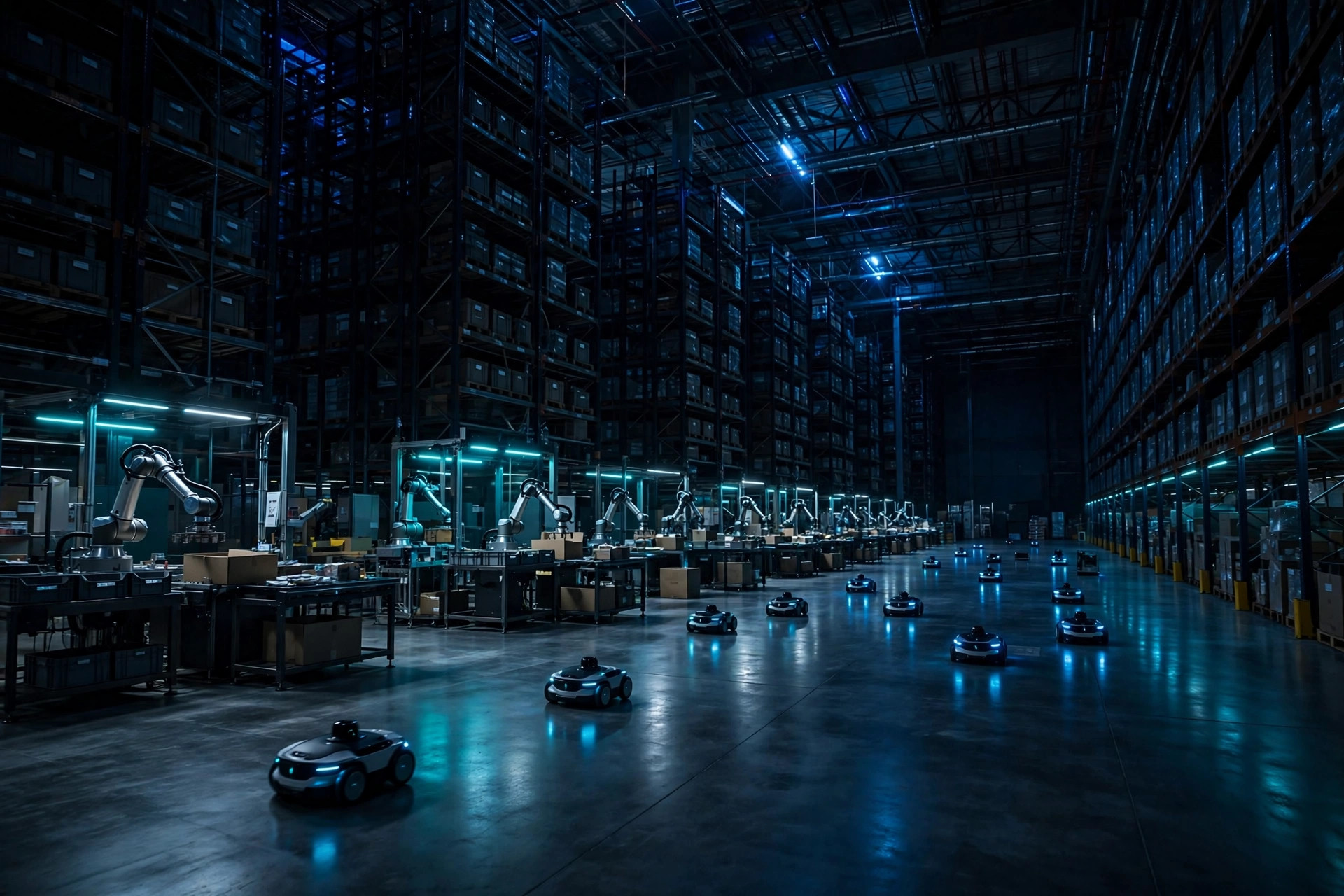
"Lights-out" means exactly what it sounds like: the lights go off, the people go home, and the machines do the work. Factories got there first. Japan's FANUC has been running a plant where robots build robots since 2001 — up to 30 days at a stretch with nobody on the floor. Their VP once bragged they turn off the air conditioning and heat too.
The most famous warehouse version belongs to JD.com. In 2017 they opened a fully automated fulfillment center in Shanghai's Jiading district: 40,000 square meters, nearly 1,000 robots, 200,000 orders a day, and four humans on site. Those four people's job? Basically nursing the robots. The bots sort 3,600 items an hour — five to six times what a person can do.
But don't let the showroom fool you. Amazon only deployed its one-millionth robot in July 2025, and the official line is that robots "participate in" 75% of global deliveries — participate, not handle. Its next-generation fulfillment center in Shreveport, Louisiana packs ten times the robot density of older sites, and it's still full of people. My bet: the 2030 lights-out warehouse won't be "zero humans." It'll be "so few humans you can ignore them."
Walking the Five Links: Transport Has Graduated, Picking Is Repeating the Grade
Receiving is basically a solved problem. Pallets in, forklifts, scan guns — done. But the odd-shaped item, the crushed box, the crooked label? The machine takes one look and gives up. Still needs human eyeballs.
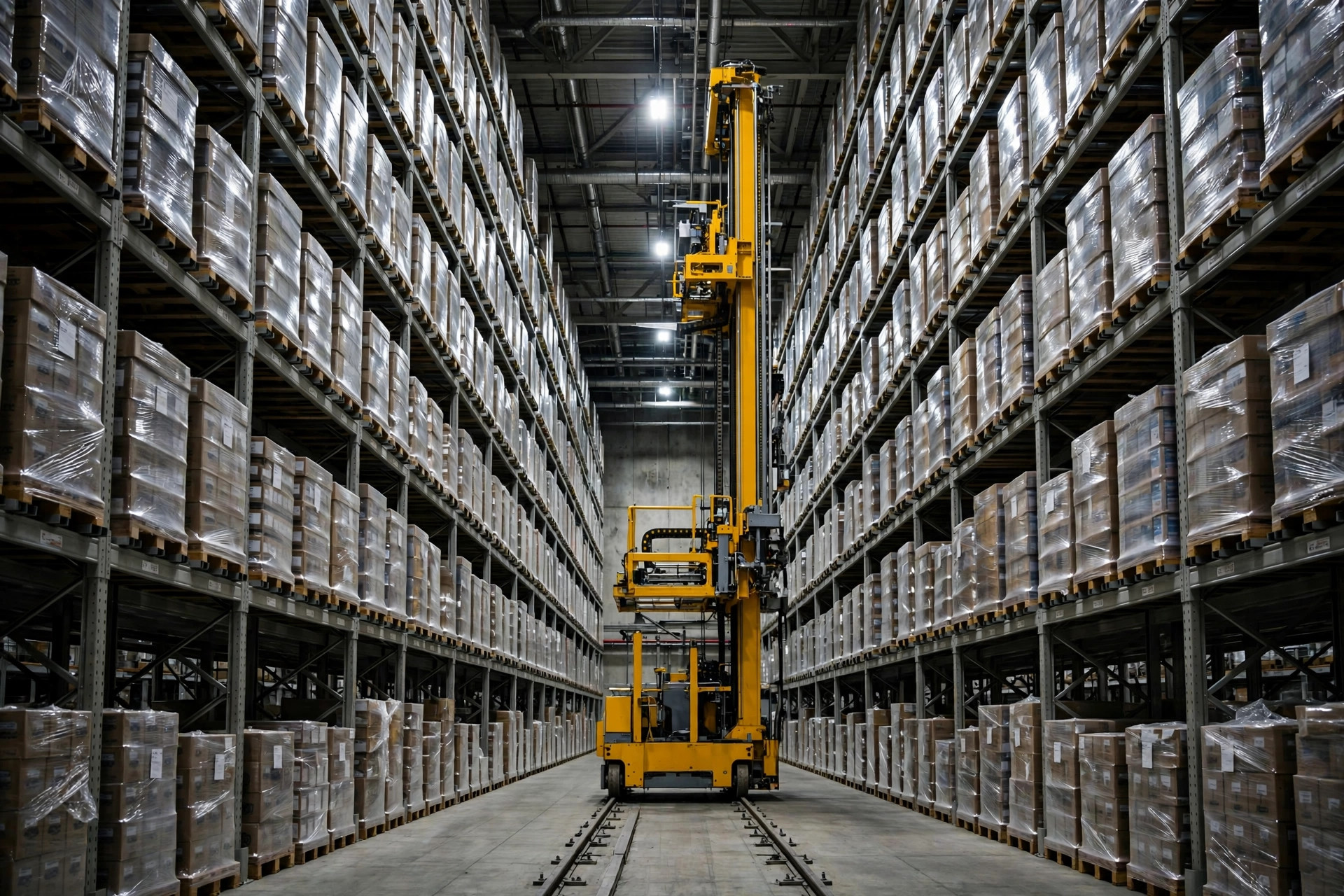
Storage tech matured decades ago. AS/RS, shuttles — you can buy them with your eyes closed. The catch is you open your eyes when the invoice arrives. Expensive is its only flaw, and also our biggest flaw as small warehouses. Our version is the "budget AS/RS": tall racks plus narrow aisles. Squeeze in two more levels, pay zero extra electricity.
Picking is the hardest link, and the furthest from lights-out. Full cases and full pallets are easy. Piece picking is hell: thousands of SKUs in every shape imaginable — soft, hard, slippery, sticky. In May 2025 Amazon unveiled Vulcan, a robotic arm with a sense of touch that can "feel" what it grabs. If even Amazon is still chewing on this bone, you know how hard it is.
Packing is half and half. Auto box erectors, sealers, and labelers are mature. But "cram five different items into one box so nothing rattles" — humans still win, and robot spatial reasoning is roughly zero. We tried an auto case sealer once; it jammed the moment box sizes varied, so we returned it and went back to hands. Lesson learned the expensive way: if your operation isn't standardized, don't touch automation.
Outbound is mature on the conveyor-and-sorter side, but the last step — loading pallets into a trailer so they don't topple — is still human craft. Dock scheduling software, though? Worth every penny: sequence which load goes first, and load times visibly shrink.
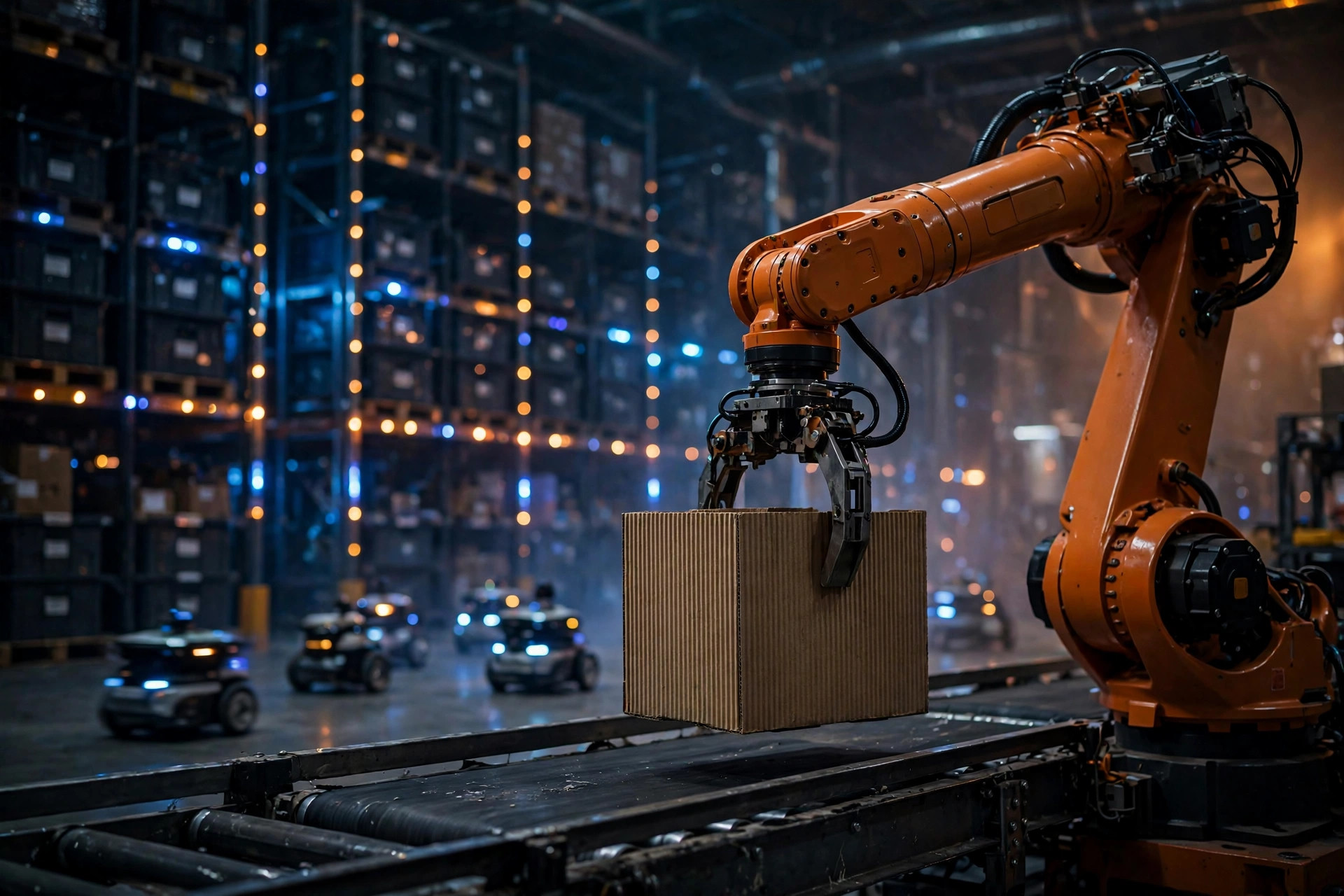
Here's the counter-intuitive part: the biggest enemy of the lights-out warehouse isn't technology. It's SKU variety and volume volatility. Uniform SKUs plus steady volume? Robots win. Ten thousand SKUs, 800 orders today and 8,000 tomorrow? Humans are more flexible. JD.com and Amazon can do this not because their tech is magic, but because their volume is big enough to keep the robots fed. Our spiky little volumes are exactly what robots hate.
The Money: Lights-Out Doesn't Save Money, It Changes What You Spend It On
A lot of people hear "lights-out" and think "no payroll, huge savings." Think again. The three warehouse types spend their money in completely different places:
| Cost | Manual warehouse | Semi-automated | Lights-out |
|---|---|---|---|
| Labor | 60%+, the big one | 30–40% | under 10% |
| Rent | ~20% | ~20% | ~20% |
| Equipment depreciation + maintenance | negligible | 20–30% | 40%+, the big one |
| Software + integration | ~zero | a slice | 15%+, at least |
| Errors and rework | you eat it | shared by humans and machines | one shutdown wipes out a day |
See it? Lights-out doesn't eliminate labor cost — it converts payroll into depreciation, maintenance, and the integrator's invoice. And here's the gut punch: the day the integrator's project team leaves, a dead robot means you can't even buy the spare part. Big companies have dedicated maintenance crews. A small warehouse's "maintenance crew" is the owner — the one crawling under a conveyor at 2 a.m. Can we afford that game? We cannot.
So the payback formula for robots is one line: volume times stability. Not enough volume, not enough stability, and the payback period outlives the equipment. DHL's often-cited numbers say 80% of warehouses worldwide are still fully manual and only 5% count as automated. It's not that everyone is dumb — the math just doesn't work. When the math doesn't work, don't force it. Let the giants pay the tuition; we'll copy their homework.
The "Lights-Out Lite" Menu: Four Things Small Warehouses Can Steal Today
Full lights-out is out of reach. But take it apart, and there are four pieces we can steal right now:
First, scan guns plus a WMS — the cheapest automation there is. One scanner plus software, and your picking error rate gets cut in half. This is the foundation of lights-out: robots run on data too. Feed them garbage data and any robot becomes an expensive way to punish yourself.
Second, auto labeling. Machines beat humans at slapping labels on boxes — steadier, never bored, never calls in sick.
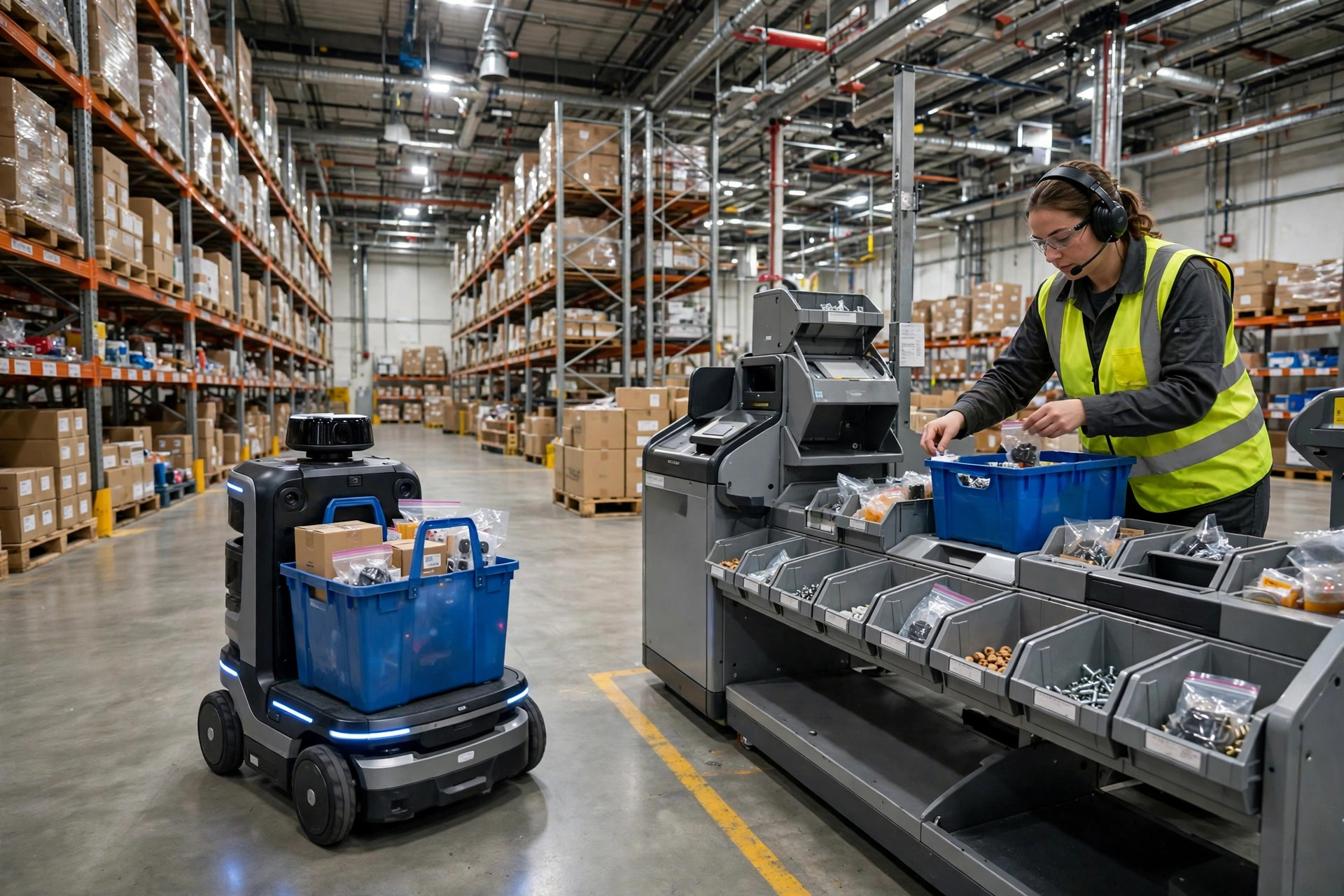
Third, goods-to-person AMRs on monthly rental. Robots-as-a-service means no big purchase: rent a few bots and try them out. Scale up for peak season, return them after. Try doing that with temp workers — actually you can let people go, but the good ones won't come back. The robots don't hold grudges. Read the contract's return terms and damage clauses before signing — those little carts bump into things; plan for it.
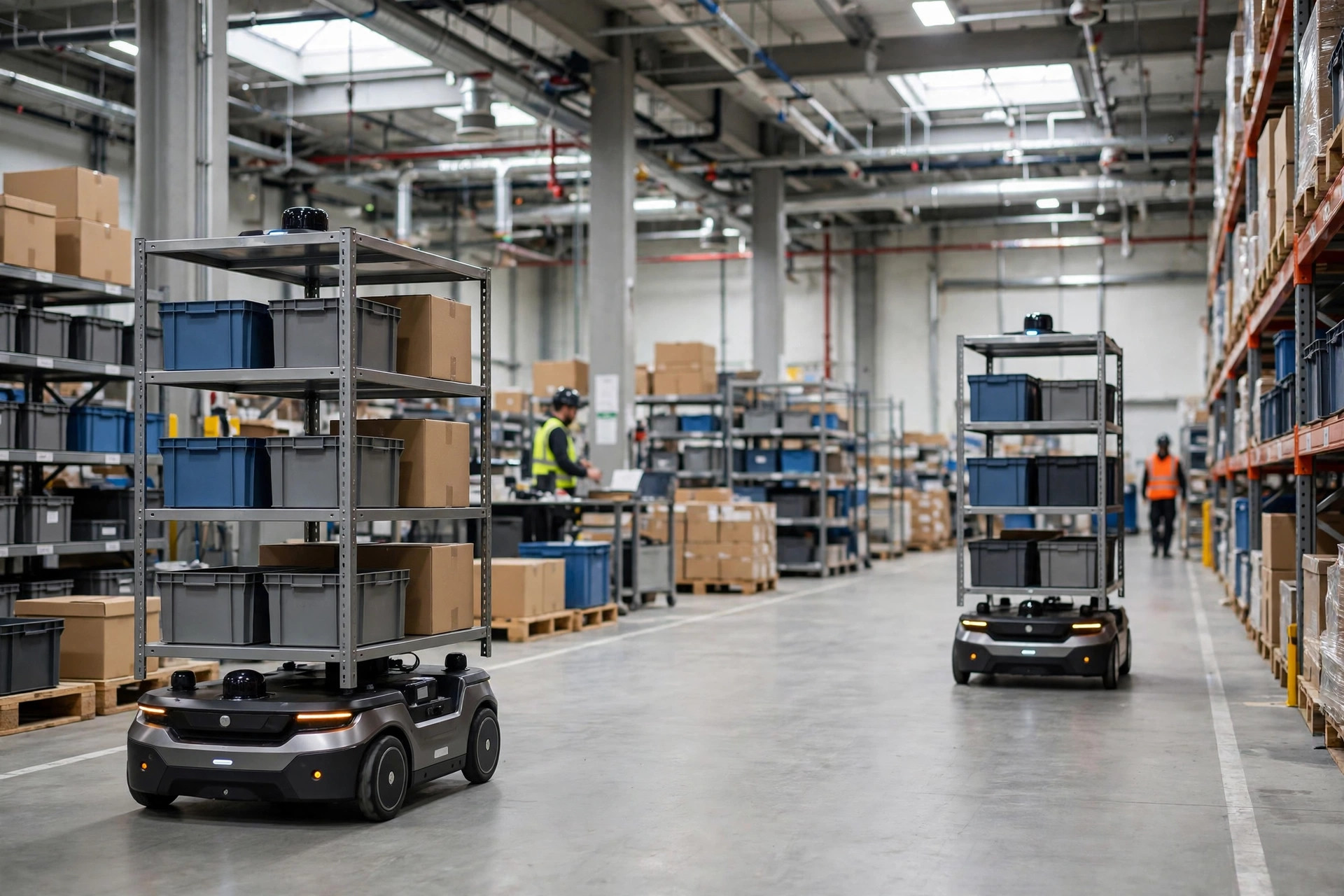
Fourth, re-laying the pack stations plus standard work. Sounds embarrassingly low-tech, but it saved us last peak season. Last November, our 3,000-square-meter warehouse in Eastvale jumped from 800 to 2,400 orders a day, and temp workers were nowhere to be found. We rented four goods-to-person bots, rearranged the pack stations into a U-shape, and set one rule: "left hand picks, right hand seals." Two people did the work of four. Mis-ships visibly dropped, customer complaints fell off a cliff, and my blood pressure finally came down. The monthly rent for four bots was less than three months of one temp worker's peak-season wages. I did the math. It pencils out.
Advice for fellow small operators: don't stare at the big phrase "lights-out warehouse." Stare at the most painful link in your own building. Whichever station begs for overtime every day and can't hire anyone — automate that one first. These four upgrades together cost less than one sortation line, but they treat the four places where small warehouses bleed every day: slow finding, wrong labels, exhausting picking, peak-season collapse. You can't get fat in one bite, but you can steal one bite at a time.
I bet the 2030 lights-out warehouse will really be a "dim-light" warehouse: 99% of the floor dark, one lit maintenance aisle, a few technicians standing in it. Our goal was never turning off the lights. It's fewer overtime hours, fewer mispicks, surviving peak season. Take the lights-out warehouse apart and install whichever parts pay for themselves — small warehouses have their own way of surviving.
By Xiao Ma, Small Warehouse Owner