Last autumn, an export consolidator showed me a packing list that told a small, expensive story about armenia brandy export warehouse storage. A shipment of Armenian brandy from the Ararat Valley had rested well in the cellar for months, yet in its final week before dispatch it had to be opened up again. The spirit was fine. The labels were not: the wrong language version had gone onto one batch, and the whole consignment had to be unpacked, relabelled, and resealed near the port. Nothing was lost, but the labour, the delay, and the repacking quietly consumed a visible share of the margin. That is the arithmetic of armenia brandy export warehouse storage. The most expensive part is rarely the spirit itself.
The distinction matters because brandy does not behave like wine in storage. Brandy arrives at the warehouse with most of its value already fixed by distillation, ageing, blending, and bottling. According to published industry accounts, the pre-shipment warehouse is therefore less a place where value is created than a place where value already made is defended. This shapes the argument of this article: in armenia brandy export warehouse storage, preservation matters more than improvement, and avoiding errors matters more than adding activity.
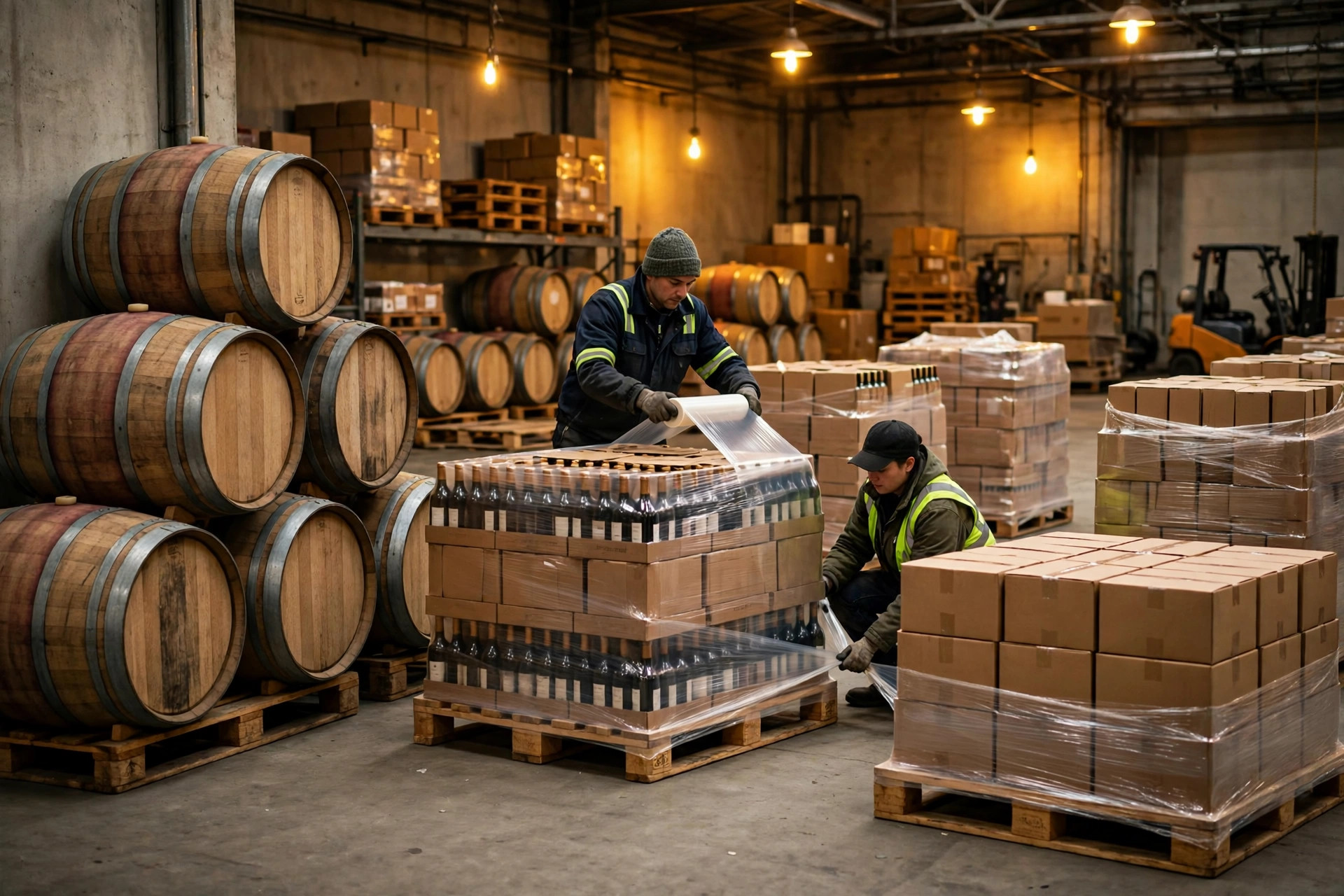
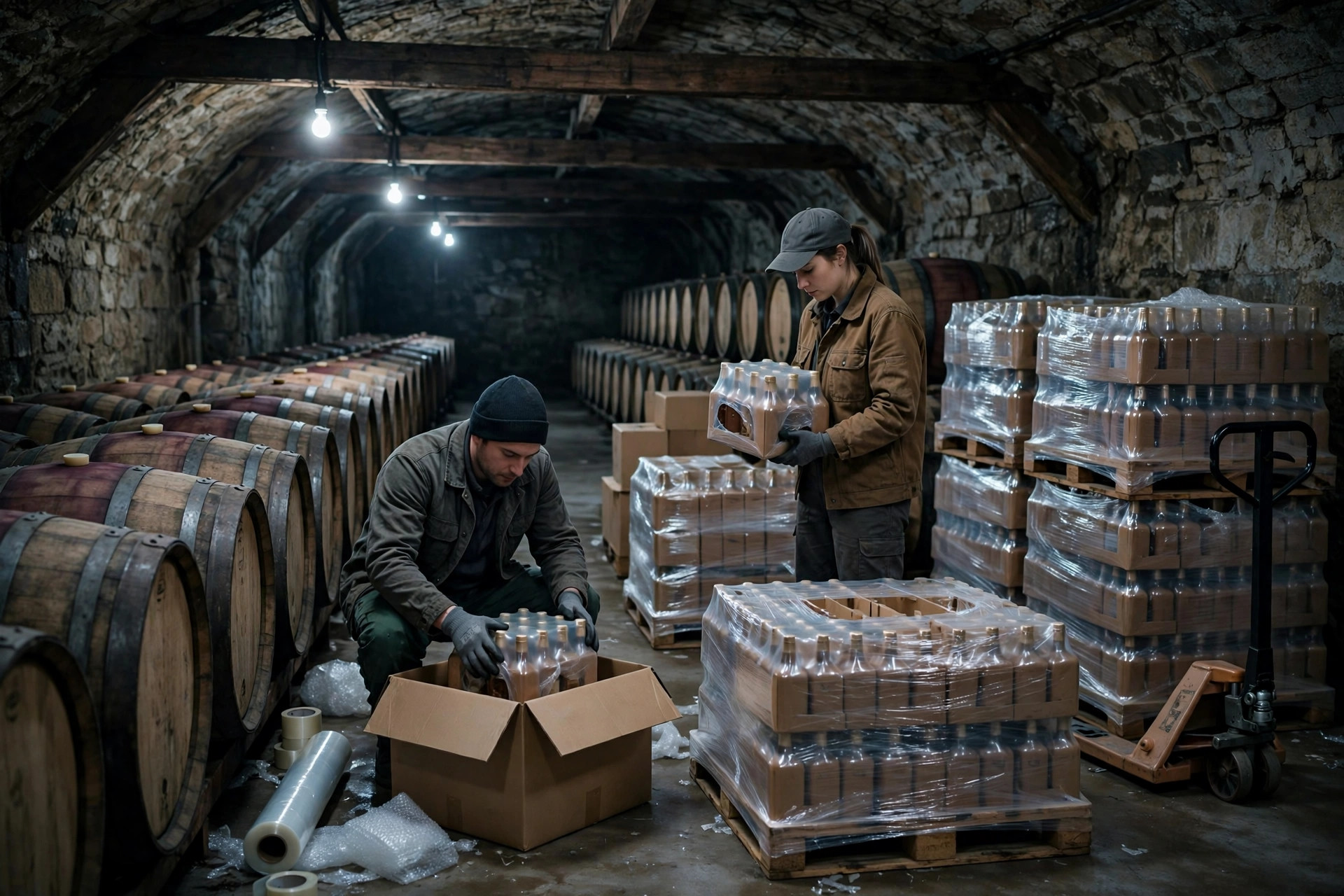
Consider first a mid-sized distillery in the Ararat Valley. Its cellar was good: cool, dark, quiet, with oak barrels in steady rows and a temperature that barely moved through the year. The trouble began after bottling. Finished cases were staged temporarily near the loading bay, where afternoon sunlight fell across the stack and forklifts raised dust as they passed. A few outer marks were scuffed, and at dispatch the warehouse had to check cases one by one and patch labels, losing two days. The lesson was precise. A good ageing cellar is not automatically a good finished-goods warehouse. Bulk spirit and bottled stock are different storage objects, and managing them with the same routine guarantees that something, somewhere, will leak.
A second case comes from an inland consolidator that gathers stock from several small producers, labels it uniformly, and builds full containers for export. One year, a destination market required a particular language and warning wording. The consolidator had received a sample label in advance, but it sat in one person's email inbox rather than on the packing bench. After a shift change, a new operator followed the previous batch's template and labelled a full pallet incorrectly. The pallet came back into the warehouse for rework: unboxing, relabelling, rechecking. The fix was low-tech. Sample labels for each destination were pinned above the corresponding workstation, and every shift began by looking at the wall before touching a case. The error rate for that class of mistake fell to near zero. Much warehouse improvement works this way. The system is not too primitive; the information is simply too far from the hands doing the work.
Armenia Brandy Export Warehouse Storage: Light, Temperature, and Time
The first account to settle is light. Finished brandy tolerates a brief moment in a bright room, but suffers from prolonged exposure, especially direct sunlight on a stack. Finished-goods areas should sit away from the sunlit strip near loading doors, and no finished pallets should rest beneath windows or skylights. Where the building cannot be rearranged, an opaque cover over window-side pallets is cheap insurance. The second account is temperature. Bottled brandy does not need the precision of a fresh-food cold room, but sharp swings and sustained heat are still unhelpful. The risk concentrates in the places people forget: pallets against outside walls and just below the roof, where day-night swings are far larger than deep inside the warehouse. Valuable lots belong in the most stable interior zone, not by the door for convenience. The third account is time. The longer finished stock sits, the higher the chance that a label version, a market requirement, or a customer order changes. Warehousing should therefore follow the order rhythm: stock with a firm shipping window gets labelled and checked first, while stock without a window should not be locked into destination-specific labels too early. Settle light, temperature, and time, and half the risk in this business is already under control.
Armenia Brandy Export Warehouse Storage at the Consolidation Point: Labels, Lots, and Compliance
The most underestimated link is the meeting point of labels and lot numbers. A distillery, a consolidator, and a freight forwarder often call the same shipment by different names: the distillery by blending batch, the consolidator by pallet, the forwarder by bill of lading number. At dispatch, three numbering systems that do not reconcile will cost hours of box-opening. The remedy is unglamorous but must be agreed before dispatch: a single reconciliation sheet that maps distillery batch to warehouse pallet number, carton number, and bill of lading number, printed to travel with the goods and kept electronically in the warehouse system. On labels, language, alcohol-strength presentation, warning wording, and importer details vary considerably by destination, and the governing rule is to check the latest official policy for the specific market rather than rely on a previous shipment's template. The warehouse's job is not to make the compliance judgment for the customer; it is to make sure the applied label matches the approved sample, exactly, and to keep a sample on file. My recommendation is simple: photograph or retain one applied label sample per shipment before it leaves. When a dispute arises, that sample is the strongest evidence available.
| Storage option | Best for | Cost pattern | Main risk |
|---|---|---|---|
| Distillery's own cellar | Stable producers with predictable orders | Mostly fixed cost, low marginal cost | Finished goods mixed with bulk spirit; weak labelling and consolidation capacity |
| Inland consolidator warehouse | Small producers shipping together | Charged per pallet or per case, flexible | Numbering mismatches across parties; high rework probability |
| Transit warehouse near the port of exit | Tight shipping windows needing fast stuffing | Higher rent and handling fees, fast turnaround | Costs accumulate quickly if stock waits too long |
No option wins for everyone, and that is the point. A stable producer with predictable orders does best in its own cellar. Small producers shipping together gain most from a consolidator's flexibility. A shipment with a tight window may justify paying more for a port-side transit warehouse rather than waiting inland for an uncertain sailing. Choosing storage is a trade-off among rent, speed, and the probability of error — not a contest for the lowest quoted price.
The Counter-Intuitive Judgment: Longer Storage Does Not Mean a Better Sale
It is tempting to assume that because brandy improves with age, keeping it longer before export cannot hurt. That intuition holds for bulk spirit still maturing in cask. It fails for bottled, finished stock bound for export. Once bottled, maturation has essentially stopped; extra weeks in the warehouse do not improve the spirit, but they do raise the chance that a label version expires, an order is cancelled, or a case is scuffed, mislabelled, or broken. The real trade-off is between readiness and exposure. Stocking early protects against an order surge but ties up cash and space; waiting for orders keeps cash light but risks missing a sailing. My judgment, grounded in the cases above, is that small and mid-sized exporters should run rolling stock tied to the order rhythm rather than hoarding on the principle that more storage is always safer. The most expensive stock is the stock reworked because its labels, order, or market changed while it waited.
A checklist that can be used tomorrow runs to five items. First, separate finished goods physically from bulk spirit, and keep finished pallets out of direct sunlight. Second, print each destination's approved label sample on the wall above its workstation, and make looking at the wall the first step of every shift. Third, reconcile four numbers before dispatch: distillery batch, pallet number, carton number, and bill of lading number. Fourth, place valuable lots in the warehouse's most temperature-stable interior zone, not by the door. Fifth, retain one applied label sample per shipment, so that any later dispute starts from evidence rather than memory. Done consistently, these five steps settle most of the account.
The open question is worth carrying into the next shipment. If export warehousing is a chain for preserving value, then at each link, is value being protected, or quietly consumed? Every exporter should be able to answer, link by link, from its own ledger.
By Dr. Chen, Supply Chain Researcher