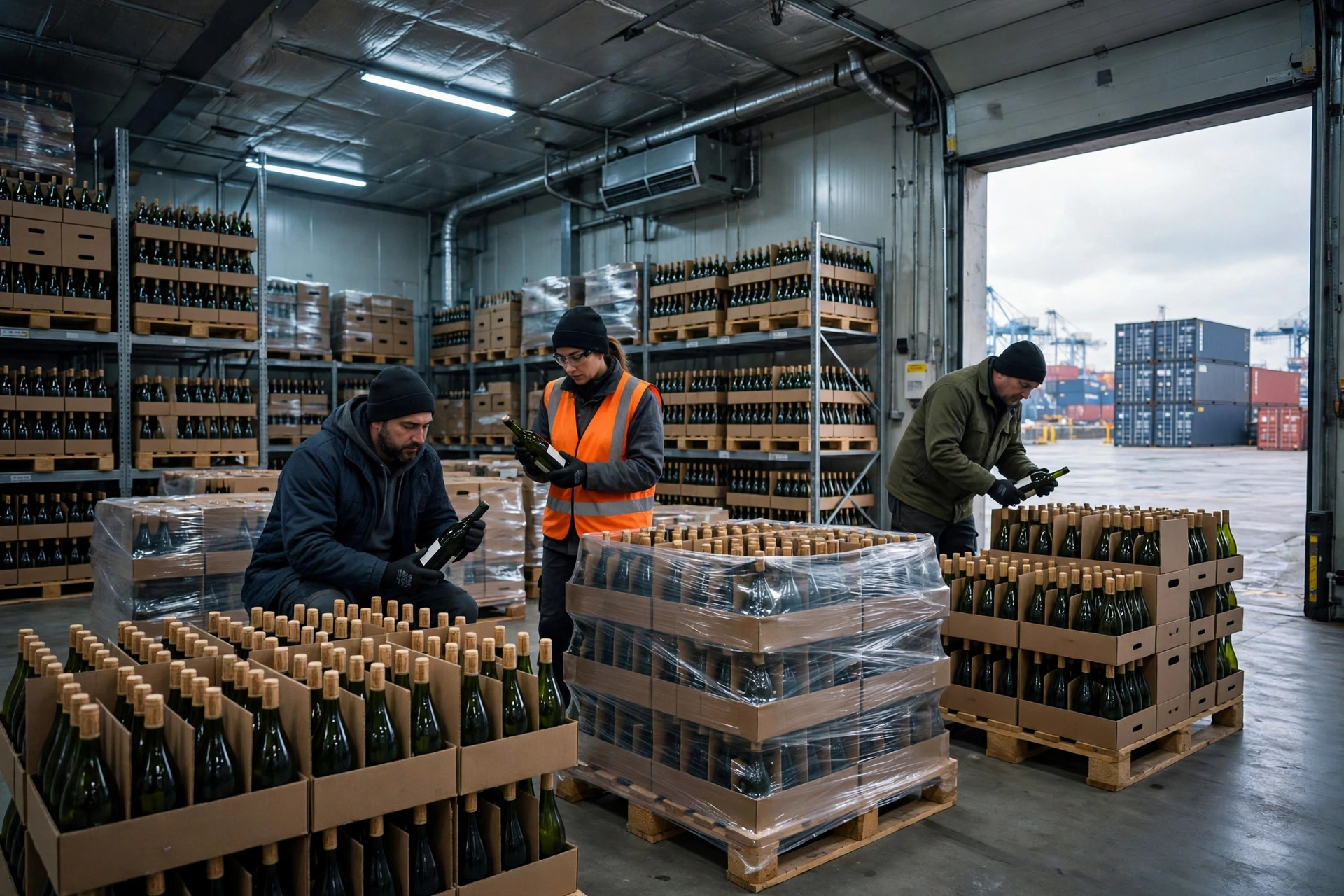
Let me tell you something: Georgian wine tastes wonderful, and moving it abroad is anything but easy. I learned that the hard way outside a warehouse near the port of Poti one hot summer afternoon, when a load of bottled red wine sat in the sun while the driver argued with the warehouse crew. The case count on the paperwork was right, but a layer of labels was missing, and the buyer would not accept the load until it was relabeled. That is what georgia wine export warehouse storage really comes down to — not the miles on the road, but the small jobs at the warehouse door that nobody wants to do twice.
After all these years on the road, I can tell you that most good wine is not ruined on the highway. It is ruined in the last few steps before it leaves: a label pasted wrong, a pallet stacked crooked, a shared load mixed up with somebody else's goods, and the problem only shows up at the destination port. If you want Georgian wine to arrive in Europe in good shape, you have to get the warehouse part right first, before you talk about trucks and ships at all.
The day I waited four hours outside a Kakheti winery
Kakheti is Georgia's best-known wine country, vineyards on both sides of the road as far as you can see. On this trip I went to pick up wine from a small family winery, run by a quiet man in his fifties who poured generously and talked little. His qvevri wine was famous in the area — fermented in big clay vessels buried in the ground, nothing like the wine you find on a supermarket shelf. But when it came to shipping, he was stuck on a simple point: you cannot put a clay vessel on a truck. What travels is bottled wine, sealed, labeled, and packed. The qvevri stays home and does the winemaking. The bottle does the traveling.
That day I waited four hours, not because the truck broke down, but because the labels did not match. The winery had printed its own labels, and one letter of the wine's name differed from the sample the buyer had sent. The warehouse crew would not take the load in. We called the buyer on the spot, got a photo of the approved sample, and the winery relabeled a whole batch before my truck could roll. Since then, I have had one rule for every small winery pickup: before anything is sealed, put the label sample, the case count, and the bottle count side by side, and read them against the paperwork out loud. Read them right, then seal the box. Half an hour at the gate can save you days in Europe.
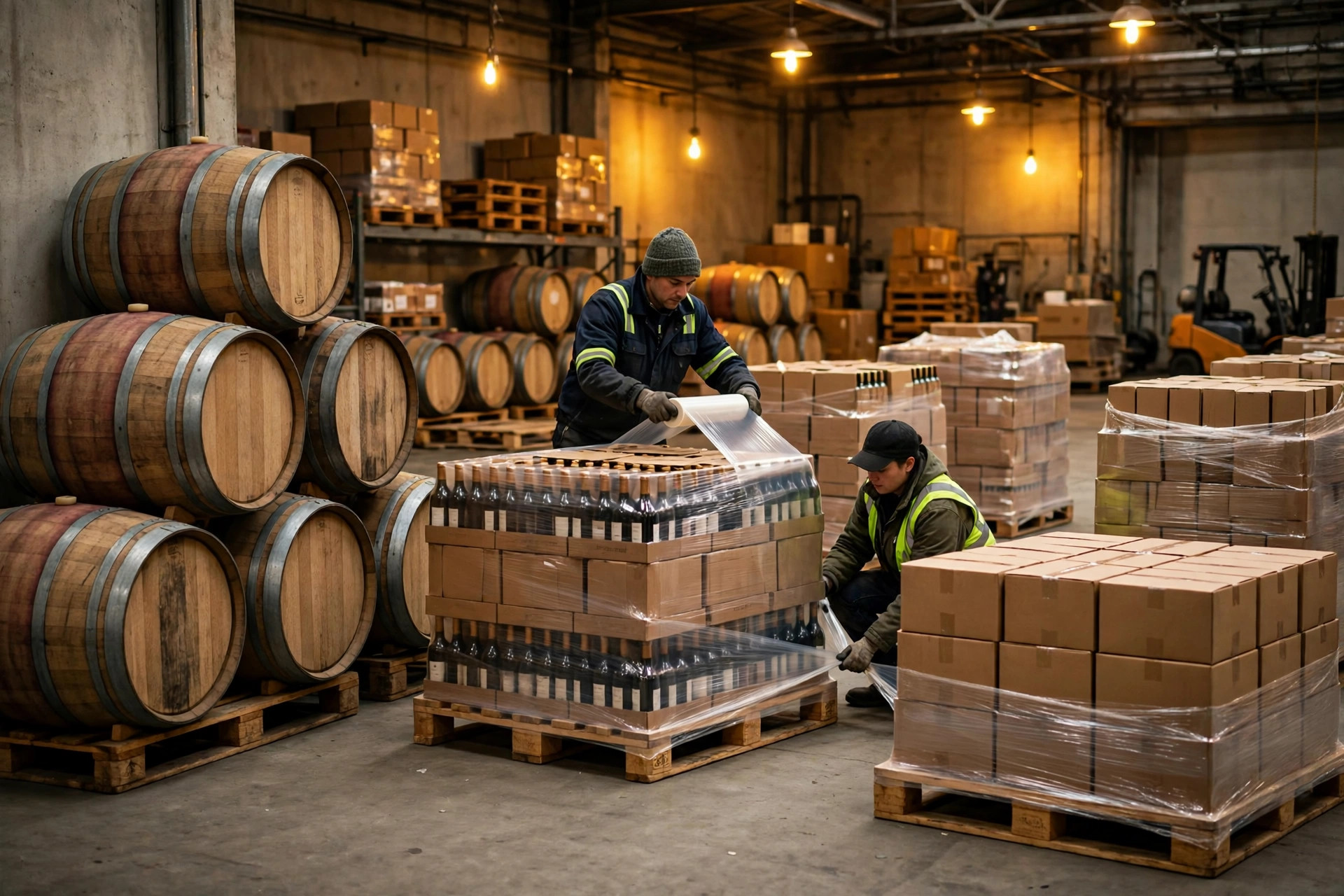
Heat is the other thing people underestimate. A Georgian summer is hot, and wine hates sudden changes more than steady warmth: cool inside the warehouse, baking in the yard, stuffy inside a closed truck. My method is plain, and it works. Load early in the morning or in the evening, not at midday. Let pallets sit in a cool, shaded spot for a while instead of pushing them straight from a cold room into the sun. And before you close the truck doors, check the stretch wrap for tears.
Georgia wine export warehouse storage, done the boring way
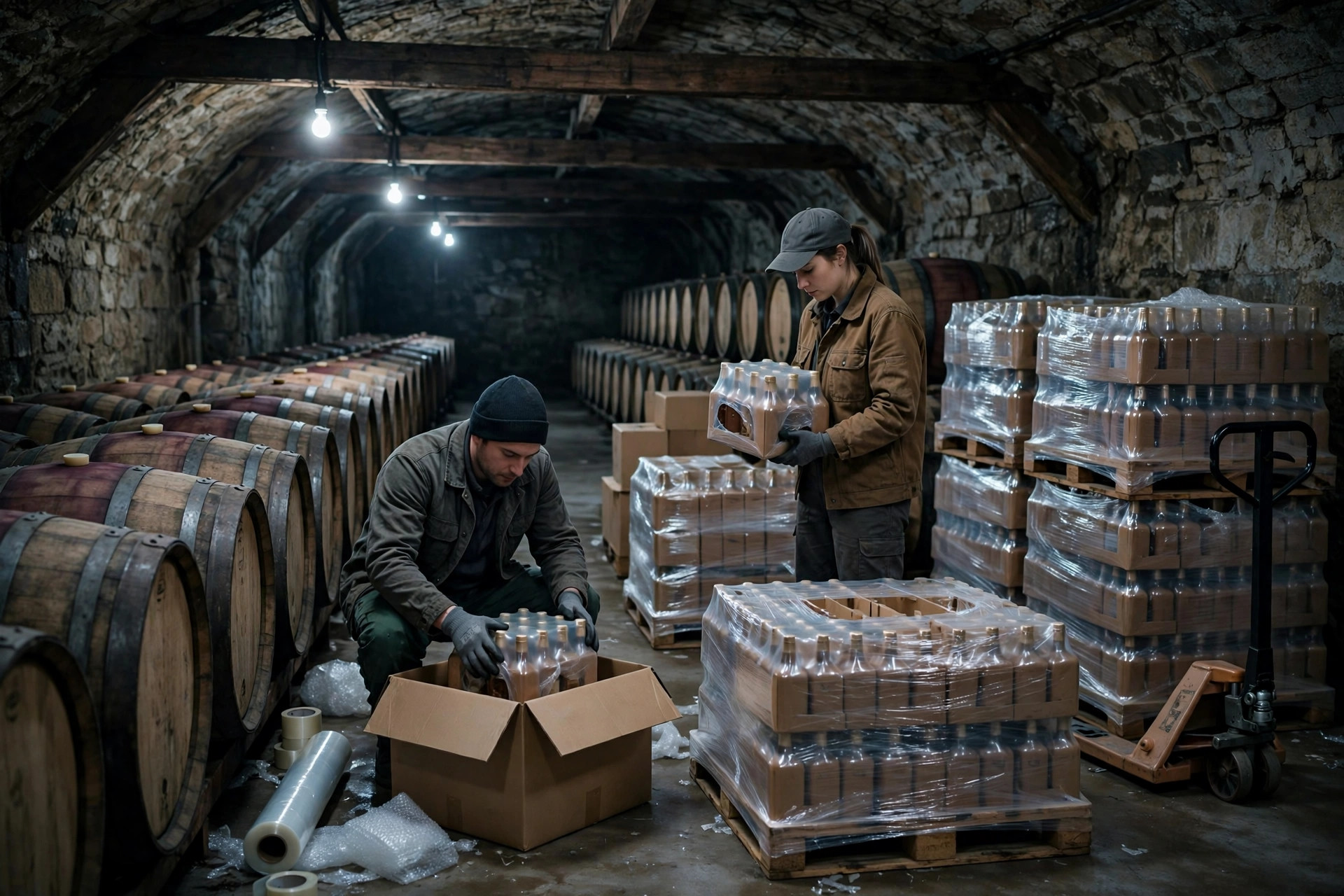
Small wineries have one problem above all: not enough volume. One grower might ship only a few dozen cases in a season, far too little for a full container on his own, so shared loads are the normal answer. Sharing is not the problem. Sharing without order is. I once saw a load at Poti where three wineries' wine shared a single pallet, labels facing every which way, boxes at uneven heights, all wrapped together into something that looked like a small hill. At the destination, the receiver opened it up, the case numbers did not line up, and two bottles were broken. They argued about it for over two weeks.
Here is how to think about a shared load: the freight you save is visible, the risk you take on is not. My advice is simple — share, but share cleanly. Give each winery its own pallet, or divide one pallet with separators, and stick a master list on the outside: how many cases from each producer, which wine, which case numbers. Make two copies of that list, one on the pallet and one photographed and sent to the buyer. Do not trust memory once several hands have touched a load.
Labels are where shared loads most often fall apart. Wine going to Europe has to meet the destination country's labeling rules, and the details change, so check the latest official policy and confirm every line with your buyer in advance — language, contents, origin, all of it. Rework is not just the cost of new labels. It means opening boxes, restacking, re-wrapping, and re-checking everything, and I have seen one relabeling job eat every cent a shared load had saved.
The real cost of Georgia wine export warehouse storage
People usually ask me about freight rates first. Fair enough, but freight is the number you can see. The expensive part is usually the rework and the waiting: a label pasted wrong, paperwork held up while someone waits for an answer, a load that arrives and does not match the order. Add those together and they often cost more than the freight itself. The freight is the open bill. The rework is the hidden bill, and hidden bills hurt the most.
| Way to ship | Who it suits | What to watch out for | My advice | | Full container, direct | Big volume, steady buyer, one batch | Waiting in the sun for goods, label rework | Lock the label sample and loading time early, load morning or evening | | Shared load | Small wineries, small volume, testing a market | Mixed goods, arguments over breakage | Separate pallets and lists, master list outside, photos before sealing | | Store first, split later | Scattered buyers, staggered pickup | Wine sitting too long, temperature swings | Agree a longest storage time and a clear release routine, do not let wine sit and age in storage |
A full container is simple but wasteful if you do not have the volume. A shared load saves money but needs discipline. Storing first is flexible, but time in storage ties up both the wine's quality and your cash. Here is the counter-intuitive part: the cheapest warehouse is often the most expensive choice. A cool, dry room, neat stacking, and a record of everything going in and out — those four things matter more than a big, impressive building. I have seen a grand-looking warehouse leave pallets sitting in the sun for half a day. Judge a warehouse by how it counts goods in and checks orders out, and whether it photographs loads before they leave, not by the size of its front gate.
A checklist you can use tomorrow
So here is the list I have built up over years of driving, ready to use on your next shipment. First, send the label sample to your buyer for approval before you print anything, not after. Second, count three times before sealing: cases, bottles, case numbers — then photograph the load and send the photo to the customer. Third, stack pallets level, heavy boxes below, light boxes above, wrap tight, and protect the corners. Fourth, on a shared load, keep producers on separate pallets with separate lists, and put the master list where anyone can see it. Fifth, load outside the midday heat, and check the wrap and seals once more before the doors close. Sixth, do not let the truck roll until the paperwork, the list, and the photos are all in hand. If one is missing, wait.
The wine is not the hard part. The accounting is. Making good wine is a skill, and keeping the warehouse record clean is the skill inside the skill. Qvevri wine can be superb, but if it arrives broken, mislabeled, or mismatched to the paperwork, good wine turns into a bad deal. Get the record right, and a small winery's wine can travel steadily all the way to a table in Europe.
An old saying fits here: slow work makes fine work. Better to wait half an hour at the gate than half a month at the port.
By Shifu Zhao, Trucking Veteran (15 yrs)