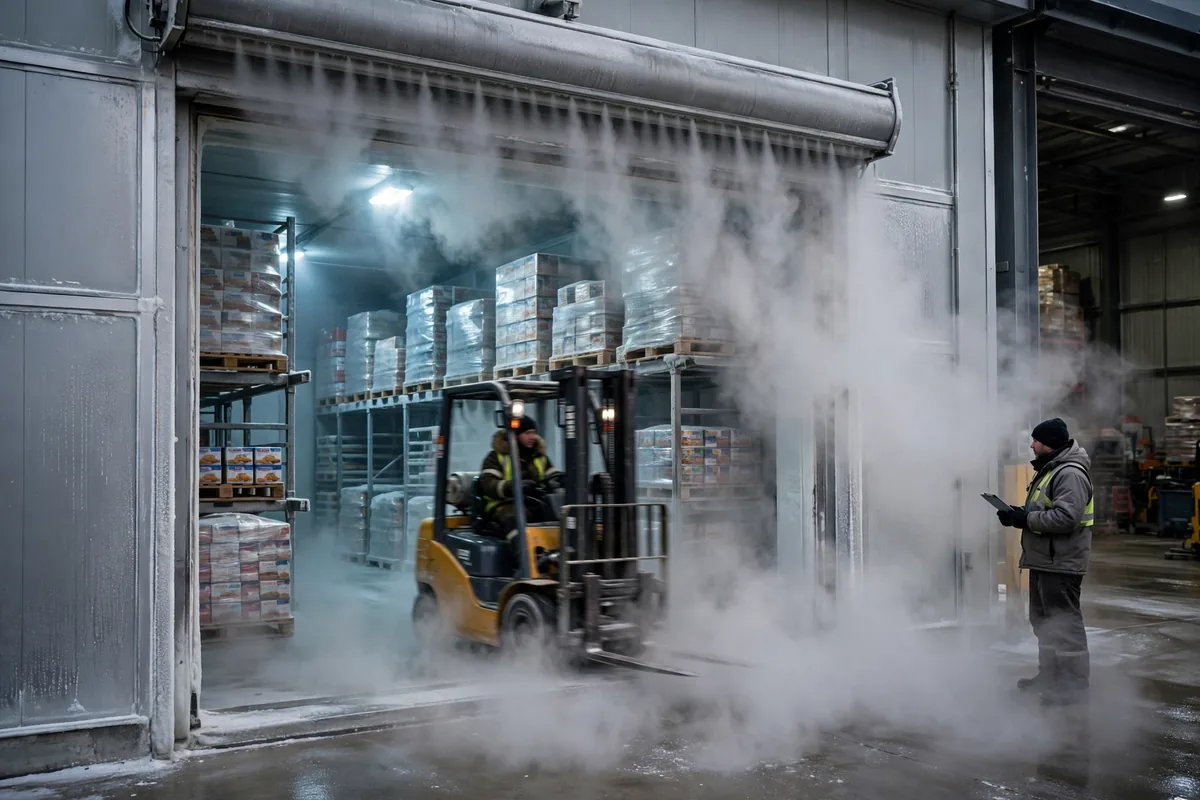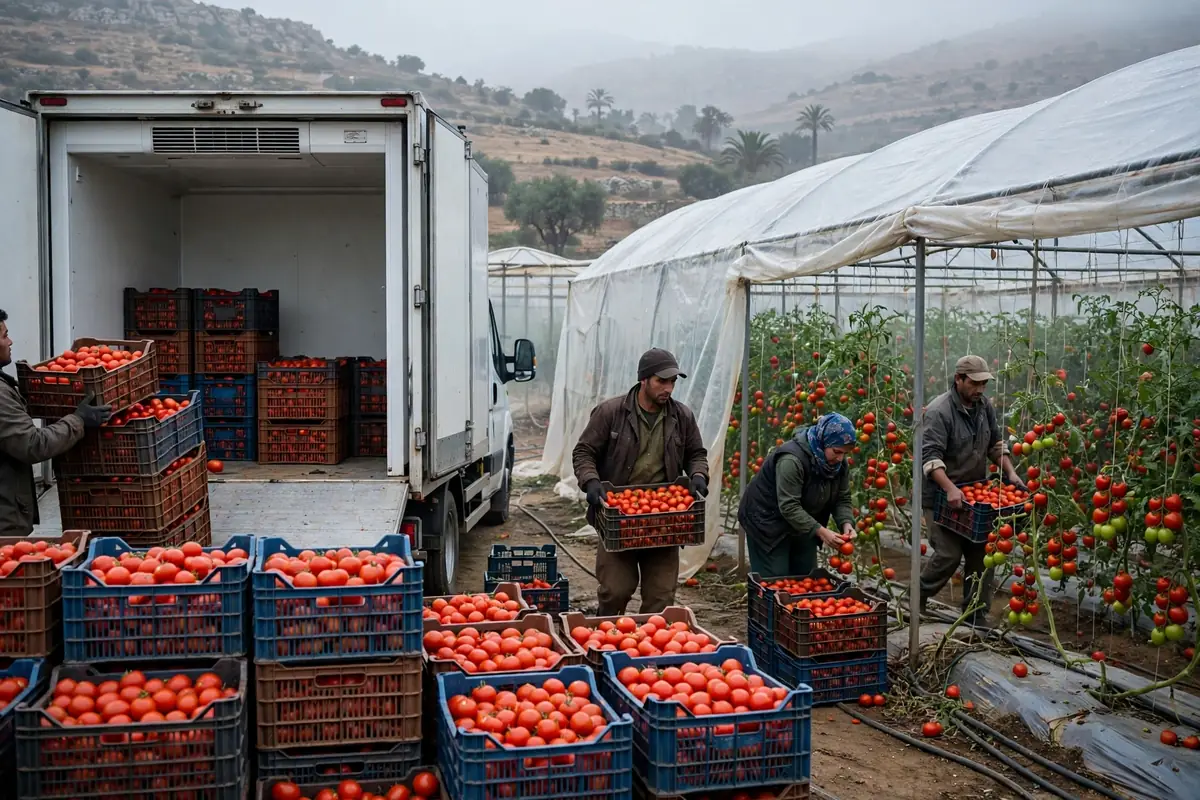
Last week Morocco did something that made every fresh-produce buyer in Europe look up: on November 5 it paused tomato exports to Africa. Heatwaves in August had hammered the Souss-Massa region, yields fell by roughly half, and retail prices at home hit 17–18 dirhams a kilo. But exports to Europe? Not a single shipment stopped. Supermarket shelves in France, Spain and the Netherlands stayed stocked. That is the morocco tomato export cold chain warehouse chain in one snapshot: one end tied to greenhouses at the mercy of the weather, the other end tied to supermarkets that never accept an empty shelf, and a cold chain in the middle holding the whole thing together.
Here is the number that tells you how big this chain is. In 2024 the EU imported 835,000 tonnes of fresh tomatoes, and Morocco alone supplied 580,000 tonnes — nearly 70%. In 2025 Morocco shipped 527,000 tonnes to the EU, about 68.2% of everything the bloc imports from outside the EU. Morocco is now the world's third-largest fresh tomato exporter. The box of cherry tomatoes you grab in a European supermarket probably came out of a greenhouse near Agadir. And if you sell on this lane, here is the truth: you are not competing on whose tomatoes are reddest. You are competing on whose tomatoes still arrive firm enough to sell.
How Long Is the Morocco Tomato Export Cold Chain Warehouse, Really?
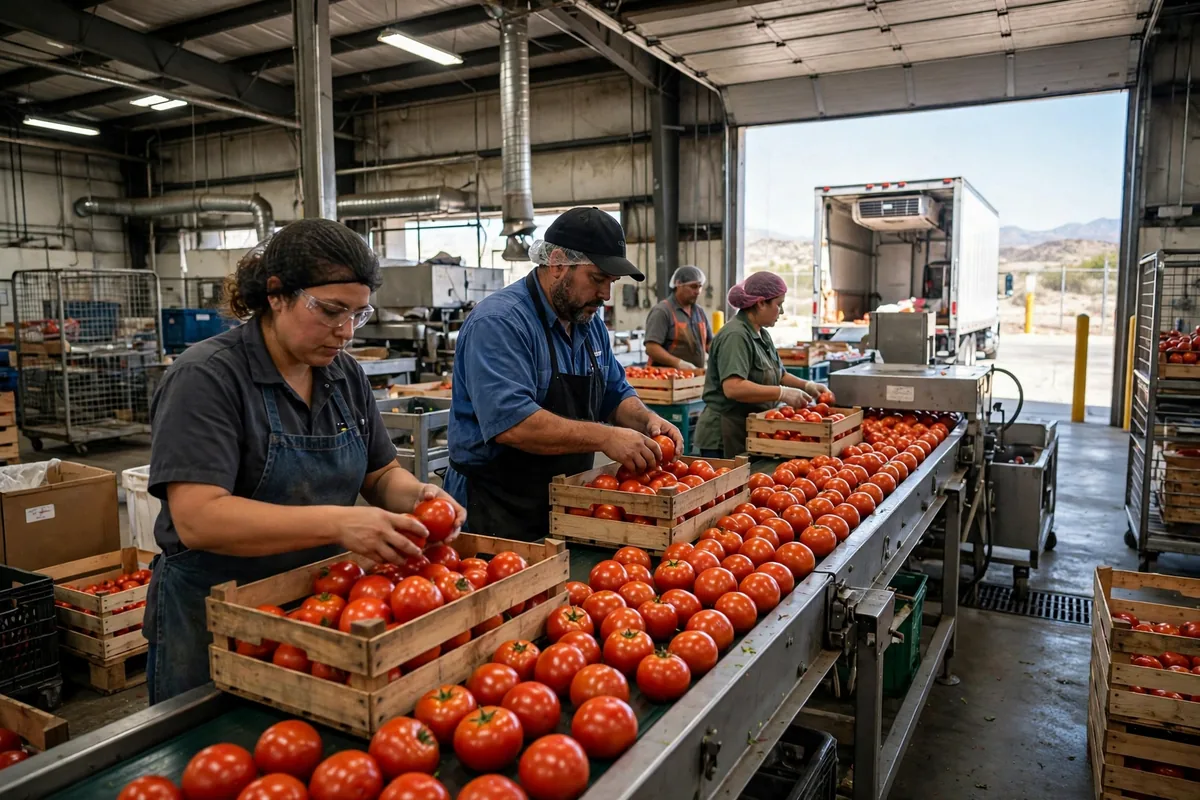
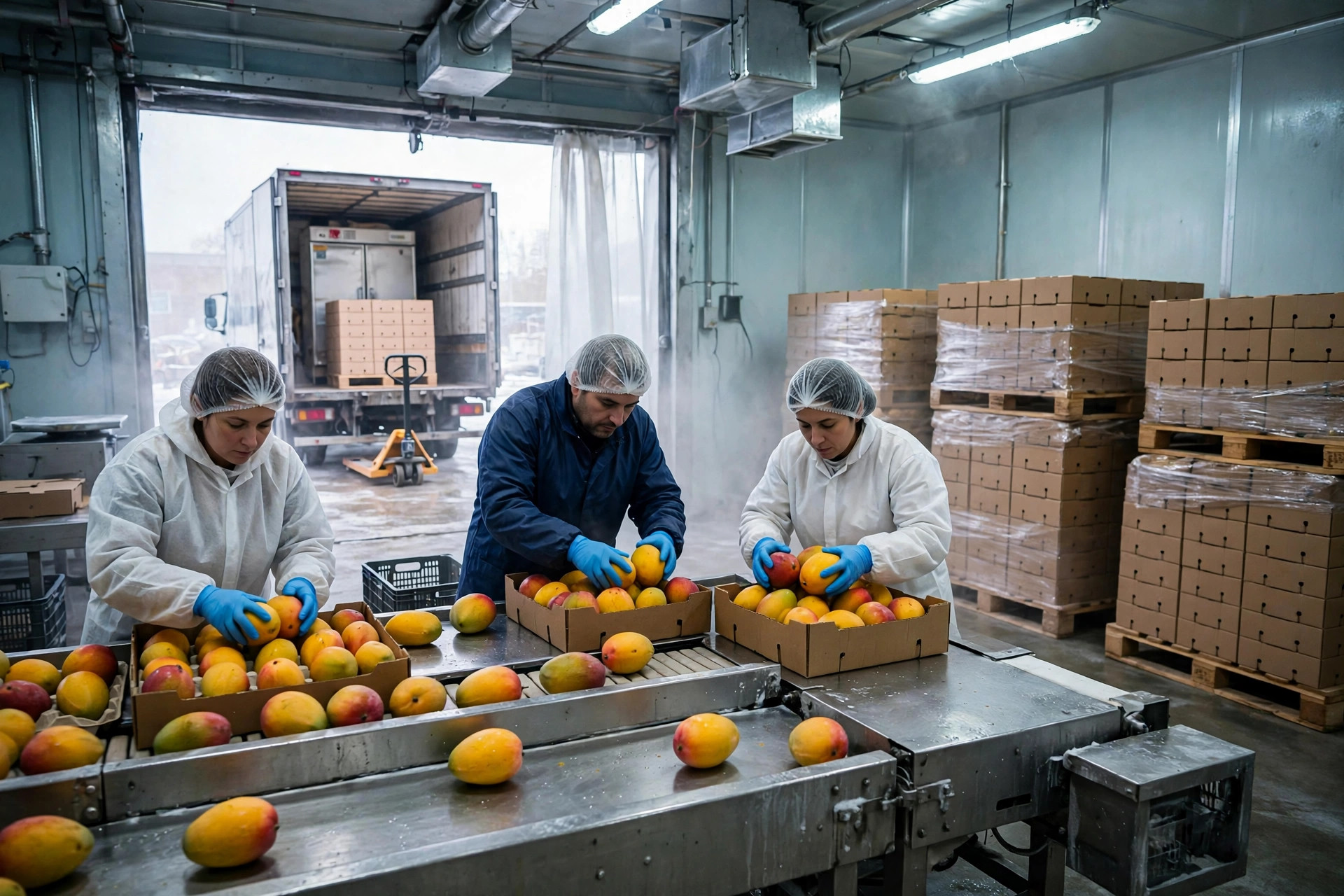
The season usually runs October to May, which lands exactly in the gap when European-grown tomatoes go quiet. The chain looks like this: harvest in the greenhouses around Agadir in the Souss-Massa region, then the tomatoes — still carrying field heat — go into pre-cooling within hours. Then grading and packing, a short hold in the packhouse cold store, then onto a reefer truck heading north the full length of Morocco to Tangier, onto a ferry across the Strait of Gibraltar, off at Algeciras in Spain, and onward to distribution hubs like Perpignan in France or straight to supermarket warehouses in the Netherlands and Germany.
A reefer truck from Agadir to Spain or France typically takes 3–4 days. Sounds short. But tomatoes are dramatic: transport temperature generally needs to stay at 10–15°C with 90–95% relative humidity. Drop below 10°C and you get chilling injury — watery flesh, flavour gone. Go above 15°C and they ripen fast and arrive soft. And tomatoes hate vibration. After 3,000-plus kilometres of road, the bruising does not show at loading. It shows when the supermarket opens the box, and the loss lands on the seller.
So the most valuable thing on this lane is not the truck. It is an unbroken chain. Pre-cooling, loading, ferry queues, unloading — every handover is a place the chain can snap. I check the temperature logger data on every single container. Any spike above 15°C on that curve, and I want to know exactly where the truck was parked when it happened.
The Math on One 20-Tonne Container of Morocco Tomatoes
Never just nod at a forwarder's lump-sum quote. Every line item deserves its own negotiation. Below is a cost breakdown for one 20-tonne container of cherry tomatoes, Agadir to Perpignan. All figures are an illustrative scenario / hypothetical example — use it to check your real quotes line by line, not as a price list:
| Cost item | Illustrative example (EUR/container) | Note |
|---|---|---|
| Harvest + pre-cooling | 900 | Field heat out within 4 hours — never skip this |
| Grading, packing + cartons | 1,400 | Keep the carton vents open; suffocated fruit costs more than freight |
| Packhouse cold store, 1 day | 250 | Don't wait for consolidation beyond 48 hours |
| Reefer truck Agadir–Tangier–Algeciras | 2,600 | Ferry included, 3–4 days |
| European leg to Perpignan | 800 | Book your unloading slot at the hub in advance |
| Insurance + temperature logger | 180 | The logger is your only evidence in a claim |
| Total | ~6,130 | Roughly EUR 0.31 per kilo |
See it? Freight is under half the total. Pre-cooling, packing and staging at origin add up to almost 40%. New sellers obsess over haggling the trucking rate, save EUR 200 there, then lose five points of product to bad pre-cooling and burn EUR 1,000 on one container. On a cold chain, the math starts in the greenhouse, not at the port.
And here is the counterintuitive part: the fastest route is not always the most profitable one. In November 2025 DP World launched its Atlas service — direct sailings from Agadir to London Gateway and Antwerp, 4–5 days, roughly two days faster than the road route, moving up to 150,000 tonnes a year onto the sea. Slower than road? No — faster, and the ship does not shake the fruit the way a truck does over 3,000 kilometres. Less damage, and about 70% lower CO2. For UK and northern Europe cargo, I now compare sea against road on total cost every time: freight, damage, and arrival quality together. Never freight alone.
Two Mistakes I Watched Happen on This Cold Chain
The first one was pre-cooling. Last November, a friend growing cherry tomatoes hit the first flush of the season — two containers harvested in one day, and the packhouse cold store had a queue. The fruit sat for over six hours before pre-cooling. It went into the boxes still warm from the field, and the reefer unit ran flat out the whole trip without ever pulling the core temperature down. At Perpignan the skins looked fine. Squeeze one and it collapsed. The supermarket rejected a big chunk of the load. I won't invent a loss percentage — the exact figure depends on the real inspection — but the lesson is one sentence: field heat has to come out within four hours of harvest. If you can't get a pre-cooling slot, harvest less that day. Don't load warm tomatoes. Pre-cooling is not a cost. It is the whole chain.
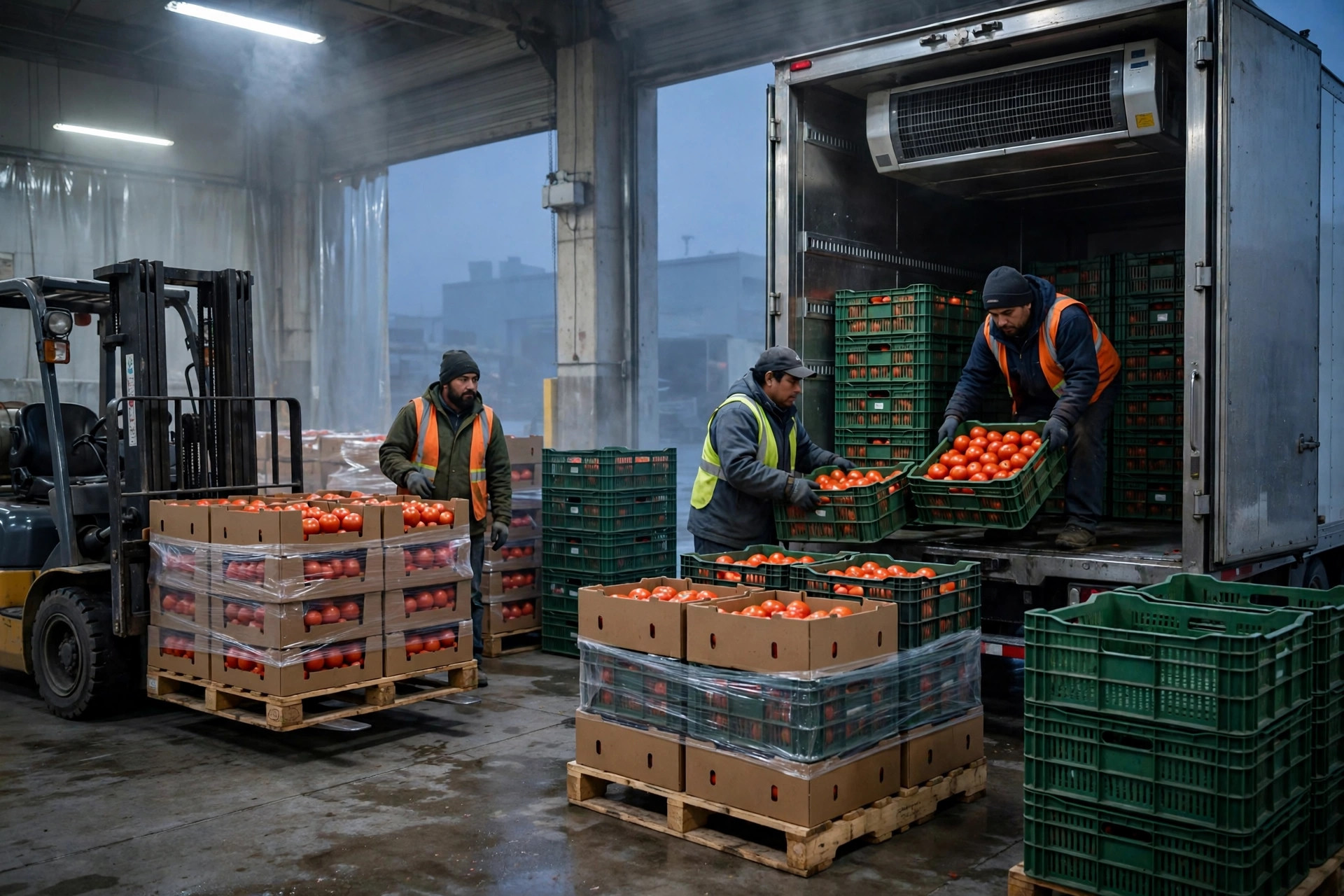
The second one was the ferry. Tangier to Algeciras is barely over an hour of sailing, but in peak season the queue to board can eat half a day. While the truck waits at the port, the reefer runs on the truck's generator — and if the fuel runs out, or the driver kills the engine to save diesel, the container temperature climbs within half an hour. My fix now: the contract says the reefer never stops during the queue, the fuel is on me, and the temperature logger data gets checked on arrival. I also pay the driver a EUR 50 "unbroken chain" bonus when the temperature curve arrives clean. Fifty euros to keep the chain intact beats a month of arguing over a claim. This one I tested myself, and it works.
One more thing on quotas. Under the EU–Morocco agreement there is a duty-free quota of roughly 285,000 tonnes inside the October-to-April window, with duties above it — check the latest official EU list for the exact terms. But look at the volumes above: Morocco ships over 500,000 tonnes a year to the EU, so the quota is blown through early. Don't build your margin on quota savings. The real profit is in the loss rate. Three points less damage on a container beats any quota.
Five Questions Before You Book
I ask these five questions before every single shipment, and the truck does not move until all five are answered. One: what time is the pre-cooling slot, and how many hours after harvest? Two: whose temperature logger is it, and do I get the data on arrival? Three: does the reefer stay on during the ferry queue, and who pays for the fuel? Four: is the unloading slot at the distribution hub booked, and who pays demurrage if we run over? Five: above what damage level does insurance pay, and which documents does the claim need?
Ask all five and the good suppliers answer fast. The bad ones start hedging. If they hedge, switch suppliers — don't wait until the cargo is loaded to regret it. The tomato season only runs October to May, eight months if you are lucky. Miss one wave and you wait a year. On this chain I would rather spend a little extra at every step than stand in front of a supermarket warehouse on delivery day staring at a container of soft tomatoes.
This one I tested myself, and it works: put the pre-cooling window, the temperature curve, and the unbroken-chain bonus in the contract, then let the driver and the logger do their jobs. From an Agadir greenhouse to a European supermarket, the morocco tomato export cold chain warehouse lane never depended on luck. It depends on who did the math on every link of the cold chain.
By Ah K, E-commerce Seller (5 yrs)