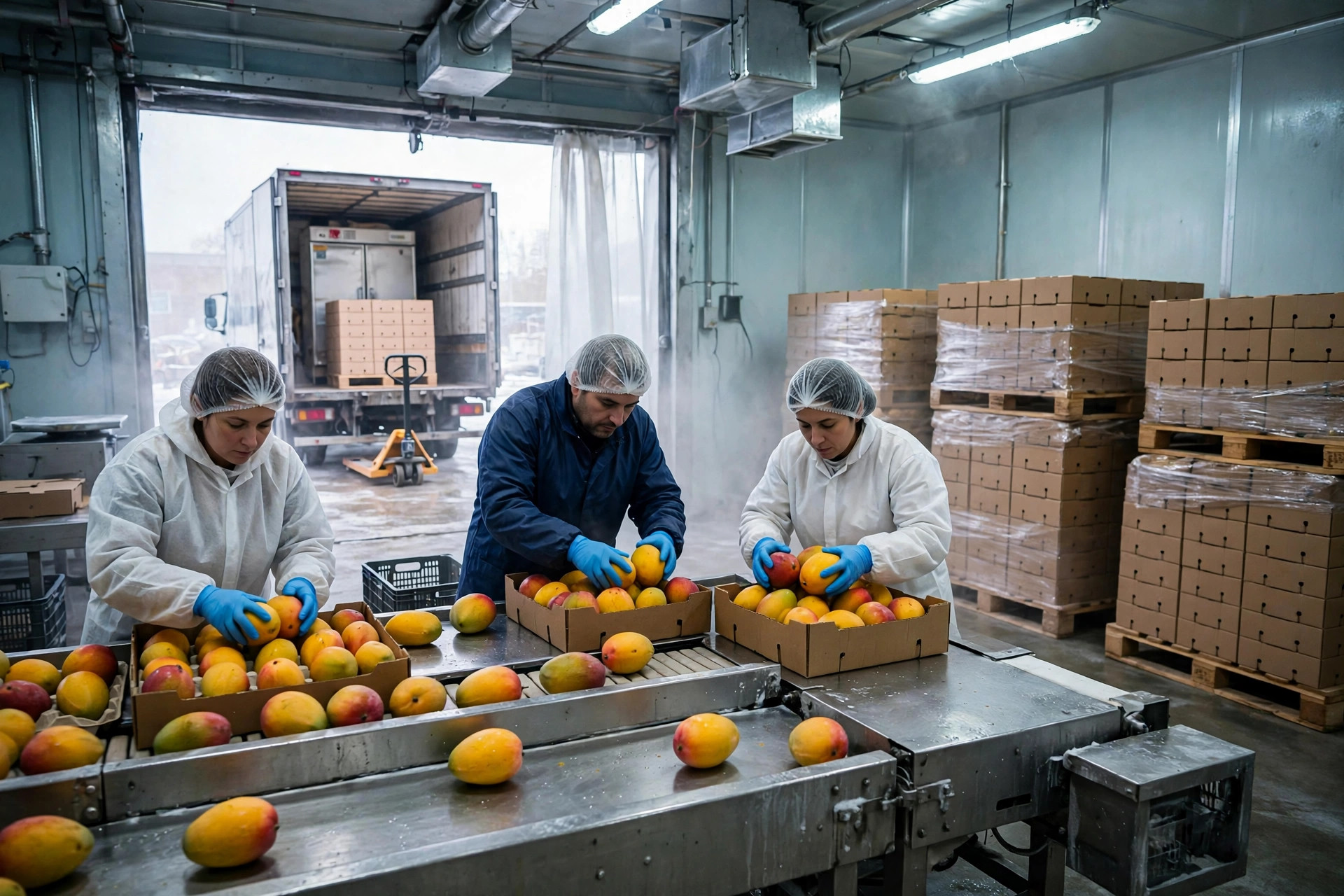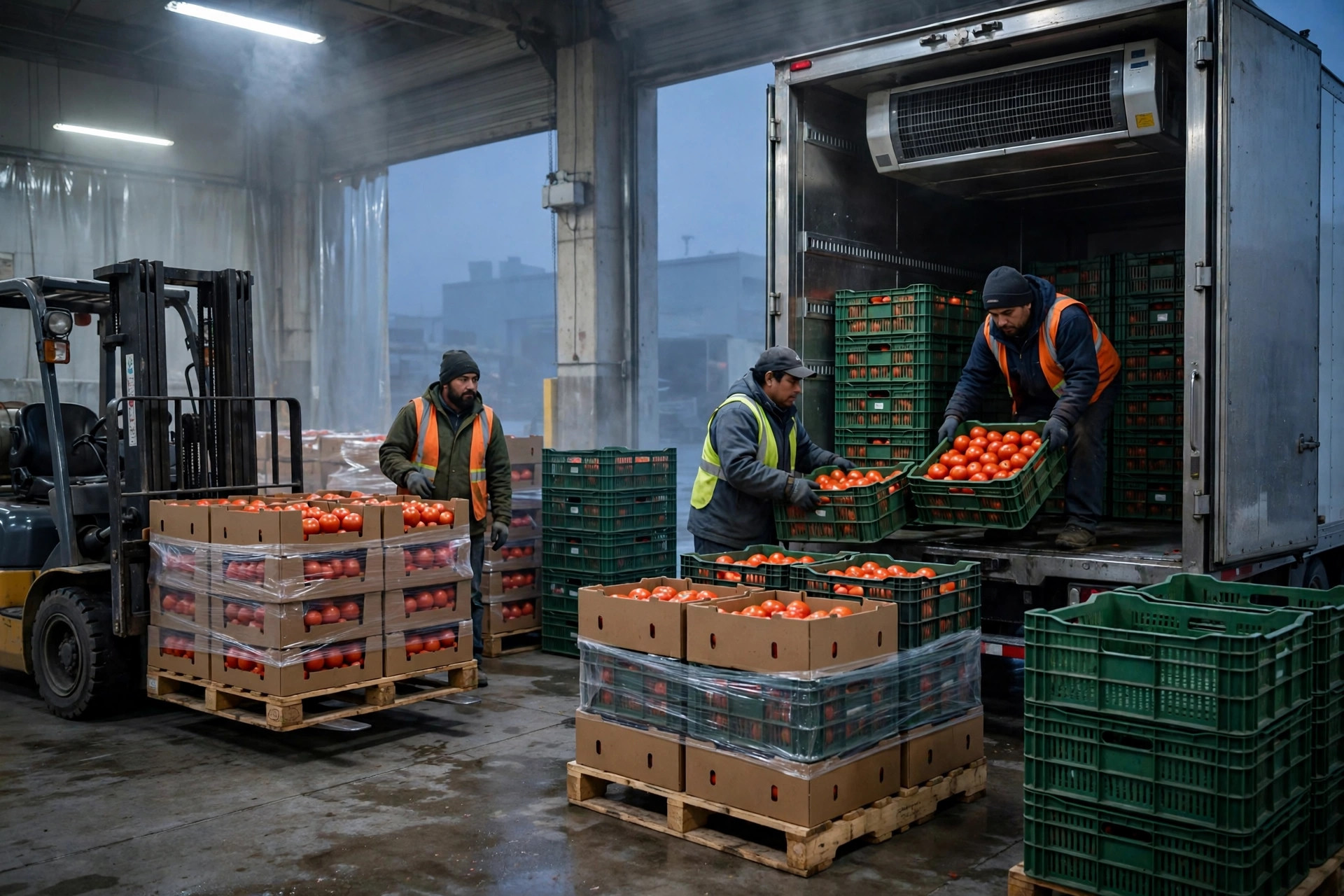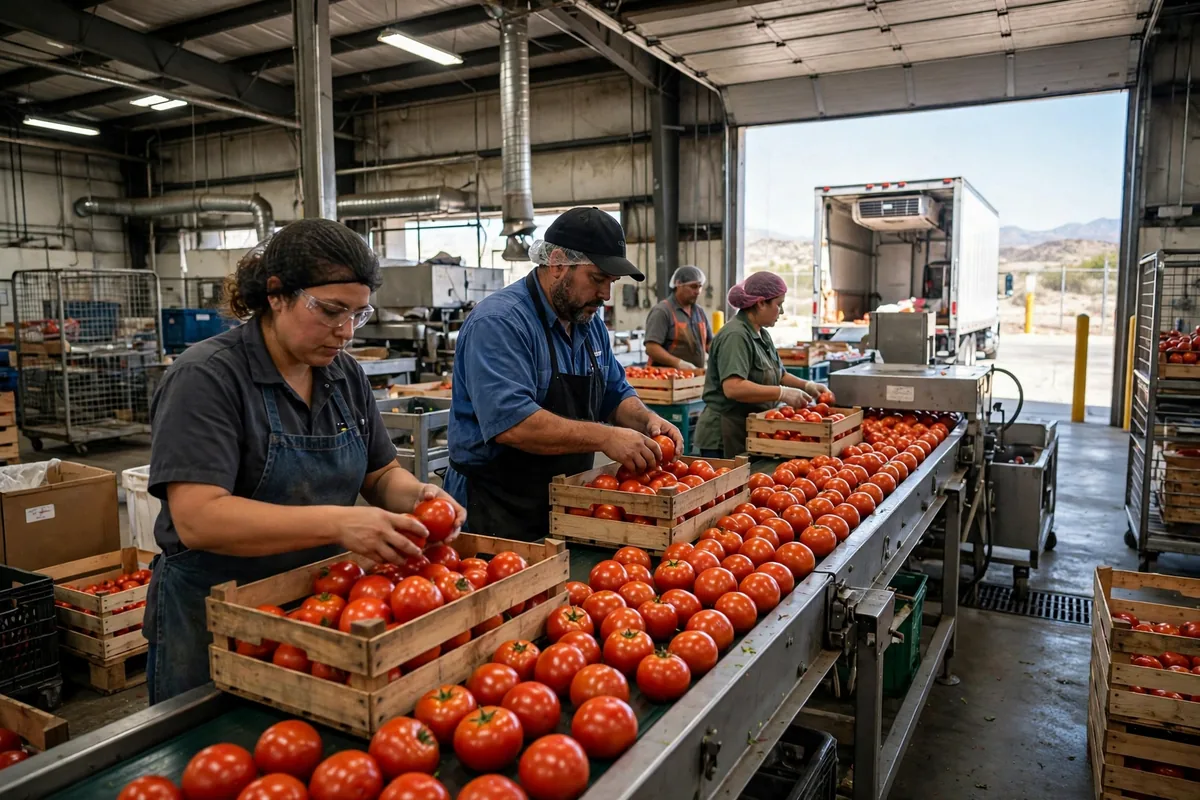
4:30 a.m. in Nogales. Six reefer trucks already lined up. Mexico tomato export warehouse logistics is not a contest over who has the biggest building, brothers. It is a contest over who holds temperature and ripening steady. A tomato picked in a Sinaloa field and sold in an American supermarket passes through exactly two gates: don't break the temperature, and don't rush the ripening. Miss either one and the whole container sells at a discount.
Let me give you the scale first. In 2024 Mexico exported 2.06 million tonnes of fresh tomatoes worth $3.34 billion, and more than 99% of it went to the United States. Mexican tomatoes made up about 90% of all US tomato imports that year. Sinaloa is Mexico's biggest tomato state with 22% of national production, and from December through April it runs the show: over 80% of its crop goes to the United States, most of it crossing at Nogales. That volume does not move because one warehouse is brilliant. It moves because everybody along the chain watches the temperature.
Mexico tomato export warehouse logistics starts with one question: how ripe is this load?
To be honest, the first thing we do when a tomato load arrives is not paperwork. It is looking at the color. Ripeness decides everything: which room it goes into, what temperature, and how many days it can stay.
In December 2024, peak season, a truckload from Sinaloa rolled in at midnight. The driver said the fruit was freshly picked, mature green. The night-shift guy didn't think twice and rolled it into a 10°C cold room, the way we used to do it. Next morning I walked the floor, picked one up, and it felt hard and dull green. I checked the thermometer: 10°C. Mature-green fruit hates that. Below 12.8°C you get chilling injury: pitting on the skin, uneven color, flavor gone. Out of 2,000 cases on that truck, we ended up downgrading more than 300 (illustrative example). From that day on, our rule is written on the cold room door: check the color card first, then set the temperature. Nobody puts tomatoes away by feel.
The temperature numbers for tomatoes are settled science. Mature-green fruit at 13–18°C and 90–95% humidity keeps for two to three weeks. Turning fruit at 13–15°C keeps seven to ten days. Pink fruit at 7–10°C keeps three to five days. Remember one floor: never put unripe tomatoes below 12.8°C. Chilling injury doesn't show up right away. It shows up on the supermarket shelf, and by then it is too late to do anything about it.
Here is the table taped to our warehouse wall:
| Ripeness | Room temperature | How long it keeps | Humidity | Biggest risk |
|---|---|---|---|---|
| Mature green | 13–18°C | 2–3 weeks | 90–95% | Below 12.8°C causes chilling injury |
| Turning | 13–15°C | 7–10 days | 90–95% | Color moves fast, check daily |
| Pink | 7–10°C | 3–5 days | 90–95% | One more day and it goes soft |
Forty-eight hours in the ripening room: ethylene cannot be rushed
Tomatoes ripen themselves. Pick them mature green, give them ethylene, and they turn color in about 48 hours. Sounds simple. It cannot be rushed.
Last January a customer was chasing a weekend slot at an American supermarket chain and pushed us to ripen a container of mature-green fruit in 24 hours. Our ripening room runs by the book: 20–21°C, ethylene at 100–150 parts per million, sealed for 24–48 hours. The customer wanted more gas and more heat, faster. The night shift held the line and kept the load in for the full 36 hours. The color came out even, the firmness was right, and the customer came back the next week and ordered another container. To be honest, color arriving does not mean ripeness arrived. Crank the heat and the gas and the skin turns red while the flavor inside is still behind. A shopper takes one bite and knows. That brand doesn't get bought twice.
Here is the counterintuitive part: a tomato warehouse is not better the colder it gets. Plenty of newcomers think cold chain means as cold as possible, and they want the fruit in a 4°C room. Wrong. Tomatoes fear cold, not coolness. Mature-green fruit lives longer and looks better above 13°C than it does at 8°C. For tomatoes, cold chain is not about cold. It is about steady: temperature held in the right band, humidity held at 90–95%. That beats chasing lower numbers ten times over.
Mexico tomato export warehouse logistics: a border warehouse near the crossing beats a big one far away
Let me run the numbers on the border warehouse itself. Our building sits 20 minutes from the Nogales crossing, and it is not big, about 3,000 square meters (illustrative example). A new warehouse down the road has 10,000 square meters but sits ninety minutes from the crossing. Last peak season the crossing jammed up, and their trucks spent two extra hours on the road. Two extra hours in the truck and the ripening schedule is already off. Our trucks are there in twenty minutes and the temperature curve barely moves. A big warehouse has its advantages, but for a border warehouse, being close to the crossing matters more than being big.
Now the cost of holding a load one extra day. One container of 2,000 cases sitting an extra day in our warehouse: the storage and plug-in charges are the small part (illustrative example). The real loss is ripeness moving forward a day. Pink fruit held one more day drops a grade, and the money lost on the whole container covers half a month of rent (illustrative example). So our rule is simple: pink fruit never stays overnight, mature-green fruit ships first in and first out, and good fruit never sits in the warehouse waiting for an order.
One more warning for anyone in this trade: since July 2025, the United States has applied an antidumping order on fresh Mexican tomatoes, with a 17.09% duty on most imports. Check the current rate and coverage on the US Department of Commerce website before you quote, because the margin is thin now and one warehouse mistake wipes out the whole order. Get the customs paperwork and certificates of origin ready before the truck reaches the crossing, not after.
This is how our warehouse runs it now: color card at receiving, 48 hours in the ripening room, pink fruit never overnight, and we only take loads within thirty minutes of the crossing. Nothing clever about it. Just every step watched, every day. A tomato can't talk, but its color and its flavor will tell you exactly which step you skipped.
By Chen Feng, Warehouse Operations Manager