Morocco phosphate export warehouse logistics is a story most people start in the wrong place. According to the United States Geological Survey Mineral Commodity Summaries for 2026, Morocco produced about 36 million tonnes of phosphate rock in 2025, and holds reserves of roughly 50 billion tonnes, about 68 percent of the global total. Those are extraordinary numbers. Yet the more instructive numbers in this chain sit downstream, in storage yards, inland transport, and port loading, because that is where a shipment is made or lost. Ore in the ground earns nothing. Ore waiting in the wrong yard, blended with the wrong grade, or missing its vessel window costs real money.
The reason is structural. Phosphate rock and fertilizer are low-margin bulk commodities. They are sensitive to moisture, to grade contamination, and to waiting. Warehousing and loading efficiency therefore feed directly into the economics of every shipment. This chain is unusual because supply is extremely concentrated, exports depend on a small number of ports, and demand is concentrated in a small number of large buying markets. A disruption at any single node is amplified across the whole chain, which is why studying this market means following the cargo after it leaves the mine, not before.
Where the phosphate chain actually breaks, from mine to port
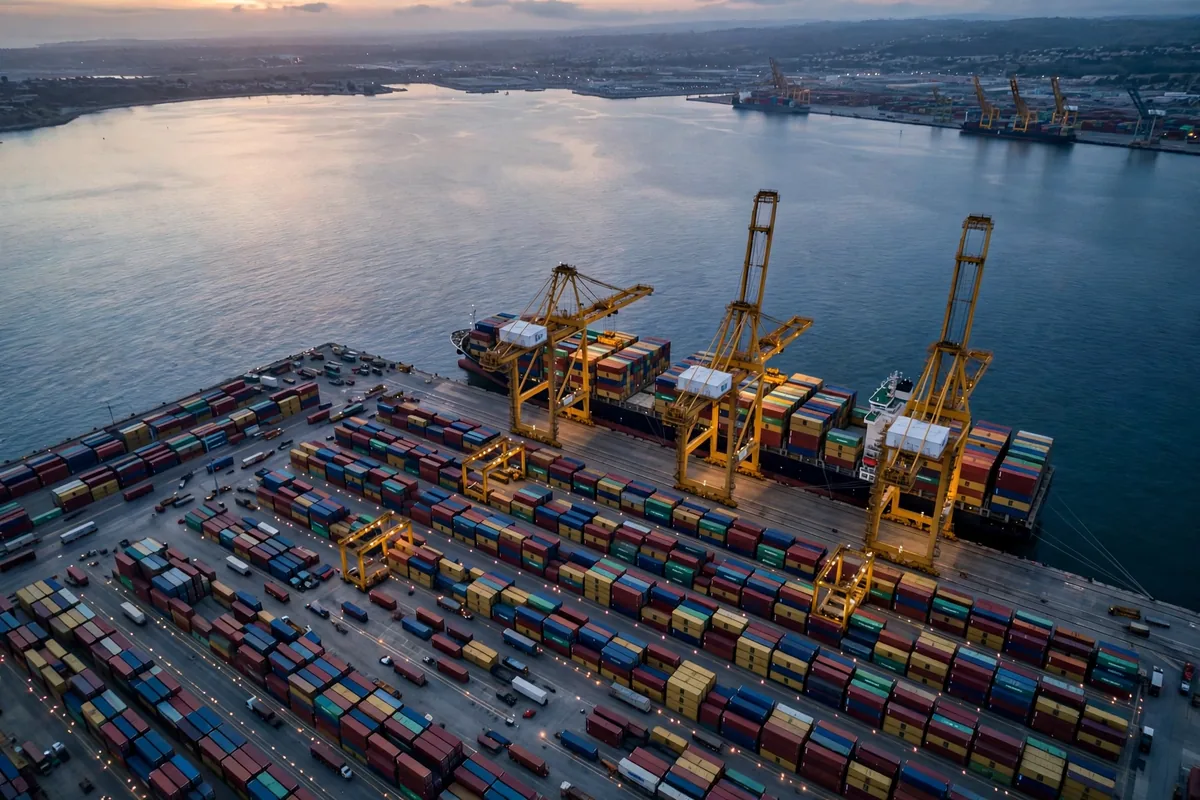
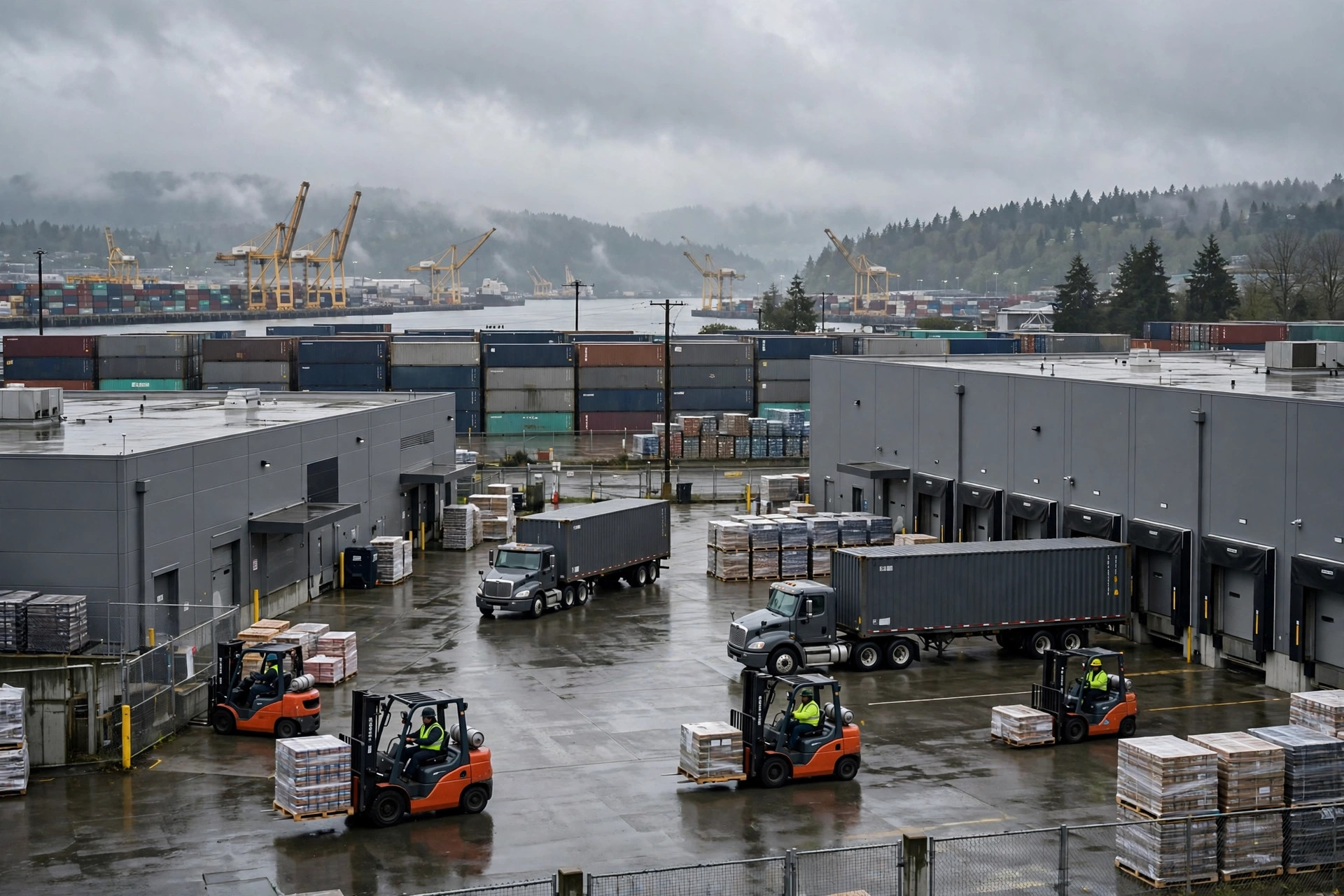
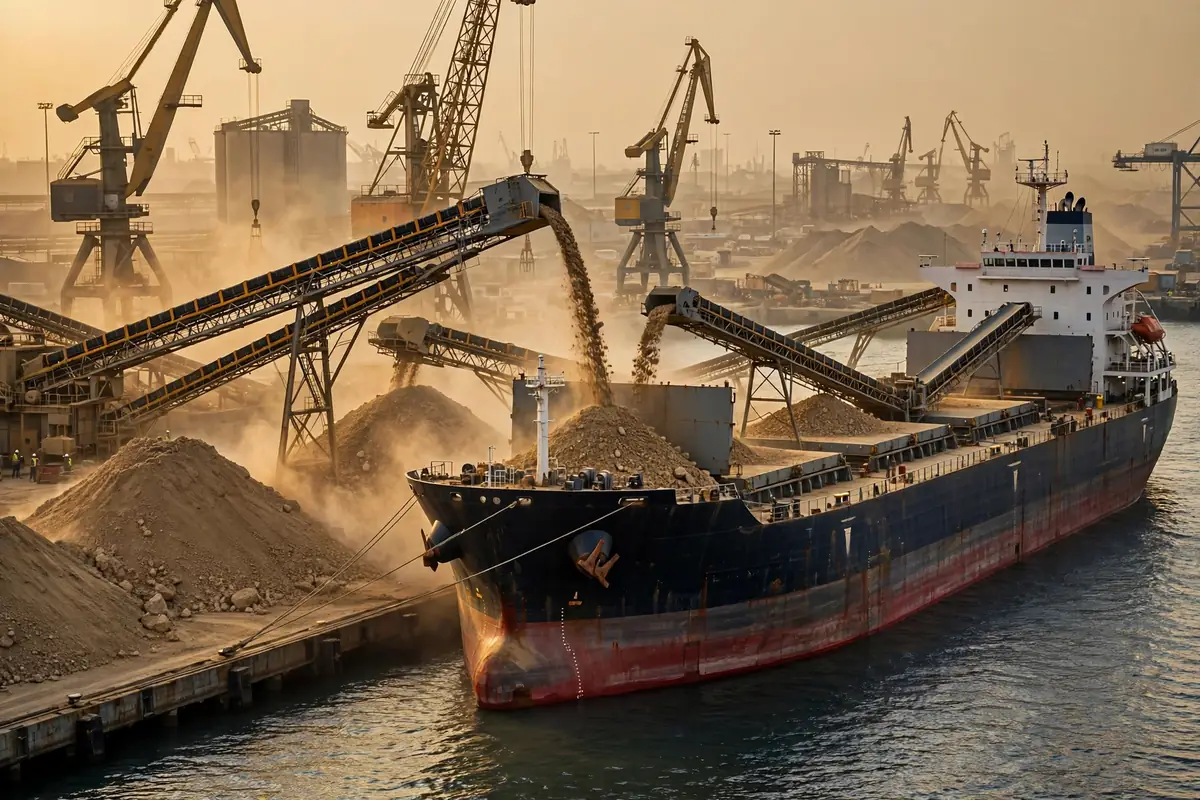
Public sources identify four main export ports for Moroccan phosphate: Casablanca, Safi, Jorf Lasfar, and Laayoune. The journey from mine to vessel breaks into three segments. The first is collection and primary storage at the mining area, where the governing logic is quality protection, since different grades and particle sizes must not be mixed, and mixing means downgrading, which shows up directly in the settlement price. The second is inland transport, where the governing logic is rhythm, because once transport is interrupted, the port yard either runs empty or overflows, with no comfortable middle state. The third is port storage and vessel loading, where the governing logic is the sailing window, since a bulk carrier does not wait politely, and demurrage is charged by the hour.
There is a counterintuitive point here that deserves to be stated plainly. The country with the largest reserves is often not the country with the most comfortable export warehousing. Concentration is itself a risk. Concentrated supply requires concentrated storage and port infrastructure, and concentrated infrastructure means a single point of failure affects a larger share of total volume. Dispersed supply can be hedged with many small warehouses. Concentrated supply can only be hedged with redundancy at a few large nodes, and redundancy costs money. What Morocco's chain really tests is not mining capacity but the organizational ability to move output on the order of 36 million tonnes a year onto ships steadily, continuously, and with low loss.
Consider an illustrative scenario, all figures illustrative. A trader plans to move the rock from the mining area to Jorf Lasfar in four lots of about 15,000 tonnes each. The first two lots arrive on schedule. The third is delayed two days by an inland transport disconnect, the planned loading sequence is disrupted, and by the time the fourth lot arrives the yard has no free space, forcing temporary storage outside the port and extra handling that consumes most of the shipment's margin. Every number in that scenario is illustrative, but the failure mode is real: plans fear a mismatch between arrival rhythm and loading rhythm, not insufficient total capacity.
A second scenario concerns buyer concentration, again with illustrative figures. Suppose Indian buyers concentrate their purchasing in a single quarter, and several traders request storage and loading windows at the same port at the same time. Yard scheduling priority instantly becomes a scarce resource. Under first-come, first-served rules, cargo arriving a week late may wait an extra sailing cycle, and the cost of that wait is not only storage fees but also tied-up capital and knock-on delays for the next shipment. According to public reporting, India is the largest buyer of Moroccan phosphate rock. Concentrated buying means concentrated demand pulses, so storage planning must follow the buyer's purchasing rhythm rather than a calendar average. Planning on averages is a common error in this chain.
How to cost Morocco phosphate export warehouse logistics without fooling yourself
Costing this chain by the storage rate alone is misleading. The visible costs are yard storage, handling, and inland freight. The hidden costs are waiting, grade mixing, moisture damage, and missed sailings. Hidden costs stay invisible until they arrive, and when they arrive they hit at the level of a whole shipment. The comparison below uses illustrative figures only, showing the direction of the trade-offs, not any port's actual pricing.
| Arrangement | Visible cost | Largest hidden risk | Best suited for | | Direct to port, minimal mine storage | Low, one less handling step | A schedule change breaks supply, no buffer in the yard | Stable sailings, fixed buyers, single-grade long contracts | | Buffer warehouse at the mine, fast port turnaround | Medium, an extra storage and management step | Poor mine warehouse management mixes grades, then moisture follows | Multiple grades, many lots, volatile sailing schedules | | Long-term leased yard space at the port | High, rent plus minimum volume commitments | Empty space in the off season, fixed costs continue | Large traders with stable annual volume and locked sailings |
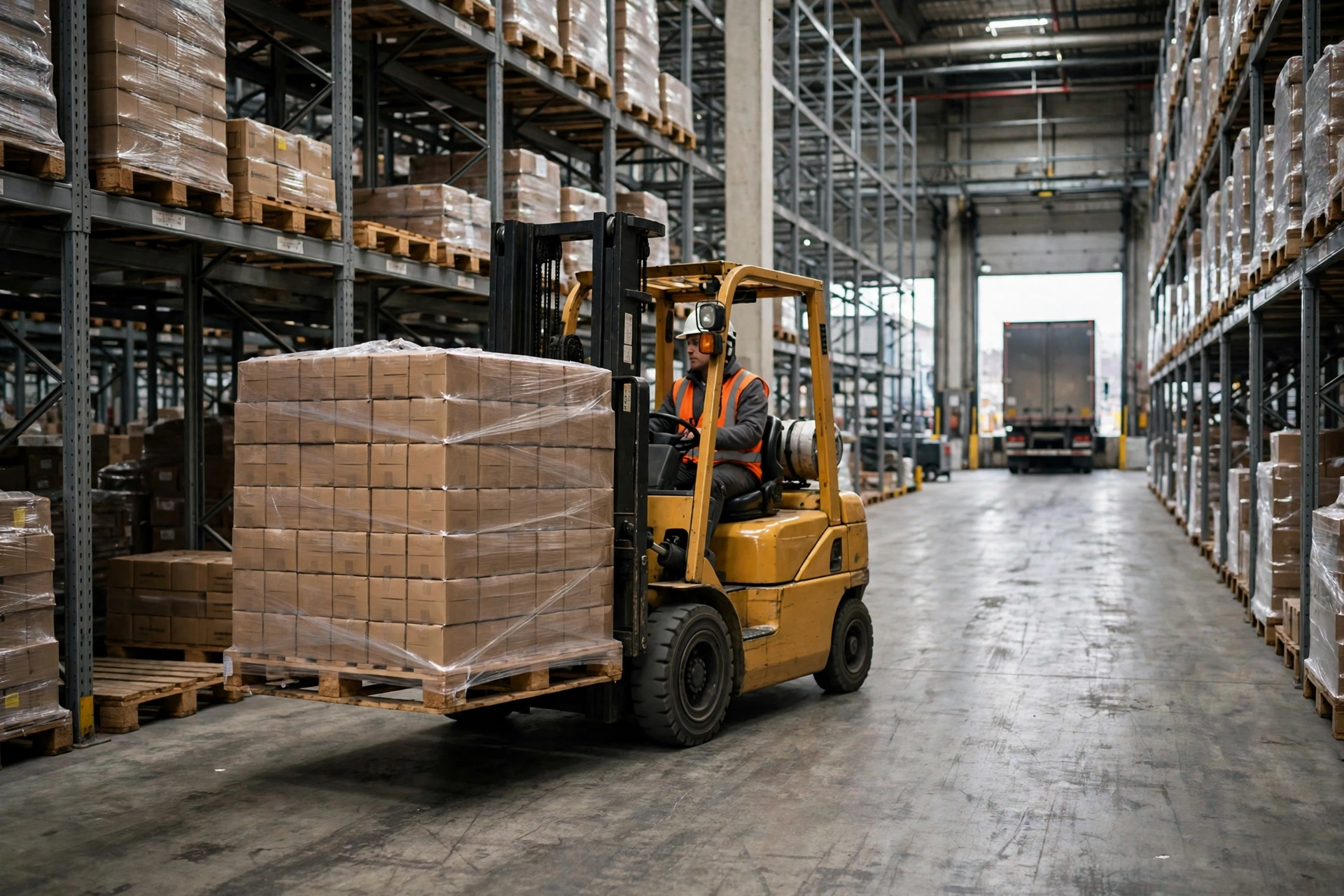
The logic of the trade-offs matters more than the numbers. Shipping direct to port looks cheapest, but it bets all flexibility on the punctuality of sailings and inland transport, and a single day's delay can cost more than the storage saved. A mine buffer warehouse looks like an extra cost, but it buys time flexibility, with cargo available when sailings shift and supply continuing when inland transport breaks. A long-term port yard looks most expensive, but it buys certainty, and for a large trader with stable volume, certainty is itself profit. No arrangement is best in all conditions. The choice depends on three variables: volume stability, sailing volatility, and grade complexity.
The trend worth watching is the shift downstream. According to public sources, OCP's fertilizer capacity stands at 16 million tonnes per year, with a target of 20 million tonnes per year by 2027. Fertilizer carries higher value than raw rock and demands more from storage: moisture control, anti-caking, and batch traceability. That means warehousing investment will increasingly tilt toward finished fertilizer, and the storage logic for rock and for fertilizer will gradually diverge. Rock storage is about throughput and rhythm. Fertilizer storage is about quality preservation and batch management. One warehouse rarely does both jobs well. Phosphate rock exports in 2025 were about 6.8 million tonnes, and set against production of about 36 million tonnes, that figure suggests a large share of output is already converted domestically into fertilizer before export, so the center of gravity in storage is moving from rock yards toward finished product warehouses.
Ports, buyers, and timelines set the warehouse layout
Pulling the analysis together, three variables decide the warehouse layout. The first is ports. Casablanca, Safi, Jorf Lasfar, and Laayoune play different roles, and shippers need to know which port fits their cargo rather than shipping through whichever port happens to have space. The second is buyers. India, as the largest buyer, sets a purchasing rhythm that directly affects how tight port yards become, so storage plans should follow the buyer, not the calendar. The third is the timeline. Fertilizer capacity climbing toward 20 million tonnes per year means demand for finished product storage will keep rising over the next few years, and warehouses built today on rock logic may need conversion tomorrow, a cost that should be considered at the investment stage rather than discovered later.
Stepping back, Morocco's case carries a lesson for other resource-exporting countries. A reserves advantage does not automatically become a logistics advantage; that comes from precise coordination of ports, warehousing, and buyer rhythms, built through sustained investment. Conversely, a country without a reserves advantage can still win a stable share of a niche market if it gets export warehousing and port coordination right. Endowment sets the starting point. Organizational capability in logistics decides how far a country can go, and that statement fits this chain especially well.
The variable most worth watching over the next few years is how quickly fertilizer capacity climbs relative to port storage structure. If capacity moves toward 20 million tonnes per year as planned while finished product storage and vessel loading fail to keep pace, the bottleneck will shift from the mine to the port, and warehousing tensions will reappear in a new form. If the capacity climb slows, utilization of existing storage will come under pressure instead. The warehousing strategy for those two scenarios is entirely different, and anyone making storage investment decisions today needs to keep an exit route open for both. That question stays open, and the answer will come from the next two years of actual data.
By Dr. Chen, Supply Chain Researcher