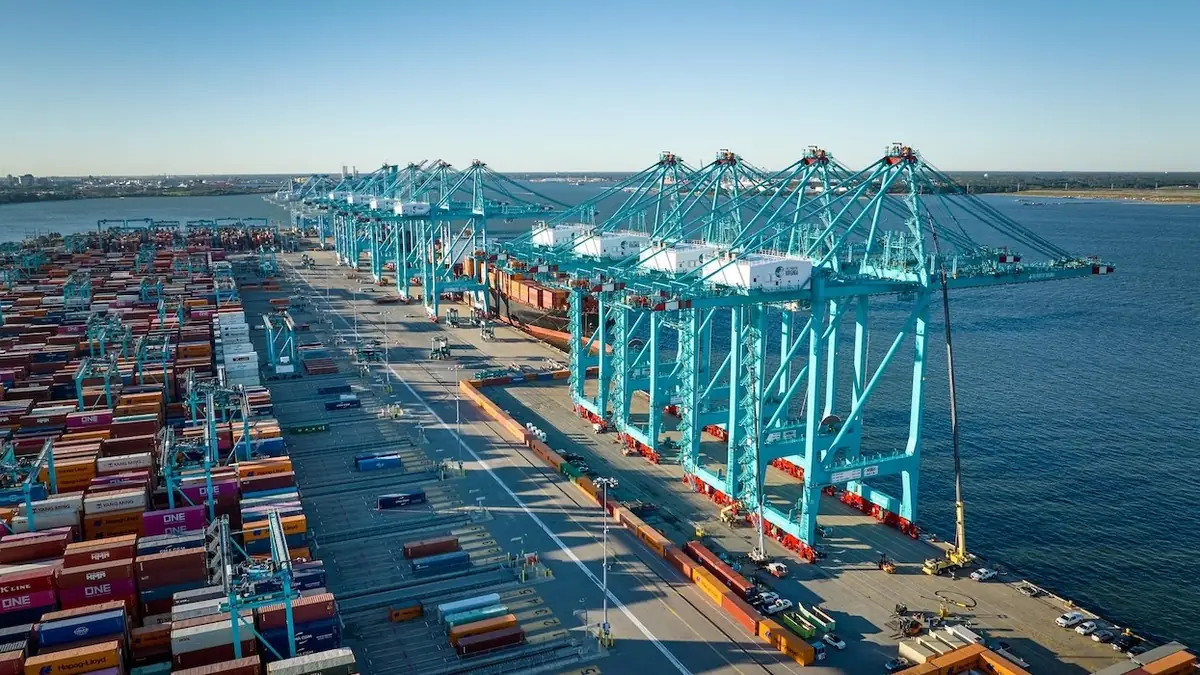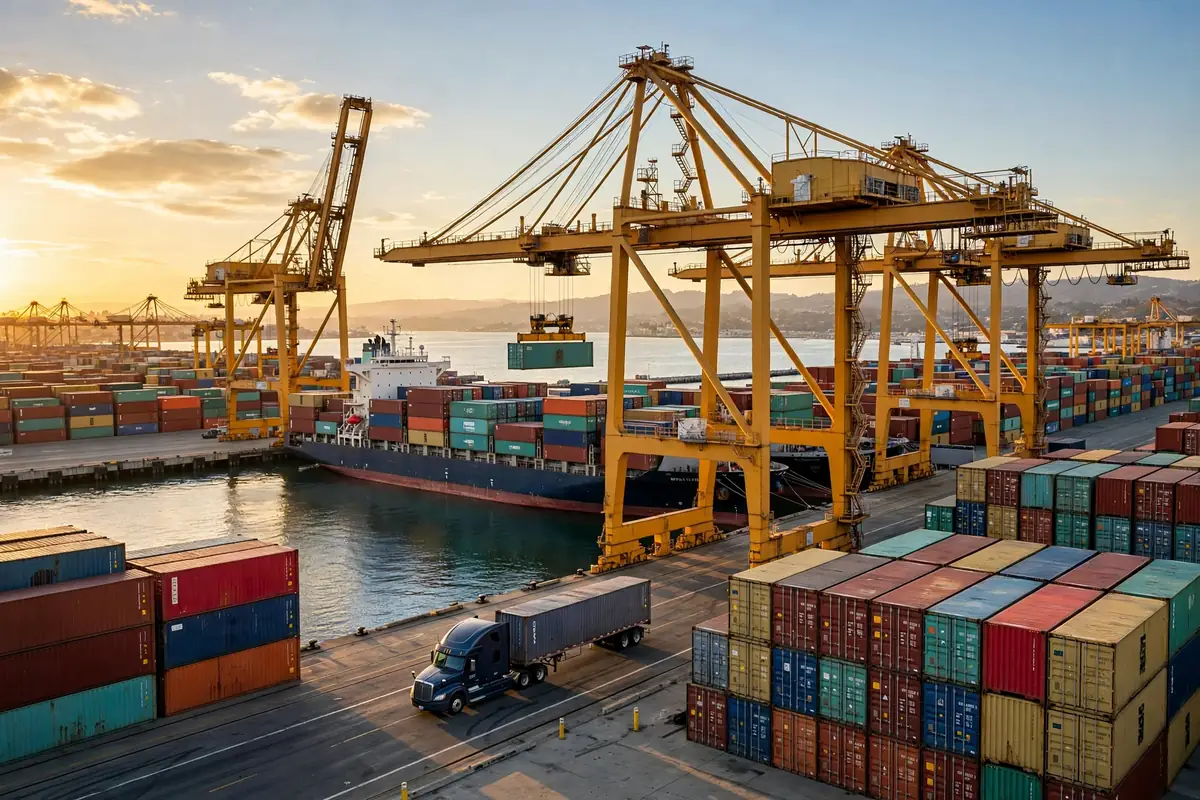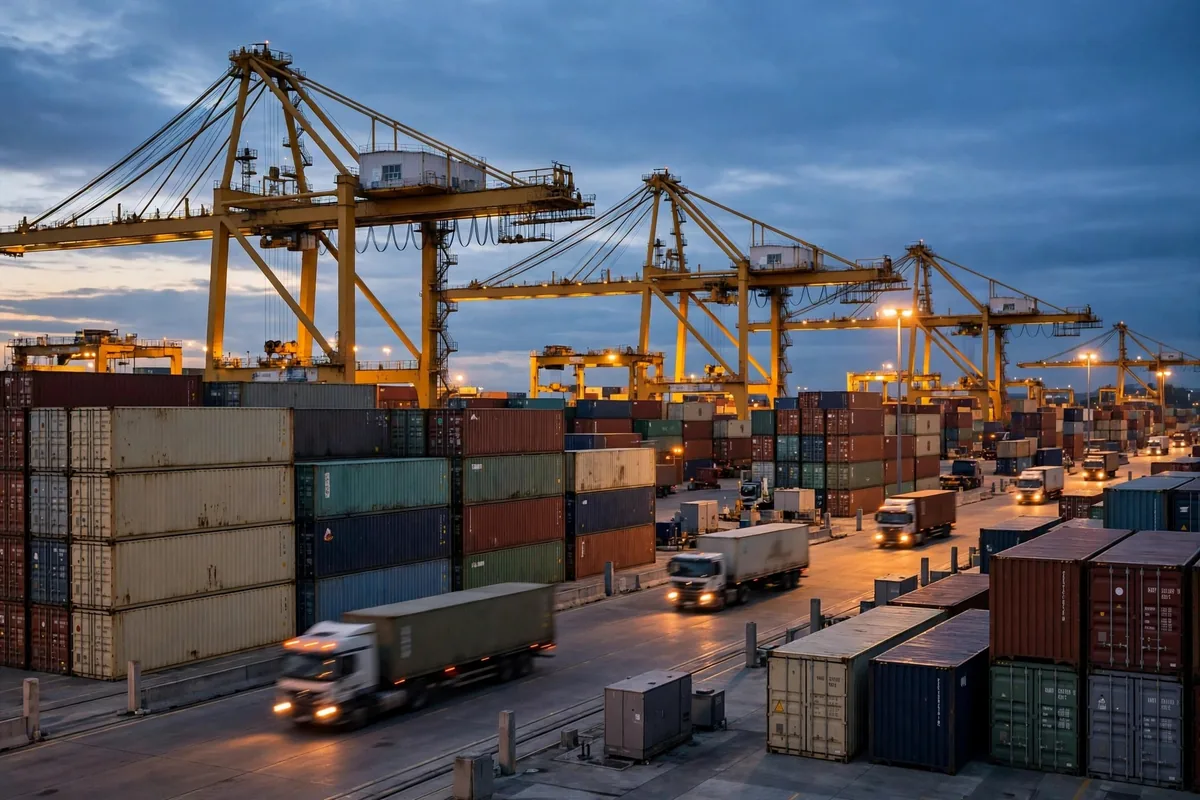
Montevideo Uruguay free zone warehouse space isn't just warehouse space, let me tell you. After fifteen years on the road, I've watched too many shippers hear "tax-free" and move containers into a free zone before doing the arithmetic — then hand the saving straight back in rent, handling, and compliance. Uruguay sits between Argentina and Brazil, Buenos Aires is just across the River Plate, and the Paraguay-Paraná waterway runs north from here, so cargo staged in Montevideo can reach the whole of southern Mercosur. A good location is not the same as a good deal.
Start with the port itself. Uruguay's container ports handled about 1.11 million TEU in 2024, according to UNCTAD. In 2025, the Port of Montevideo itself reported roughly 857,000 TEU, with physical container movements down about a quarter on the year before — enough for the port to drop out of the million-TEU club. A hub port that lives on transshipment cargo swings with its cargo base, and when volumes dip, the negotiating power shifts to the shipper. When the port is quiet, that's when you sign.
What a Montevideo Free Zone Warehouse Actually Gives You
Uruguay's free zone regime runs under Free Zone Law No. 15,921, on the books since 1987 and barely changed in three decades. That stability is the real selling point. According to the Montevideo city government's investment pages, free zone users are exempt from almost all national taxes — corporate income tax, wealth tax, VAT — goods move in and out of the zones duty-free, and profits can be repatriated without restriction. Social security contributions are the exception; those still have to be paid. Those benefits are contractually guaranteed for up to ten years for trading and services, and fifteen for manufacturing.
Montevideo hosts three of the country's main free zones: Aguada Park, the WTC Free Zone, and Zonamérica. Zonamérica is the famous one — a 92-hectare campus with more than 500 companies, whose tenants account for 41% of goods exports from Uruguay's free zones, according to the national investment promotion agency. But Zonamérica is strongest on services and corporate operations, so if your business is pure cargo warehousing, don't fixate on the biggest name. There are eleven free zones across the country — by the port, the airport, and inland. Pick by where your cargo is going, not by which zone has the glossiest brochure.
One hard rule to know before anything else: 75% of a free zone company's workforce must be Uruguayan nationals, though service companies can get approval to go as low as 50%. That barely matters if you just need a couple of people watching the warehouse. But a distribution team of dozens means hiring, social security, and compliance all priced in from the start. The exemption covers taxes, not people.
From the Quay to the Free Zone Warehouse, How It Really Moves
Let me walk you through a run I know well. Late in 2025, a shipment from Asia arrived in Montevideo for transshipment on to Asunción, Paraguay. The box came off at the port's specialized container terminal. The port authority is also reviewing a proposed USD 900 million new terminal with a design capacity of 1.15 million TEU a year — still under review, with operations not expected until around 2031, so it counts for nothing in today's planning.
Once the box is off the ship, there are two roads. The first is into the free zone warehouse: the container is pulled from the terminal and transferred under customs control into the zone, where it is stripped, sorted, repacked, and relabelled, then rebuilt into loads heading for Paraguay — either north by river along the Paraguay-Paraná waterway or overland across the border. The cargo never enters Uruguay's customs territory, so no duties and no VAT are triggered. That is where the free zone earns its money. The second road is to leave the box in the port yard while you wait for a sailing or the buyer's instructions. Short stays are fine, but yard storage is charged by the day, and once the free period runs out the bill climbs steeply — I've seen yard charges end up costing more than the free zone would have.
Here is the counter-intuitive part: getting into the free zone is the easy bit. The hard bit is velocity. Cargo that sits still in the zone still pays rent. I once watched a shipment sit in a zone warehouse for four months while the owner waited for the market; the final costing came out about 20% more expensive than clearing customs into a domestic warehouse and distributing from there. The exemption saves tax, not time — and in a warehouse, time is the most expensive thing there is.
Montevideo Uruguay Free Zone Warehouse Math, Three Routes Side by Side
The table below is an illustrative scenario — my own workings for comparing cost structures, not any operator's real quotation. Get real prices in writing, and check current policy on the official sites.
| Route | Best for | Duties and VAT | Storage and handling | Speed | Biggest risk |
|---|---|---|---|---|---|
| Free zone warehouse and distribution | Cargo re-exported to Mercosur neighbours | Exempt inside the zone; payable only on entry to the domestic market | Monthly rent plus pick, pack, and relabelling fees | Adds 1–3 days for break-bulk and sorting | Slow-moving cargo; rent eats the tax saving |
| Port yard short transit | Waiting on a sailing or buyer instructions, under two weeks | Not triggered while uncleared | Daily storage; steep once free time expires | Fastest; no stripping | Free time runs out and costs spiral |
| Direct clearance into a domestic warehouse | Cargo sold into the Uruguayan market | Uruguayan duties and VAT apply in full | Domestic rent usually below free zone levels | Flexible distribution after clearance | Re-exporting returns is paperwork-heavy |
The table makes the point plainly: the free zone doesn't pay for every cargo. If the final buyer is in Uruguay, routing through the zone just adds a step; if buyers are spread across Argentina, Brazil, and Paraguay, that's where the zone earns its keep. One more line people miss: sales from a free zone into the Uruguayan domestic market are restricted. Under the Montevideo investment pages' reading of the rules, the relevant tax treatment holds only while domestic sales stay within about 5% of the zone user's related sales total. The idea of slipping goods into the zone tax-free and then quietly selling them into the domestic market doesn't work.
What Not to Put in a Free Zone, After Fifteen Years on the Road
Three rules, and I don't bend them. First, no low-value, slow-moving cargo: the tax saved is a fixed number, rent is charged by the day, and a product shipping once a month just works for the zone operator. Second, no domestic-market cargo — the sales cap is real, and once you cross it you're paying the taxes anyway, plus extra administration. Third, no small single-container lots: the value of a free zone is breaking bulk and repacking, and one box in, one box out gains nothing.
What does fit? Cargo that splits across several Mercosur countries — one container in, three loads out. Cargo that needs repacking, local labelling, or light processing. Seasonal stock that waits for the selling season and ships out in waves, as long as rent and tied-up capital are in the spreadsheet. And remember the timing: with throughput down in 2025, operators are short of cargo, so this is a good moment to negotiate a longer contract, a better rate, and a longer free period.
There's an old saying among drivers: a sharp abacus makes for a long business. A Montevideo Uruguay free zone warehouse is worth it only if you can answer three questions before you sign — where does the cargo finally sell, how fast will it move on, and what share goes to the domestic market. Get those straight, then negotiate the rent. That's the only discount that ever turns out to be real.
By Shifu Zhao, Trucking Veteran (15 yrs)