We have a client who shipped to Liberia for the first time last year and called me before the vessel sailed, sounding completely relaxed. Susan, he said, once the cargo reaches Monrovia we are basically done, right? The port unloads it, we find a warehouse, we sell at our own pace. I laughed and told him not to close his logistics budget yet. Arrival, I said, is only half of this business. The other half is called pickup. Three months later he called again: his container had been sitting in the port for almost three weeks.
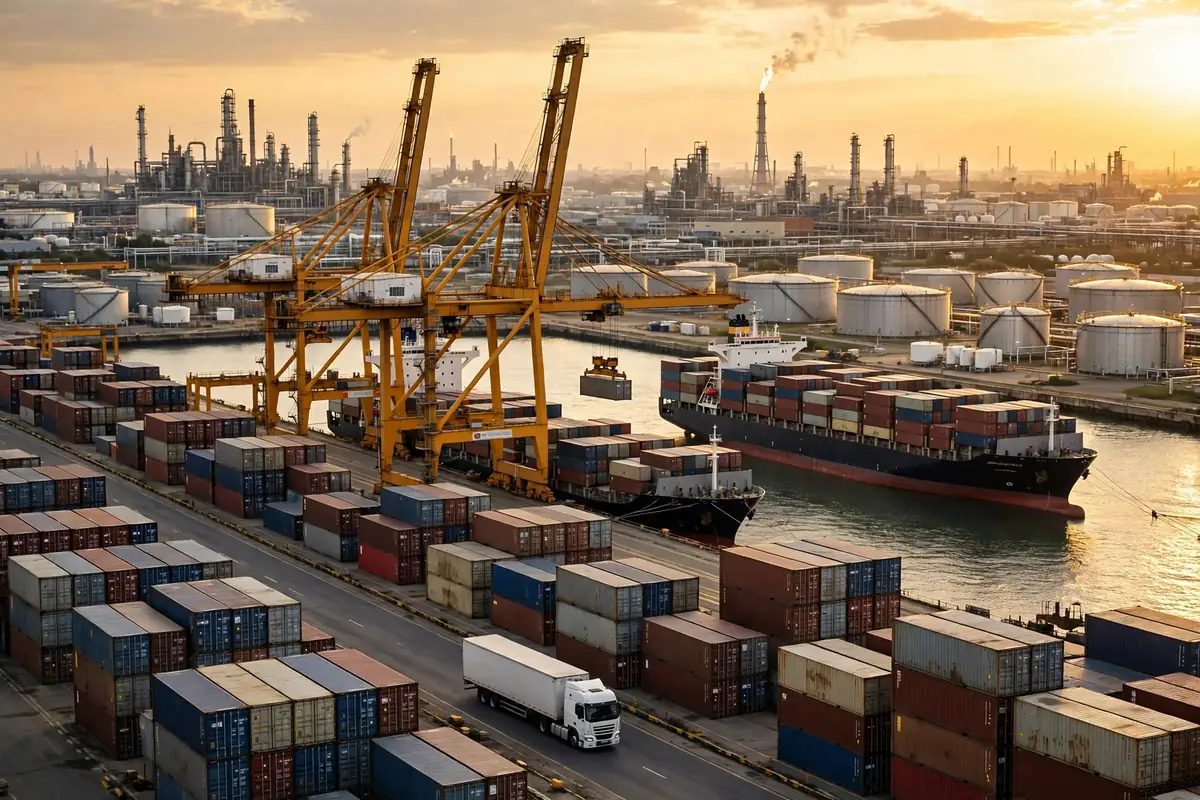
His experience is typical. The Freeport of Monrovia is Liberia's largest port and its main commercial gateway, and more than ninety percent of Liberia's international trade moves through its ports. In 2025 the Liberian port system handled 575 vessel calls, 174,258 TEU and 12.3 million tons of total throughput, up 10.7 percent year on year, with bulk cargo dominated by iron ore exports at more than seventy percent. This is a system built around bulk exports and national imports, and an importer's container competes for attention inside a busy machine.
Monrovia Liberia Port Congestion, Explained in Numbers a Shipper Can Use
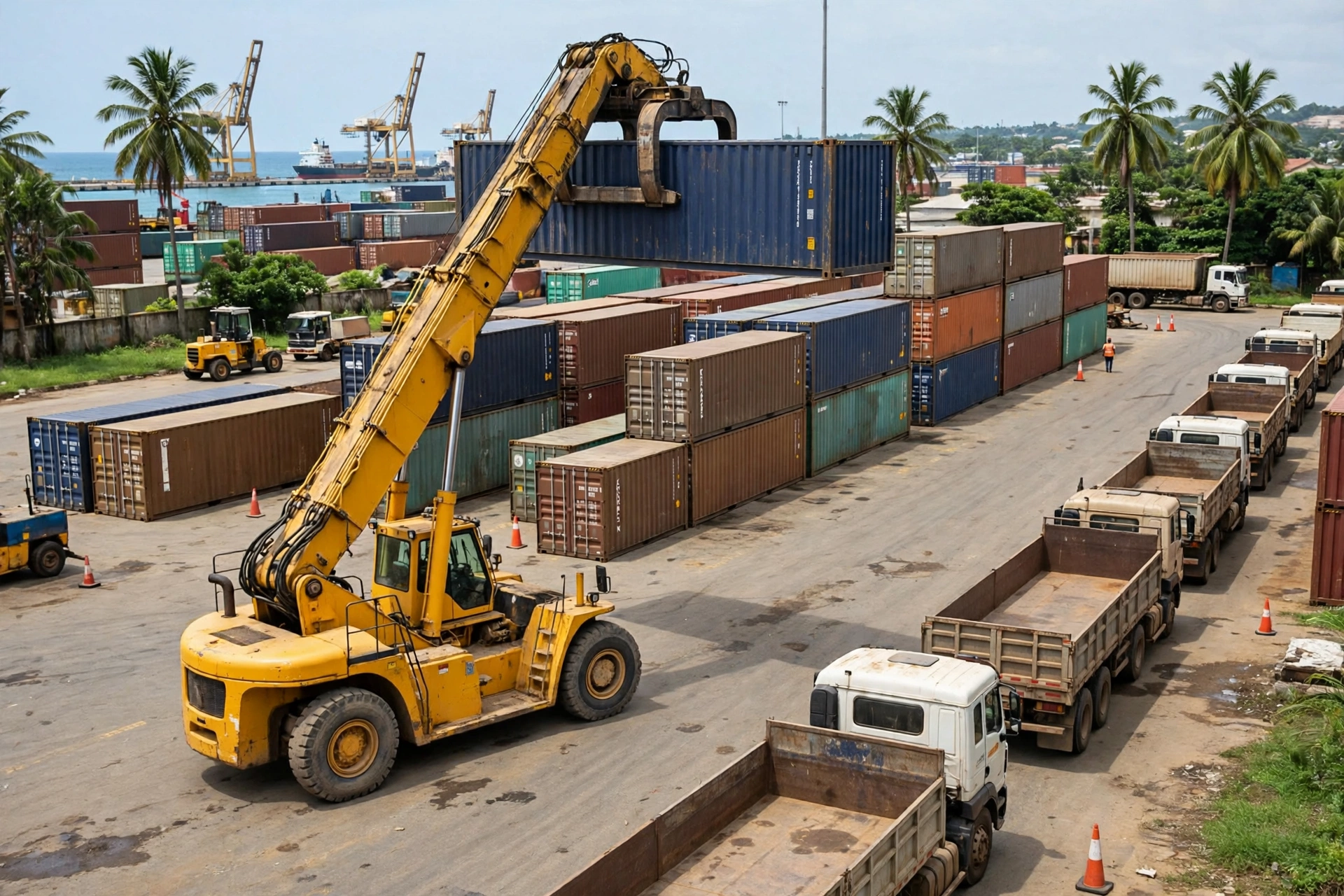
The Freeport of Monrovia is operated by APM Terminals under concession, in operation since 2011, with an upgrade of about 125 million US dollars completed in 2017. The terminal has roughly 600 metres of quay, about 80,000 square metres of yard, and annual container capacity of around 200,000 TEU. Liberia's annual container volume is now close to 200,000 TEU, after growing by roughly thirty percent in two years, according to APM's November 2026 figures. Put plainly, volume has caught up with designed capacity, while concrete does not grow.
The dwell time tells the real story. In 2026 the average container stay at Monrovia rose to fifteen to sixteen days, from seven to eight days in 2025. When boxes sit twice as long, effective storage capacity is nearly cut in half, because a yard that cannot empty cannot receive. The operator's own maths is blunt: about 250 import containers need to be picked up every day to keep the yard flowing, and in practice only about 170 are actually collected. APM has invested 15 million US dollars in equipment including reach stackers, but equipment and process take time to land, and no shipper should build a delivery promise on the hope that a port becomes smooth next month.
Our client had planned with home-port assumptions. He started looking for local warehouse space and a clearance agent only after the vessel arrived, while his sales side had already quoted arrival dates to wholesalers. While the container waited, delay costs grew by the day and the buyers' phone calls grew sharper. The cargo did come out, but the waiting ate a visible piece of his planned margin. His own summary was the honest one: he thought the risk in West Africa was on the water, when in fact it was on the shore, in the days when cargo had arrived but could not move.
Here is the counterintuitive point I make to every client considering Liberia. Monrovia's problem is not that it is a bad port. Its problem is that its volume has caught up with its capacity, and from January 2027 Maersk's W5A service will make Monrovia a first port of call, where much cargo previously arrived transshipped through other West African hubs. A first call is good news for routing. It may also concentrate even more volume on the same yard. A better line does not fix a weak shore setup; if your warehouse and pickup arrangements are not ready, it can simply deliver your cargo into congestion faster.
The Off-Port Warehouse Calculation for Monrovia Liberia
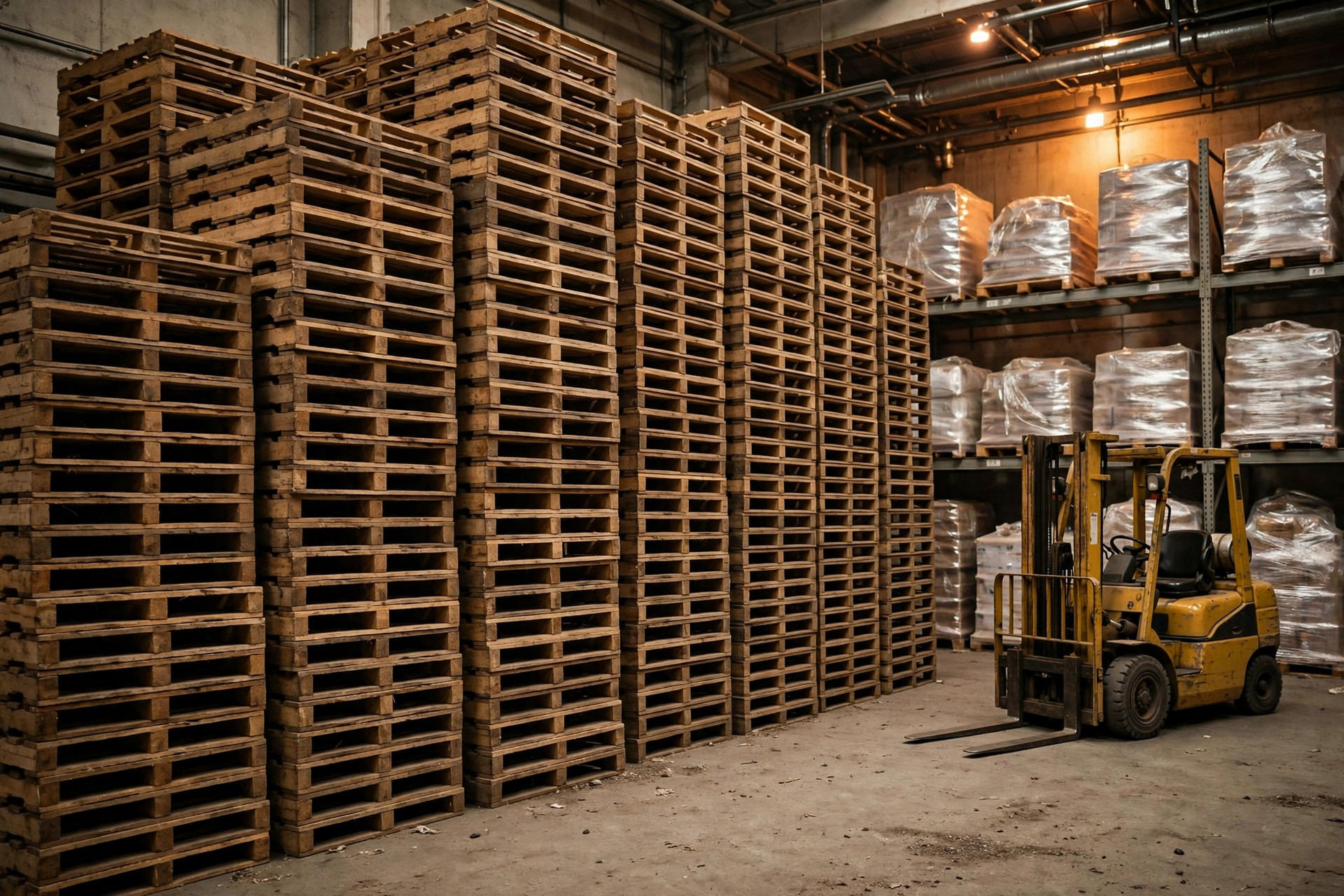
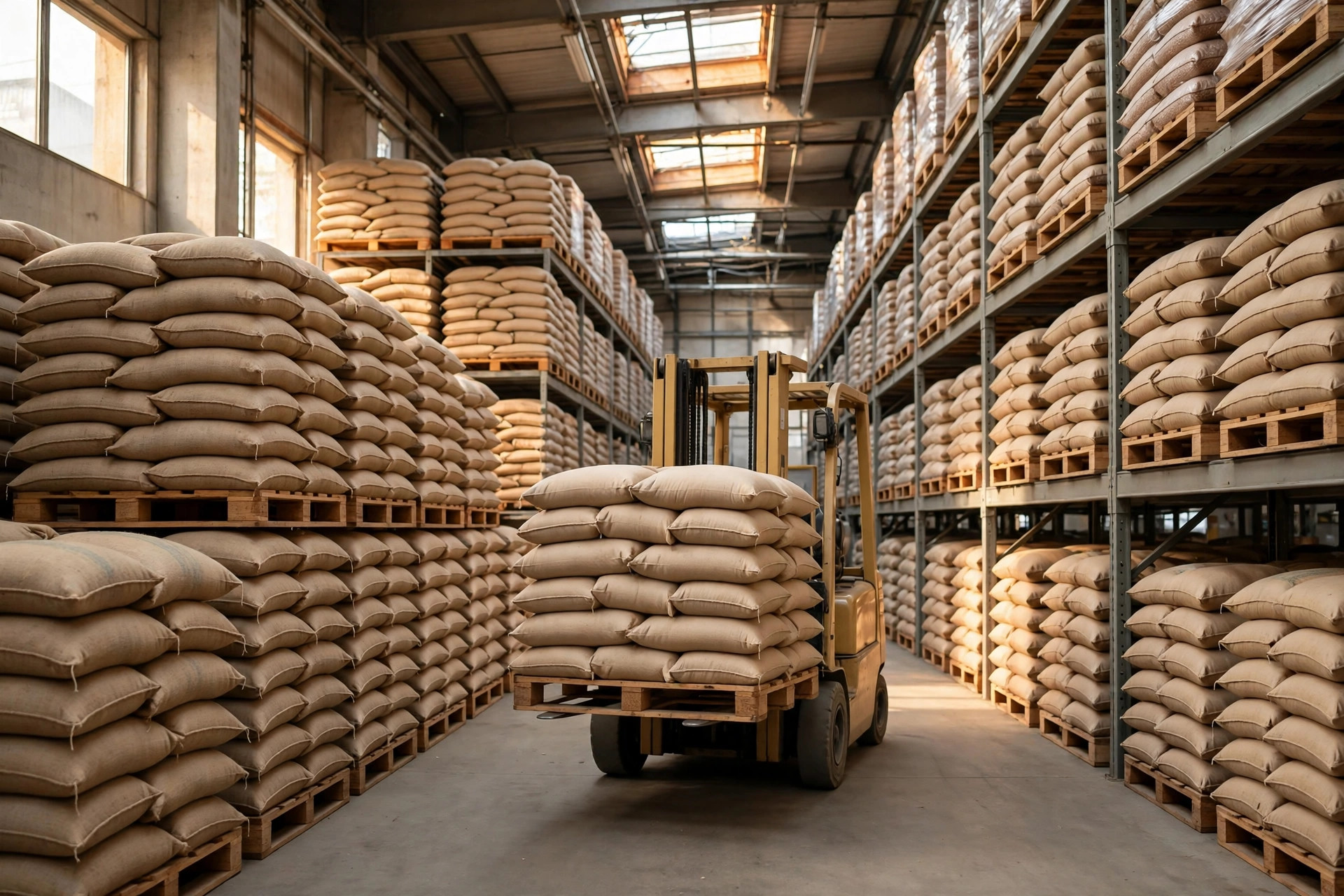
My standing advice in Monrovia is to place a fast-turn warehouse outside the port, close enough for same-day trucking, and treat it as part of the port move rather than as storage. Inside the port, almost nothing is under your control: pickup sequence, clearance progress and release timing all belong to other parties. The moment cargo leaves the gate and enters your own warehouse, sorting, allocation and delivery come back into your hands. An off-port warehouse does not mainly buy you space. It shortens the uncontrolled part of the chain.
Here is a hypothetical worked example, with illustrative numbers only and no claim about real Monrovia warehouse prices. Suppose a seller brings in ten containers a month. Option one uses no off-port warehouse, with each container held an extra ten days at an assumed all-in waiting cost of 120 dollars per container per day. That is 12,000 dollars a month, before lost orders. Option two rents a small off-port warehouse at an assumed fixed cost of 7,000 dollars a month, pulls cargo out as soon as it clears, and cuts waiting to two days, about 2,400 dollars, for a total of 9,400 dollars. Option two saves 2,600 dollars a month on paper, but the real saving is different: delivery dates stop being weather reports and become commitments a buyer can plan around. Clients buy certainty about when goods will be in a wholesaler's hands.
| Factor | Waiting at the port only | Off-port warehouse receiving and sorting |
|---|---|---|
| Pickup rhythm | Set by port and clearance | Your process starts at the gate |
| Delivery promise | A rough estimate | Planned by area and buyer |
| Cost shape | Waiting costs rise with congestion | Fixed rent plus controlled handling |
| Best for | One or two trial containers | Sellers shipping steadily for distribution |
When I review an off-port site, three tests are non-negotiable. First, a truck must be able to complete the port run the same day, or your shuttle becomes a second congestion point. Second, the building has to support real sorting, because consumer goods here move onward in mixed, fragmented orders; a container dumped whole into a shed is not distribution. Third, power reliability and security belong in the contract, because nobody mentions outages or shrinkage during the sales pitch and everybody pays for them later.
For slow clearance and pickup, I give clients a fixed sequence. Get documents checked before the vessel sails. Use a clearance partner with an actual team in Monrovia who can physically chase a problem, not only forward emails. Tie pickup to the sales plan, so cargo already sold moves first. And write delivery dates as ranges rather than a single heroic day. Sellers dislike that last point, right up to the moment it saves them a penalty and a customer.
Liberia is a small market, and that is exactly why fulfilment reliability matters more there, not less. In a large market, a stock-out costs you an order. In a small market where wholesalers all know each other, two failed deliveries cost you a reputation. Another of our clients, a household-goods seller moving only a few containers a month, holds a small off-port warehouse and pulls seasonal stock out early. When competitors run dry, he still has goods, and he has become the main supplier to two major wholesalers. His line was simple: in a small West African market, you do not win by being one cent cheaper, you win by never being the supplier who disappears.
The opposite case is just as instructive. In 2025 a seller came to us after treating Liberia as an add-on market and running it with the same playbook he used for another West African country. The pickup rhythm in Monrovia was different, his cargo sat, and his buyers had already been promised dates based on the old experience. He ended up renting space and trucks at emergency prices. Every port has its own temperament, and copying the last port's playbook is the most expensive habit in regional distribution.
So my conclusion has not changed. The Monrovia line is worth doing, and as routing and volume grow, the opportunity grows with it. But the money on this lane is made on shore, in how much earlier you arrange warehousing, clearance and pickup than the competitor whose cargo sits next to yours. Nobody controls the port section. Everybody controls what they built outside the gate. Next time you negotiate the contract, remember to ask these three questions: how many days after arrival should pickup realistically take, and who pays for waiting; is there an off-port warehouse ready to receive and sort the cargo, and how is it priced; and can delivery dates be written as ranges instead of fixed days. Ask those three before you sign, and your Liberia business is steadier than most.
By Susan, 3PL Sales Director