Many cosmetics warehouses still treat MoCRA as "a factory problem" — if they don't manufacture or fill products, they assume the law has nothing to do with them. That reading may have held in 2023; by late 2026, FDA's enforcement record has falsified it. MoCRA cosmetics warehouse requirements were never just about whether a warehouse has to register — they form a full inspection logic around facility conditions, batch records, and adverse-event traceability.
What MoCRA Changed: The First Overhaul Since 1938
According to FDA publications and the Congressional Research Service, MoCRA — the Modernization of Cosmetics Regulation Act of 2022 — was signed on December 29, 2022 as part of the Consolidated Appropriations Act, 2023: the first substantive expansion of FDA's cosmetics authority since 1938, replacing a regime with no mandatory registration, listing, or recall authority. MoCRA closed those gaps — registration, listing, safety substantiation, adverse event reporting, a cGMP mandate — plus new mandatory recall and records-access authority. The original registration and listing deadline was December 29, 2023; FDA used enforcement discretion to push enforcement to July 1, 2024. As of October 2026, no transition period remains — FDA holds inspection tools it can deploy at any time.
The Cases: Warning Letters Have Reached "Holding Conditions"
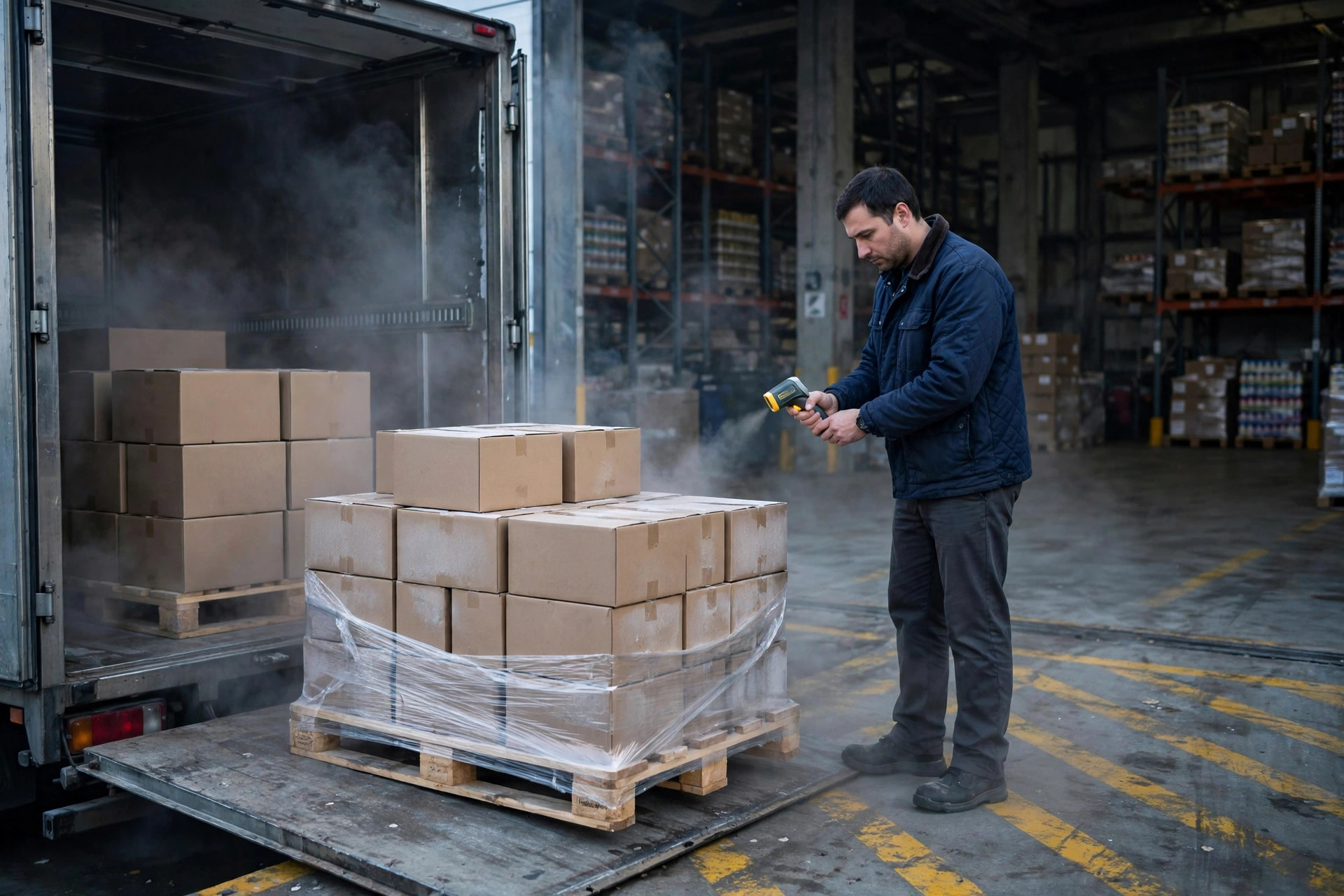
From October 28 to 30, 2025, FDA inspected Purolea Cosmetics Lab in Livonia, Michigan; on April 2, 2026, the agency issued a warning letter finding its cosmetics "prepared, packed, or held under insanitary conditions" and therefore adulterated — "held" standing alongside "prepared" and "packed" as an independent basis for the violation. Storage conditions at the warehouse are themselves an inspection entry point under MoCRA's enforcement framework — no manufacturing failure required.
The second letter is more instructive. From June 16 to 23, 2025, FDA inspected Private Label Skin Care, Inc. in Canoga Park, California — a brand owner outsourcing to a contract manufacturer (CMO). The CMO had notified the brand of elevated impurities, yet the brand kept distributing the affected batches. The December 18, 2025 warning letter was explicit: as the product owner and responsible person named on the label, the brand cannot outsource quality responsibility to its CMO. FDA recommended removing the adulterated batches; the company carried out a voluntary recall. The lesson: under MoCRA's liability chain, the private-label brand and the contract factory sit on the same rope — the warehouse in the middle has only its records to defend itself with.
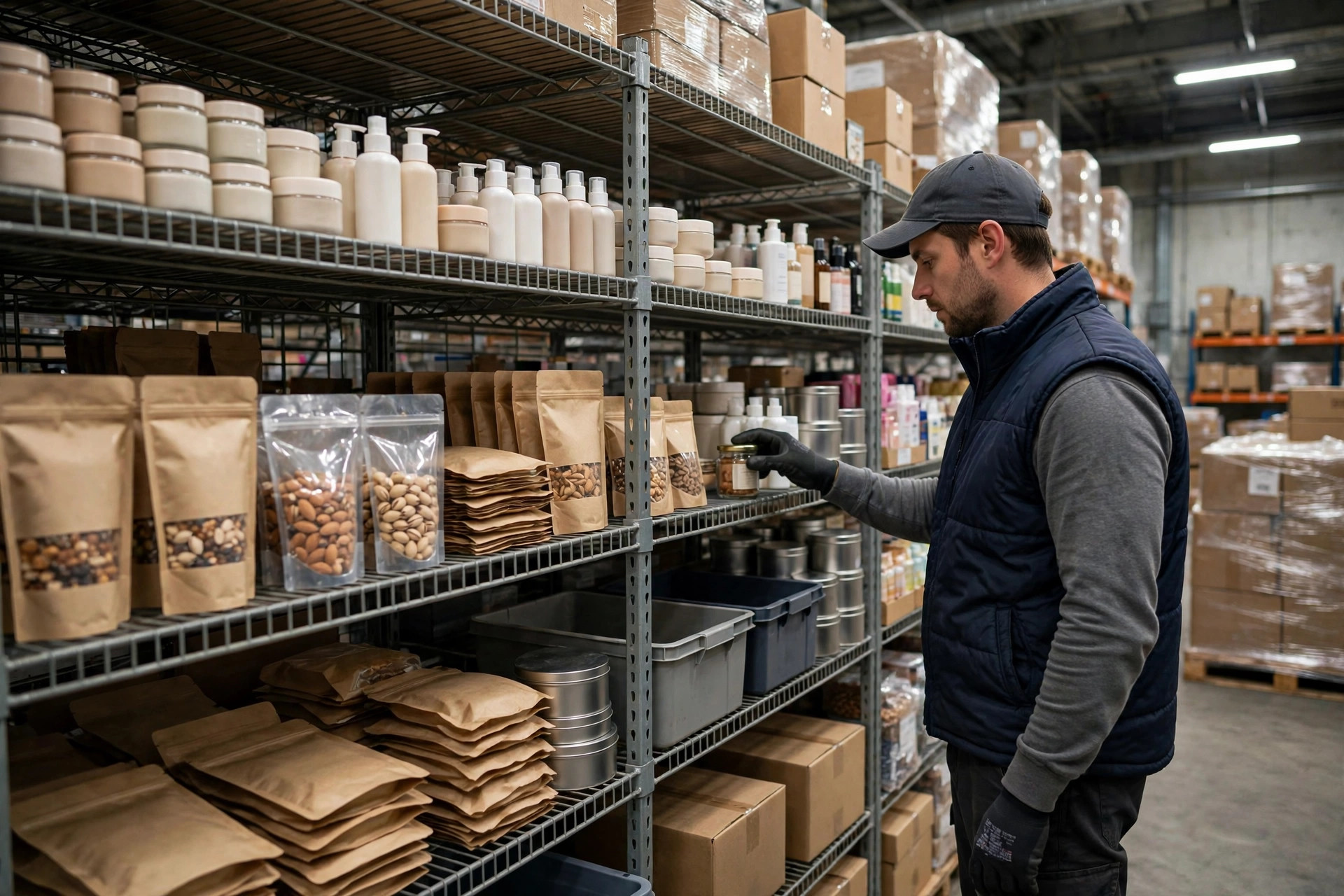
A third signal came from Foshan, China, where FDA inspected a cosmetics company from October 20 to 24, 2025 and issued a warning letter on April 20, 2026. The company's SPF sunscreen products are regulated in the U.S. as over-the-counter drugs under drug cGMP (21 CFR Parts 210/211), not MoCRA's cosmetics provisions. The counterintuitive reality: most cosmetics-facility warning letters published in 2025–2026 were issued under drug cGMP, not MoCRA's cosmetics provisions — because drug-cosmetic borderline products like sunscreen, acne, and antiperspirant products are drugs in the United States, and they sit by the pallet-load on ordinary cosmetics warehouse shelves.
MoCRA Cosmetics Warehouse Requirements: The Registration Decision Matrix
Do you have to register? Per Section 607 of the FD&C Act and FDA's August 2023 guidance:
| Facility type | Registration required? | Product listing | Adverse event records | Notes |
|---|---|---|---|---|
| Facility manufacturing or processing cosmetics (including filling) | Yes | Responsible person files | Yes | New facilities within 60 days; renew biennially |
| 3PL warehouse doing only labeling, repackaging, holding, or distributing | No | No | Depends on role | Statute expressly exempts facilities solely engaged in holding/distributing |
| Brand-owned distribution center (finished goods storage and shipping only) | No | Responsible person files | Yes | Brand as responsible person bears reporting duties |
| Fulfillment warehouse doing filling or container-filling repack | Yes | Responsible person files | Yes | Filling = manufacturing/processing; exemption does not apply |
| Small-business facility (avg. annual U.S. cosmetics sales under $1M) | Deferred | Deferred | Yes (3-year retention) | Prior 3-year average under $1 million, inflation-adjusted; excludes eye-area, injectable, internal-use, and long-wear categories |
The key detail: exemption from registration is not exemption from records. Small businesses are excused from registration, listing, and GMP — but not from adverse event reporting or record retention, whose period only shortens from six to three years. An exempt pure-holding warehouse can still be compelled to produce records when FDA "reasonably believes" a held product may cause serious adverse health consequences.
What the FDA Actually Inspects: Four Entry Points
First, registration status. FDA's Cosmetics Direct portal holds nationwide registration data, and investigators arrive knowing whether you should be on the list. Since July 1, 2024, unregistered manufacturing or processing facilities can be flagged at the import stage.
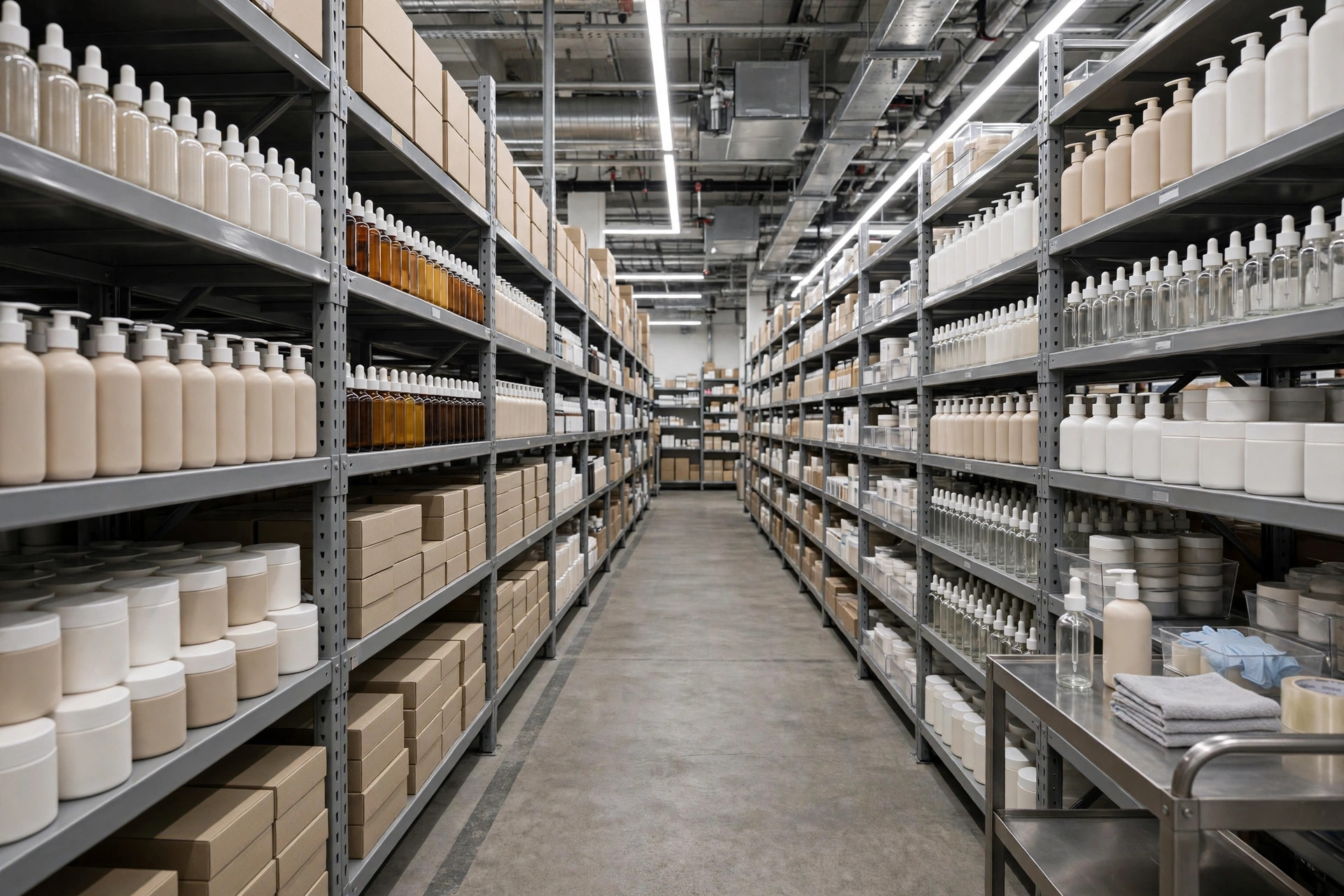
Second, holding conditions and GMP. MoCRA directs FDA to issue cosmetics cGMP regulations, and FDA has already published its proposed rule for public comment. Once the final rule lands, inspections shift from "are you registered" to "how do you operate on the floor": temperature and humidity control, pest management, batch segregation, cleaning validation — a standard that already applies to warehouses holding drug-cosmetic borderline products.
Third, adverse event records and the 15-day clock. MoCRA requires the responsible person to report serious adverse events within 15 business days of receipt, to submit new material medical information within one year of the initial report, and to retain related records for six years. The warehouse sits upstream: complaints, return reasons, and batch anomalies that live only in a customer-service system — never structured into traceable records — can start the 15-day clock without the brand ever knowing. The Private Label case showed FDA has zero tolerance for "knew and did nothing."
Fourth, records access and mandatory recall. FDA can demand records access when it reasonably believes a cosmetic may cause serious adverse health consequences, and can order a mandatory recall when a product is likely to cause serious adverse health consequences or death. For warehouses, batch traceability becomes a survival requirement: when a recall order lands, locking down every unit of the affected batch — by location and by shipment, within 48 hours — determines the scale of the event.

The Timeline and Retention Schedule: Counting the Obligations
MoCRA obligations by timeline and responsible party:
| Obligation | Key dates | Retention | Responsible party |
|---|---|---|---|
| Facility registration | New facilities within 60 days; renew every 2 years; update within 60 days of changes | Registration kept current | Facility owner/operator |
| Product listing | New products within 120 days of marketing; update annually | Listing kept current | Responsible person (brand on label) |
| Serious adverse event reporting | Within 15 business days of receipt | 6 years (3 for small business) | Responsible person |
| Safety substantiation records | In place before marketing, maintained continuously | Product lifecycle | Responsible person |
| Fragrance/flavor ingredient list | Within 30 days of FDA request | As requested | Responsible person |
| Label contact information | Completed by December 29, 2024 | Ongoing | Responsible person |
| Cosmetics cGMP | Proposed rule published; final rule per statutory timeline | Per final rule | Facility operator |
The cost structure is widely misunderstood: registration itself is free through the Cosmetics Direct portal — the real cost is building and maintaining the records system. Six years of adverse event records, annually updated listings, batch-traceable warehouse records: all require process, systems, and people. Building traceability yourself versus choosing a batch-capable warehousing partner is a calculation every cosmetics brand should have redone.
Why Warehouses Became the Compliance Blind Spot
The pattern is clear: MoCRA's structure makes warehouses feel off-target, and the pure-holding exemption led 3PLs to conclude it has nothing to do with them. Second, the responsible person is usually the brand — the lightest-asset link, with manufacturing, warehousing, and logistics all outsourced and records scattered across three or four systems. Third, dual regulation of drug-cosmetic borderline products means many warehouses unknowingly hold drug-cGMP products managed to cosmetics storage standards.
The result is a counterintuitive landscape: the warehouses at highest compliance risk under MoCRA are precisely the pure-holding facilities exempt from registration — because the exemption relaxed their records discipline, while none of FDA's inspection entry points (holding conditions, adverse-event traceability, records access) exempted them. In the Purolea warning letter, "held under insanitary conditions" was written for every cosmetics warehouse to read.
Where This Is Heading: Inspections Will Only Go Deeper
The final cosmetics cGMP rule is approaching under MoCRA's timetable. Companies that read the MoCRA cosmetics warehouse requirements as only a registration question will be caught off guard: inspections will graduate from registration checks to on-the-floor GMP conformity inspections, converging toward drug inspection depth. On imports, MoCRA applies equally to foreign-made cosmetics sold in the United States — the Foshan case shows the inspection radius already reaches Chinese factories.
The open question is for operators: when an FDA investigator stands at your warehouse door asking for six years of adverse-event-linked records for a specific batch, can your system answer the same day? If not, the question is not whether to close the gap but when to start. Check the official source for the latest policy — the timeline will only tighten, never loosen.
By Dr. Chen, Supply Chain Researcher