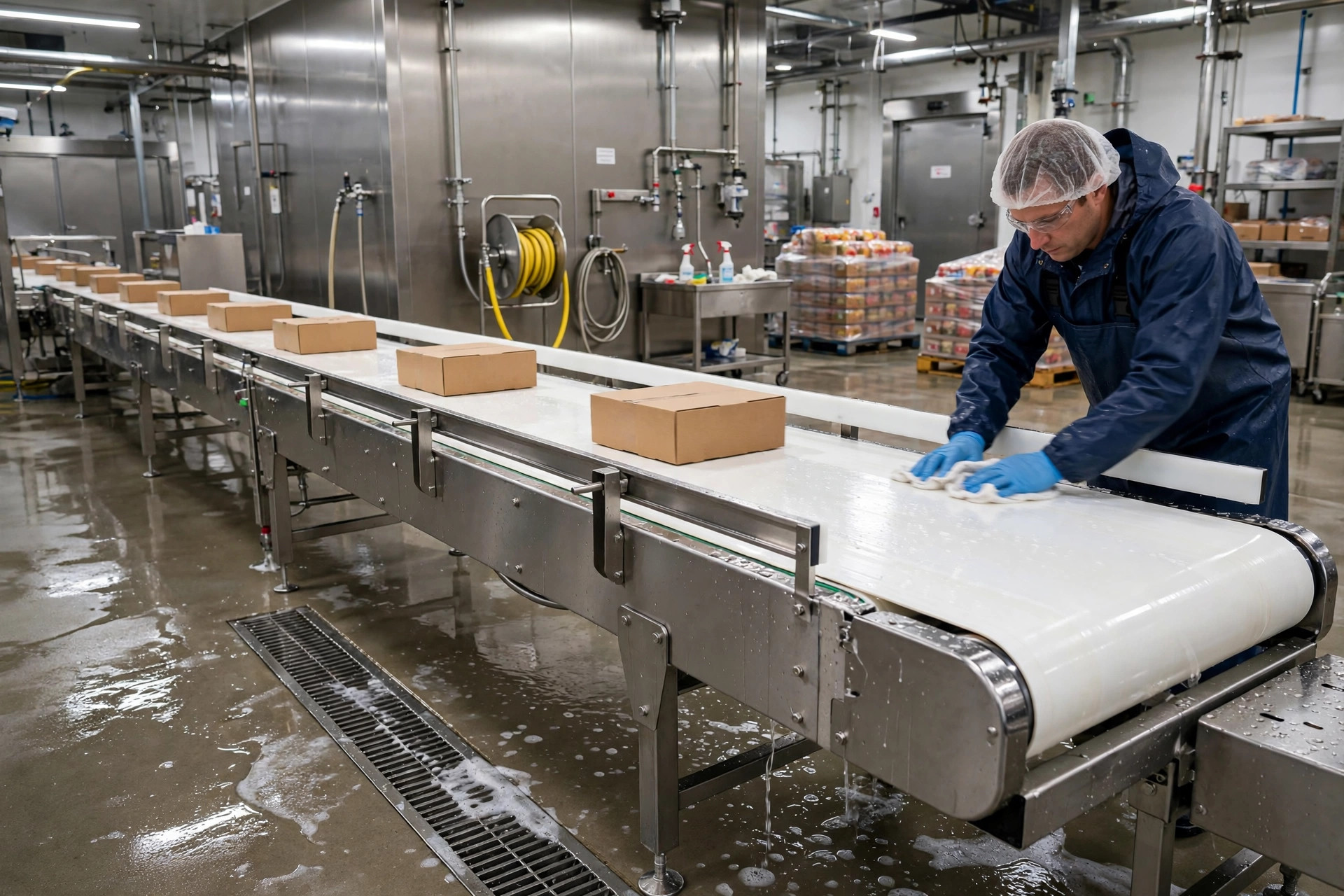
In July 2024, at a 3PL food warehouse in Ontario, California, an inspector's thermometer read 46°F on the outermost pallet of a refrigerated truck; a probe between two cases read 45°F. The FDA Food Code's receiving ceiling for refrigerated food is 41°F (5°C). The driver blamed door-open unloading. The inspector didn't argue — per the warehouse's incoming inspection checklist, all 22 pallets of dairy were turned away on the spot.
The carrier's logs later showed the reefer unit had died for nearly three hours mid-route and the trailer topped 50°F; the restarted unit recovered air temperature, but the product's core temperature never did. Accepted on looks alone, that load would have put the risk on store shelves weeks later.
This is the daily reality of food warehouse incoming inspection — one of the highest-risk handoffs in the supply chain. A researcher's take — rejection criteria, receiving records, and one judgment most warehouses get backwards.
Incoming Inspection: The Riskiest Handoff in a Food Warehouse
Receiving is a singular moment of liability transfer: once a shipment is signed for, food safety responsibility moves from supplier to warehouse. Temperature abuse in transit, damaged packaging, missing paperwork — before the signature, the supplier's problems; after, all yours. The FDA's 2016 final rule on the Sanitary Transportation of Human and Animal Food says it plainly: shippers must specify temperature conditions and sanitary requirements to carriers in writing, and anyone aware of a possible temperature-control failure must not sell or distribute that food until a safety determination is made.
The regulation thus puts the burden of "what now" on the receiving end: without enforceable criteria and complete records, a warehouse surrenders its protection the moment liability transfers. The economics agree — turning a load away costs waiting time and one return trip; accepting a compromised load costs segregation, re-inspection, possible destruction of the lot, and in the worst case a downstream recall.
A Four-Dimension Rejection Checklist for Food Warehouse Receiving
Through an FDA lens, receiving checks reduce to four dimensions — temperature, shelf life, packaging integrity, documentation — each with a bright rejection line. The checklist below synthesizes U.S. food warehouse practice; adjust to your product mix, but adjust upward:
| Dimension | Check | Rejection line (baseline) |
|---|---|---|
| Temperature | Refrigerated product, core/surface temp | Above 41°F (5°C) — reject; check FDA's website for current requirements |
| Temperature | Frozen product, frozen state | Not fully frozen; thaw-and-refreeze signs (water stains, large ice crystals) — reject |
| Temperature | Hot food (where applicable) | Below 135°F (57°C) — reject |
| Temperature | Milk, shell eggs, etc. | Above 45°F — reject; check FDA's website for current requirements |
| Shelf life | Remaining shelf-life ratio | Below the contracted ratio — reject; follow customer policy if none specified |
| Shelf life | Production date / lot code | No lot code or production date, untraceable — reject |
| Packaging | Case damage, moisture, mold | Damage reaching inner packaging, moisture or mold — reject the pallet/case |
| Packaging | Pests, foreign objects, off-odors | Live insects, rodent signs, chemical odors — isolate and reject the lot |
| Documentation | PO, bill of lading, packing list | Product, quantity, or lot mismatch — hold signature |
| Documentation | COA/test reports, temperature logs | Cold-chain load with no transit temperature record or unexplained excursion — reject |
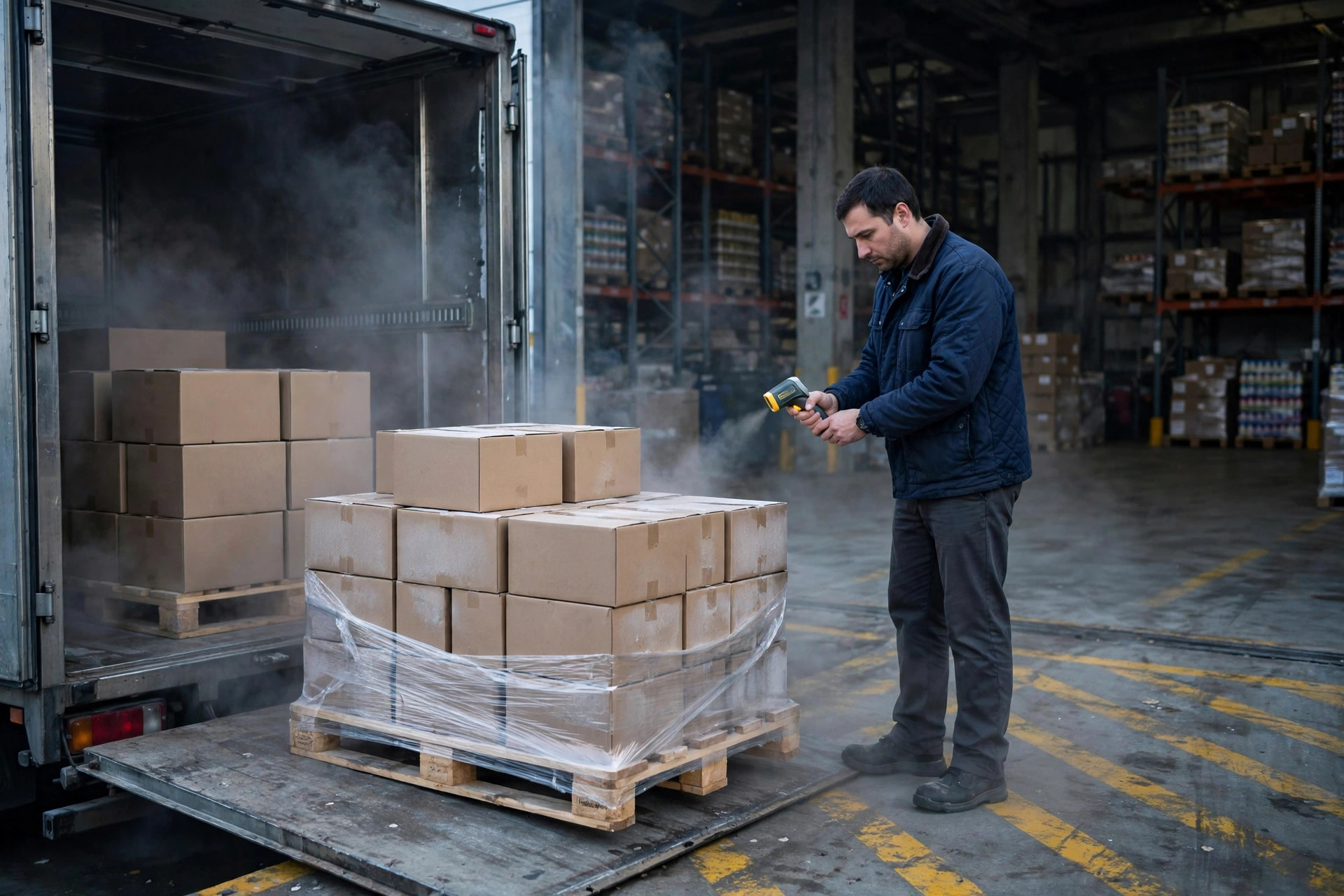
Two caveats. First, the 41°F, 135°F, and 45°F thresholds come from the FDA Food Code and are corroborated across multiple public sources — but FDA revises the Code and states may amend it locally, so review this SOP at least annually, with "per the latest FDA requirements" as the fallback. Clause numbers are deliberately omitted; check FDA's website for the current text. Second, the remaining-shelf-life ratio has no regulatory number. It is a commercial term: if your contract says 75%, receiving enforces 75%. Silence hands the interpretation to the supplier.
A Houston food distributor learned that lesson in early 2025. An imported dry-goods container arrived with several lots at only about 40% of shelf life remaining against a contracted 75%, and roughly a third of the pallets in moisture-stained, moldy cases. The inspector rejected the full container — 18 pallets back on the same truck. The supplier protested the product was "fine, just short-dated, take a discount." The answer was one sentence: the contract says 75%, and mold means rejection. Three months later that lot, resold to a looser distributor, drew a downstream mold claim. The point: once criteria live in the contract and the SOP, the decision stops being a dockside negotiation and becomes a procedure.
The 5 Elements of Receiving Records
Many warehouses still run receiving as "someone looked, it seemed fine, sign here" — which, from FDA's perspective, barely counts as a control. Under FSMA the record is part of compliance: what you can produce determines your position in an inspection or dispute. A defensible receiving record has five elements.
First, document verification: PO, BOL, packing list, COA or test reports — present or not, and whether product, quantity, and lot codes match the goods. Second, measured temperature values: actual readings, probe locations, instrument ID, time — readings, not the word "OK." Third, packaging condition: where damage, moisture, pests, or foreign objects were found, with timestamped photos. Fourth, dates and lot codes in the system for traceability. Fifth, the disposition — rejected, accepted under concession, or held — with decision-maker, time, notifications, and follow-up. Lose any one and the evidence chain breaks, and a broken chain only shows its cost when something goes wrong.
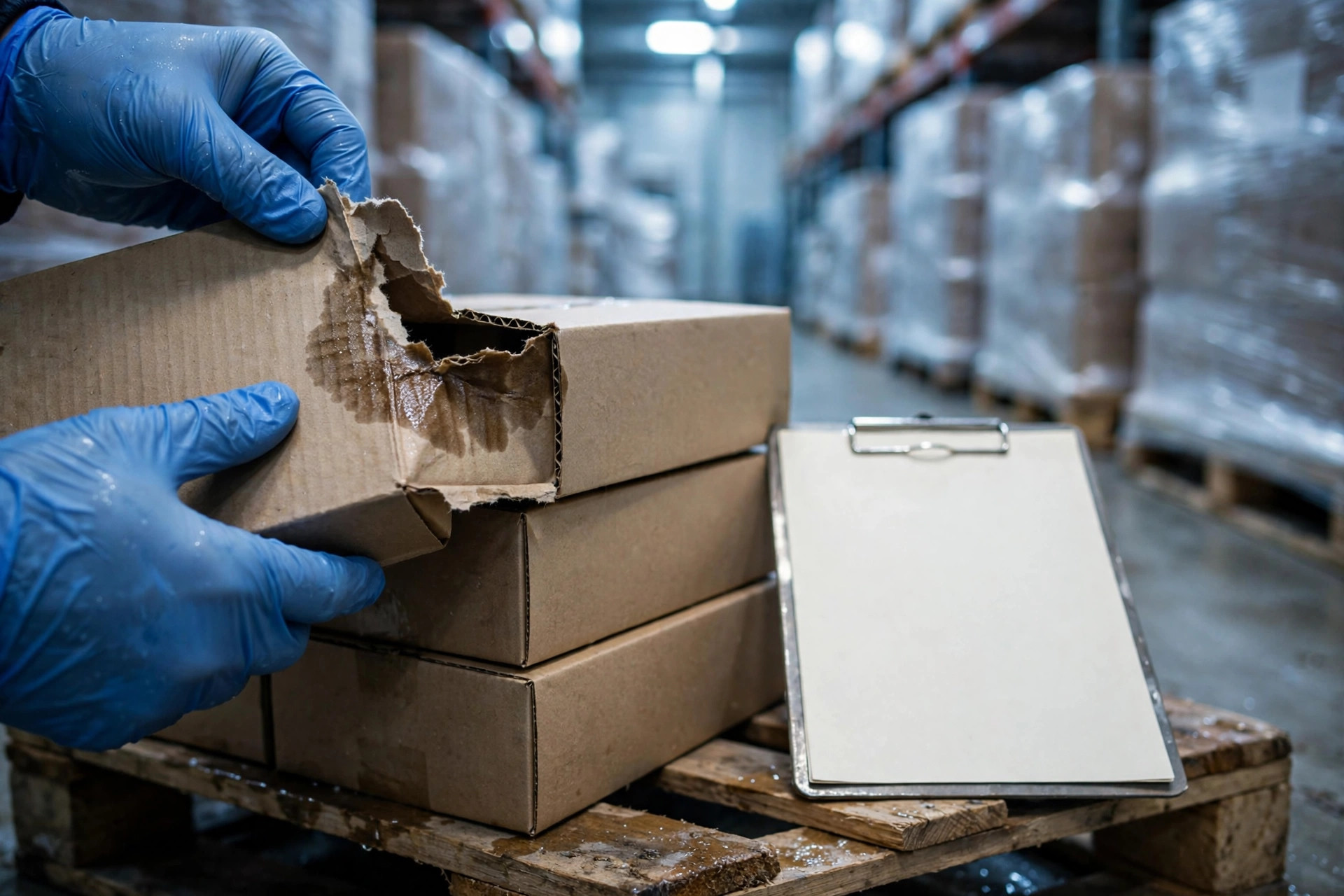
The Counterintuitive Call: Reject What You Cannot Prove
Here is the judgment most warehouses get backwards: the most dangerous load is not the one that looks bad — it is the one that looks fine but cannot prove it.
Two trucks. Truck A arrives at 42°F, one degree over the ceiling, but carries complete logger data showing 38–40°F all trip, rising only during 20 minutes of door-open unloading — plus a full COA, lot codes, and shelf-life paperwork. Truck B arrives at 39°F, fully compliant, but with no transit temperature record, no COA, and half its lot labels missing. Instinct releases B and holds A. Through a risk lens, B is riskier: 39°F proves only this moment's probe points, nothing about the prior ten hours.
The FDA's "no sale or distribution until a safety determination is made" rests entirely on evidence. No records, no determination; no determination, and turning the load away is the only option. The decision logic should therefore be not "does the product look fine" but "can it prove it is fine." Once that clicks, documentation becomes a rejection criterion on par with temperature.
The Real Trade-off: Rigor vs. Dock Throughput, in Three Tiers
Strict standards are easy to write, hard to run against dock throughput: thirty inbound trucks a day at peak, and full inspection of every case gridlocks the dock; pure inspector discretion lets the standard slide. The workable answer is risk tiering, with inspection depth stepping down:
Tier A (high risk): refrigerated/frozen and ready-to-eat — temperature on every truck at multiple points, packaging sampled per pallet, documents verified line by line. Tier B (medium risk): ambient dry goods and prepackaged foods — sample cases and packaging, verify documents and shelf life, temperature only for anomalies. Tier C (low risk): non-food consumables — quantity and appearance only.
Tier assignments belong in the SOP with scheduled review: twelve clean months can graduate a supplier from A to B; one temperature excursion sends it back to A with corrective action. The mechanism concentrates effort where risk is highest — and concedes that 100% inspection is unrealistic, keeping sampling's residual risk explainable and traceable.
When the Temperature Gun Becomes a Sensor
Receiving has barely changed in twenty years: a person on the dock, an instrument, eyes, a notebook. But reefer trailers increasingly carry continuous loggers, IoT sensors can push the full temperature curve to the warehouse before arrival, and traceability pilots are binding lot, temperature, and documents into harder-to-tamper chains.
The question worth sitting with: when data no longer depends on manual measurement, does the inspector's job disappear? My assessment is no — it changes shape, from measuring and checking to data review and exception adjudication. A machine reports 41 versus 42 degrees; a person decides what 42 means. The checklist itself will evolve from paper into a rules engine.
Until then, the temperature gun on the dock and the five elements on the receiving record remain a food warehouse's nearest line of defense. Someone has to guard the gate, enforce the standard, and be stubborn about the paperwork — common sense, the scarcest commodity in supply chains.
By Dr. Chen, Supply Chain Researcher