Let me complain first: on Mercari, a lot of secondhand sellers do not lose money on the sale. They lose it on the shipping. The item was cheap to begin with, so one slow pack, one overpriced mailer, or one wrong label and the whole order was pointless. Mercari seller shipping is not really about who negotiated the lowest rate. It is about who wastes the least motion at the packing table.
I sell used clothing and small household items. On a busy day that means a few dozen small parcels, all low value, all slightly different. Early on I did it the dumb way: phone in hand, hunt for the item, bag it, print, repeat. The table got messier, I got tired, and the numbers still did not add up. Things only settled down when I rebuilt my whole mercari seller shipping routine step by step. Here is what I actually do now.
Mercari seller shipping starts with one decision: which label
Decide your label before you decide anything else. The platform label is the easy option. Who pays, which carrier, you pick it on screen and print. For new sellers and low volume, I say start there. One less place to make a mistake is worth more than a tiny rate difference. Platform fees and label prices change, so always go by the latest policy on the platform itself, not some old post in a seller group.
Once your volume is steady, shipping on your own label can make sense. You get more choice, and if you already have a carrier setup that fits your parcels, you can use it. But the traps are real. Enter the weight wrong or the size wrong and you get adjusted charges later, plus a fun afternoon arguing about it. Used clothing is sneaky here. A shirt feels light, then you add a thicker mailer and a card and the weight moves. I once copied the same weight across a whole batch. The adjustments ate everything I thought I had saved, and then some.
My rule is boring: platform label for daily orders because it is stable, my own label only for the few categories where the weight almost never changes. Do not make a simple job complicated just to look professional.
The packing table: mercari seller shipping warehouse fulfillment is about flow
Real scene. Last winter I cleared a batch of used coats and hoodies and sold over forty pieces in one day. With my old method, each order took several minutes end to end. I would never have finished.
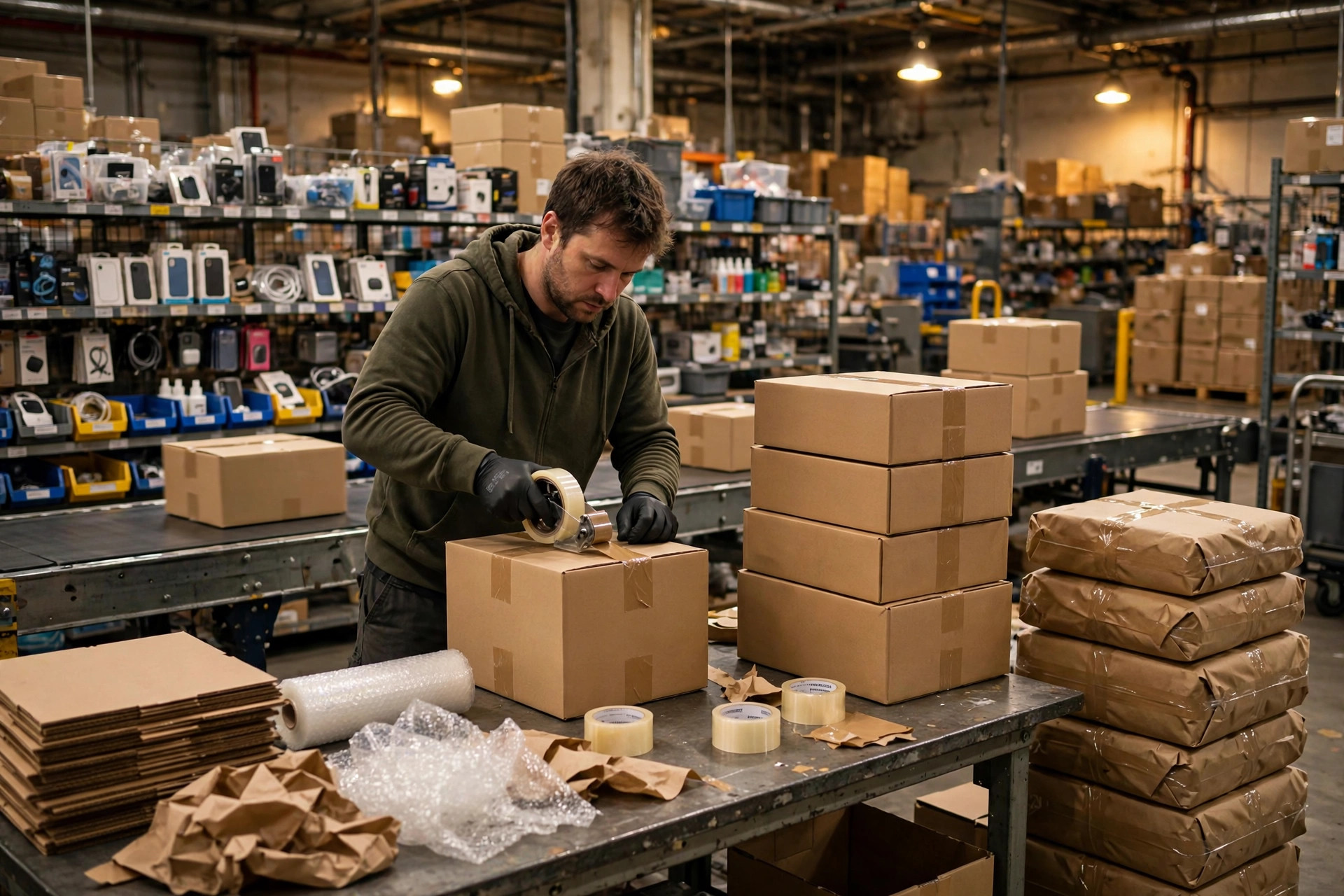
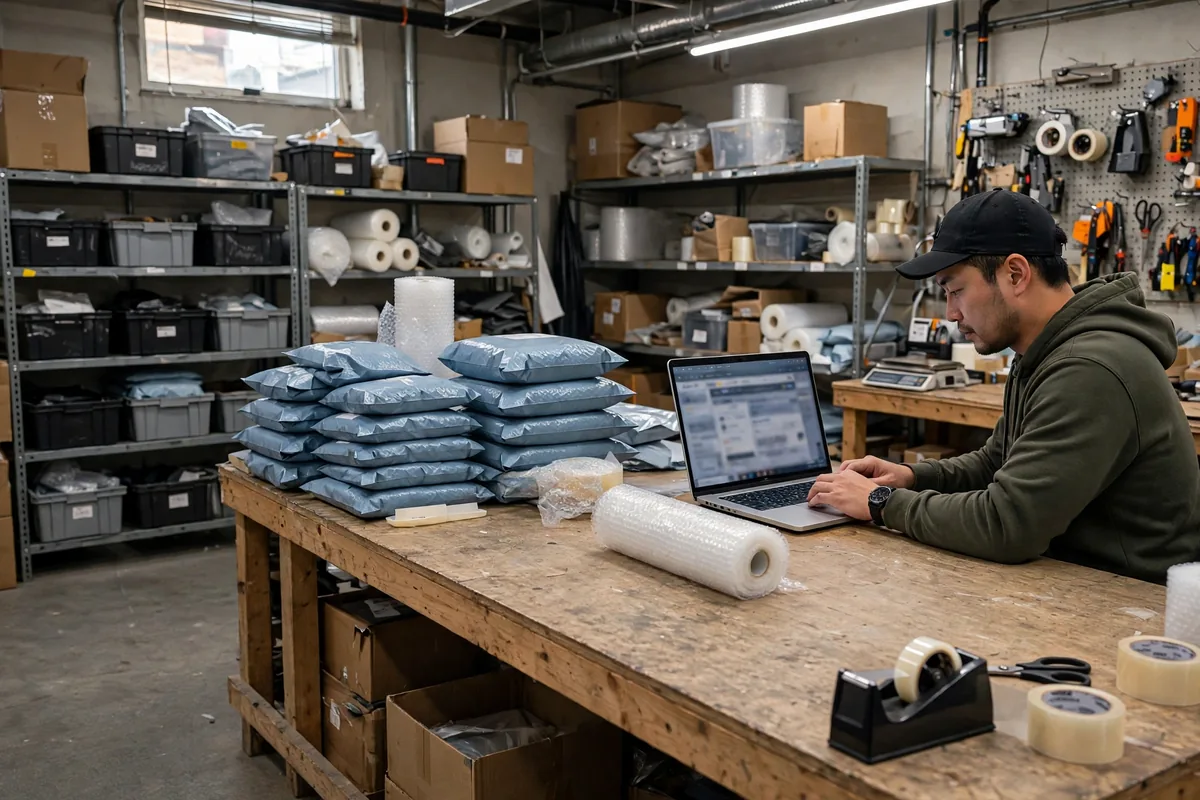
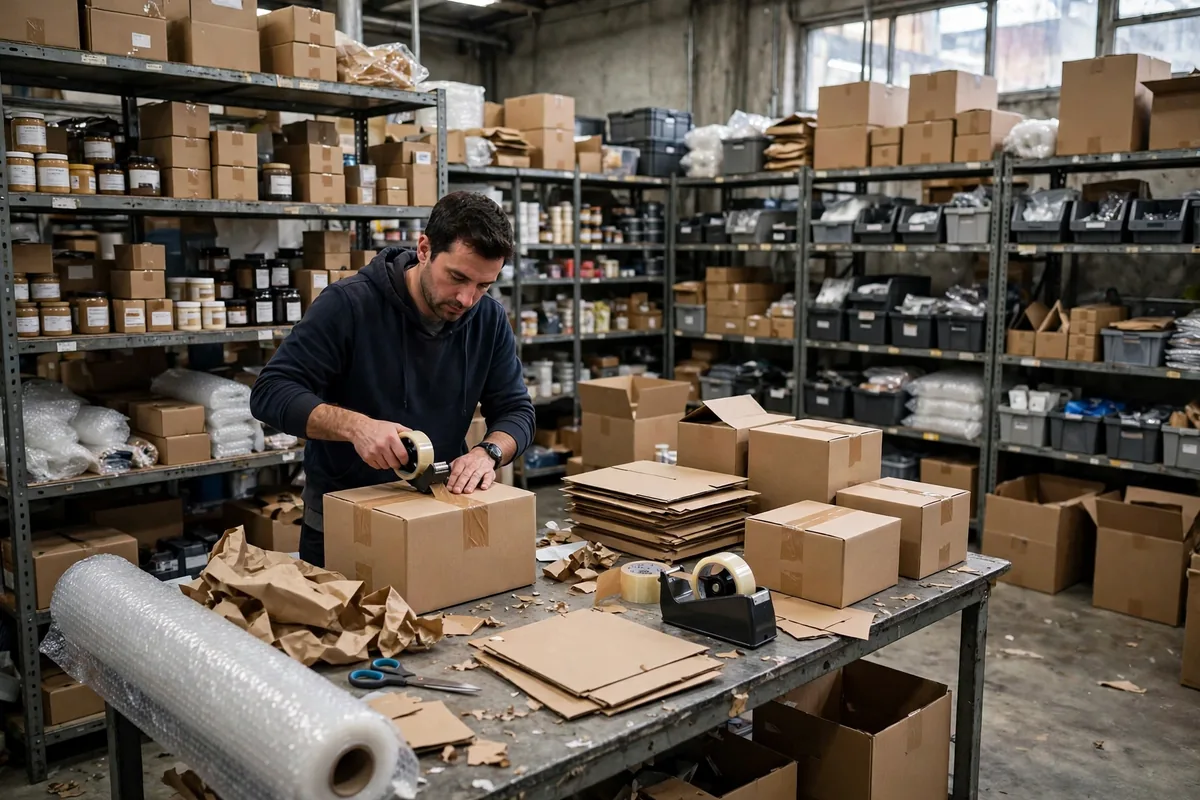
Now the table is fixed. On the left, a small shelf divided into slots, in listing order, so a sold item has a known home. In the middle, the packing zone: mailers stacked small to large, tape and scissors always on my right. On the right, the done zone. A labeled parcel gets pushed right, and when the pile is tall enough it goes out for pickup or drop-off. My phone sits on a stand in front of the packing zone. It is only for checking orders and scanning, not for carrying around the room.
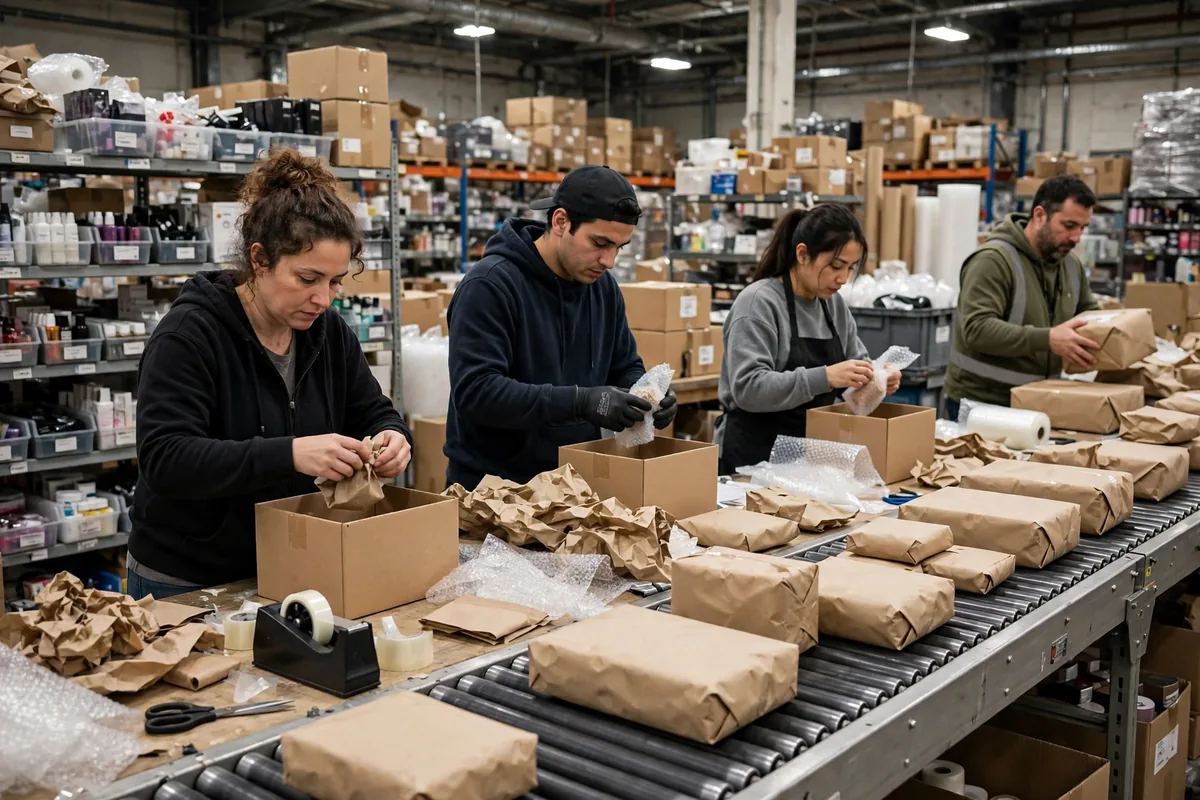
The sequence is fixed too. First, pick everything for the batch onto the table. Second, bag and seal everything. Third, label and check everything. Splitting the three steps is much faster than doing the full cycle one order at a time, and your hands build a rhythm, which means fewer missed items. Before any label goes on, I glance at the count and color inside the bag. With secondhand goods, shipping the wrong variant is the classic disaster. One return costs more than that order ever made.
Here is the counterintuitive part. Low-value secondhand orders do not make money on rate differences. They make money on packing speed and supplies. The rate barely moves and you do not control the platform rules anyway. But thirty seconds saved and one less mailer used, multiplied by dozens of orders a day, is real money.
Run the numbers: supplies versus labels
I ran a rough calculation for a small seller doing around thirty orders a day.
On supplies: small mailers for thin tops, medium for hoodies and light jackets, boxes only for shoes and fragile items. If a bag works, skip the box. Boxes take space and demand filler. Do not buy mailers that are thicker than you need. Strong enough, not see-through, with a seal that actually sticks is enough. I tested a premium-feeling mailer against a plain one for a month. The plain one saved enough to cover extra tape rolls, and my damage rate did not change at all.
Same with tape. Skip the printed, pretty stuff. Plain wide clear tape wins. And skip thank-you cards and freebies on cheap secondhand orders. Buyers want the right item, shipped fast. The card goes straight in the trash. A tighter seal is a better gift.
On labels: the platform label wins on simplicity and fewer errors, your own label wins on flexibility. If you want a fair test, take your ten most predictable orders and run both ways. Count everything: adjustments, reprints, and the time you spend messaging support. If you only compare the sticker price of the label, you will get the wrong answer. I did the math and my conclusion stayed the same: stability first, savings second.
Speed and storage: do not let small orders bury you
Mercari buyers are impatient, and honestly I get it. Secondhand buying is bargain hunting. Wait too long to ship and the buyer starts thinking about canceling. My rule: same day if I can, next day at the latest. If you cannot keep up, list less. Your listing speed has to match your shipping capacity.
Storage should follow shipping, not the other way round. Fast movers live on the shelf closest to the table. Slow items go further back. When I photograph and list an item, I decide its slot right then. When it sells, I walk straight to that slot. Every used item is one of a kind, so the worst outcome is selling something you cannot find. Then you cancel, and too many cancels make the account look bad.
Weigh before you label. It takes two seconds. A cheap scale lives on the right side of my table, so there is no excuse. Accurate weight means fewer adjustments, which means fewer headaches later.
A few traps I have already paid for
One: take a photo before sealing anything valuable or fragile. If a buyer claims a missing or damaged item, you have something to compare. Not every order, just the ones worth arguing about.
Two: seal it properly. Press the flap twice, fold the corner, then label. It costs almost nothing and prevents the bag opening in transit, which is a return you created yourself.
Three: do not overstock supplies. Mailers and tape look cheap until they eat your space, and the wrong size cannot be returned easily. Keep roughly a few weeks of stock. Your product mix will change, and your supply sizes need to change with it.
Four: re-read the platform rules now and then. Commissions, shipping charges and label options change without asking you. Always follow the latest policy on the platform, never last season's habits.
There is no secret to mercari seller shipping warehouse fulfillment. Pick fast, pack fast, label carefully, repeat. When volume grows, every minute you save in that little warehouse corner turns into margin. This routine works, I have tested it myself.
By Ah K, E-commerce Seller (5 yrs)