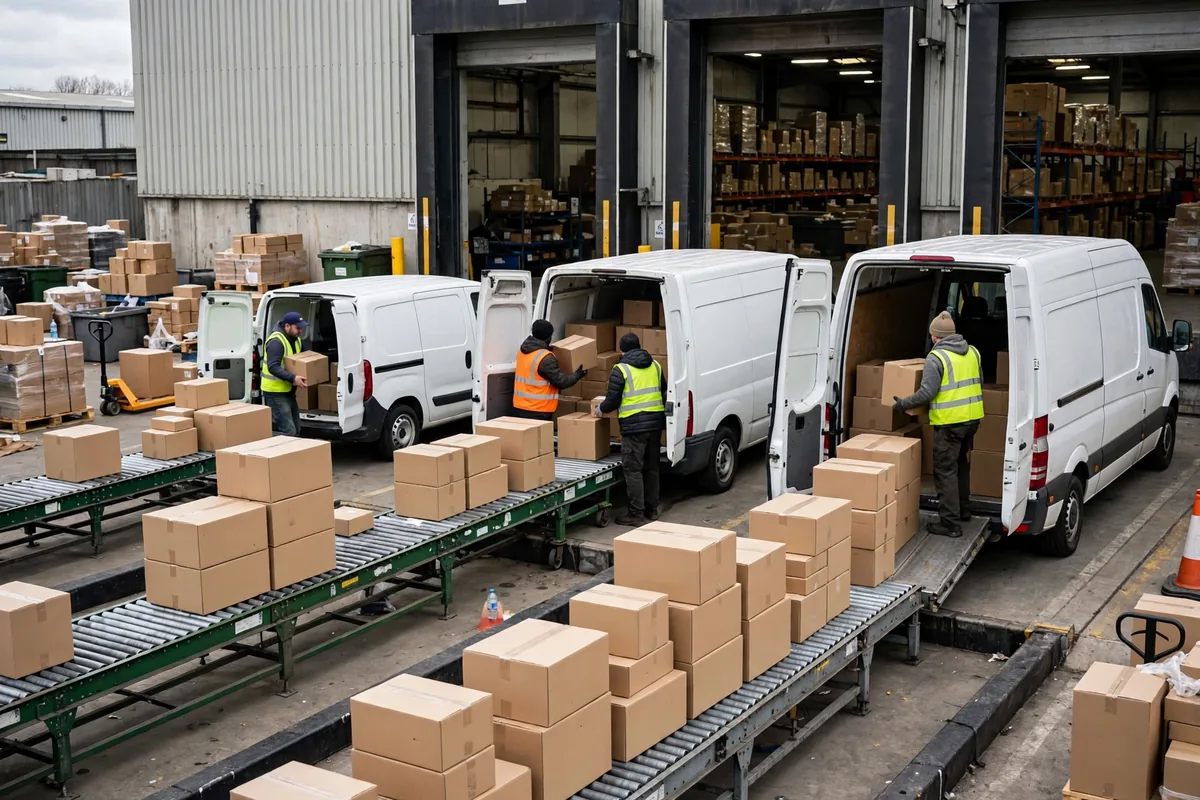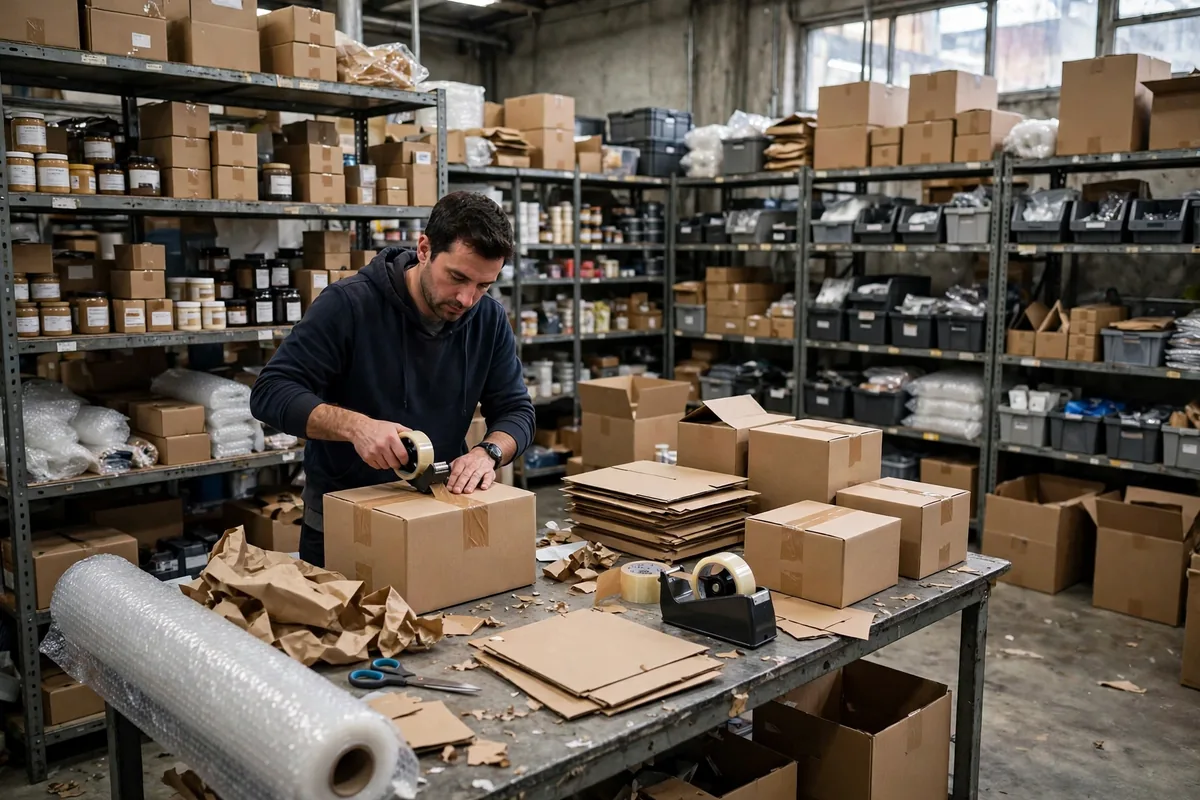
Shopify seller warehouse fulfillment nearly broke me before it taught me anything. Let me complain first: the hardest part of running a Shopify store is not getting orders — it is getting orders you cannot ship. This sounded like a boring operations topic to me two years ago. I figured a garage, two shelves, and some tape would do. Then one night my wife and I were still packing past 2 a.m., and the next morning we both felt run over. That night taught me shopify seller warehouse fulfillment is not a warehouse question. It is a sleep question.
Quick scope note: this is only about Shopify independent-store sellers choosing between self-fulfilling and a 3PL. I am not talking about Amazon's multi-channel programs here — different game, different math. I am Ah K, five years selling cross-border, and everything below is stuff I learned the expensive way.
Shopify seller warehouse fulfillment: the dividing line is your hours, not a magic order count
Everyone asks for the magic number: how many orders a day before you need a 3PL? I used to hunt for that answer too. It does not exist. What exists is a calculation: what is your hour worth? Take the minutes one order costs you — pick, check, label, seal — and multiply by your daily orders. That is the chunk of your day the warehouse eats.
On stated assumptions, if you are doing a couple of dozen orders a day with a tight SKU range, self-fulfilling is absolutely fine: flexible, cheap, and you control quality. Once packing reliably eats three or four hours a day, you are no longer saving money. You are trading product research, ad testing, and customer email time for packer wages — your own. That trade loses every time I have run the numbers.
Two hidden variables matter just as much. First, error rate: tired people grab the wrong SKU and forget the freebie, and on your own store nobody absorbs that cost but you — one wrong shipment is a refund plus a bad review. Second, spikes: a promotion or one creator video can multiply orders overnight, and a two-person garage setup simply breaks. Half of what a 3PL sells you is elasticity for exactly those weeks. Carrier and 3PL rates vary widely, so check each provider's current official pricing instead of trusting anyone's screenshot, mine included.
| Signal | Keep self-fulfilling | Seriously evaluate a 3PL |
|---|---|---|
| Daily orders | Low and steady, handled comfortably | Growing steadily; packing crowds out growth work |
| SKU profile | Few SKUs, small, easy to pick | Many look-alike SKUs needing zoned picking |
| Peaks | Promotions barely move volume | Sales or creator pushes spike orders sharply |
| Returns | Few returns, handled at home | Frequent returns needing inspection and restocking |
| Your energy | Time left for products and ads | Shipping delays launches and ad tests |
My two phases: the garage system, and life after moving volume to a 3PL
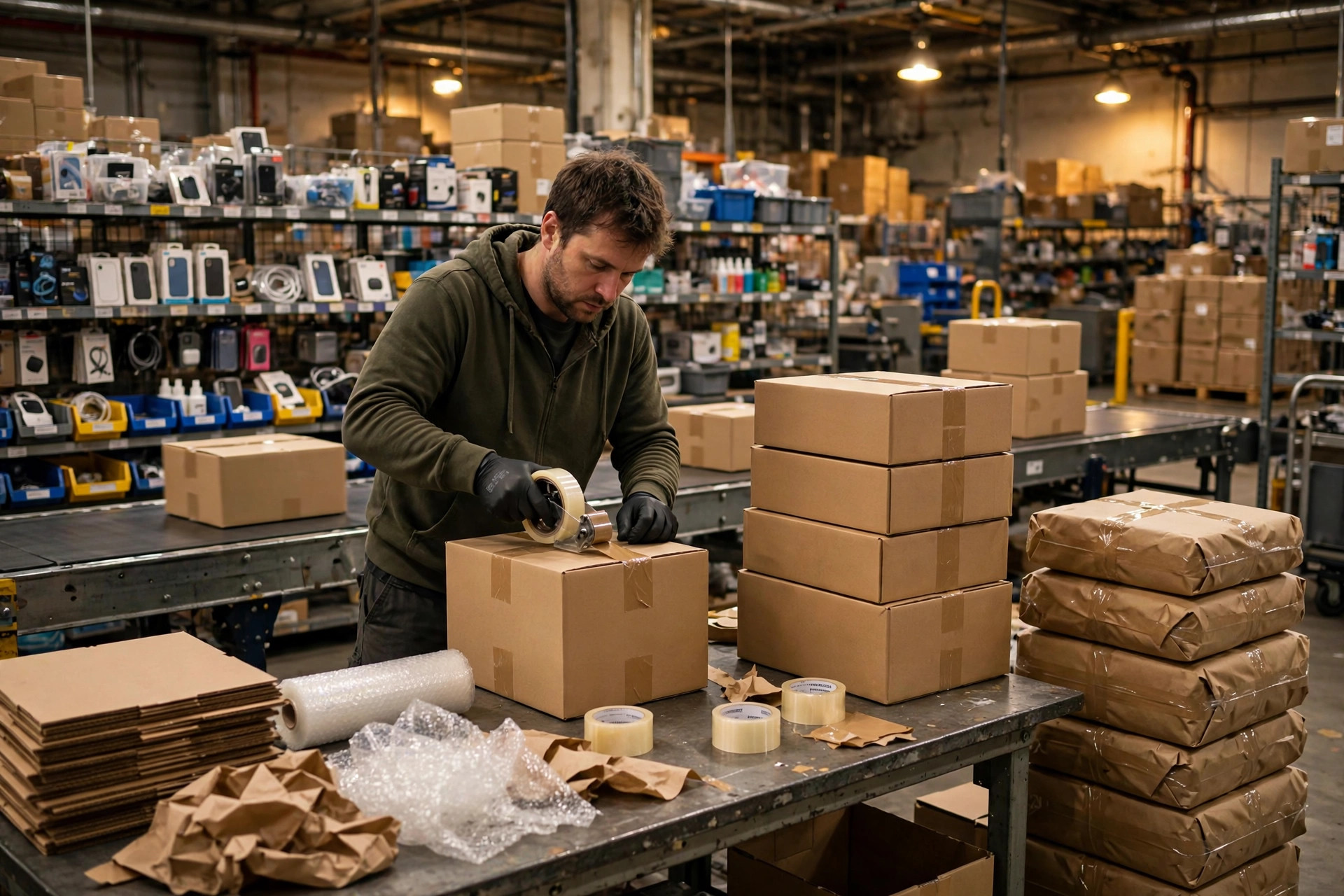
Phase one, 2022, on the assumption of roughly thirty orders a day in small home goods. My garage system was crude but it worked: print the previous day's orders in one batch in the morning, pick by SKU in piles, check everything in one pass, then label and seal in one pass, then wait for pickup. The one rule that made it work: never pack order-by-order as orders trickle in. Batch picking and batch packing kept errors low and kept me sane, and at that volume self-fulfilling was the right call — the saved storage and pick-pack fees were real profit.
Phase two was the lesson. Before one peak season I launched a product push and orders multiplied — on my working assumption, past a hundred a day. Two of us working flat out still fell two days behind. Independent-store buyers are less patient than marketplace buyers; the where-is-my-order emails stacked up and a couple of customers went straight to payment disputes. After that I moved my high-volume standard products to a 3PL for storage, picking, packing, and dispatch, and kept only a small set of high-value items that need my own hands-on check at home. It cost more per order, yes. But my time came back, and orders grew because I was testing products and tuning ads again — not because I taped boxes faster.
Shopify seller warehouse fulfillment in practice: picking, packing, and returns
If you are still self-fulfilling, three fixes buy you a lot of runway. First, layout: put fast movers closest to the packing bench and stop wasting steps. Second, a real check step: scan or read back every SKU and quantity out loud at the bench — embarrassingly simple, and my error rate dropped immediately. Third, standardize consumables: two or three box sizes, one filler type. Fewer choices at the bench means faster packing.
Returns are where independent stores quietly bleed. Marketplaces hand you a returns machine; your own store makes you build one. My three-tier rule: unopened returns get inspected and go straight back to the shelf; lightly flawed items become clearance listings; damaged items get photographed, documented, and written off fast instead of haunting a corner for months. If you use a 3PL, write returns handling into the agreement before you sign: who inspects, how photos come back to you, what restocking costs, and how long unclaimed returns sit before disposal. And when you compare 3PLs, do not compare pick-pack price alone — ask about error compensation, inventory accuracy, and peak-season cut-off times.
Here is my field-tested trigger: for two straight weeks, if shipping takes more than a third of your working day, or shipping has already delayed one product launch or one ad test, stop debating. Move the volume products to a 3PL for a one-month trial and keep the fiddly items at home. Shopify seller warehouse fulfillment has no prize for doing everything yourself — the win is spending your hours on the work that makes orders grow. This one I have tested myself, and it works.
By Ah K, E-commerce Seller (5 yrs)