Let me tell you something. After all these years on the road, the fussiest cargo I have ever hauled is not glass, and it is not precision instruments. It is Madagascar vanilla beans. They smell wonderful, and they have a terrible temper. A couple of harvest seasons ago, I was waiting to load at a collection point north of Antananarivo when the shipper opened a case and found white mould blooming across the pods. That one case was not just a write-off: when mould shows up, the price of the whole shipment starts sliding. I still got paid for the run, but the cargo itself went at a discount. That day taught me the real lesson of vanilla: the warehouse maths has to be done before the truck is loaded. Anything you try to fix at the port is already too late.
Two Vanilla Loads That Went Wrong on My Route
The first load went wrong at that same collection point. Beans had come in from farm after farm. Some were dried through, some still carried dampness inside, and they were all packed into the same cases. Within two weeks, the damp pods went mouldy first, and the mould smell crept into the dry pods next to them. Dampness sits sealed in a case and works away quietly. And here is the cruel part about vanilla: because the aroma is so strong, any off smell has nowhere to hide. The moment a buyer opens a case and catches that sour note, the price negotiation turns against you in a single sentence.
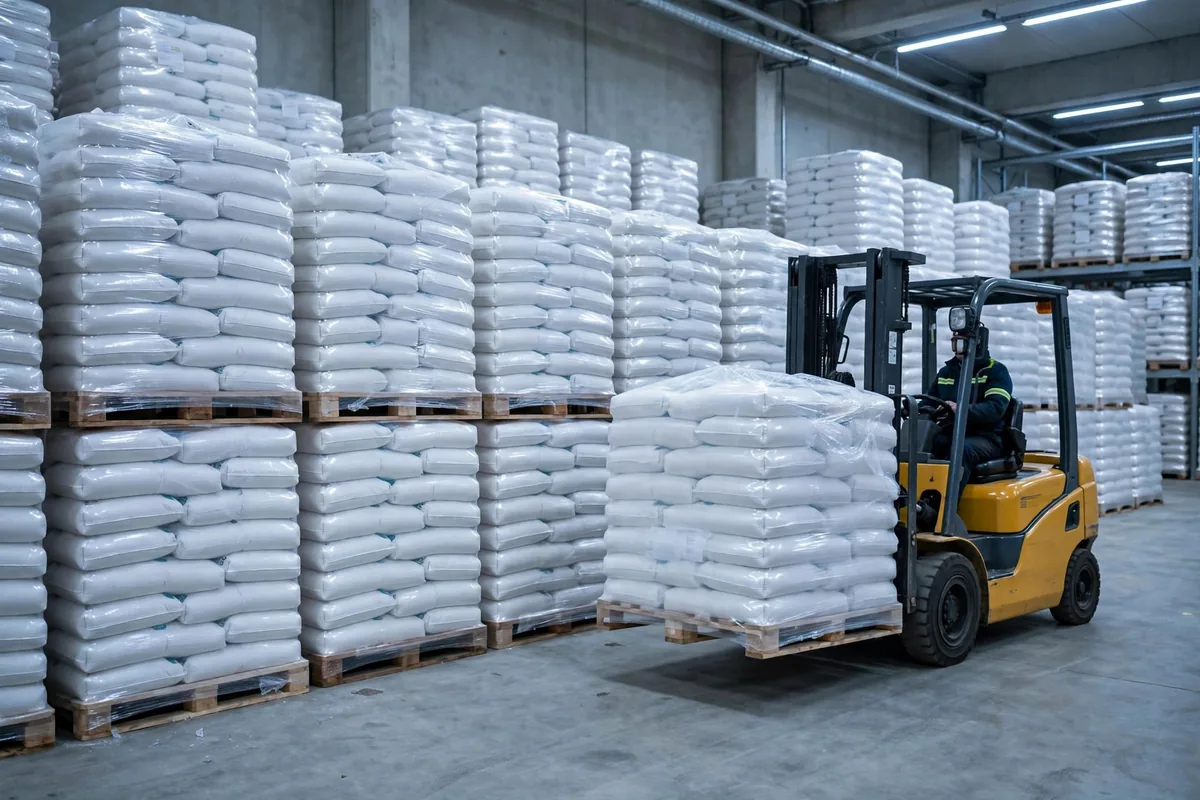
The second load went wrong near the port of Toamasina. A shipment was booked on a sailing, the sailing slipped by a few days, and the cargo sat longer than planned in a temporary warehouse by the port, in the rainy season. The shed's ventilation was nothing special, and the shipper, afraid of damp, had the cases wrapped up tight. The wrapping kept the rain out but trapped the moisture inside. The pods went soft, and the aroma turned dull and stuffy. The shipper kept saying the same thing to me: when the sailing moves, the storage time moves, and every bit of damp-proofing you did earlier has to be recalculated. After all these years on the road, the loads I dread most are the ones that are "only a few days late."
What These Two Loads Tell You About Vanilla Warehouse Storage
Strip both stories down, and vanilla export warehouse storage is afraid of three things: dampness, stray aromas, and crushing. Dampness is the root of mould, stray aromas are the enemy of fragrance, and crushing ruins the look of the pods. After harvest, the beans go through grading, sun-drying and curing. If that stage is done sloppily, everything after it is built on a hole. Grading is not about looking tidy. It is about keeping pods of different dampness apart, so that one damp handful does not drag down a whole case of good beans. If drying and curing stop short, the pod looks dry outside while the core still holds moisture, and once the case is sealed, that moisture turns the case into a mould farm.
Here is the counter-intuitive part, and most people get it backwards: drier is not always safer. Dry the pods until they are brittle and you have lost the aroma, and the buyer is left holding what looks like dry firewood. What buyers want is a pod that is supple and oily, not one that crackles. Mould prevention and aroma preservation pull in opposite directions, and warehouse work is finding that middle point. Better to grade finely and pack carefully than to over-dry everything to save trouble. The labour you save on drying is paid back many times over in the price you lose on the shipment.
Advice for Shippers and Warehouses: Three Separate Bills
The first bill is grading. Grade the beans the moment they come in, by dampness, length and appearance, and stack each grade separately with its own record. Mixed packing saves one round of labour, and mould repays you case by case. Different grades sit in different zones with clear labels, so anyone walking in can see which lot ships first and which lot needs watching.
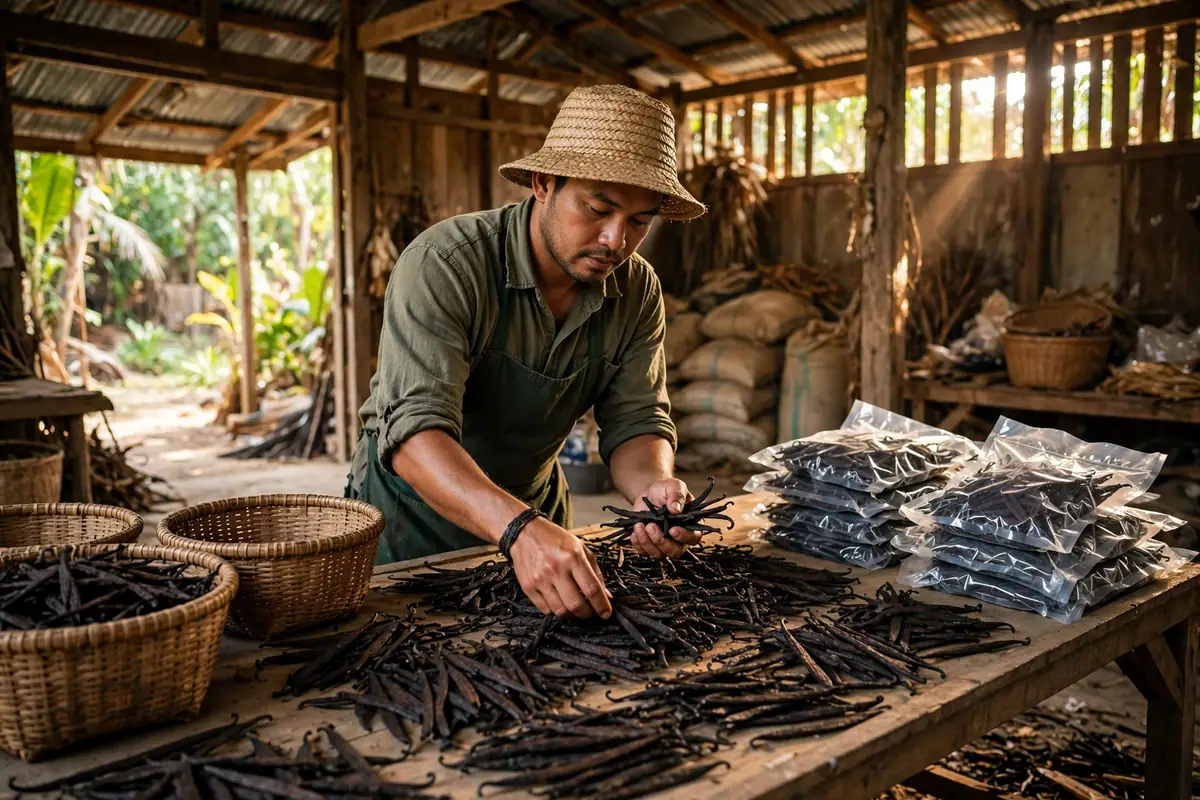
The second bill is packing. Vacuum packing is the best money you will spend in vanilla storage. Pull the air out and dampness cannot get in, aroma cannot get out, and stray smells have no way in. But vacuum packing is not finished when the machine stops. Check every seal, check every bag, and stack the cases lightly. Pack the bottom layer too heavy and the pods deform under the weight. And before a pod goes into a vacuum bag, check its dryness again. A damp pod sealed in a bag is just mould with a roof over its head.
The third bill is the port connection. From the producing region to Antananarivo, then on to Toamasina for export, every leg needs slack for a sailing that moves. Shipping in the rainy season, ask in advance what the temporary warehouse offers for ventilation and damp-proofing, and when a sailing slips, rework the inspection routine at once. Sometimes one extra look is what saves a whole shipment.
I also recommend a rough-and-ready daily routine: look three ways, feel three ways. Look at the cases for water marks and mould spots, at the seals for leaks, and at the labels for lot and date. Then feel the bags for firmness, the pods for suppleness, and the bottom cases for dampness. The dangerous warehouse is the one that says "we checked last month." Vanilla changes fast, and inspection is never "done." It is only "how many times this week."
One more thing deserves its own note: stray aromas. Vanilla picks up smells fast, and if cases share a zone with other strong-smelling produce, the fragrance picks up foreign notes right through the bag. The fix has to be real separation, not a line painted on the floor: distance between zones, and no shared ventilation path. Aroma is the whole value of the bean, and once a foreign note is in there, no amount of money washes it out.
The same care applies to drying and curing. Do not trust the surface alone: split a pod and look at the core, squeeze it for suppleness, smell it for a clean fragrance. Those few minutes cost far less than opening cases later and doing the whole job again. Before the cargo leaves, open a few sample cases and check the seals, the dryness and the aroma. A problem found at home can still be fixed locally. A problem found on the ship belongs to the buyer.
On the compliance side, one honest word: import duties and inspection rules change from year to year, so check the latest official requirements for the destination before shipping, and confirm the paperwork with the freight forwarder and the destination customs broker before the cargo sails. Vanilla is high-value cargo, and one paperwork slip can undo the best warehouse work in the world.
There is an old saying among drivers that good cargo fears being shut away, not being looked at. Vanilla is exactly that kind of cargo. Look at it often, handle it gently, keep it dry without drying the life out of it, and keep its fragrance clean. Get the mould bill, the aroma bill and the vacuum bill right, and the pods will still smell like themselves when they reach the buyer. That is what holds the price.
By Shifu Zhao, Trucking Veteran (15 yrs)