Here is the conclusion up front. Lyon works for operators who distribute across France without betting everything on expensive space around Paris. It does not work for freight that lands at a port, clears, and wants to leave again the same week. lyon france warehouse logistics is not really a geography question. It is a coverage bill, a linehaul bill, and a labor bill arriving in the same envelope, and you had better open all three before you sign anything.
I have watched too many people choose a warehouse with a compass on a map. They draw a neat circle, the circle looks balanced, and they feel clever. Warehouses are not circles. Freight has an origin, orders have a shape, trucks have routes they like and routes they tolerate, and somebody has to be willing to show up for the early shift. Lyon sits in an interesting spot because the main north-south and east-west motorway axes of France cross there. Paris lies to the north, Marseille to the south, Italy to the east. For national distribution that crossroads position is genuinely useful. It is just not free, and the price is hidden in the shape of the coverage.
lyon france Coverage: Strong North to South, Weaker Side to Side
Start with what coverage from Lyon actually looks like. North toward Paris is a mature motorway corridor. South toward Marseille is the same. East toward Italy means harder terrain, and cost and transit reliability on that leg are simply less predictable than on the north-south runs. So the real coverage shape of a Lyon warehouse is not a circle. It is an ellipse stretched north and south, strong along that axis and weaker toward the western and eastern edges, where the map says reachable and the road says reachable eventually, usually through a relay or a longer transit promise.
Pull out your own order heat map before you believe anyone's coverage claim, including mine. If your orders concentrate around greater Paris, the north, and the southeast, the Lyon ellipse covers you well. If the weight of your orders sits on the western coast, that ellipse leaks, and the leak shows up as a linehaul cost that creeps upward month after month while everyone blames the carrier.
A home-goods seller learned the two-sided version of this lesson in 2022. They moved their French warehouse from south of Paris to the Lyon area for straightforward reasons. Space and labor around the capital kept getting harder, and a large share of their orders were headed south and east anyway, so shipping from Paris meant freight traveled north to consolidate and then south again to deliver. From Lyon, the southbound and eastbound linehaul shortened and the overall delivery bill improved. What they had not priced properly was the inbound side. Their goods arrived through northern ports and air gateways near Paris, then needed an inland transfer down to Lyon, and in peak season that transfer wobbled, with several inbound batches losing days in the handoff. The lesson is plain. A Lyon warehouse saves money on the outbound end and spends money on the inland end. Put both ends in the same table. People who only calculate one end always end up feeling cheated.
Test the structure with your own numbers. Assume, purely as an illustration, a seller shipping on the order of ten thousand orders a month inside France, with roughly four tenths of orders in the north, four tenths across the south and east, and the rest scattered. Replace those shares with your real order data before concluding anything. Under that shape, Lyon's linehaul advantage on southbound and eastbound orders can offset much of its inbound transfer penalty. Change the shape so the north holds more than seven tenths of orders, and the advantage mostly evaporates, leaving the extra inland leg as pure cost. Rent, labor, and linehaul prices vary by place and season, so price them from current local quotes. Borrowing another operator's numbers is the most common way warehouses lie to themselves.
warehouse logistics Trade-Off: Inland Wins Distribution, Ports Win Direct Flow
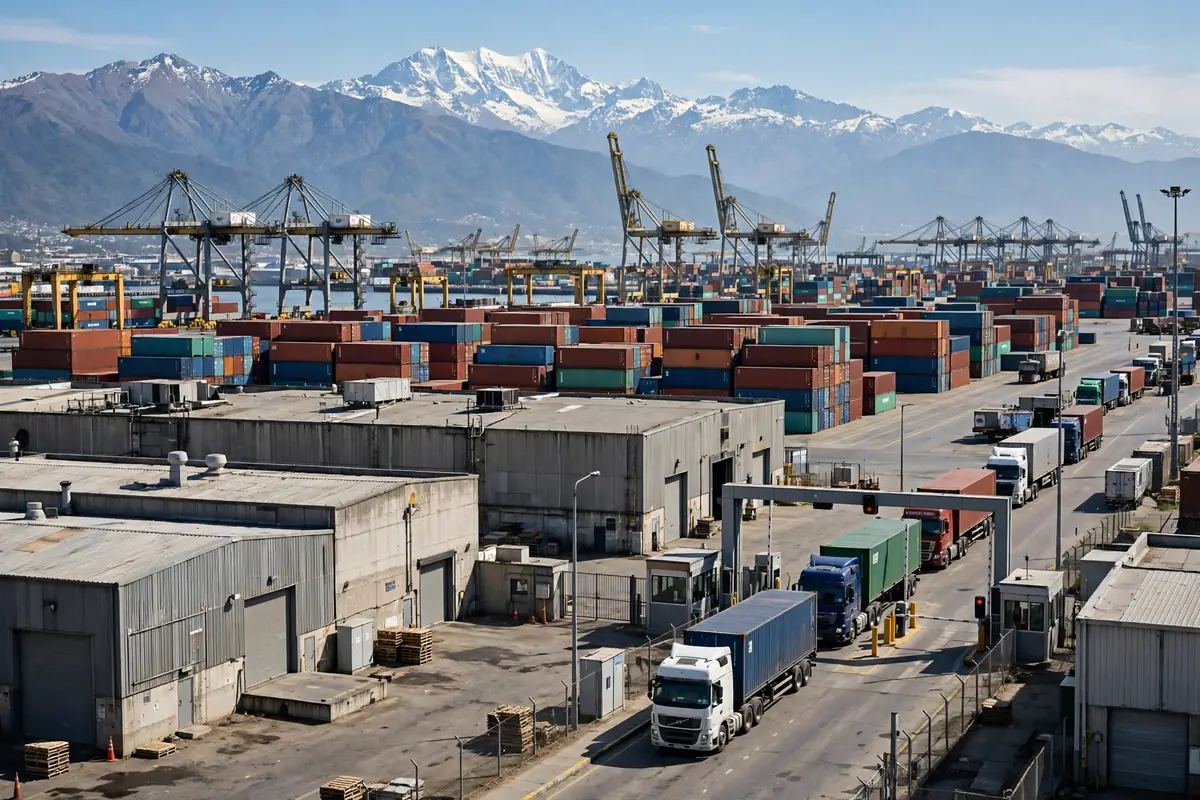
The core decision inside lyon france warehouse logistics is inland warehouse versus port warehouse, and the two run on opposite logic. A port warehouse is built for freight that arrives, clears, gets labeled and sorted, and enters the delivery network fast. Its strength is a short inbound leg and a quick handoff. Its weakness is that port-city warehouse space is contested, and reaching deep into the interior stretches the linehaul. Lyon runs the other way. You pay an extra inland leg on the way in, and in exchange you stand in the middle of the country distributing outward in every direction.
That gives you a clean test, and it is the only test that matters. Look at the shape of your freight flow. If it is direct flow, large batches, short dwell time, concentrated destinations, put it near the port, because routing it through Lyon adds an inland movement that buys you nothing. If it is distribution flow, freight arriving in bulk and leaving as thousands of individual parcels across the whole country, with labeling, kitting, or returns work happening in between, then the inland position starts earning its keep. Same city, same warehouse, opposite answers, depending entirely on what your freight actually does all day.
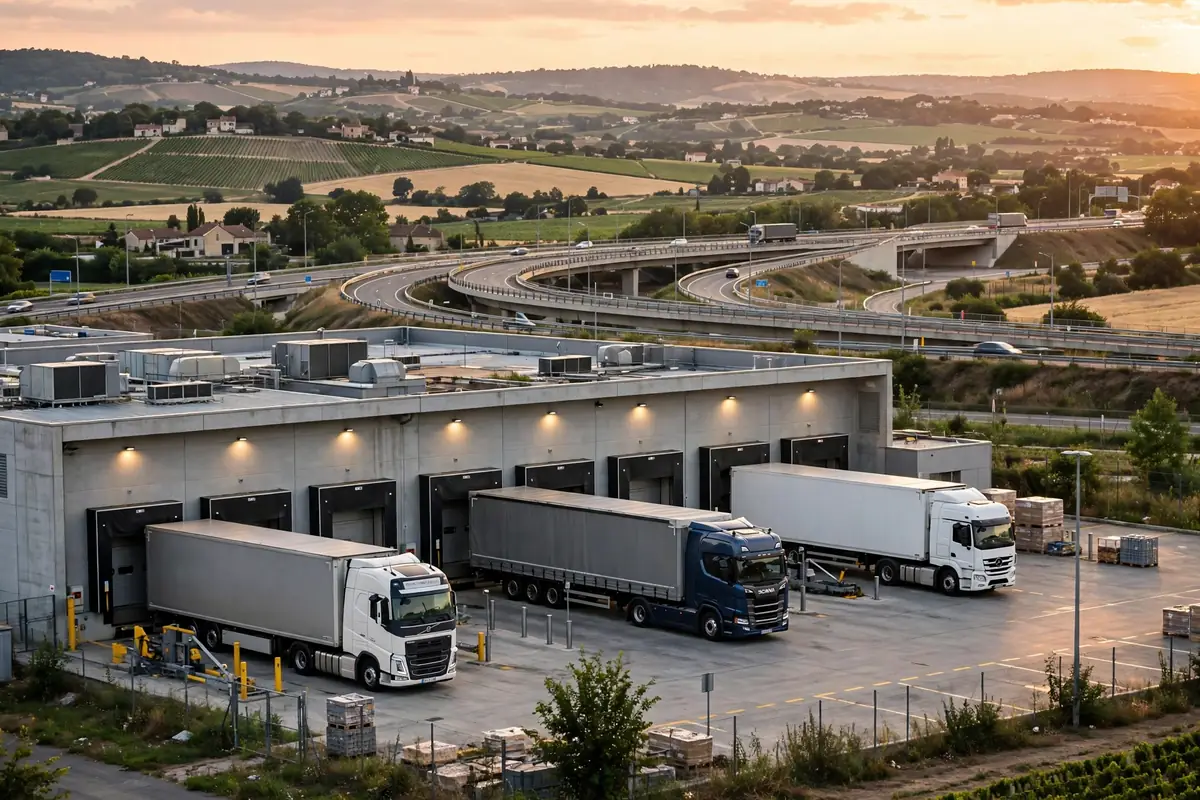
Labor and site selection are the other half of the bill people underprice. Employment arrangements, shift patterns, and rest rules in France follow their own framework, and the specifics should be confirmed against current local rules and professional advice rather than copied from another country. On the ground, I look at three things when I walk a park. First, truck movement, how close the gates are to a main motorway exit and whether trucks can get in and out cleanly in the early hours, because that decides linehaul reliability. Second, real labor availability, whether the area has a working pool of warehouse labor and the transport links to bring peak-season reinforcements in, because being near a city on the map is not the same as staffing a shift. Third, room to grow inside the same park, because moving a warehouse once costs far more than paying slightly more rent at the start. None of those three can be judged from a brochure.
An outdoor-goods company ran this comparison seriously in 2023 and chose a site closer to a port instead of Lyon, and they were right. Their freight was heavily seasonal, arriving in large waves before the season, with a short window to clear, receive, and pre-distribute. Every extra inland transfer compressed that window. For their flow, time was worth more than distance. Hand the same comparison to a household-goods seller shipping steadily all year into a national parcel network, and the answer can easily flip. There is no standard answer in site selection, only whether the site matches your flow.
So what belongs in Lyon? National distribution freight belongs there, steady volume spread across France, with value-added work in the building such as labeling, kitting, and returns processing, because that freight uses both the central position and the operating space. Freight that also serves northern Italy and nearby markets can justify Lyon as a compromise point, even if the eastbound leg is not the easiest run. What does not belong there is direct import flow that must turn around fast after landing, orders concentrated overwhelmingly around Paris, where a central warehouse just adds a daily long haul, and highly seasonal bulk freight whose time window gets eaten by the transfer.
One last practical word. If you do land in Lyon, get local professional help on employment contracts, scheduling, and site compliance under current rules. Do not transplant the playbook you used in another country and assume it travels. In France that part has its own way of working, and learning it the hard way usually costs more than the advice would have.
Say it plainly, you are never choosing a city. You are choosing the road your freight will travel every day. For distribution freight, Lyon is a shortcut. For direct flow, it is a detour. Figure out which one your freight is before you sign the lease, not after, agreed?
By Lao Mi, Supply Chain Veteran (20 yrs)