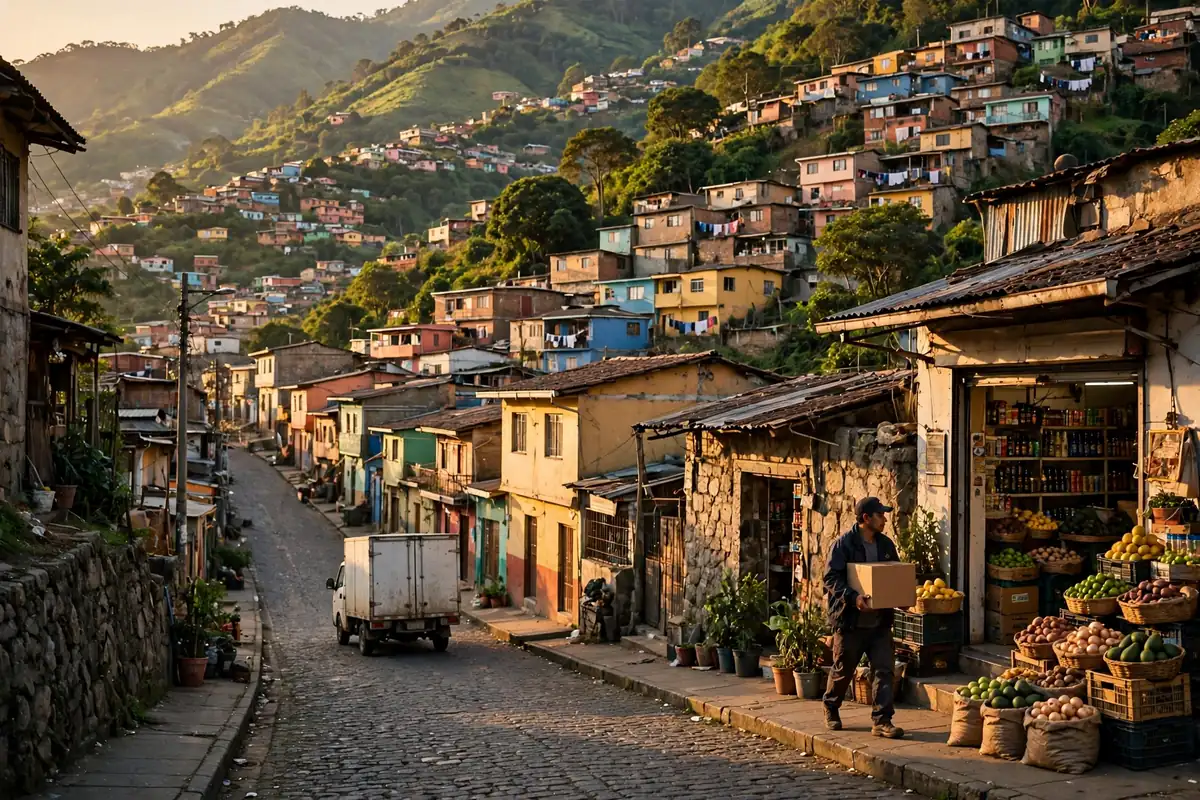
Let me tell you something about Medellín, Colombia, and urban warehouse distribution: if you plan the last mile here the way you would in a flat city, you will get the math wrong. Medellín sits in a mountain valley at about 1,500 meters, and it is Colombia's second-largest city. The whole place is hills. Where you put the warehouse and which road the truck takes — all of that starts with the terrain, not the price list. After all these years on the road, I have watched plenty of shippers lose money here, and it was rarely because the product was bad. It was because the warehouse was in the wrong place.
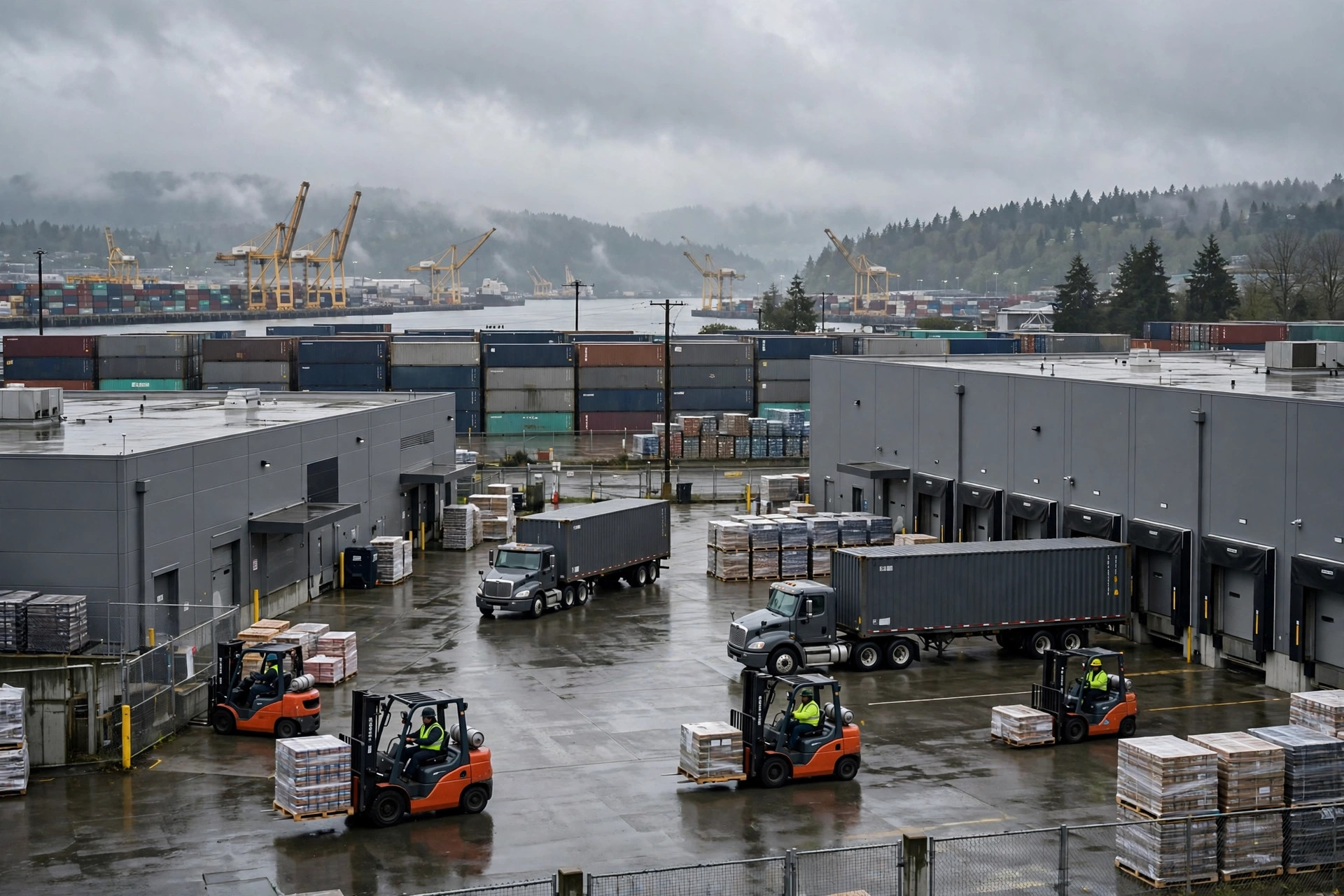
It was a rainy afternoon last year, and I was driving household goods out of a warehouse in Itagüí, south of the city, headed for El Poblado. On the map it looked like a short hop, maybe ten kilometers, normally a little over an hour. That day the rain was coming down hard and the big trucks were crawling uphill. I crept forward on the brake, and by the time I reached the door the light was fading — two to three hours for ten kilometers. The customer just said, if every delivery runs like this, my shelves cannot wait. That is when it sank in: here, delivery time is not measured in kilometers. It is measured in slopes, in rain, and in the time of day.
A few months later, a shipper selling daily goods told me his problem. New to the Colombian market, he had picked a big warehouse out on the high plateau near Rionegro, east of the city, because the rent looked cheap. On paper it was just over a ridge and into town. In real life, every run meant climbing a mountain road. His trucks missed the morning opening hours and got caught in the evening rush coming back. Returns and top-ups were worse: one round trip could eat half a day. After about three months he did his own accounting — the rent he saved was gone, spent on fuel, driver hours, and lost orders. So he split the operation: the big warehouse stayed on the plateau for reserve stock, and he rented a small transit warehouse in the south of the city. Stock for next-day orders moved into town the day before. Delivery times steadied, and the business started to make sense.
Picking a Warehouse in Medellín: Look at the Slope Before the Price
Warehouses around Medellín fall roughly into three places. A small warehouse inside the city sits close to customers and suits fast-moving goods, but big trucks do not always get in during the day, and loading space is tight. The industrial belt to the south, around Itagüí and Envigado, has plenty of warehouses and easier roads, which is why so many shippers end up there. Out to the north around Bello, or east on the plateau, space is bigger and rent looks lower, but every trip into town means a climb and time you never get back.
Let me tell you how I judge a warehouse: not by the rent per square meter, but by how many trips a truck can make in a day from that door. In this city, a truck that makes three runs a day instead of two is worth a driver's wage plus a tank of fuel. A warehouse that looks close in a straight line can still be slow, because the slope, the one-way streets, and the rush-hour traffic decide the real delivery time. That is what cheap really means here.
The Last-Mile Cost Is Hiding on the Hill
Most people add up last-mile cost as fuel plus driver pay. In a mountain city you have to add three more lines: the extra fuel burned climbing, the hours lost sitting in traffic on a slope, and the empty return leg when the truck comes back down with nothing on board. Plenty of neighborhoods are built halfway up a hill, where a big truck simply cannot go. The last stretch has to be done by a small van, a motorcycle, or somebody carrying the box on foot. The address can be perfectly written, and the driver still has to call from the bottom of the hill for directions.
Here is a simple comparison I use with shippers. It is not a price list — treat the money columns as relative levels, not quotes:
| Warehouse option | Rent level | Delivery speed into town | Best for | Watch out for |
|---|---|---|---|---|
| Small city warehouse | High | Fastest, same-day | Fast-moving goods, small parcels, urgent orders | Truck access limits, small loading area |
| Large south-suburb warehouse | Mid-range | Fairly steady, slow at peak hours | Household goods, regular stock | Rainy afternoons can jam the hillside roads |
| Large north or plateau warehouse | Relatively low | Slowest, mountain crossing takes time | Slow-moving goods, reserve stock | Delivery times swing widely, top-ups need a day ahead |
The table makes the counterintuitive point plain: the cheapest rent can carry the highest total delivery cost. A small city warehouse costs more in rent, but the time saved, the fuel saved, and the orders not lost often cover the difference. In Medellín, last-mile delivery is not a contest over who pays the least rent. It is a contest over who counts the full bill. There is another trade-off that catches newcomers by surprise: a bigger truck carries more in one load, yet it turns, climbs, and enters hillside neighborhoods with much more difficulty. Sometimes two small vehicles running separate routes beat one big truck on both speed and reliability.
Timing has to follow the mountain's rhythm as well. Mornings are usually the smoothest window, good for the long runs and the hilly districts. Once the afternoon rain arrives, the slopes get hard, so that is the time for short, flat-city runs. I have seen warehouses push all their outbound loads into the afternoon, and the whole fleet ended up queuing in the rain. The fix was simple: send the far and hilly orders out first in the morning. A five-minute confirmation call before the driver leaves can save half an hour of wasted driving.
Working with a warehouse crew matters too. Do not set receiving times too tight; leave room for rain and traffic. If the warehouse sits by a slope, the loading area needs enough room for a big truck to turn, or the space is useless. Put the fast-moving stock near the door. And a driver who knows the roads beats a navigation app every time — the app only knows the shortest route.
Advice for Shippers Entering Colombia: Three Things to Settle First
One, do not rent a big warehouse on day one. Start small, or work with a local third-party warehouse for a few months, and watch which products move fast and which districts order most. Medellín looks like one market, but buying habits differ by district — ordering rhythms in El Poblado and Laureles are not the same.
Two, do not rely on a single transport fleet. Road conditions here change fast, and when one fleet is fully booked, another one can step in. A local fleet brings something no contract can write down: drivers know which roads are passable and which slope to avoid when it rains. Vehicle restrictions and city entry rules can also vary by area and change over time, so check the latest official policy before dispatching.
Three, count returns and top-ups as part of the delivery plan, not as an afterthought. Many shippers only budget for outbound delivery, yet here a return trip costs nearly as much as a delivery. Sturdy packaging, a careful check of the address and phone number, and a quick confirmation with the customer before dispatch can prevent plenty of wasted return journeys. Do not wait until a bestseller sells out before moving stock down from the plateau warehouse.
After all these years on the road, I have come to see it this way: Medellín does not punish people. It just does not reward anyone in a hurry who refuses to learn the roads. Pick the right warehouse, drive the route that actually works, and leave enough time in the plan. On mountain roads, haste is the most expensive cargo you can carry.
By Shifu Zhao, Trucking Veteran (15 yrs)