Lubumbashi lives or dies by what rolls out of its mines. As the capital of Haut-Katanga Province and the heart of the Copperbelt, the city gathers the Democratic Republic of Congo's copper and cobalt, and it is also where the journey to the port first gets stuck. Digging ore out of the ground is one problem. Getting it to a ship is another, and between the two sit warehousing, export quotas, and the long road to the sea. Until that chain is understood, any talk of Lubumbashi copper cobalt warehouse logistics is just speculation.
According to the U.S. Geological Survey's Mineral Commodity Summaries 2026, the DRC produced about 230,000 tonnes of cobalt in 2025, roughly 73% of the global total. That figure describes a structural reality: world cobalt supply is concentrated in a single country, and that country's export policy can rewrite the market in a matter of months. In February 2025, the DRC suspended cobalt exports for four months, then switched to a quota system in October 2025, with quotas far below production capacity. When policy shifted, ore started piling up in mine-site yards, and warehousing moved from back-office support to front-line problem. Supply chain researchers often say the bottleneck sits not where output is largest but where flexibility is smallest, and Lubumbashi in 2025 proved the point.
Where Lubumbashi's Cargo Comes From
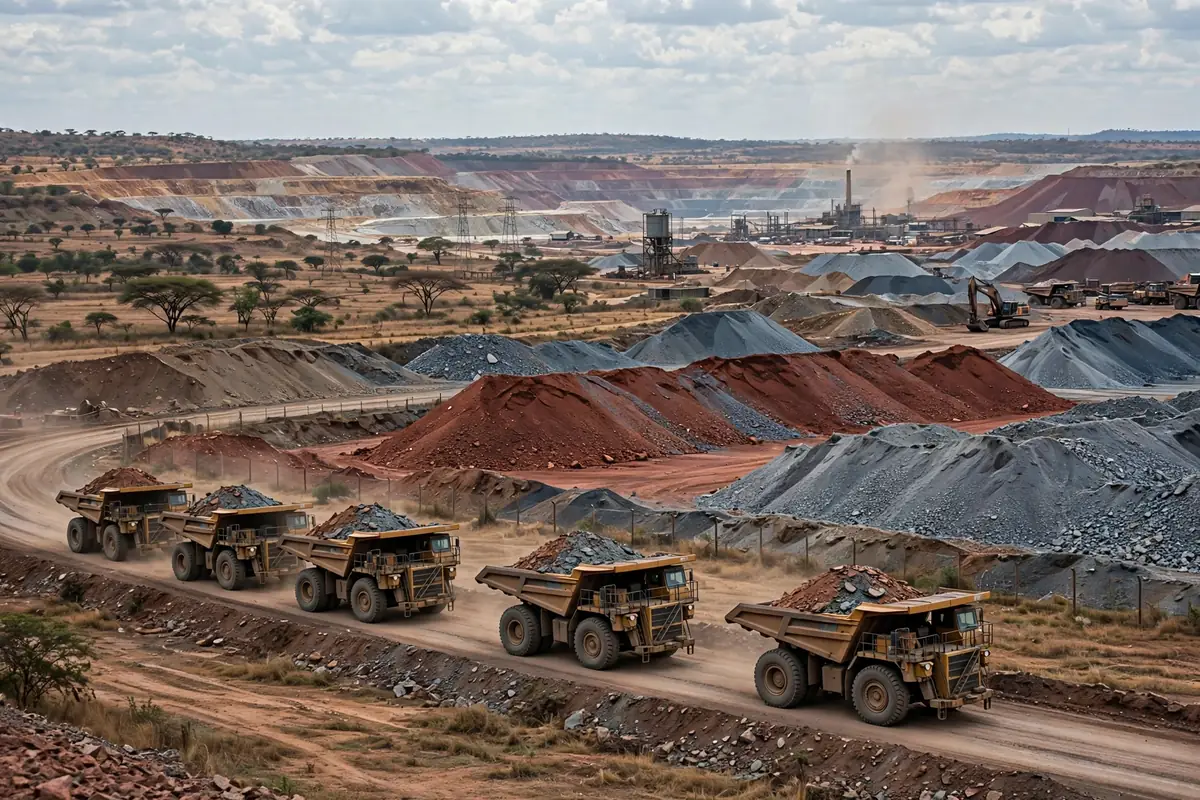
The supply picture around Lubumbashi is not mysterious. The Ruashi mine sits right beside the city, and ore travels a short distance from pit to processing plant and stockyard, a chain so short there is barely room for middlemen. CMOC reported record 2025 output of 117,500 tonnes of cobalt and 741,100 tonnes of copper, produced at the Tenke Fungurume mine and the Kisanfu mine. Tenke Fungurume has annual copper capacity of 450,000 tonnes, and Kisanfu holds the world's largest cobalt resource. Those volumes make one thing clear: the cargo moving through Lubumbashi is not small, and a stall anywhere in the chain quickly becomes an overflowing yard.
Concentrated supply is a double-edged sword, and that is worth spelling out. On one side, output from a few large mines is stable, so route planning can be built around them and warehouse nodes do not need to be scattered everywhere. On the other side, when one large mine's shipping rhythm is disrupted by policy, every yard in the region comes under pressure at the same time, with nowhere to divert cargo. That concentration means warehouse planning in Lubumbashi must be sized for the worst case and given spare capacity, not designed around average shipment volumes. Anyone who sizes a yard on averages will discover the error in the first month policy tightens.
Lubumbashi Copper Cobalt Warehouse Logistics: Three Routes to the Sea
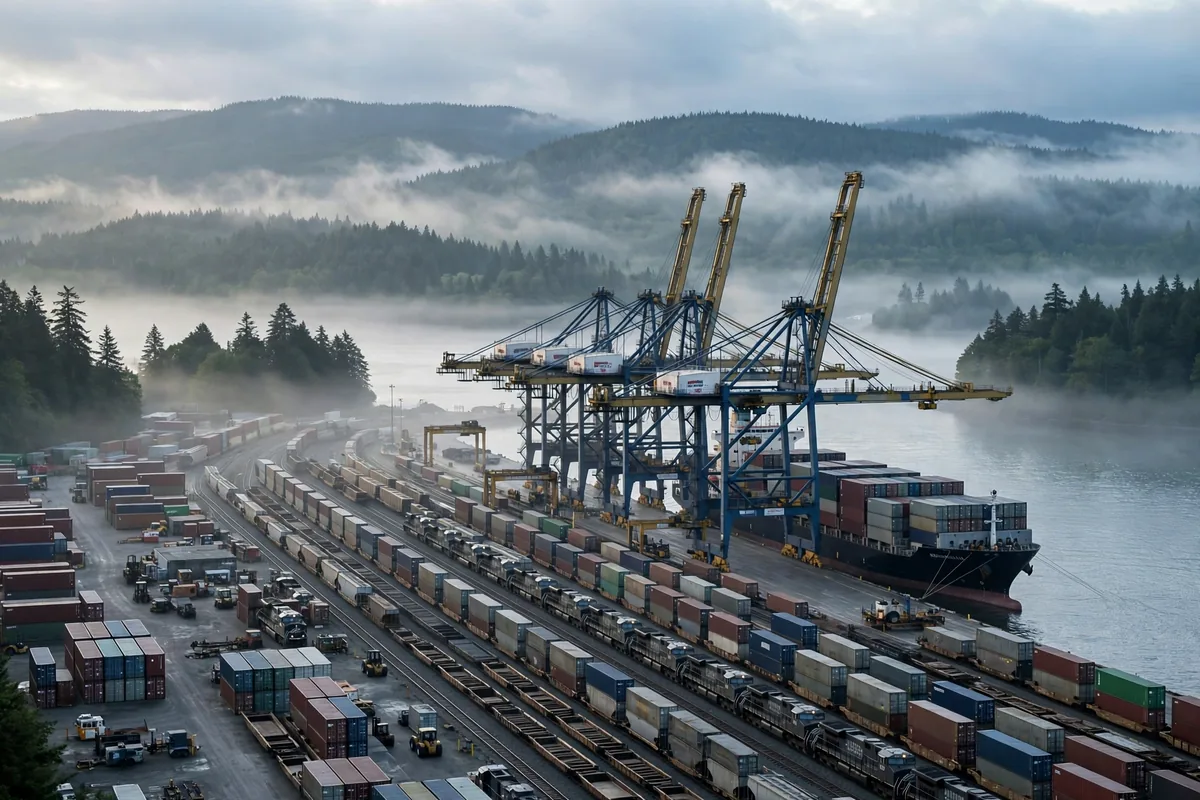
From Lubumbashi, three main directions lead to the sea: south to Durban, east to Dar es Salaam, and west along the Lobito Corridor. None of them is perfect, and choosing one means choosing among three kinds of risk, with no standard answer, only the trade-off that fits the moment.
| Direction | Strength | Risk |
|---|---|---|
| South to Durban | Mature port, many shipping lines | Long overland distance, many handover points |
| East to Dar es Salaam | Relatively shorter distance | Customs clearance and congestion vary sharply |
| West via Lobito Corridor | Direct to the Atlantic, strong political backing | Infrastructure still being upgraded |
What this table really says is that corridor choice is not a decision for the logistics department alone. It has to be made together with sales rhythm, quota windows, and the receiving capacity of the destination port. Durban's port is mature, but the long overland leg means high in-transit inventory. Dar es Salaam is closer, yet clearance delays make arrival times swing unpredictably. The Lobito Corridor enjoys clear political support, but its infrastructure is still being upgraded, so it cannot carry the full volume in the short term. The sensible approach is a main corridor plus a backup kept warm: run volume on the main route and send a small share down the backup so it can be scaled up when it matters.
One structural fact shapes the whole picture: most of this cargo is ultimately refined in China, which refines roughly 75% to 80% of the world's cobalt, while the DRC holds about half of global cobalt reserves, roughly 6 million tonnes out of a global total of about 12 million tonnes according to the USGS. Resources sit at one end, refining capacity at the other, and Lubumbashi sits in between, so any disruption in warehousing or transport ripples to both ends. That structure is exactly why Lubumbashi copper cobalt warehouse logistics cannot stop at whether the local yard is big enough; it must also match quota rhythms and the receiving capacity of the destination port.
The Cost of Waiting: The Hardest Line in the Warehouse Bill
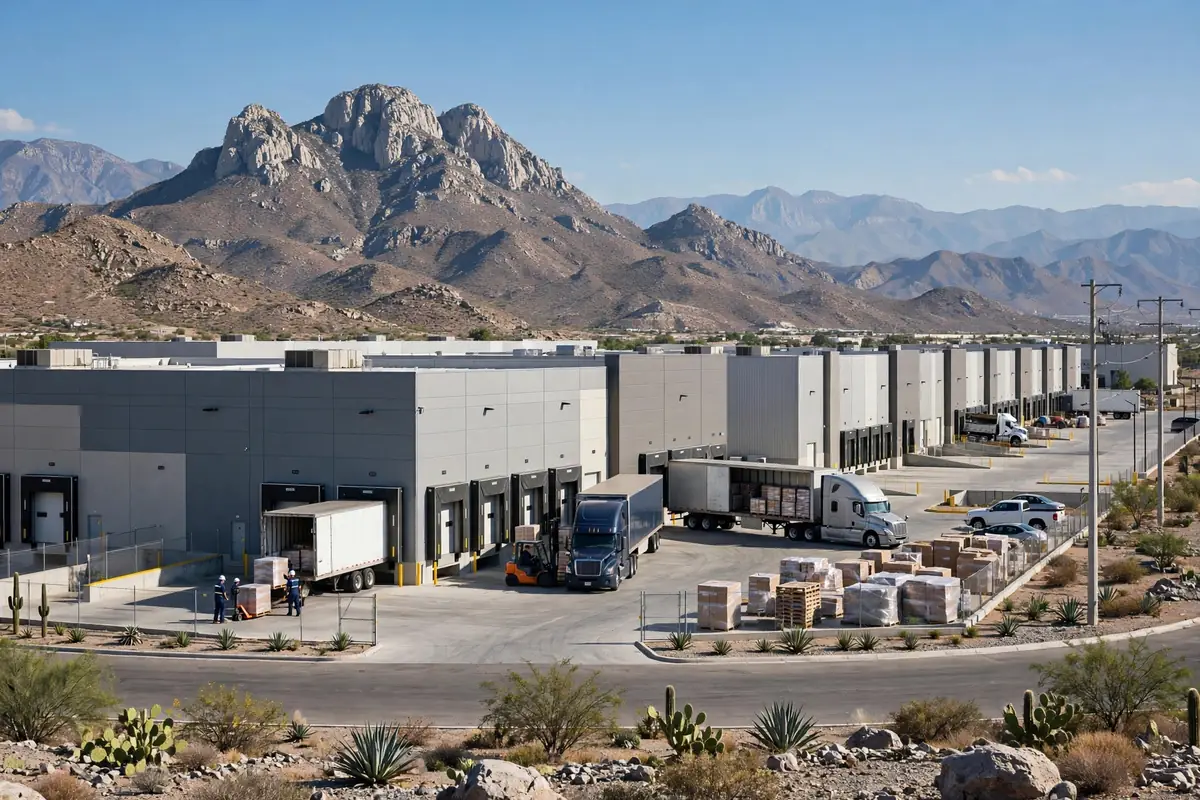
Here is the counterintuitive part: the hardest part of mine-site warehousing is not storage, it is waiting. Ore does not mind sitting still. What hurts is not knowing how long it will sit. Under a quota system, export allowances are released in batches, and while one batch is still waiting, the next batch of ore arrives in the yard. Yard space is fixed, cargo keeps coming, and as time stretches, the costs of rehandling, restacking, and resampling quietly climb. Many mining companies only discover, when they finally add up the bill, that the real expense was not rent but the uncertain time cargo spent waiting on policy.
Consider a scenario: suppose a mining company ships on a monthly plan and the quota window suddenly tightens for a month. The yard holds an extra month of cargo, and on the surface that looks like one more month of rent. In reality there is also the labor of restacking, the cost of resampling and retesting, and the price difference of rerouting to another corridor to protect a vessel booking. None of these is large on its own, yet together they often exceed the rent itself. Worse, assay data goes stale while cargo waits, so samples must be retaken before shipment, the laboratory queue adds days, and days turn into weeks. That is how the cost of waiting compounds: invisible on the ledger, everywhere in the cash flow. It is also the part of Lubumbashi copper cobalt warehouse logistics that spreadsheets miss most often, because waiting time never appears as a line item until it is already too late to budget for it.
Contract structure has to follow the same logic. A long-term yard lease at a fixed rent becomes a pure loss when policy tightens, while flexible terms that charge by actual days occupied and restacking moves tend to survive volatility far better. Contract terms may look like legal work, but in Lubumbashi they are part of warehouse cost, and signing the wrong clause means carrying the entire cost of waiting yourself.
Three Judgments for Lubumbashi Warehouse Planners
First, treat quotas as a permanent condition when planning production. The 2025 suspension and quota regime were not one-off events but tools that policymakers can reach for again. Production plans should reserve buffer yard capacity for policy swings instead of designing yards around full-speed shipments.
Second, never bet on a single corridor. Durban, Dar es Salaam, and the Lobito Corridor each have weaknesses, and the cost of keeping backup routes looks high until a single blockage produces demurrage losses that dwarf it. Route diversification is not a luxury on this corridor; it is a necessity.
Third, plan warehousing in step with sales rhythm. How large the yard should be and how much buffer capacity to hold should not be decided by the warehouse team alone. They should be derived backwards from quota windows, vessel schedules, and the receiving capacity of the destination port. When those three rhythms do not match, even the largest yard is just a bigger parking lot.
The Lubumbashi copper cobalt story will keep unfolding, but the variables that matter are not in the mine pit. They are in how quotas, corridors, and yards are coordinated, and whoever aligns those three rhythms first will pay the least tuition on this route. How long this pattern lasts depends on the DRC's policy direction and on how global refining capacity is distributed, and both are worth watching closely.
By Dr. Chen, Supply Chain Researcher