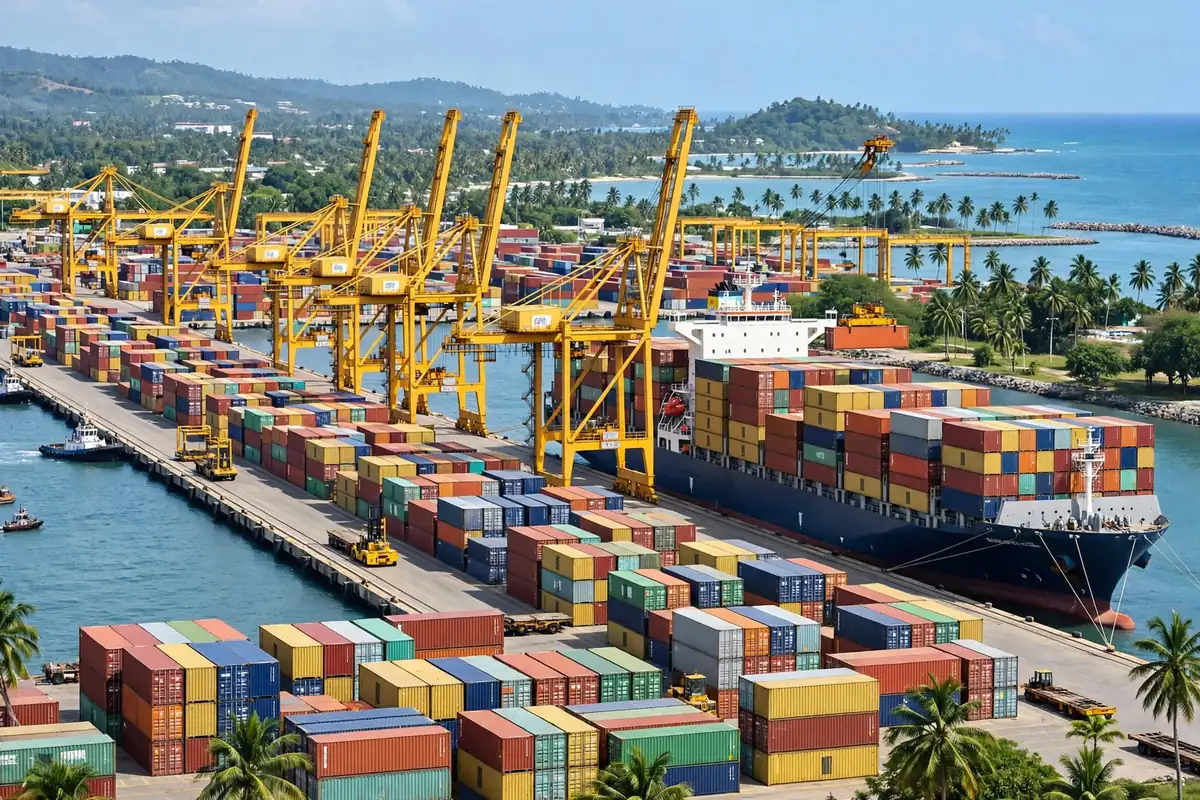
Let me say it straight: a lot of sellers hear "African port" and think the move is to stack freight there and wait for local buyers to show up.
Wrong. Completely wrong.
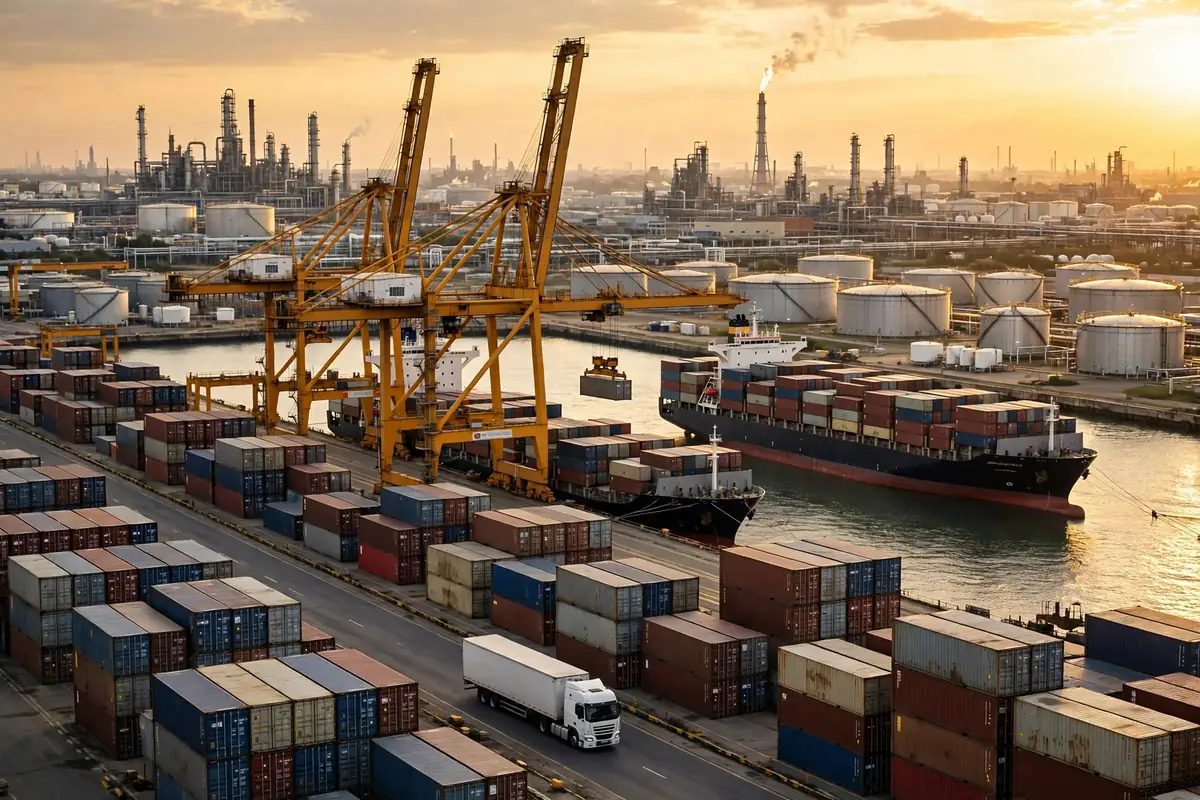
Lomé is not played that way. According to public port information, the Lomé Container Terminal in Togo has a 1,050-metre quay and a depth of 16.6 metres, and handled about 1.9 million TEU in 2023. Those numbers look strong, right? The number that actually matters comes next: about 93% of the cargo here does not stay in Togo. It moves on to landlocked Sahel countries — Mali, Niger, and Burkina Faso.
Ninety-three percent never stays. In a port where freight is basically just passing through, what does a warehouse even earn? I will break down Lomé port transshipment warehouse logistics the way a seller does the math.
Lomé Port Transshipment Warehouse Logistics Starts With Where Freight Goes
Five years selling cross-border, and my biggest lesson is simple: never fight the direction freight is already moving.
Freight through Lomé takes three routes. First, a box comes off one ship and goes straight onto another, or onto a truck, and keeps moving to another West African port. Second, a box comes off the ship into a transit warehouse, gets unloaded, sorted, relabelled, and reloaded onto a truck heading inland. Third, a small share really does enter the Togo market. That share is small and slow.
In 2024, 651 vessels called at Lomé. In April 2025, the port welcomed its first 24,000 TEU-class giant, the MSC Diletta. Ships are getting bigger, and turnaround will only get faster.
So if you treat Lomé as a final warehouse, you are fighting 93% of the flow. Your freight sits while everybody else's freight is already on the road. Rent, container detention, and tied-up cash pile up together. Most sellers cannot carry that.
The move that actually worked for me is the opposite: use Lomé as a pivot, not a destination.
A Port Where Cargo Barely Stops Still Pays Warehouses Three Ways
I split the Lomé warehouse money into three layers. Each layer earns differently and does a different job.
The first layer is the transit warehouse. Ship to ship, ship to truck. Freight comes in, gets split, consolidated, labelled, and re-documented, and it should leave within 48 hours. Speed is the product here. What kills you in this layer is not high rent. It is a truck that was never booked, or documents that never caught up. Ships do not wait, and trucks do not wait either.
The second layer is the bonded warehouse. Freight does not enter the inland market yet, so it sits in a bonded zone. You wait for the inland customer's order, payment, and clearance documents, then release it. This layer earns "buffer" money. Sellers need it most when they are stocking up for peak season and orders have not landed yet. While freight is in bond, duty is not paid and the choice is still yours.
The third layer is the inland distribution warehouse. Once freight reaches Mali, Niger, or Burkina Faso, you put a small warehouse close to the customer and handle the last mile. This layer is closest to the buyer and knows local roads and payment habits best.
You are not supposed to build all three layers. A seller picks one layer to stand on, then connects the layers above and below it.
Here is an illustrative scenario — not a real quotation, just the logic: suppose a shipment sits seven extra days in a Lomé transit warehouse. Rent, detention, and tied-up cash together can eat a large part of that shipment's margin. Now suppose the same shipment has its inland truck and TRIE/T1 transit documents booked in advance, and leaves the port within 48 hours. Those seven extra days disappear. Do the math and the lesson is clear: in Lomé, the saving is not in cheaper rent. It is in faster turnaround.
TRIE/T1 Transit Documents Are the Real Gate
A lot of sellers talk about Lomé and stop at the quay length, the water depth, and the size of the ships. Those numbers matter, but they are not the gate.
The real gate is the paperwork.
Freight heading from Lomé to an inland country needs transit procedures. With TRIE/T1 transit documents, the questions are when they are started, who handles them, and whether freight waits for documents or documents wait for freight. That decides whether your cargo leaves on time. I have seen sellers with freight in and a warehouse rented, stuck because the transit document was never started early. The truck waited two days at the port gate. Rent kept running, the truck kept charging, and the customer kept calling.
My method is basic, but it works: while the freight is still at sea, I check the transit document list first. Product name, quantity, consignee, destination — one by one, confirmed with the customer. The moment the cargo berths, documents, trucks, and the warehouse all move at the same time. Nobody waits for anybody.
Here is another trap: do not use a transit warehouse as a long-term warehouse. A transit warehouse is built for fast in and fast out. Stack freight there for weeks and the rate, the space, and the management all stop making sense. If freight has to sit in Lomé for more than two weeks, ask yourself one question: is it waiting for an order, or waiting for a decision you have not made? Waiting for an order, use the bonded warehouse. Waiting for a decision, do not ship yet.
Let me give you two patterns I have seen among sellers — illustrative scenarios, not one real shipment. The first sold small appliances and sent two containers straight to a destination warehouse on his first Lomé run, thinking he could "sell slowly once it is in Africa." When an inland customer needed stock, documents, trucks, and rent all waited on each other. The freight burned more than ten extra days in the port area, and the customer switched supplier. The second sold daily goods and did the opposite: on arrival he split the container by Mali and Niger, booked trucks in advance, and started transit documents early. The cargo was on inland trucks within two days of berthing. Same lane, two different results. The difference was not the product. It was the rhythm.
So the real Lomé warehouse math is not the rent per square metre. It is how many days freight sat in the port, how many days the truck waited, and how many days the customer waited. A seller has to watch those three numbers every day.
What This Means for Chinese Sellers: Use Lomé as a West Africa Pivot
Back to the question sellers actually care about: can this place be used?
Yes, but only if you use it the right way.
The logic of Lomé port transshipment warehouse logistics comes down to one sentence: do not sell freight to Lomé. Sell freight through Lomé to the whole West African interior. Your customers are in Mali, Niger, and Burkina Faso. Lomé is the nearest deep-water hub to them. It is a pivot, not a destination.
Here is what I do, in three moves that I have tested myself:
First, ship small and often. Do not send one big container as a gamble. Send a small batch, test how it sells inland, and run the full chain — documents, trucks, distribution — end to end. Then scale up. Before the chain works, the bigger the volume, the faster the loss.
Second, count stock days to the inland customer, not to Lomé. Many sellers count stock cover only until the port. Once it berths, they feel safe. The real stock cycle runs to the customer's hands: 30 days at sea, 2 days in Lomé transit, plus several more days by road inland. Miss one leg and you are the one who runs out of stock.
Third, find a local partner who actually knows TRIE/T1 and inland trucking. Do not try to learn it the hard way. Ports, warehouses, trucks, and documents — if you are weak on any one of the four, the whole chain stalls. A local partner costs a little more, and it is worth it. One stall costs more than a year of their fee.
One last honest word. The fact that 93% of Lomé's cargo never stays is not the port's weakness. It is its position. Once you understand the position, you know how the warehouse should be built, how freight should move, and where the money is made. Miss the position, and even the cheapest rent is a trap.
This one I have tested myself: figure out where the freight is flowing first, then talk about the warehouse.
By Ah K, E-commerce Seller (5 yrs)