It was a Tuesday afternoon in February 2026. One of our temp workers tripped at the edge of the dock and skinned his palm raw. He laughed it off and said he'd be back tomorrow. I couldn't laugh. All I could think was: what if he files a complaint with OSHA? Looking at the list of the most common OSHA warehouse violations, how many could my little 100,000-square-foot operation actually survive?
Before that day, OSHA was just background noise to me — headlines about some giant corporation getting fined six figures. None of my business. That night I couldn't sleep, so I pulled up OSHA's published inspection guidance and checked our warehouse item by item. The more I checked, the colder I got. Every citation hotspot on that list is aimed squarely at small operators like me.
Four Citations and One Hard Lesson: My Friend Near Ontario
In April 2025, a friend of mine — let's call him Lao Liu — ran a 180,000-square-foot warehouse near Ontario, California. A disgruntled ex-employee filed a complaint, and OSHA showed up. They stayed for three days and left him with four citations: forklift operators with no training records, no written hazard communication program, an emergency exit blocked solid by pallets, and no daily forklift inspection records.
I won't quote the fine amounts — OSHA's maximum penalties per serious violation are published on OSHA's website and change with policy, so check the latest numbers there. Four citations; do the math yourself. Lao Liu hired a lawyer, got the small-business reductions, and it still stung for half a year. The funniest one was citation number four: the forklift checklist. One printed sheet of paper, one checkmark a day, basically zero cost — and because he never did it, he got a citation for free.
But the dollar amount wasn't what shook me. It was the counterintuitive truth nobody tells small operators: the fine isn't the scary part. The re-inspection is. The first visit is usually educational — citations at the "serious" level, a slap on the wrist. But if you fix things without keeping proof, or the same problem gets caught a second time, it escalates to willful or repeat — a completely different penalty tier (again, check OSHA's site for current maximums). Worse, you can land on OSHA's Severe Violator Enforcement Program list, which is basically an industry-wide announcement that your shop has problems — and your insurer will absolutely notice at renewal time. Around here we have a saying: the first citation is tuition, the second is a stupidity tax, and there is no third.
Forklifts: The Reigning Champion of the Most Common OSHA Warehouse Violations
Forklifts are the undisputed champion of warehouse citations, and that's not my opinion. In OSHA's fiscal 2024 data, "forklift operators not trained" — standard 1910.178(l)(1) — alone drew more than 500 citations, with another 300-plus for missed refresher training under 1910.178(l)(4). Look closely: nobody got cited for advanced maneuvers. It's all fundamentals — no license, no refresher, no inspection.
We were a textbook case. Three guys who could drive a forklift, "all veterans, could do it with their eyes closed." My old thinking: certification is a big-company vanity project; small shops don't do theater. That temp worker's fall woke me up — if someone gets hurt, OSHA's first question is "where are the operator certifications and training records?" "He's experienced" doesn't count. Paper counts.
Here's the cheap fix, custom-made for our kind of broke: call your local forklift dealer or a training company. Half a day of training plus a test, a few hundred bucks per person, done for years (refresher intervals follow OSHA's current requirements — check the website). The daily inspection is even cheaper: print an inspection checklist on letter-size paper, laminate it, hang it on the steering wheel. Whoever drives, checks the boxes and signs. Thirty seconds a day. If OSHA ever walks in now, the first thing I'm doing is slapping that stack of checklists on the table. Remember the inspector's motto: if it isn't documented, it didn't happen.
The Most Underestimated Entries on the Most Common OSHA Violations List: HazCom and Exits
On OSHA's 2025 top-ten list, Hazard Communication (standard 1910.1200) sits at number two, with over 2,500 citations in a year. Plenty of small operators scoff: we're not a chemical plant.
I scoffed too — until I counted our "chemicals": two drums of floor cleaner, battery acid for the forklifts, a can of pesticide, several cans of WD-40. OSHA's HazCom doesn't care how much you have. It cares about three things: a written program, an SDS (Safety Data Sheet) for every chemical, and employees who know the hazards. Lao Liu's second citation died right here — a few drums of cleaner, and he couldn't produce a single SDS.
The cheap fix: call every chemical supplier and ask for the SDS (they're required to provide it), print them, and put them in one binder labeled "Chemical Safety." Print a chemical inventory list and tape it to the wall. Spend ten minutes covering it with every new hire and get a signature. Total cost: one binder. When the inspector flips through it and nods, that citation dies on the spot.
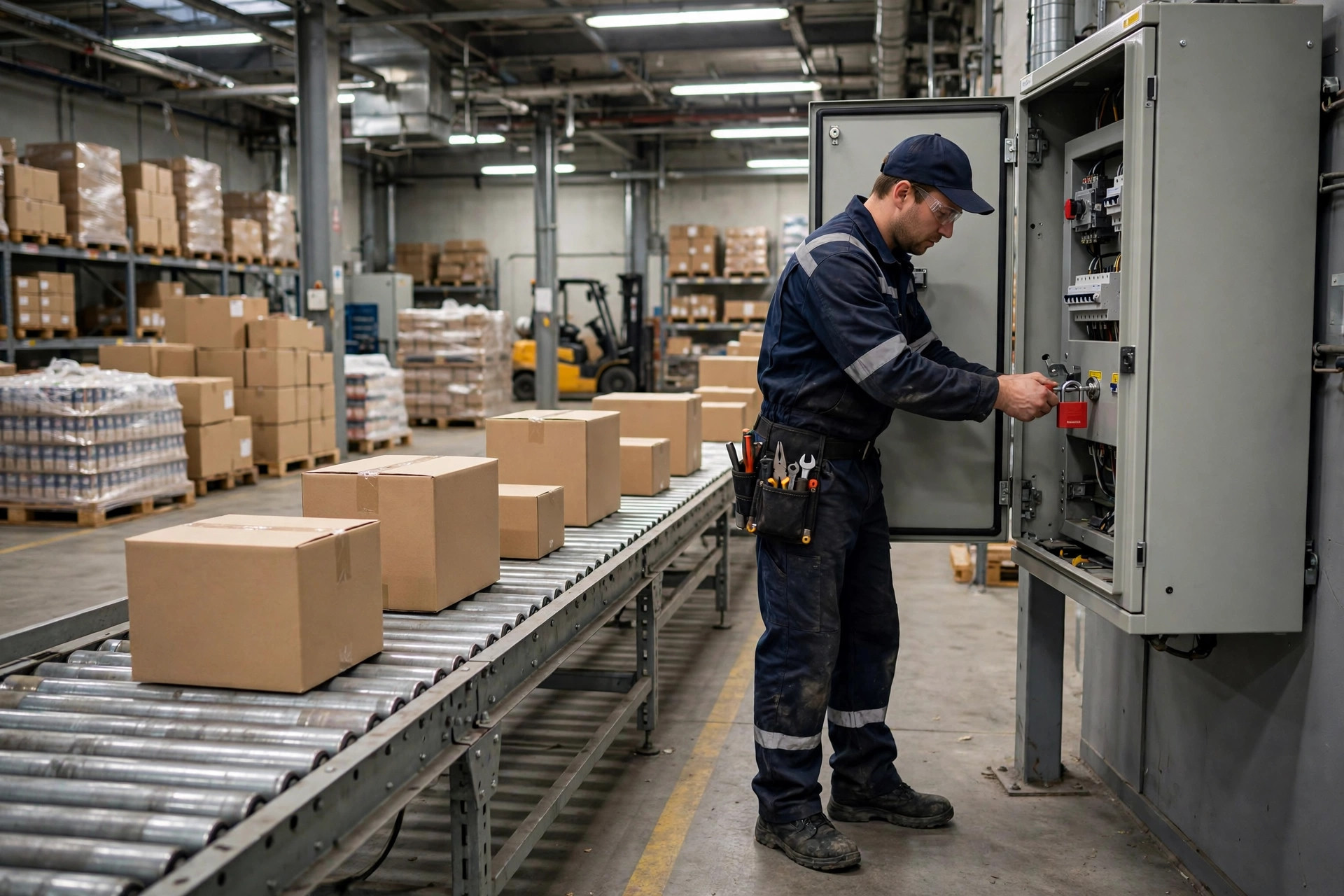
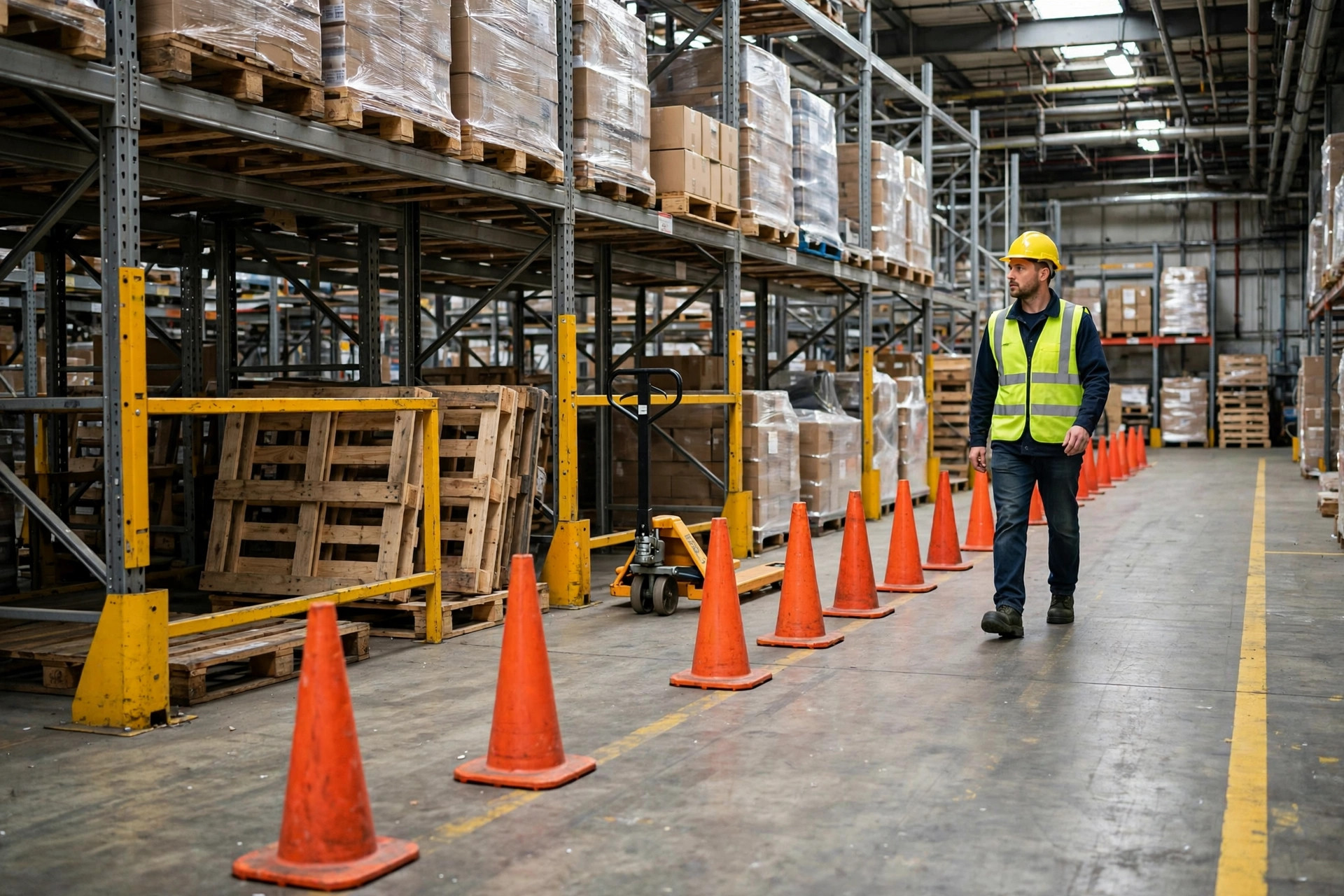
Two more cheap traps while we're at it. Blocked emergency exits (standard 1910.37): our favorite small-warehouse move — "temporarily" staging a few pallets by the exit, and temporary lasts three months. Fix: paint the exit lane on the floor and spend five minutes at end of day doing a "sweep" — walk the exits, move whatever's blocking. Lockout/tagout (standard 1910.147): servicing the roll-up door or conveyor without locking out power. Buy five padlocks and a stack of tags online for a few dozen bucks. A lock on the switch saves a life.
The Small-Operator Self-Audit: One Table, One Habit
Forget the fifty-page compliance manual — small shops don't eat that. This table cost me a friend's tuition. Print it and tape it to the wall:
| Violation | Where they get you | Small-warehouse fix | What it costs |
|---|---|---|---|
| Uncertified forklift operators | No training records, no refresher | Half-day training with local dealer, get the card | A few hundred bucks/person |
| No daily forklift inspection | No inspection records | Laminated letter-size checklist on the wheel, check and sign | ~Zero |
| Missing HazCom program | No written plan, no SDS | Request SDS from suppliers, binder + wall list | ~Zero |
| Blocked emergency exits | Pallets and cartons at exits | Paint the lane, 5-minute end-of-day sweep | A can of paint |
| Storage in front of electrical panels | No clearance | Paint a box, mark "no storage" | ~Zero |
| No lockout/tagout | Servicing equipment live | Five padlocks + tags | A few dozen bucks |
| Slippery or cluttered floors | Oil leaks, debris | Kitty litter for oil, rags for the rest | Pocket change |
One table, plus one habit: on the first Monday of every month, spend thirty minutes walking the warehouse with this table and take photos with your phone. When the inspector asks, you pull out your phone: "Here are our monthly self-audit records." How much is that sentence worth? At least one citation.
One last gut punch: OSHA's penalty-reduction policy cuts deeper the smaller you are (check the current percentages on OSHA's site). Even OSHA knows small shops have it rough — a first visit won't kill you. But only if you're "careless," not "negligent." We can't afford a big company's compliance budget, but we can afford thirty minutes a month and a sheet of printer paper.
Big warehouses have EHS departments and compliance software. We don't. But small warehouses have their own way of surviving: big companies buy compliance with money; we build it with habits and paperwork. Get the forklift cards this month, the SDS binder next month, paint the exit lanes the month after. Three months from now you won't be bulletproof, but at least you'll open the door smiling when OSHA knocks — a citation can happen, but never twice for the same hole in the ground.
By Xiao Ma, Small Warehouse Owner