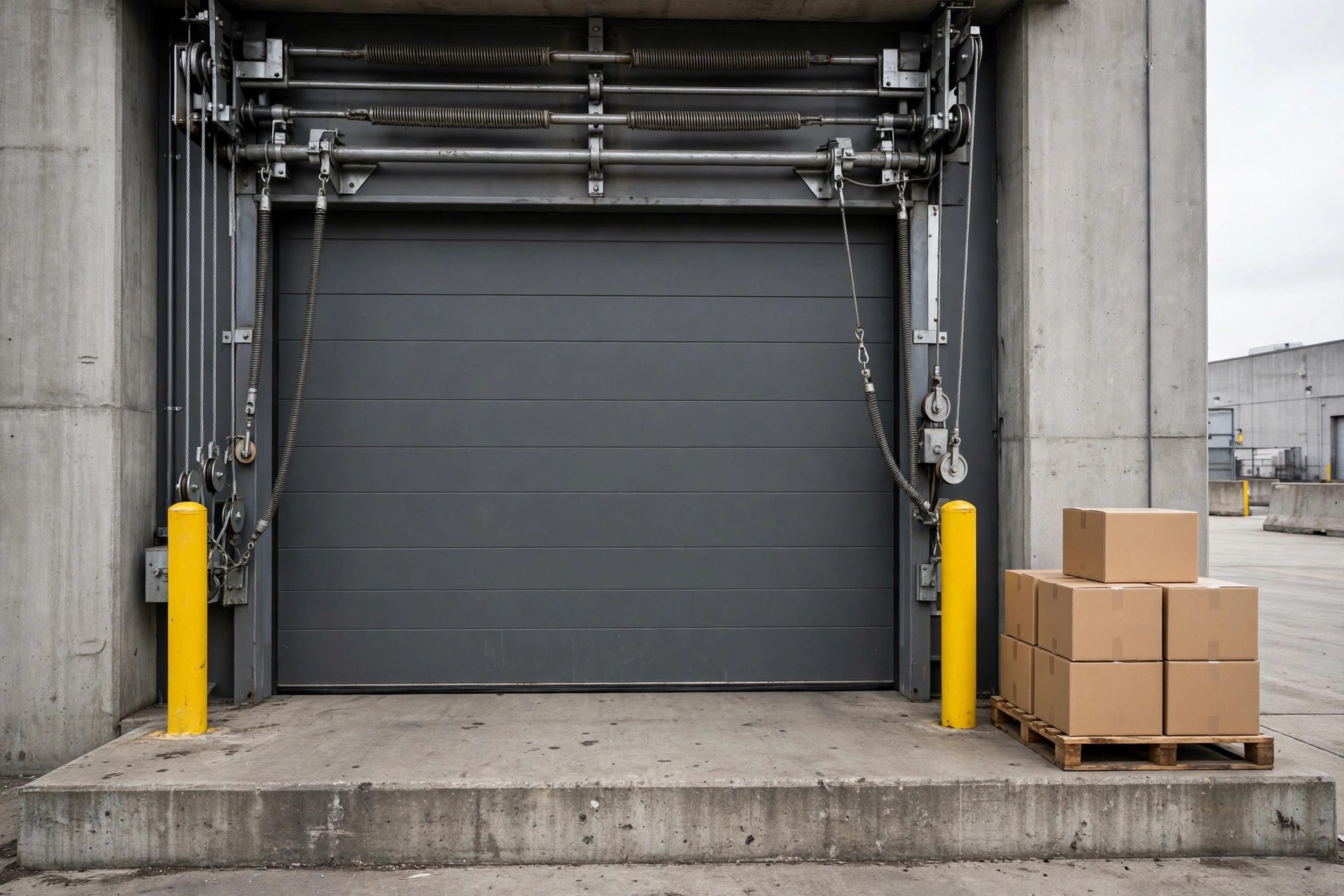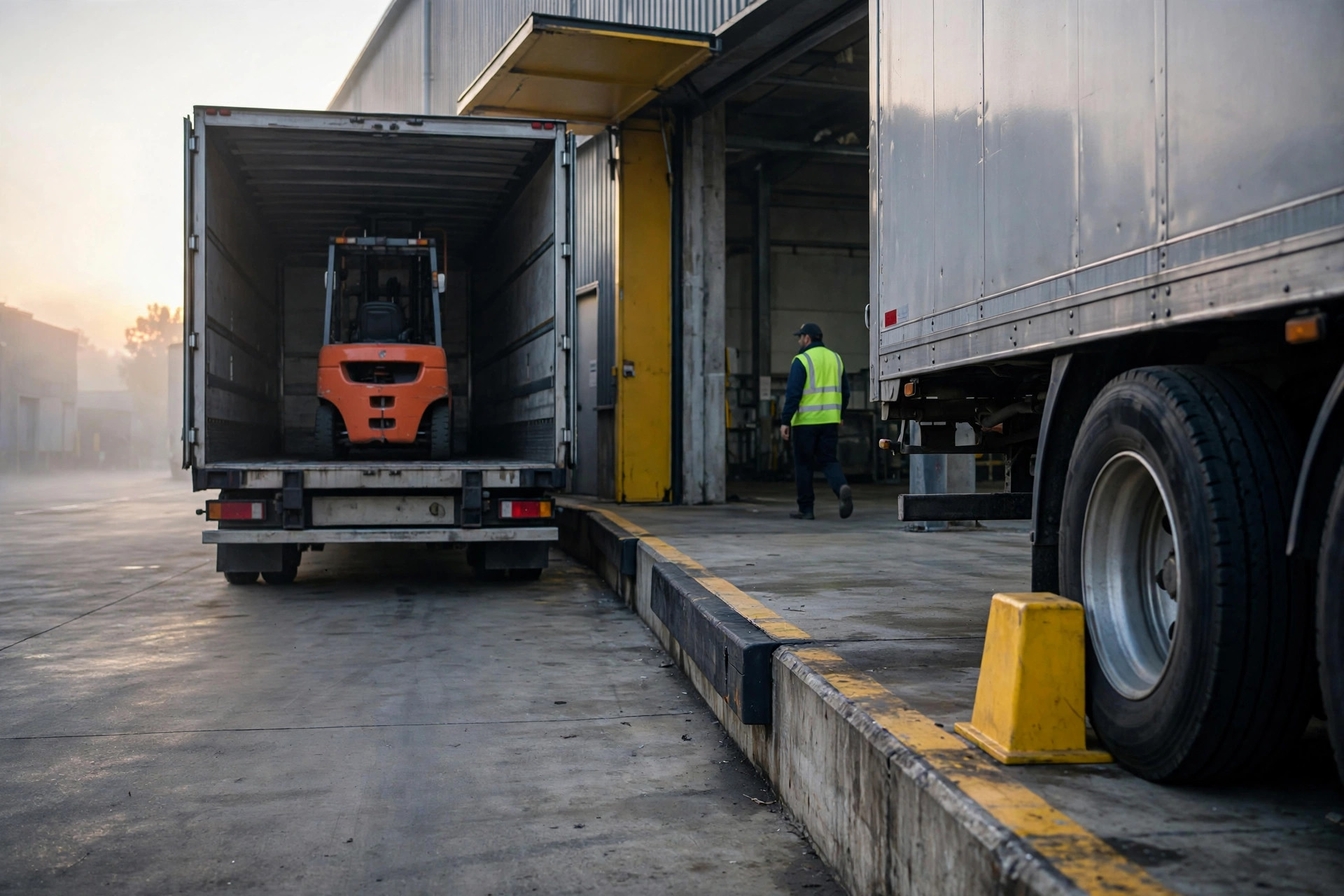
2 a.m., night shift. A trailer backs into Door 6. The driver kills the engine, and Xiao Li is already rolling his forklift toward the trailer.
I wave him off. Hold on. Where are the keys? Where are the chocks?
He rolls his eyes. "Boss, we've done this eight hundred times."
Here's the honest truth every warehouse manager knows: dock accidents don't happen because someone "never did it." They happen on the eight-hundred-and-first time, when somebody skips one step. Americans call this loading dock safety, and OSHA's loading dock safety requirements are honestly simple — set the brakes, chock the wheels, secure the vehicle. But when something goes wrong, every warehouse says the same thing: "We always chock the wheels."
What OSHA's Loading Dock Safety Requirements Actually Say
29 CFR 1910.178, the powered industrial trucks standard. Four lines that matter for docks. Memorize them:
- (k)(1): During loading and unloading, set the brakes and chock the drive wheels. For a trailer, that's the rear wheels closest to the dock. This is the floor. Non-negotiable.
- (m)(7): Trucks, trailers, and railroad cars must be secured before loading or unloading — and before driving a forklift onto a trailer, check the trailer floor for rot, holes, or water damage.
- (k)(3): For a dropped trailer (tractor gone, trailer sitting on its landing gear), you may need fixed jack stands. A forklift rolling to the back shifts the weight and the whole trailer can tip nose-up.
- 1910.26(d): Dockboards have to be secured against movement too. An unsecured plate can kill just as easily.
One thing to remember: OSHA's minimum is wheel chocks. Trailer restraints — dock locks — are NOT required. But —
The Two Ways Trailers Kill
Way one: trailer creep.
A forklift weighs thousands of pounds. Every time it drives in and brakes, it shoves the trailer forward a little. Weak chocks, a slight grade, and the trailer walks away from the dock an inch at a time. Once the dockboard can't reach the dock edge anymore, one end hangs in the air, and the next forklift trip ends with the truck going down.
June 2025, night shift at our warehouse. Door 3, a 53-foot dry van. The operator was on pallet forty when the dockboard "bounced" under him. He stopped. The trailer had walked seven or eight inches. The board was hanging onto the dock edge by two fingers' width. The shift lead shut the whole door down for ninety minutes — re-chocked, winched the trailer back. And while we were at it, we found the trailer's ICC bar was bent. A dock lock couldn't have grabbed it anyway. If that shift hadn't stopped, the next trip would have been a forklift going over the edge.
Way two: early departure.
This is the one that kills. Communication breaks down, the driver thinks unloading is done, and he pulls away with a forklift still inside. The dockboard goes with him. The forklift either flips inside the trailer or drops into the gap between dock and trailer.
November 2024, the week before Thanksgiving. A 3PL warehouse down the road from us. A driver misheard, thought the load was done, and pulled out while the operator was still grabbing the last pallet. The board slid off. The man fell from a dock over three feet high and broke his collarbone — two weeks in the hospital. OSHA showed up and wrote a serious citation. Fine amounts get adjusted for inflation every year, so check OSHA's current penalty schedule — but it was enough to hurt that warehouse for a while.
Creep is the trailer leaving slowly. Early departure is the trailer leaving suddenly. A chock stops the first one. It does nothing against the second.
Trailer Restraints: Not Required, But We Installed Them Anyway
OSHA only requires chocks. But chocks have three hard limits, and we learned them the painful way:
First, one chock isn't enough. Chocks go on the rear wheels closest to the dock — and one side alone won't hold. The trailer rocks and kicks the chock out.
Second, bad ground kills them. Rain, ice, gravel — chocks lose their grip fast.
Third, a chock can't stop a driver flooring the accelerator. Against early departure, a chock is a placebo.
So we run three layers now:
| Method | Rough cost | Stops | Doesn't stop |
|---|---|---|---|
| Wheel chocks | Tens of dollars a pair | Trailer creep | Early departure; wet, icy, or gravel surfaces |
| Dock locks (trailer restraints) | $1–2K per door, installed | Creep + most early departures | Trailers with damaged or missing ICC bars; power loss or manual override |
| Traffic lights + key control | A few hundred dollars | Early departures caused by communication breakdown | — |
Here's the counterintuitive part: the most expensive equipment can't stop the cheapest accident. A dock lock is only as good as the communication behind it. If the driver still has his keys, he drives off anyway. What actually lets me sleep at night is the third row — communication beats hardware.
Our key control is simple: trailer backs in, driver kills the engine, keys go on a hook on the dock office wall, and he takes a "WORKING" tag. Who returns the keys? Only the shift lead. Drivers don't touch that hook. Traffic lights are even simpler: red outside means the driver stays put, green inside means forklifts can work. A few hundred dollars of hardware, and it's the only thing that stops early departure.
Our Checklist (What We Actually Do Now)
This list is taped to our dock office wall. New hires memorize it on day one:
- Trailer backs in — don't unload yet. Driver kills the engine, sets the brakes, keys go on the office hook.
- Chock the rear wheels closest to the dock, both sides. One chock is the same as no chock.
- Before the forklift boards: check three things — trailer floor for holes or water damage, ICC bar straight or bent, dockboard seated properly.
- Dropped trailer? Check the landing gear first, add fixed jack stands if needed. Prevents nose-up tip.
- Set the dockboard, then stomp on it twice. If it wobbles, reset it. Confirm the lights: red outside, green inside.
- Rain, ice, or gravel: chocks AND dock lock, anti-slip mat on the board.
- Only the lead can release a truck: return the keys, flip the light green.
One more rule came from a fight with a driver: drivers don't reposition trailers in the work zone. We had a guy who got tired of waiting and nudged his trailer forward "to line it up" — destroyed every chock placement. It's in our carrier agreement now: one warning, then we switch carriers.
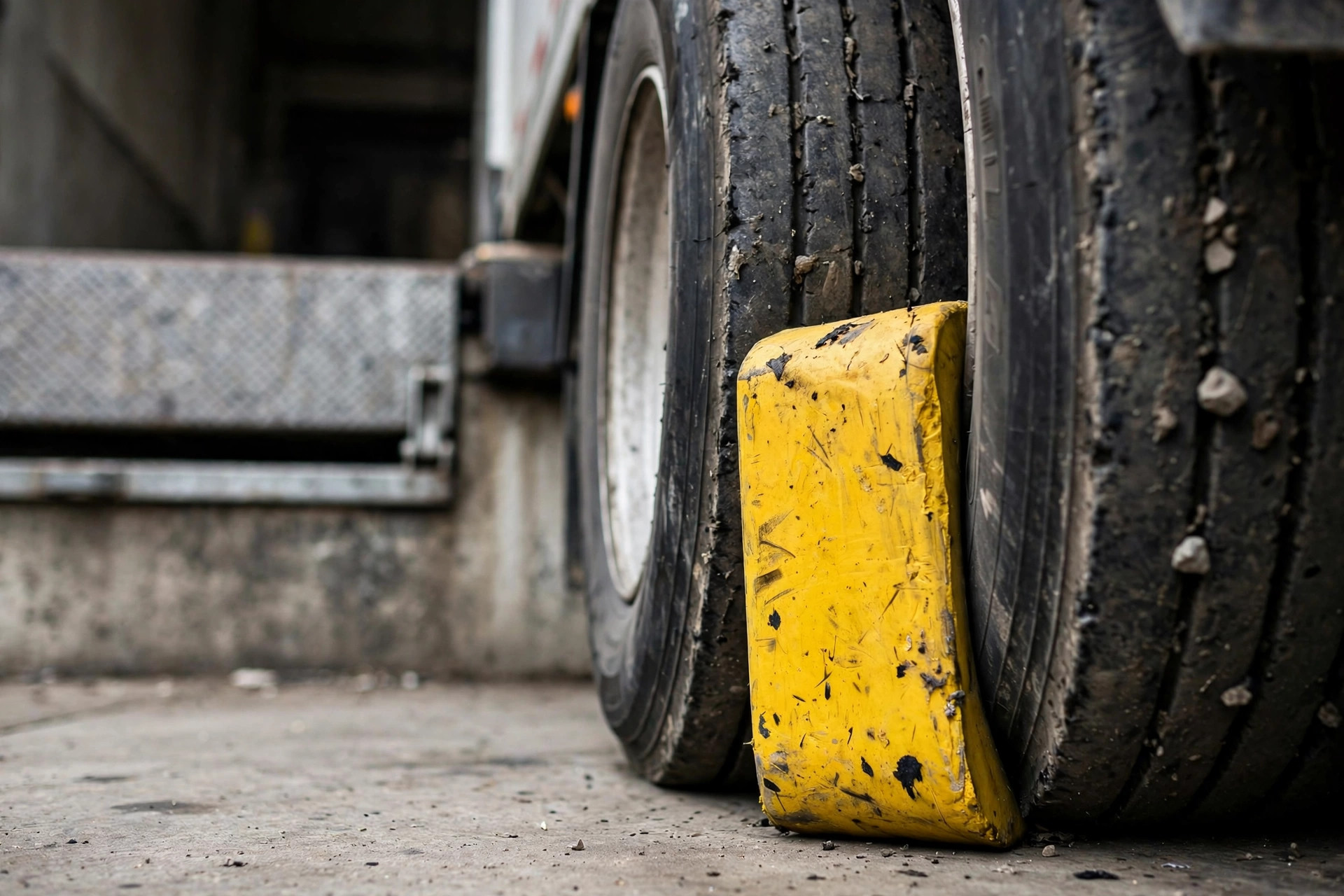
So here's my reminder to fellow warehouse folks: when OSHA inspects your dock, the citation is the small problem. When something really goes wrong, it's your people on the ground and your shift shut down. Do one thing tonight: take ten minutes on night shift and check your chocks — enough of them, placed right. A pair of chocks costs tens of dollars. It's the cheapest safety money in the whole building. Don't save it there.
By Chen Feng, Warehouse Operations Manager