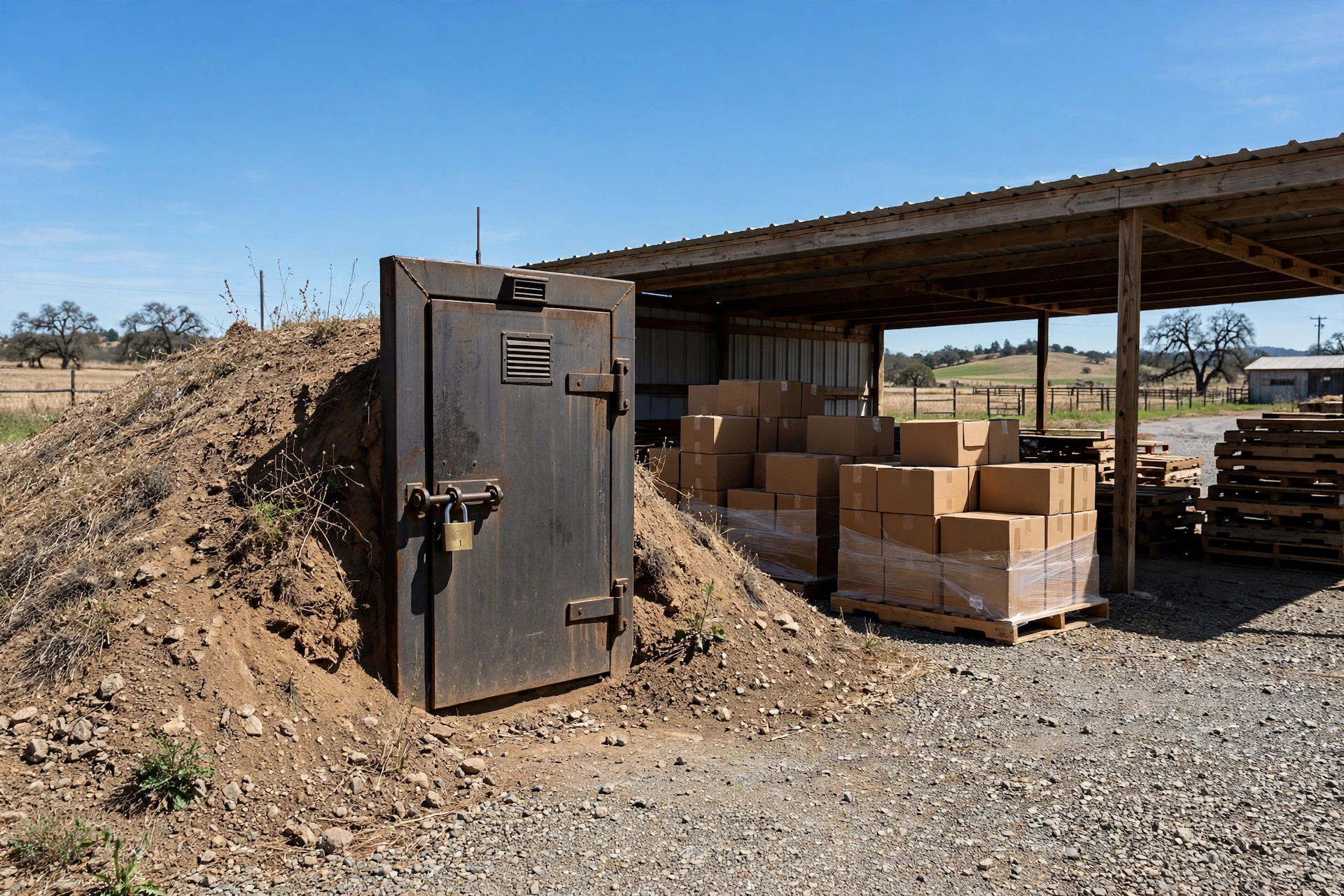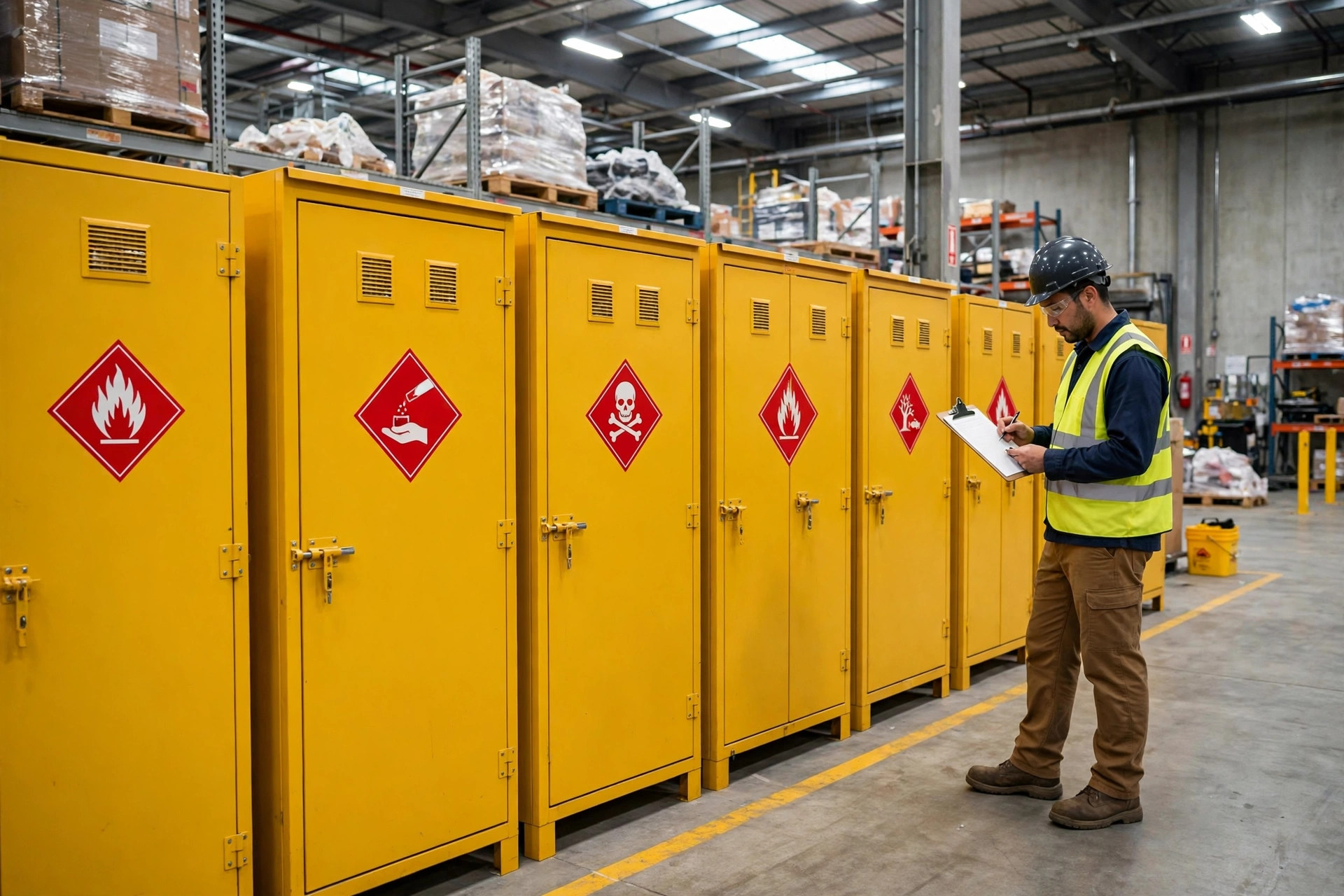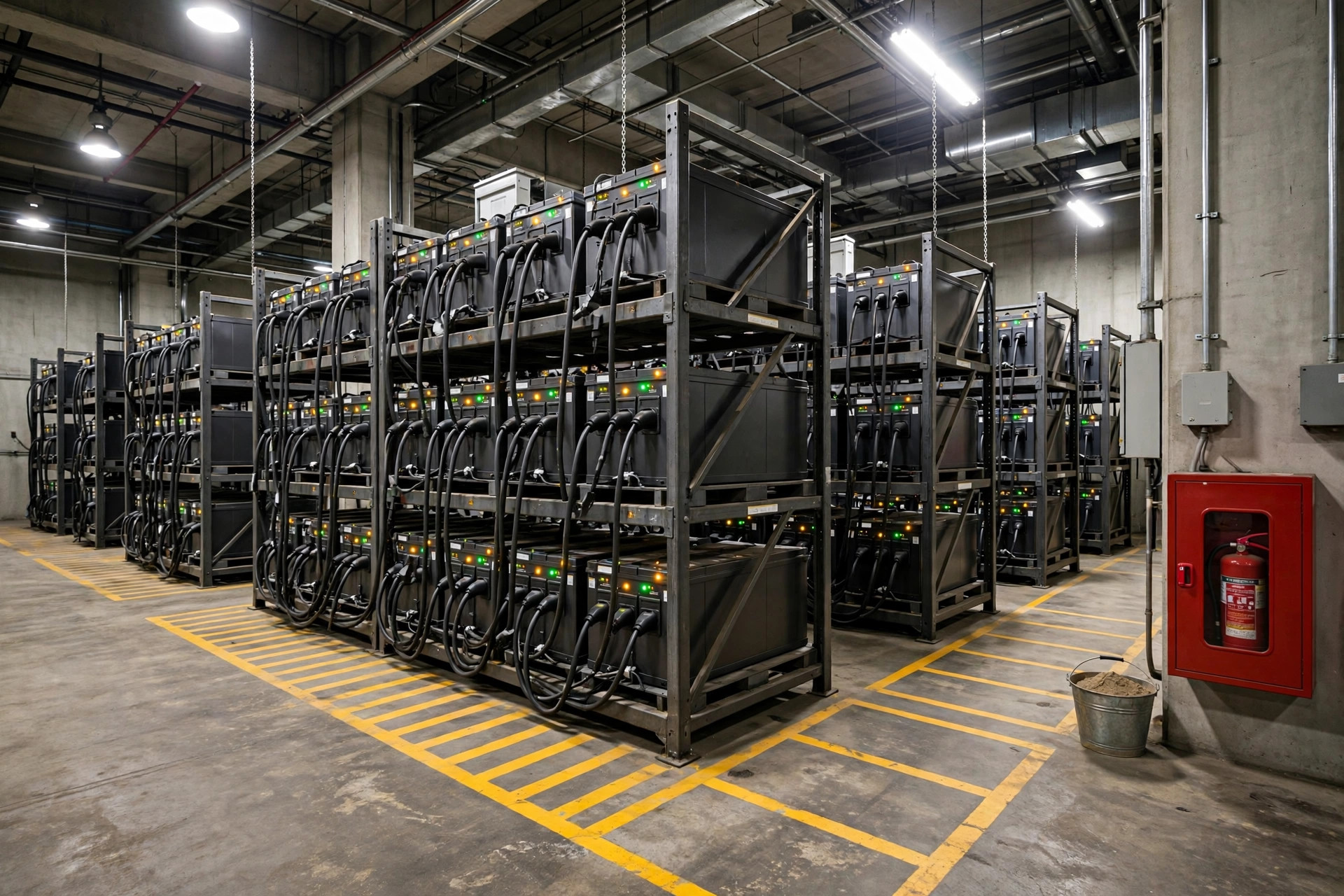
Last fall I walked a fire inspector through the annual inspection of a 3PL warehouse in Mira Loma. He stopped in front of the charging area: two rows of power strips nailed to a wall, more than twenty lithium batteries — e-bike packs, power-tool batteries, AGV spares — crammed together and charging, with a cardboard staging area less than seven feet away. He pointed at the wall and asked the manager, "Where's your fire separation for this charging zone?" The manager froze. In his mind, a charging area was just "a wall with extra outlets."
I have heard some version of that answer for years. Which warehouse can operate without lithium batteries today? Forklifts, AGVs, pallet jacks, floor scrubbers, handheld scanners, e-bikes — charging is no longer a side chore. And thermal runaway shows no mercy: one internal short, and within minutes a cell can climb to several hundred degrees, vent flammable toxic gases, and take the neighboring batteries with it. In June 2023, a lithium battery fire at an e-bike shop in Manhattan's Chinatown killed four people, and the FDNY followed with enforcement sweeps of battery charging and storage sites across the city. In April 2019, a grid-scale storage facility exploded in Peoria, Arizona, injuring multiple firefighters. That was not an ordinary fire. That was thermal runaway.
So no theory today — just practice. One honest note first: there is no single code written specifically for "lithium battery charging in warehouses." But the pieces exist and they fit together well enough. OSHA 29 CFR 1910.178(g) covers the basics of charging installations. NFPA 855, the Standard for the Installation of Stationary Energy Storage Systems, covers fire spacing and suppression for lithium systems. Everything else comes down to your local fire marshal and your insurer. Combine the three and you have a complete prevention checklist.
Centralized or distributed? Do the math first
Every warehouse faces this choice, and the two options cost very different things.
Centralized charging means carving out a dedicated zone — ideally a separate room — where every battery comes to charge. The advantage is that your fire protection investment only has to be done once: fire-rated walls, smoke detection, sprinklers, temperature monitoring, bollards or barriers, all in one place. And with people kept at a distance, the classic violation — an employee plugging a battery in next to a stack of cartons — mostly disappears. The real costs: you give up floor space, batteries get hauled back and forth every day, and during peak season someone will always be tempted to "just charge it at the workstation."
Distributed charging means charging at each workstation and work zone. Convenient, no hauling, easy battery swaps for AGVs. But the risk points multiply: ten charging points are ten ignition sources, and each one needs its own detection, monitoring, and keep-clear zone. Nobody staffs that. When the inspector comes, every single point has to pass — one fails, the whole finding lands on you.
My verdict is blunt: if you have more than about ten batteries charging at once, or any large-format packs like e-bike batteries or AGV spares, centralized charging is the only defensible answer. A small repair bench or returns station can stay distributed, but every point must meet the centralized standard — fire blanket, smoke detection, no combustibles within reach. Most warehouses choose distributed not because they ran the numbers, but because it is easier. One real fire settles that math permanently.
The non-negotiable hardware
Start with OSHA's old rules, because they still apply. 29 CFR 1910.178(g)(1) is explicit: battery charging installations shall be located in areas designated for that purpose. Paragraph (g)(2) requires ventilation, fire protection facilities, and protection of charging equipment from vehicle damage. Paragraph (g)(10) bans smoking in the charging area; (g)(11) bans open flames, sparks, and electric arcs. These were written in the lead-acid era. The lithium era does not relax a single one of them — it only tightens them.
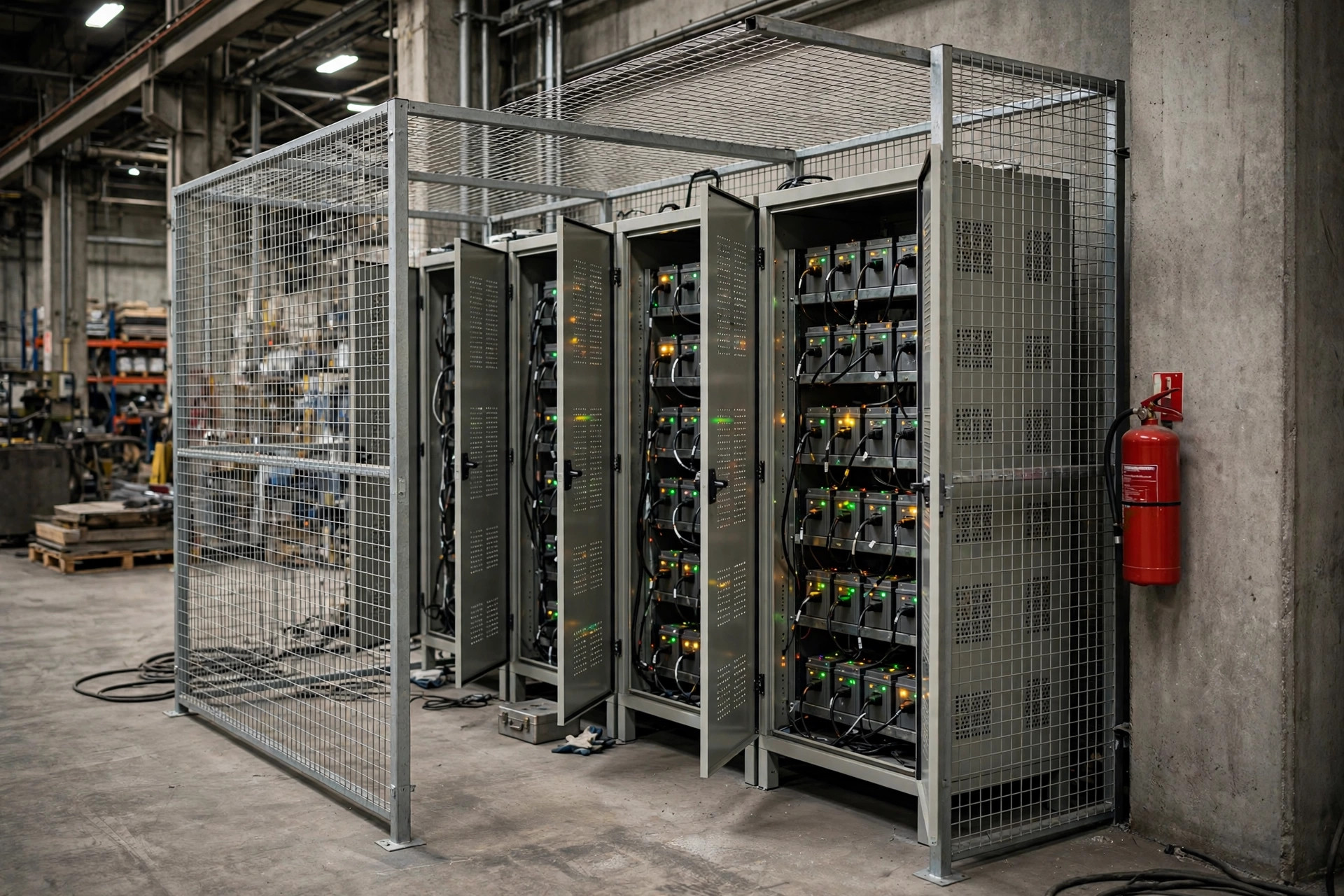
Charging cabinets are the standard for high-energy-density batteries. E-bike packs and AGV spares belong in fire-isolated charging cabinets with individually separated compartments, so one bad cell does not take the whole cabinet. For layout, NFPA 855 offers a useful reference point: the standard calls for about 3 feet (1 meter) of separation between energy storage units, and between units and walls. But the final word belongs to your local fire marshal. Ask them before you build, not after you fail the inspection — asking first is always cheaper than rebuilding.
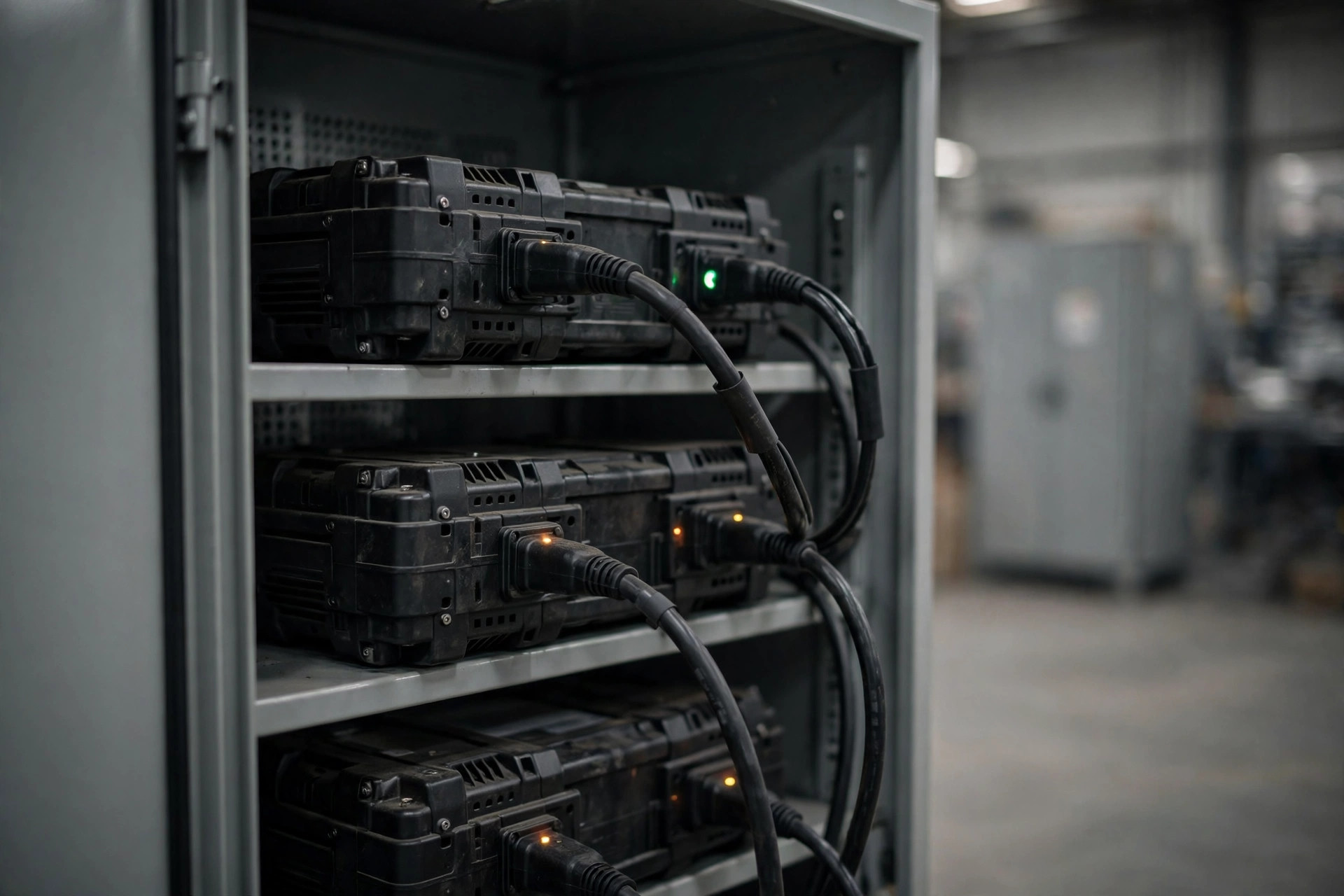
Temperature monitoring and smoke detection are the second line of defense. Before thermal runaway, a battery usually gives you a warning window: heat, smoke, swelling. Put smoke detectors and temperature sensors in the charging zone, and set alarm thresholds per the battery manufacturer's documentation and your fire marshal's requirements. One thing operators consistently get wrong: most fires start at night or during unattended hours. An alarm that only sounds on-site is useless if nobody is there to hear it — it has to reach someone on duty.
A few details that get missed: keep charging, charged, and uncharged batteries in separate areas, never mixed in one pile. Damaged, swollen, or water-exposed batteries get isolated, tagged, and never charged — they wait for the manufacturer or a qualified handler. Keep the charging zone floor dry and clean, and keep cartons, pallets, and stretch film out of it entirely.
When thermal runaway starts, the first five minutes decide the loss
If it happens, the order is: people out, call 911. Thermal runaway vents toxic gases — do not stand around watching it, and do not try to "save" the battery.
If it is safe to reach, kill power to the charger. Note the distinction: kill the power source, not the burning battery. Nobody touches the battery that is in runaway. Let it burn, and isolate everything combustible around it.
Here is the key fact about suppression: NFPA 855 names water as the preferred agent for lithium battery fires, and the reason is sustained cooling, not "putting it out." Thermal runaway is an internal chemical reaction — a dry-chemical extinguisher will not stop it, so do not expect one canister to solve the problem. If you have hydrants or a large water supply on site, cool continuously. If not, wait for the fire department. The entire goal is one thing: cool it down, stop the spread.
And when the fire is out, the job is only half done. A battery that has been through thermal runaway must be isolated and watched for at least 24 hours against reignition — reignition hours or even a day or two later is a documented phenomenon. Finally, notify your insurer and the fire department for the incident record: you will need it for the claim and for every inspection that follows. Before any charging-zone retrofit, talk to your insurer first (your premium may change), then invite the fire marshal for a pre-inspection, and keep the records of every corrective item.
Checklist: print it and post it at the charging area door
- The charging area is a designated, separated zone, away from cartons, pallets, and other combustibles
- High-energy-density batteries charge in fire-isolated cabinets with individually separated compartments
- Adequate spacing between cabinets and to walls (NFPA 855 references about 3 ft / 1 m — confirm with your local fire marshal)
- Smoke detection and temperature monitoring installed, with alarms reaching on-duty staff around the clock, including unattended hours
- Charging equipment protected from vehicle impact; the area is well ventilated
- No smoking, no open flames or sparks in the charging area (OSHA 1910.178(g) requirement)
- Damaged, swollen, or water-exposed batteries isolated, tagged, and never charged
- Charging, uncharged, and fully charged batteries stored in separate areas, never mixed
- Everyone knows the emergency sequence: evacuate → call 911 → cut power → cool continuously with large volumes of water → isolate and watch for reignition
- Any battery that has been through thermal runaway is isolated and observed for at least 24 hours before handling
- The charging-zone layout and any retrofit have been disclosed to the insurer and pre-inspected by the local fire department