Last month a client's owner asked me: "Lao Mi, we've got 60 people in the building and labor budget's going up 8% next year — is automation worth it now?" I told him not to ask whether it's worth it, but when. The most common automation mistake isn't picking the wrong equipment — it's going three years too early, or three years too late. Too early and depreciation eats your margin while equipment idles; too late and the extra labor spend would have bought half the system.
There's a rough-but-reliable way to time it: plot the annual cost line of "keep doing it manually" against the annual cost line of "automate," and the crossing point is when you should move. No consultants needed — one spreadsheet does it.
Draw two lines. The numbers are illustrative; the logic is real.
Line one: annual labor cost. Formula: (fully-loaded cost per head × headcount) × (1 + annual increase) ^ years. A California warehouse associate with overtime and benefits typically runs $50K–$60K a year fully loaded; take your actual increase from the last three years, 4%–8% is the usual band, don't guess. Sixty people at $55K each growing 6% a year: labor goes from $3.3M to $4.41M over five years.
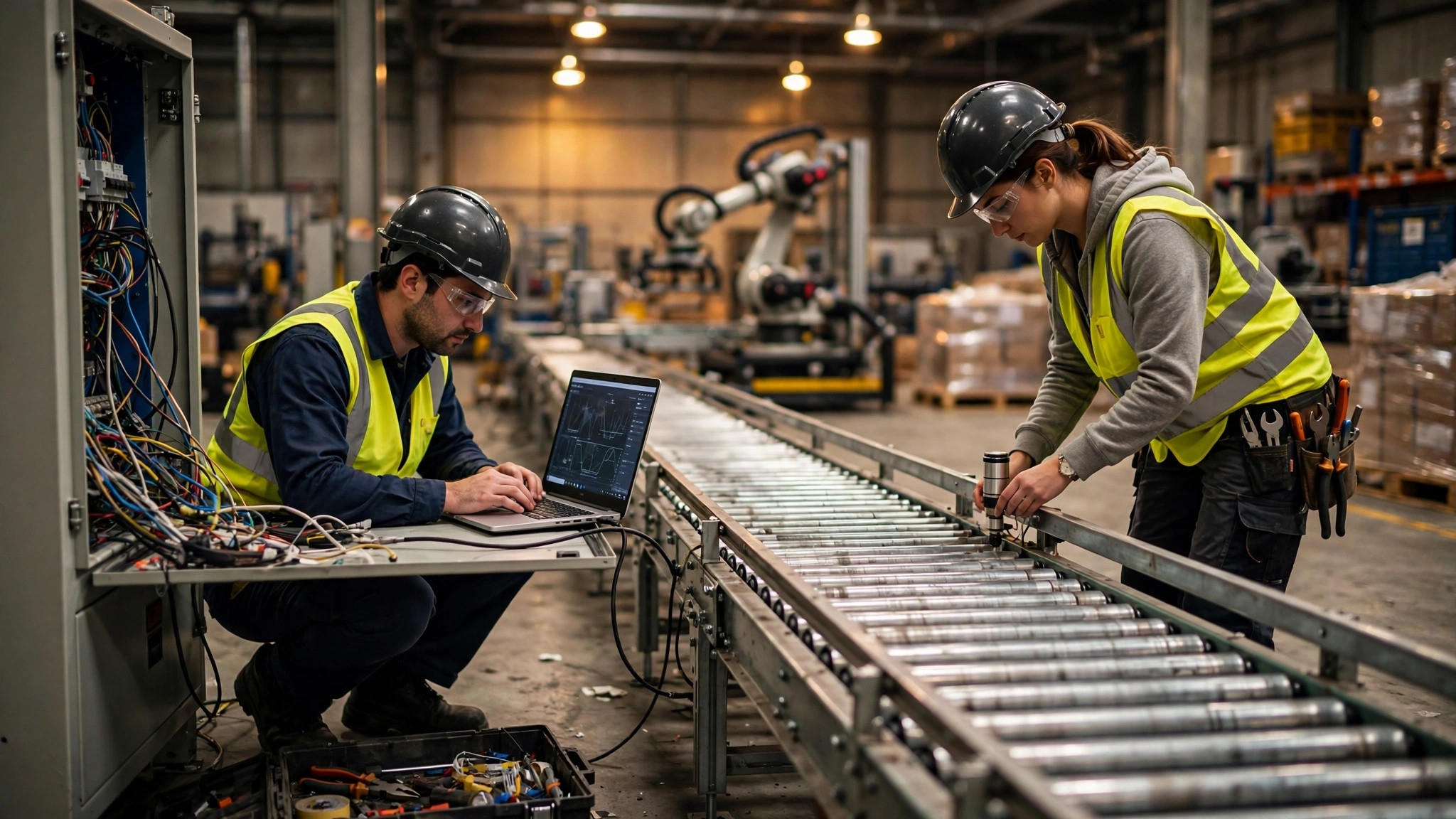
Line two: annual automation cost. Formula: (total equipment investment ÷ depreciation life) + annual maintenance + remaining labor. Three details matter: don't use finance's 7-year schedule — use the equipment's real technical life, 8–10 years for conveyors and sorters, 5–7 for AMRs (batteries and tech churn faster). Maintenance runs 5%–8% of equipment cost per year. And don't zero out labor — automation isn't zero-headcount; keep 30%–40% of people for exceptions and upstream/downstream handoffs.
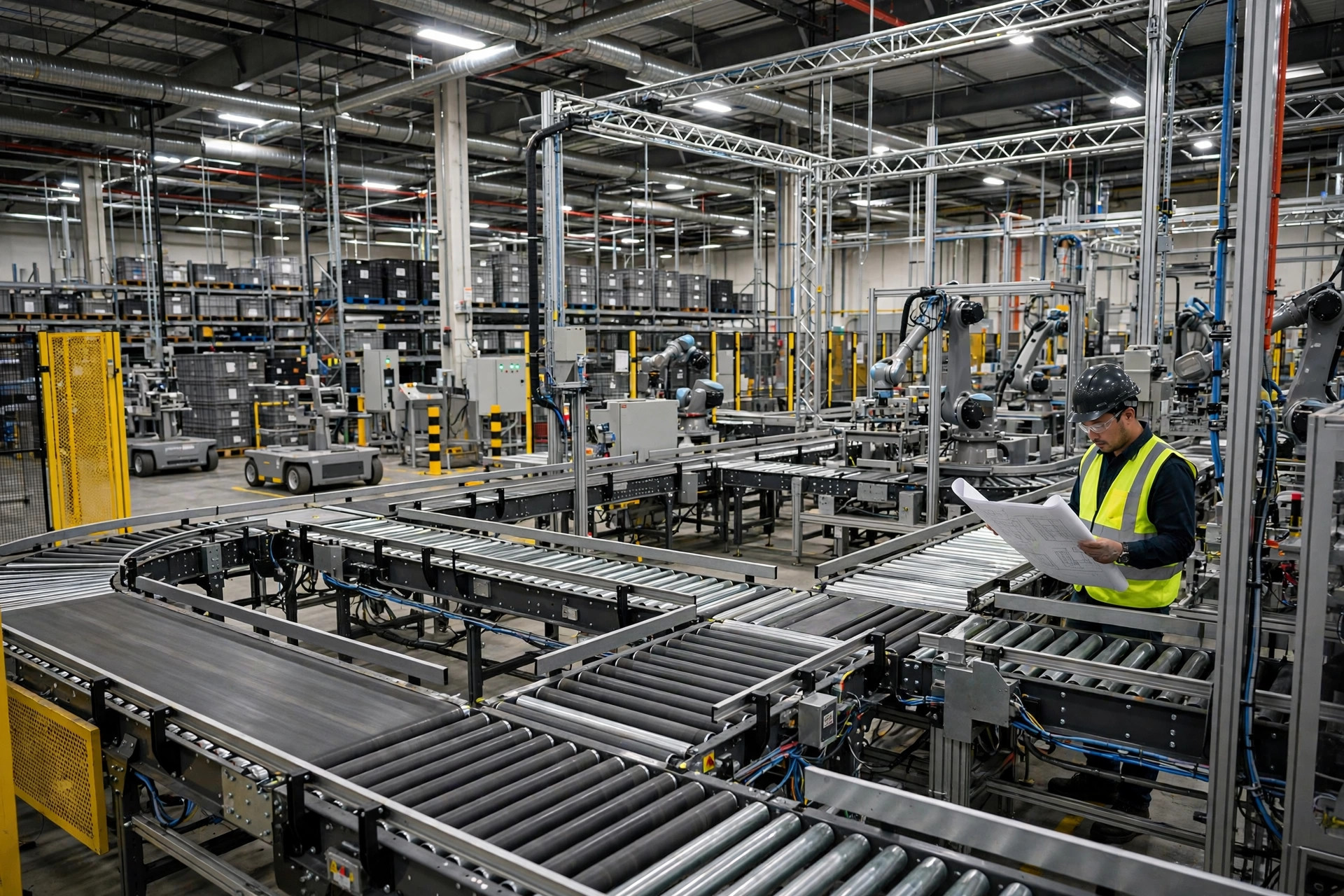
Example: a $2M semi-automated sortation line, 8-year depreciation = $250K/year, maintenance $120K/year, 25 remaining people at $1.37M/year — automation-side annual cost around $1.74M. Compare with $4.41M manual in year five? Hold on — don't compare it that way.

The crossing point is the answer. Don't compare endpoints to starting points.
Most people stop at the step above and conclude "automation saves half." Wrong. The right comparison plots two year-by-year curves: years on the x-axis, that year's total cost on the y-axis. The labor line climbs exponentially; the automation line has a one-time step in year one, then runs flat. Where they cross is your payback year.
With the illustrative numbers: year one automation costs $2M capex + $1.74M operating = $3.74M, $440K more than manual's $3.3M — looks like a loss. Year two, labor hits $3.5M while automation stays $1.74M, saving $1.76M. Cumulatively, payback lands around the end of year two into year three. That 2–3 year payback is the answer the owner wanted.
But one trade-off has to be stated plainly: the payback point is extremely sensitive to the wage-growth assumption. At 4% annual growth it slides to year four; at 8%, payback hits in year two. So always model three scenarios — conservative, base, aggressive. Anyone showing the owner a single number is running a con.
Three traps, each enough to wreck the model
Trap one: treating "heads saved" as "heads cut." The model saves 35 people; that doesn't mean you can lay off 35 people. US layoffs carry notice periods, severance, and unemployment-insurance rate hikes — realizable savings deserve a 30% haircut. The realistic play is attrition without backfill, but that stretches payback by a year.
Trap two: forgetting the double-cost implementation window. The 3–6 months before automation stabilizes are parallel-run: equipment being tuned, labor can't leave, you're paying twice. This transition cost often runs 10%–15% of total investment. Leave it out of the model and finance's post-mortem will be full of surprises.
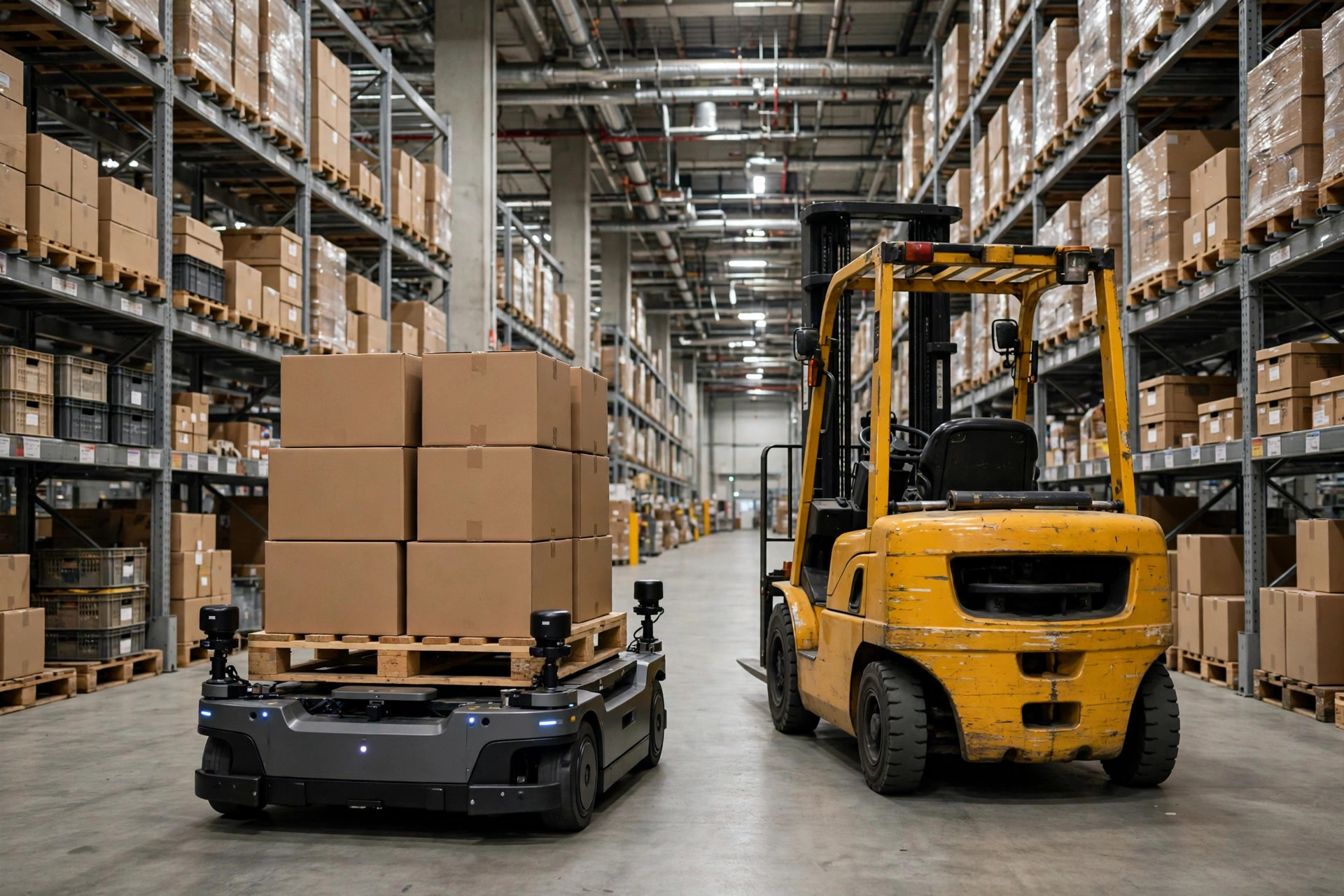
Trap three: modeling a static world. The model assumes flat volume for five years, but a 30% swing is routine for e-commerce buildings. My practice: add a volume sensitivity — if volume drops 20%, does automation's unit cost overtake manual? Heavy assets like conveyors look ugly fast when volume falls. That's the real edge of light-asset options (AMRs, shuttles): add vehicles as needed, cost tracks volume.
When to skip the math: just go, or just wait
Two verdicts that need no spreadsheet. One: you can't hire. Night shifts, remote locations — where the problem isn't the raise percentage but whether anyone shows up at all. Automate directly; the math would only tell you you're already late. Two: volume is on a declining trend two years running. Freeze any heavy-asset automation until the business stabilizes — installing equipment now means working for depreciation.
Everything in between needs the calculation. And most warehouses live in between. Plot the two lines, then move a year ahead of the crossing point — because from purchase order to stable operation takes 9–12 months minimum. Your computed "optimal time" is really the latest acceptable time.
Pull your last three years of labor increases tonight. You'll have version one of the model before bed.