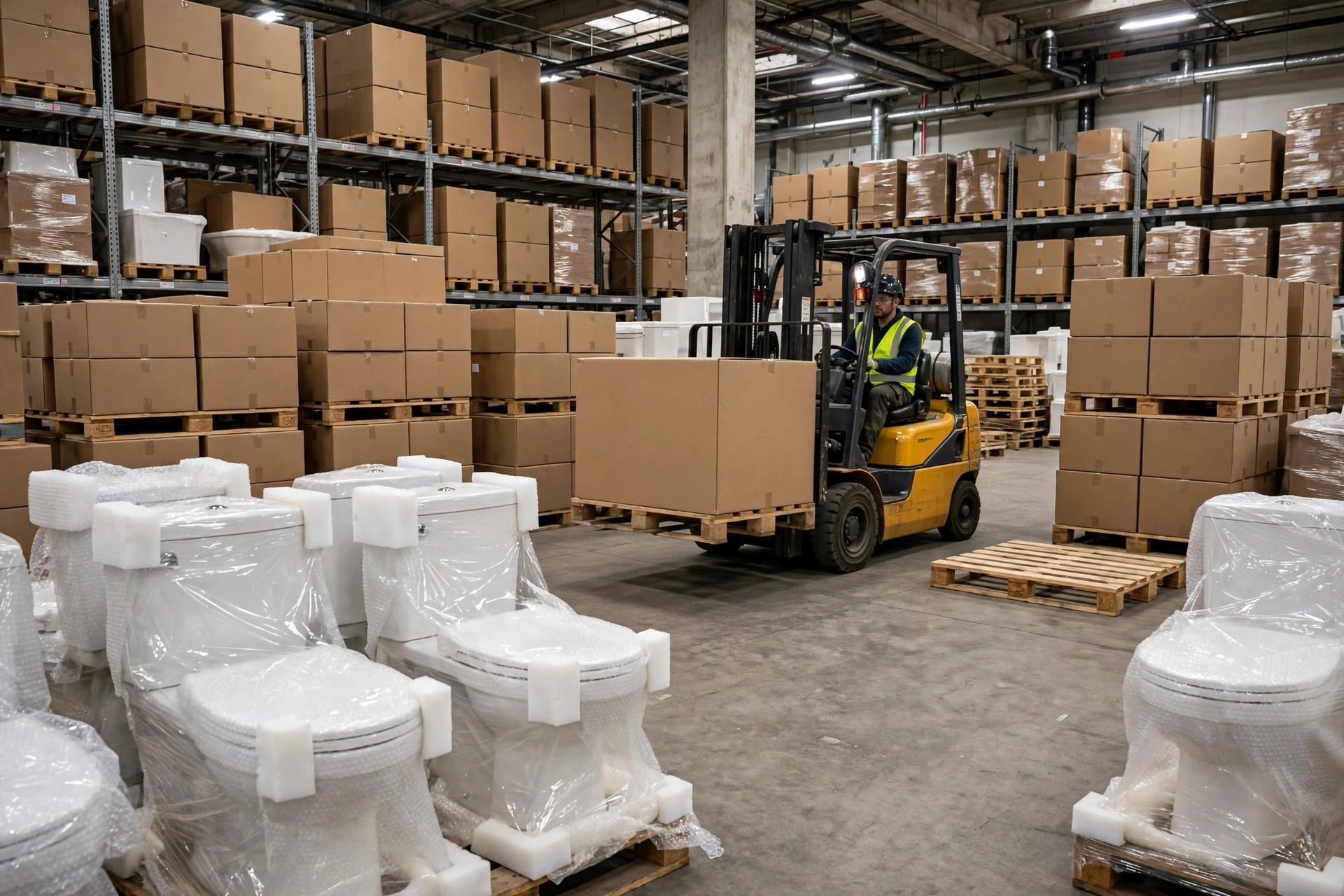
It was 6:30 on a morning in the week before the big sale, still dark outside. Kitchenware warehouse storage handling gets ugly at exactly that hour: three trucks at the door, orders already stacked into the afternoon, and my team leader walking over to tell me two cartons of cast-iron pots had slid off the second level during the night shift. One enamel pot had a chip out of it. The crew stood there watching me, waiting for one sentence. Let me be straight with you. My only thought was this: if we kept working the old way, we would drop another one before lunch.
Our warehouse is not huge, about a hundred people, and cookware takes up roughly half the volume. Pots, knives, cutting boards, glass containers, small appliances. Every one of them takes space, and every one of them behaves differently. Pots are heavy. Knives chip. Glass hates vibration. Sets are the worst of all. Break them open or leave them sealed, both choices cost you something. After years of this, I have learned one thing: this business is not won by how high your racking goes, but by whether you separate the heavy problem from the fragile problem and cost each one honestly.
Kitchenware Warehouse Storage Handling Is Really Two Problems: Heavy and Fragile
Heavy first. One summer we took on a cast-iron customer. One carton weighed 32 kilos. It was not a big box, but two people carrying it could feel it in their shoulders. A new hire, trying to be quick, put a pallet up on level two with a forklift and thought the job was done. The level below held glass food containers. The beam had bowed slightly, and when the night picker pulled a box out, the whole pallet shifted. Nothing fell. But my stomach dropped, and that was enough.
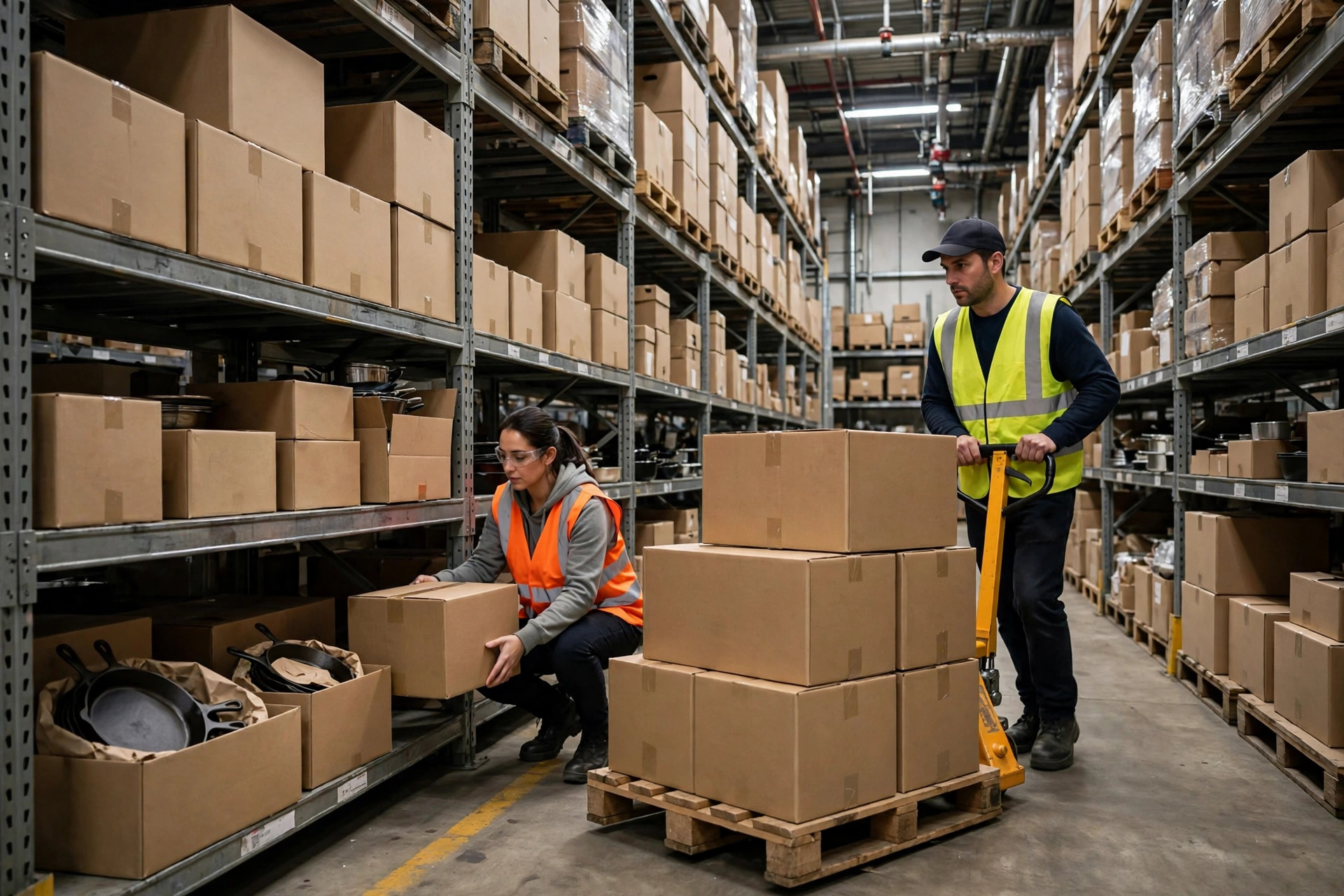
After that we made a rule that nobody argues with: any carton over 20 kilos stays on the ground level or level one. No exceptions. Heavy goods get thicker beams and sturdier pallets, and the thin pallets go elsewhere. Some people complained that we were wasting the high bays. I showed them the numbers. With heavy goods low, pickers do not climb, forklifts do not shuttle back and forth, and two people can pick forty-plus extra orders in a shift. The labor saved beats the rent on those high bays. And back injuries fell. In the second half of last year, our sick leave for lifting injuries was less than half of the first half.
Fragile is a different fight. Knives and glass fail in two ways: chips and pressure. Years ago we stored knife sets next to pots. The cartons looked fine. Open them, and the blade had nicked its own box, and the customer sent it back. Now knives have their own zone. We leave a fist-width gap between cartons, and pickers never drag a knife box flat off a shelf. They lift it with both hands. Glass is stricter still. Food containers and casserole dishes stack no more than three high, and nothing goes on top of them. Within a month, damage claims fell from a dozen or more a week to three or four.
Kitchenware Warehouse Storage Handling and the Kitting Math
Sets are where a cookware warehouse bleeds money quietly. Take a 16-piece pot set. Sometimes the customer buys the whole set. Sometimes they buy one pan. Sometimes a promotion bundles a frying pan with a saucepan. Keep the set sealed and whole-set picking is fast, with almost no damage. But a single-piece order leaves you stuck. Break everything open and single picking is flexible, yet stock counts become a nightmare. One missing lid and the numbers never reconcile.
We tried both extremes, and both bit us. Two years ago, before a sale, we broke open two hundred 16-piece sets. Then the promotion changed, whole sets sold out, and the crew rebuilt sets until 2 a.m. We shipped more than a dozen wrong ones, and returns poured in for days. The next year we went the other way and broke open nothing. Single-piece orders meant opening a sealed set, picking one piece, and resealing the box. We did not have enough people on resealing, and orders backed up for two days.
So now we split sets into three bands by sales, reviewed monthly. Here is the table we actually use:
| Set type | How we store it | Orders it fits | What burned us before |
|---|---|---|---|
| Bestsellers, over 100 sets a month | Sealed, whole-set cartons, one dedicated row | Mostly whole-set orders | Breaking them open, then rebuilding wrong |
| Mid-range sets, dozens a month | Half sealed, half broken into singles | A mix of whole and single orders | Going all one way, then a promotion flips demand |
| Slow sellers, a handful a month | Singles only, no sealed stock | Almost all single-piece orders | Sealed stock sitting untouched for six months |
We counted three months of orders, one by one, to build it. After the split, the singles zone only holds pieces that actually move, and a full count takes half a day instead of two. Let me be straight: there is no perfect answer for sets. There is only the answer that matches your sales mix. When the mix moves, the bands move. We do not wait for someone to ask.
Here is the counterintuitive part. The most expensive thing about breaking sets open is not labor. It is mistakes. One wrong piece, one missing lid, and the return freight plus customer-service time costs far more than the ten extra minutes picking took. So we would rather pick slowly and get it right. The singles zone has a photo chart of each set, laid out piece by piece. New hires pick against the photo, count it themselves, and the team leader spot-checks. Slower, yes. But our error rate fell, and on total cost we come out ahead. Speed that creates returns is not speed.
How We Put Heavy Goods Away Now
This is the routine posted on our wall. New hires learn it before they touch a heavy carton.
First, weigh at receiving. Anything over 20 kilos gets flagged red in the system, and the forklift driver sees it at a glance. Nobody sends it high. We used to judge by feel, and one 30-kilo-plus carton of stoneware ended up on level three, bowed a beam, and forced us to rework a whole row. Weighing is not optional.
Second, check the beam before you load. Our heavy zone uses thicker decking with tighter beam spacing. It cost more up front. But decking is the wrong place to save money. What you save on steel will not cover one dropped load.
Third, pick heavy first, light last. Heavy goes at the bottom of the outbound carton, light on top. Everyone knows this, and everyone forgets it when the shift gets busy. So the heavy line on the pick ticket is printed bold and red. The picker grabs heavy first, and the packer sees the order without thinking.
Fourth, roster for people, not just for volume. The heavy zone never runs on new hires alone. One veteran pairs with one newcomer, and they take turns lifting. During peak, when people work long stretches, morale drops fastest in the heavy zone. I put more veterans on nights, and let newcomers learn in daylight. If nights run clean, days have energy. At the end of the day, you are managing people. Racking is fixed. People are not.
Fifth, walk the heavy zone every Friday before close. Rules drift if nobody looks. Thin decking creeps back in, someone wedges two pot cartons into the knife zone, a heavy carton quietly ends up on level two. The team leader walks the zone with a checklist, photographs violations, and reports them at Monday morning huddle. It saves rework and damage claims. A rule nobody inspects is not a rule.
That routine has run for over a year. Heavy drops are basically zero. Set errors are down sharply. Peak weeks are still exhausting, but we have not had a midnight rebuild since. The crew grumbles about the rules, then follows them, because the work runs smoother when they do.
One reminder about kitchenware warehouse storage handling for anyone running the same kind of warehouse: do not start by buying taller racking or a smarter system. First separate heavy from fragile, split your sets by real sales, and get weighing and beam checks right. Get the basics solid, then talk about efficiency. Otherwise the best system in the world is just standing over a floor full of broken porcelain.
By Chen Feng, Warehouse Operations Manager