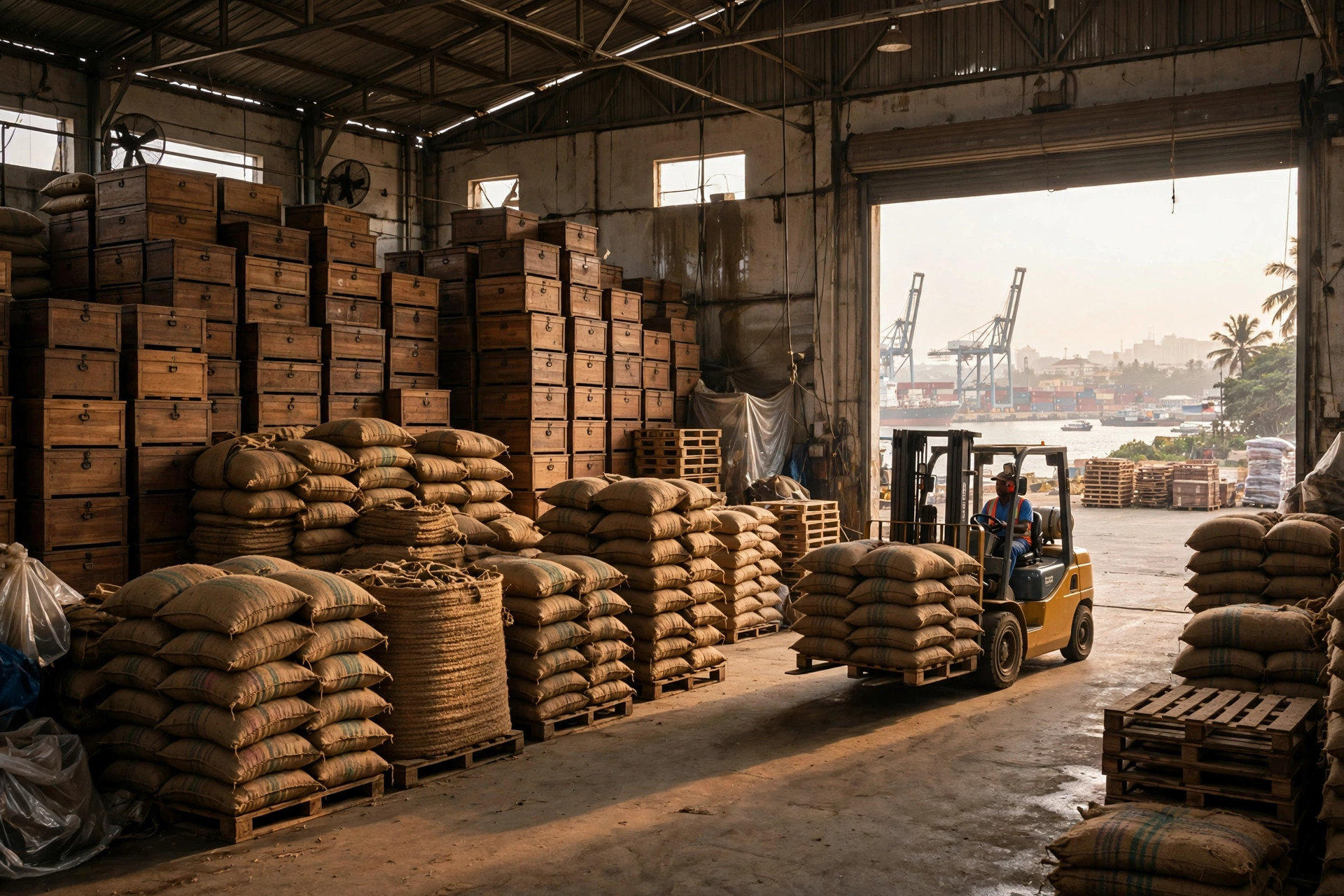
We have a client who exports Kenyan tea. His factory sits in the highlands, and his tea travels all the way to the Mombasa auction warehouse, waits for auction, and then gets packed for shipment. Last year he came to us to talk about a warehousing contract, and his first question was a familiar one: "Every warehouse quote looks reasonable, so why does the warehousing leg still lose money by year end?" When a shipper asks that, the quote is usually not wrong. It is incomplete.
Let me get one thing straight first: tea is not flowers. Kenyan flowers run on cold chain and speed. Tea runs on moisture control, blending discipline, and auction timing. Apply a flower cold-chain playbook to tea and you will spend the money and still end up with damp tea and mixed-up blending lots. Kenya tea export warehouse storage is a different ledger altogether.
Kenya Tea Export Warehouse Storage Through Two Client Stories
The first story starts at a highland factory. The factory processes tea in a wet highland climate, stores it in its own warehouse while lots accumulate, and then trucks it down to Mombasa. The factory warehouse looked fine from the door: roofed, walled, indoors. But the walls sweated, the floor had no moisture barrier, and the bottom tea sacks sat directly on the ground. On arrival in Mombasa, the bottom sacks were damp and musty and had to be downgraded. The loss was not those few sacks. The downgrade dragged down the blending grade of the whole lot, and the auction price dropped a grade with it.
The second story sits in Mombasa itself. Tea entered the pre-auction warehouse, waited for auction, waited for blending, waited for stuffing, and the longer it waited, the more trouble arrived. Tea from different factories and different grades got stacked together for blending, the marks showed only a generic description, and when the blending order came down, the warehouse spent half a day just finding the right lots. Loading slipped, and demurrage risk followed. What the shipper saw on the invoice was a storage fee. What actually cost money was the searching, the rework, and the missed loading window, none of which appeared on the quote.
The lesson behind both stories is the same: the big cost in tea storage is not the price per square foot. It is downgrades from moisture failure and rework from blending confusion.
What the Mombasa Auction Warehouse Really Has to Do
Mombasa is the hub of Kenyan tea exports, and the auction mechanism sets the rhythm of the pre-auction warehouse: goods arrive first, auction second, blending and dispatch third. A pre-auction warehouse is not a place where tea simply sits. It has to do three jobs at once: keep moisture out, keep grades separate, and make every lot findable fast.
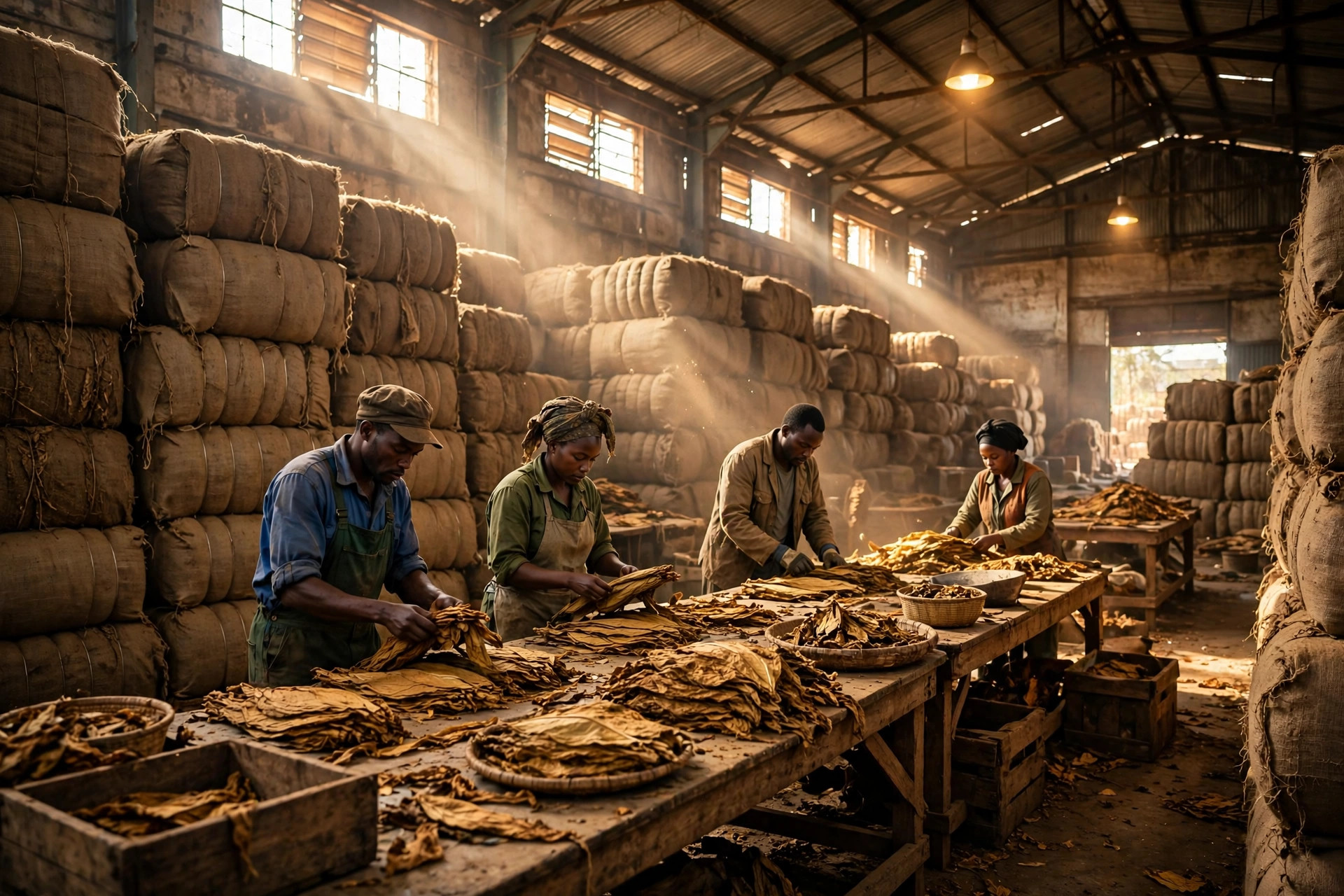
Moisture control starts with the floor, the walls, and ventilation together. In Mombasa's humid coastal air, sacks must sit on pallets, clear of floors and walls, with extra ventilation and inspection rounds in the rainy season. Do only one of the three and you have effectively done none. Inspections should not just scan the surface either. The bottom layer, the wall side, and the doorway are where damp starts, so sample those spots first.
Blending is the second job, and it is widely misunderstood. Blending is not pouring teas together. It is keeping grades, origins, and batches clearly separated first, then combining them exactly to a buyer's order. The warehouse preparation decides dispatch speed: batch labels, grade marks, and lot numbers all in place means a blending order can be picked immediately. Unclear labels mean the warehouse spends half a day sorting before it can even start.
One public anchor belongs in your contract talks. According to Business Radar citing Kenya Tea Development Agency (KTDA) figures, the Miritini warehouse in Mombasa currently covers about 130,000 square feet, with roughly 60,000 square feet of expansion planned and a 2027 completion target. Capacity is changing, so do not lock a long-term contract to today's footprint. Leave room to adjust space and rates when the expansion lands. Treat specific rates as figures to confirm against the latest KTDA and auction-house terms, not as numbers from an old quote.
The Costs Missing From the Quote, and Three Questions for Negotiation
A 3PL tea storage quote usually lists storage and handling. Here is the ledger the client actually pays:
| Cost item | Usually on the quote? | Why it blows up |
|---|---|---|
| Storage fee | Yes | Auction waiting time gets underestimated |
| Moisture control and inspection | Often no | Damp downgrades pull the whole blending grade down |
| Blending and sorting labor | Often no | Unclear labels mean rework delays loading |
| Demurrage and rebooking | No | Late loading penalizes you on both ends |
| Re-testing and rework | No | Failed moisture or bag checks mean doing it twice |
Here is the counterintuitive part: the cheapest quoted warehouse is often not the cheapest warehouse. If moisture control, blending discipline, and lot retrieval are weak, the storage savings come back doubled as downgrades and rework. When you choose a warehouse, do not just compare the unit rate. Compare who owns moisture damage, who reworks a blending error, and who carries the schedule risk when retrieval is slow.
So next time you negotiate a contract, remember to ask these three questions: first, how are moisture downgrades priced and compensated; second, is blending and sorting labor inside the storage fee or charged separately; third, how does the storage rate change when the auction waiting period runs past the agreed days? Get those three answers in writing, and the costs missing from the quote will stop showing up at year end.
Kenya Tea Export Warehouse Storage and the Blending Ledger
The blending ledger deserves its own paragraph, because it is the line item shippers underestimate most. We had a client whose blending order arrived and the warehouse filled it with a roughly matching grade. At auction, the buyer inspected the lot, found the grades mixed, and bought it down a grade on the spot. The storage fee had not changed by a cent, yet the price drop on that one lot wiped out months of storage savings. A blending error looks like warehouse work completed on time. In money terms, it is a discount the shipper never agreed to.
The fix comes down to three sentences worth writing into the service standard: separate batches before you blend, do not release a lot whose labels are unclear, and check the blending order against the lots before anyone starts picking. Then assign the costs in advance: who reworks a blending error, who pays storage while it is reworked, and how a downgrade loss is shared. With those sentences in the contract, the warehouse looks twice at every label. Without them, a blending error turns into a negotiation between the shipper and the warehouse, and the shipper usually pays for the lesson.
By Susan, 3PL Sales Director