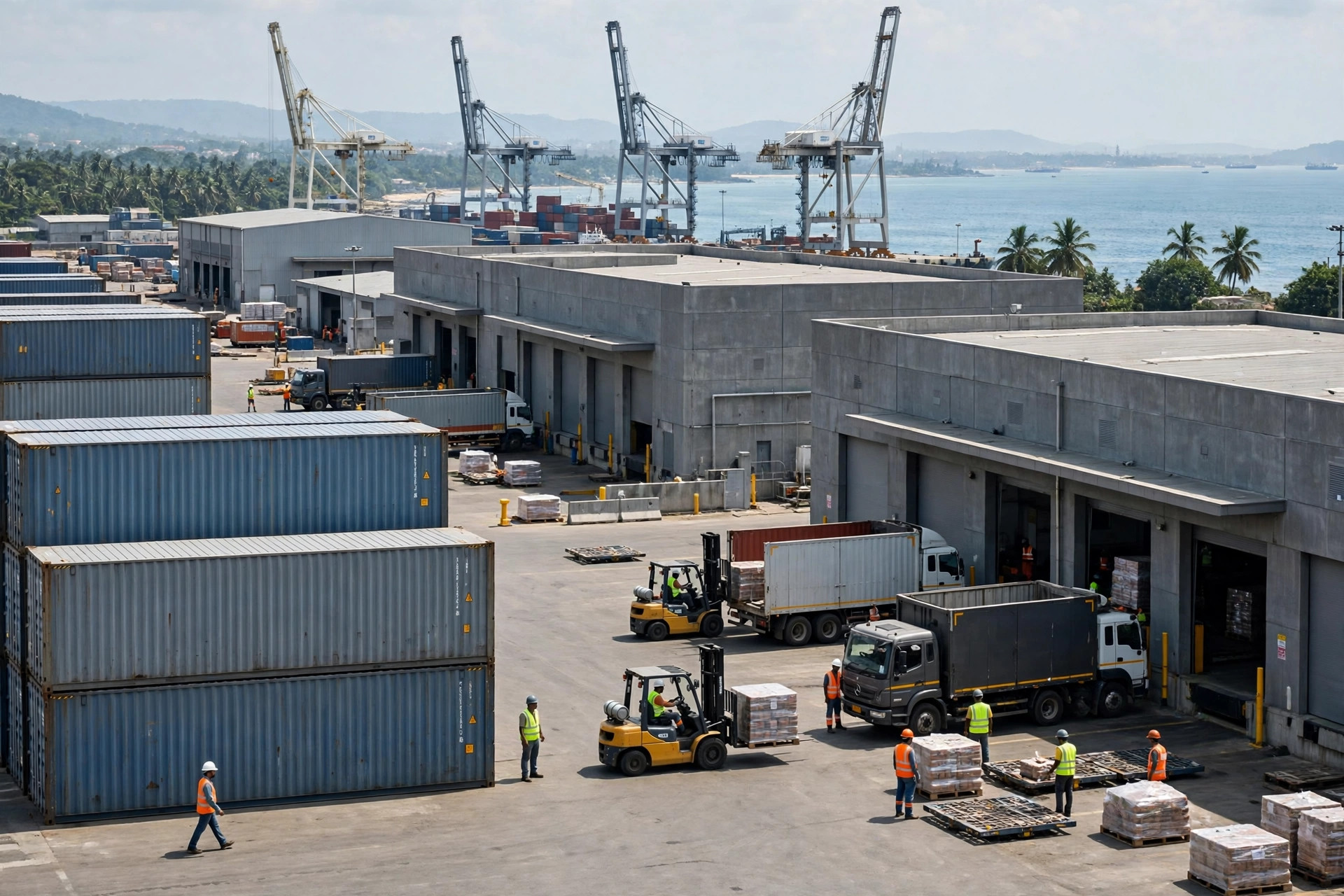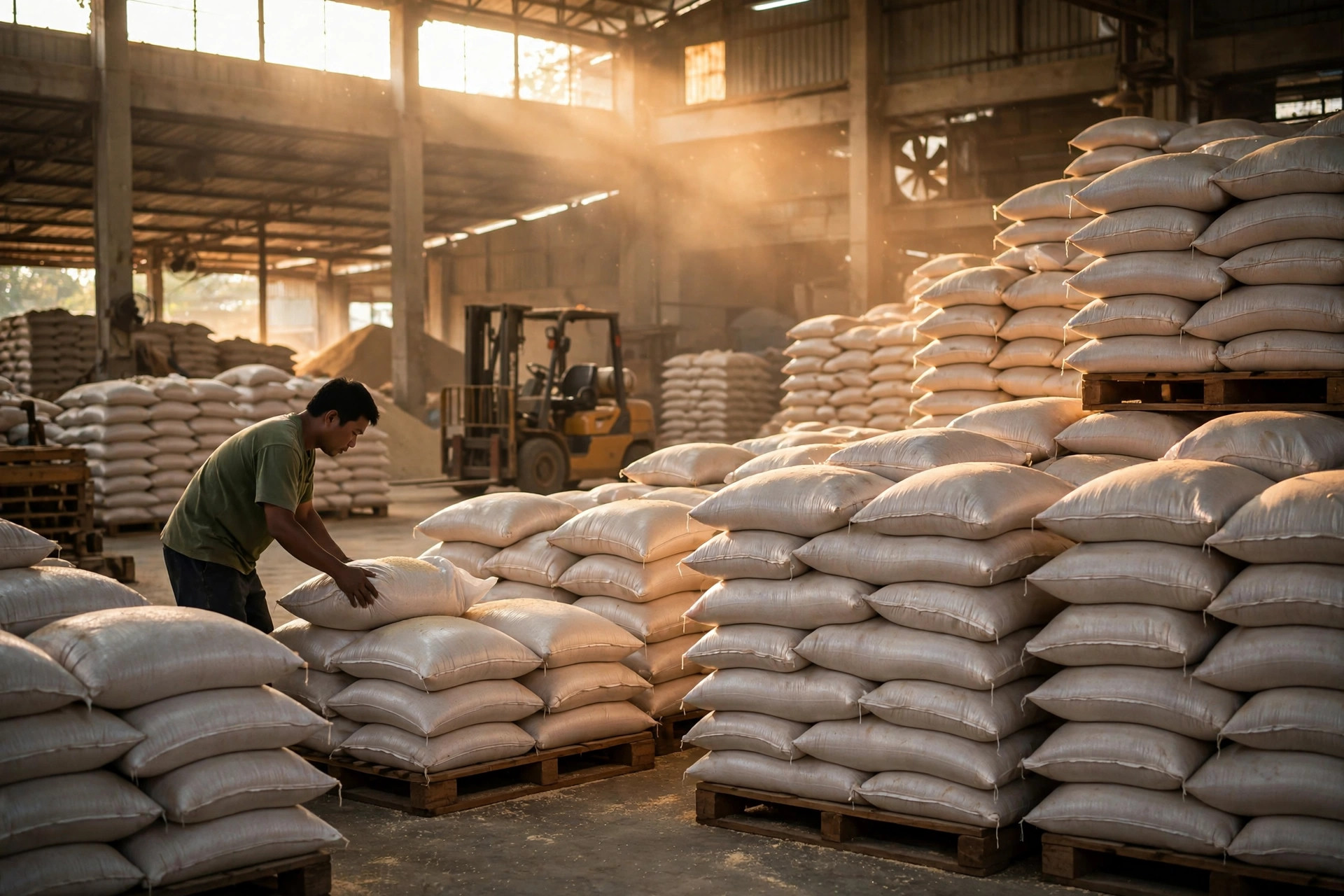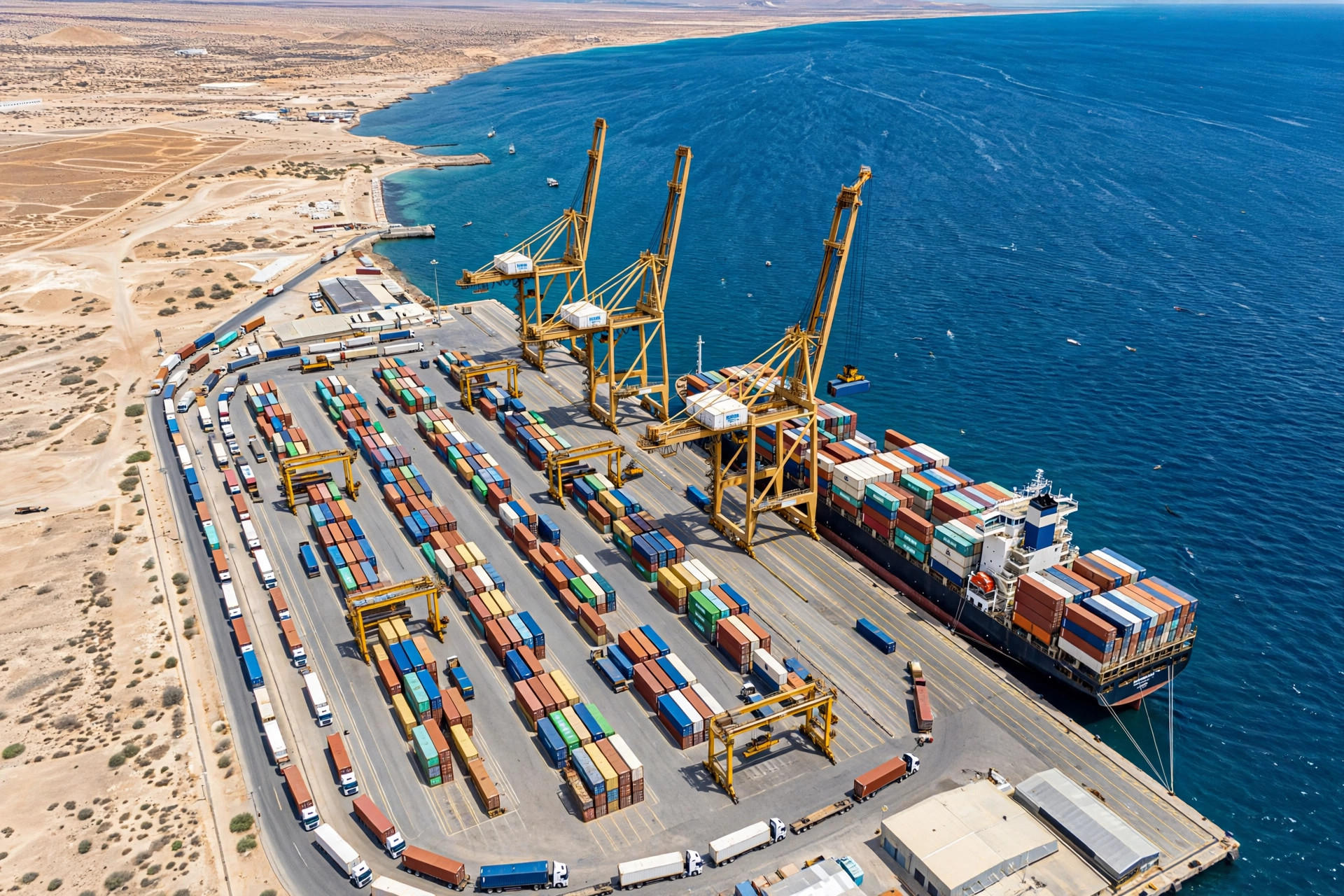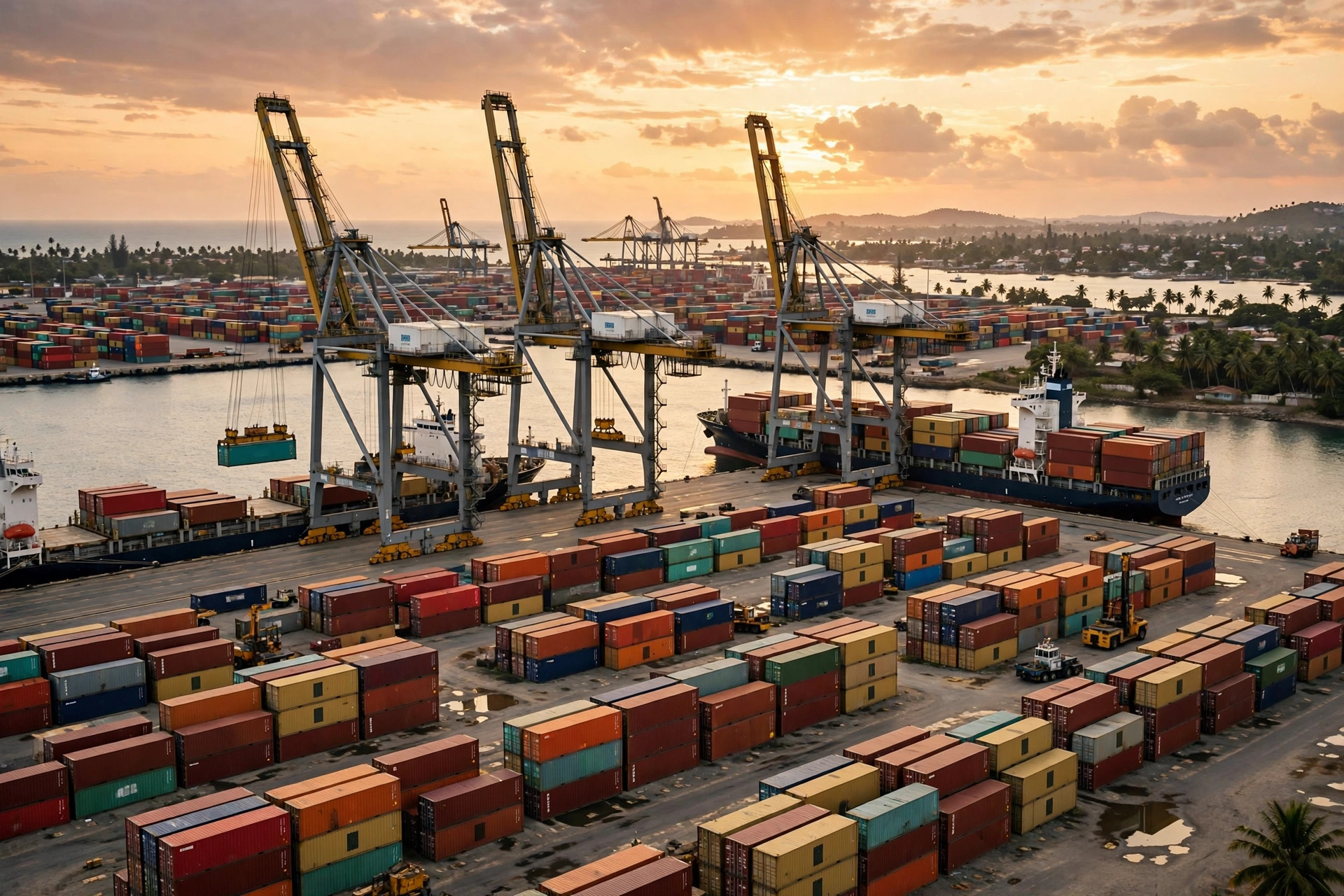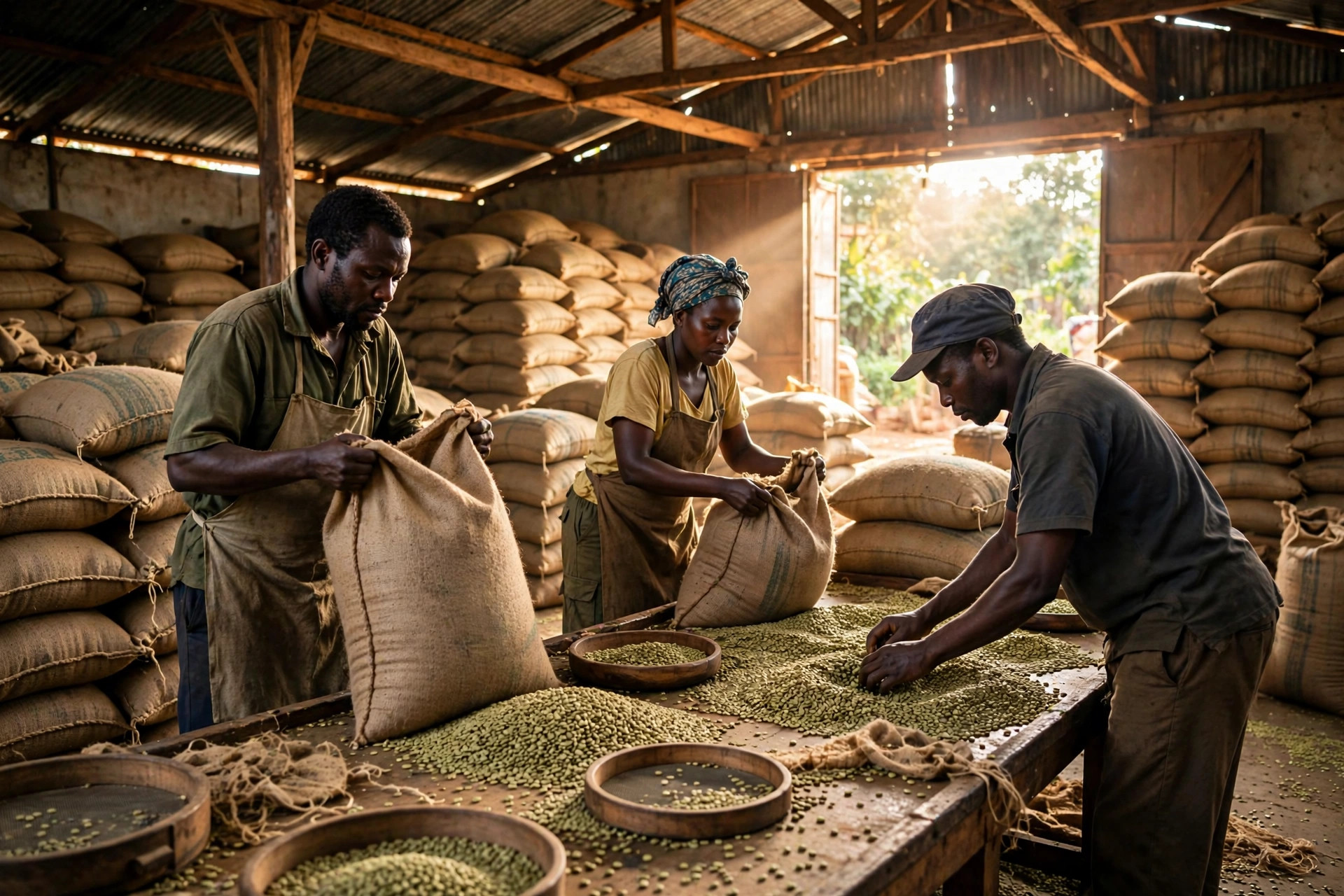
It is 5:30 in the morning in Kampala, on Uganda's coffee export warehousing chain. The dry mill has just switched its lights on, and the air smells of green coffee. The night shift has not left yet, forklifts are moving in the yard, and the quality inspector is walking the bags with a moisture meter. Outside, drivers are already asking about loading times, and the container numbers all check out — everything waits on quality clearance. Let me be honest: in Uganda coffee export warehousing, the hardest part is never "do we have a warehouse." It is that natural and washed processing create two different warehousing chains from the moment coffee enters the mill. Manage them as one chain and buyer inspection will eventually catch you.
This article follows that chain: how Uganda coffee leaves the Kampala dry mill, how it is separated and stored, and how it connects to Mombasa port.
Uganda Coffee Export Warehousing Starts at the Dry Mill: Hulling, Grading, and Moisture
A dry mill does three things: hulling, grading, and moisture control. Natural-process coffee arrives still in its dried fruit. Washed coffee arrives as parchment coffee, already pulped and washed. The starting states are different, and so is the handling rhythm. But whatever the chain, every lot passes through the same gate first: sampling.
Our fixed routine is this: sample every incoming lot for moisture, defects, and foreign matter. Lots over the contract moisture line go aside on their own. They never join compliant lots in a shared stack. Lots with high defects get marked separately and never get blended into good coffee to hide them. That sounds like common sense, and it is exactly the rule most likely to break on site. In peak season, trucks queue up, yard space runs out, and someone always suggests "just blend it in for now." Blending saves space for a day. At buyer inspection, the whole container can be discounted, and that loss is far bigger than a few extra days of yard rental.
After grading, storage zones must follow the grades. Different grades, processes, and lots stay in separate zones, with labels written clearly. Uganda exports mainly Robusta, along with Arabica, and once grades and processes mix up, finding goods and consolidating containers fall apart. Our zone signs show process and grade in different colors, so a new hire can find goods by reading the sign.
Natural vs Washed Coffee: Two Warehousing Chains, Not One Rhythm
Natural and washed coffee are not a question of which is better. They differ in entry state and risk. Natural coffee is dried as whole fruit; sun-drying depends on weather, so incoming moisture is more likely uneven. Warehousing must focus on rechecking moisture and ventilation: uneven lots stacked together can develop local dampness and heating, so they must be stored separately, sampled often, and restacked more frequently than washed coffee.
Washed coffee is pulped, fermented, washed, and then dried, arriving at the mill as parchment. Its risk sits at the other end: if fermentation and washing were not done well, the risk of off-flavors is higher, so incoming inspection has to watch odor and uniformity in addition to moisture and defects. Washed coffee stores on a steadier rhythm, but if it gets mixed with natural coffee, or if a container consolidates washed and natural lots together, the buyer inspects against washed expectations and the flavor description and grade no longer match. A discount follows without argument.
| Stage | Natural chain | Washed chain |
|---|---|---|
| Entry state | Dried whole fruit | Parchment coffee |
| First checks | Moisture uniformity, foreign matter | Odor, uniformity, defects |
| Storage focus | Ventilation, frequent sampling, prevent local dampness | Zone separation, never stack with natural |
| Worst trap | Uneven moisture blended in one stack | Natural and washed consolidated in one container |
| Pre-shipment recheck | Moisture, defects, grade | Moisture, defects, odor, grade |
In our warehouse, the two chains stay separate at entry, in storage, and in consolidation. The "convenient" blended approach looks faster on site and always gets repaid at inspection.
The People Side of Uganda Coffee Warehousing: Shifts, Morale, and Training
Let me talk about people, because warehousing is never only about coffee. In peak season, the dry mill runs two shifts. The day shift hulls and grades. The night shift carries on. The quality inspector is the one role that cannot go missing.
We learned this the hard way. During one peak push for containers, the night-shift inspector called in sick, day-shift staff covered the night, and sampling frequency dropped. A lot with high moisture was not isolated and got stacked with a compliant lot. We only caught it at pre-shipment recheck, then had to re-sort and re-consolidate, losing two days and nearly missing the container window. After that, we set a hard rule: the quality post never goes vacant. If someone is out, an experienced day-shift worker covers it. New hires only shadow; they never clear lots alone.
Training new hires has its own discipline. A new hire spends two weeks on grading and labeling before touching inspection. Labeling looks small, and it is where the site makes the most mistakes: one wrong letter in the process code, one wrong digit in the grade, and consolidation and shipping documents all follow the error. Senior workers train them through three lots: the senior works the first while the new hire watches, the new hire works the second while the senior watches, and the new hire works the third with a senior recheck. Morale matters: exhausted people turn sampling into a walk-through, so night-shift allowances and rotations are written down, and every shift starts with ten minutes on container windows.
Uganda Coffee on the Road: From Kampala to Mombasa Port
Uganda is landlocked, so export coffee travels overland to Mombasa port in Kenya. This connection is an extension of the warehousing chain, not the end of it. Before dispatch, our fixed routine covers four things: recheck moisture and defects and confirm grade and lot; verify container number, seal number, and documents three ways; inspect packaging and inner bags and replace damaged ones on the spot; and photograph everything — lot, container number, seal, and loading condition. Those photos and records are the evidence if a dispute arises.
On the road, two risks dominate: moisture damage and lot mix-ups. Rainy-season hauls demand careful checks of tarpaulins and inner bags; damp coffee discovered at port opening leaves warehouse, trucker, and port arguing with no clean answer. Mix-ups are quieter: poorly labeled consolidated lots throw off port sorting and buyer sampling. We write every lot's bag count and position on the loading sheet, load by the sheet, and recheck before sealing.
Here is a counterintuitive judgment: on the export chain, the most expensive stage is often not freight. It is buyer discounts and rework. A container discounted for moisture or defects can lose more than the entire inland freight leg, and rework from a consolidation error costs missed vessel windows that cascade. Spending an extra half day on rechecks, sorting, and photos looks slow, but it saves money across the whole chain — judge it on total cost, not warehouse time alone.
Where Buyers Discount Uganda Coffee: Moisture, Defect Beans, and Contamination
Buyers inspect three things: moisture, defect beans, and contamination — over the line on any of them means a discount. Unlike the Rwanda dry-port piece and the Ethiopia coffee piece, this piece is about the Uganda dry mill itself. Warehousing can block all three in advance, or let all three through; the difference is execution on site. Our rule is firm: a lot that fails pre-shipment recheck never gets consolidated, no matter how tight the container window is. We would rather negotiate a changed window than send a problem lot to a buyer. A changed window costs time; a problem lot costs price, reputation, and possibly the next order.
A Reminder to Fellow Operators: Three Points, Worth Repeating
Three reminders for fellow operators, all paid for with our own mistakes: never blend the chains — natural and washed stay separate at entry, in storage, and in consolidation. Blend once, and inspection repays it tenfold. Never leave the quality post vacant. However busy peak season gets, sampling frequency and rechecks cannot drop — the time saved by cutting them gets returned in rework. Never rush the sealing. Finish rechecks, document checks, and photos before sealing the container. A problem found after sealing costs ten times what it costs in the warehouse.
Warehousing, at its core, is guarding the identity of every lot: origin, process, grade, moisture, and container. Guard that identity, and when the coffee reaches Mombasa and the buyer, it is still the same lot — and its price and reputation hold.
By Chen Feng, Warehouse Operations Manager