Every year, once the processing season ends, Italy canned tomato export warehouse storage settles into a peculiar state: the goods look like the safest thing in the building, and that is precisely when their risks stop getting attention. Canned tomatoes do not demand urgent dispatch the way fresh produce does, so many warehouses move them into an ambient zone and consider the ledger closed. The reality runs the other way. The ledger for canned goods is calculated slowly, and the cost of getting it wrong arrives late and large. By the time a buyer opens a carton and finds a problem, the shipment's destination is already difficult to rescue.
Italy canned tomato export warehouse storage and the first question: who sets shelf life
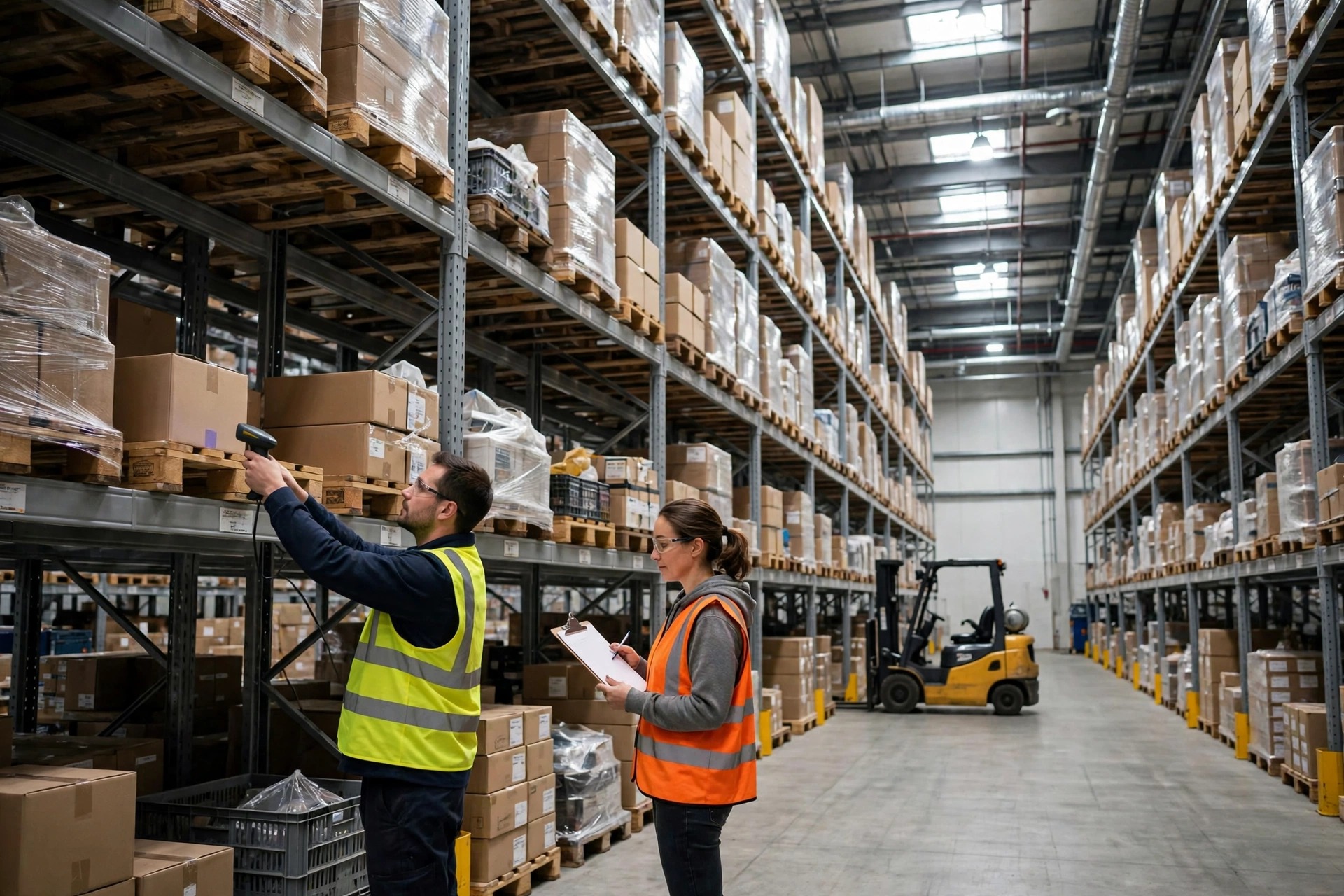
Start by clearing away a common misunderstanding. The fact that canned tomatoes keep well does not mean shelf life can be estimated from experience. The same lot can face different shelf-life criteria in different buyers' hands, and every shelf-life and specification figure must follow the buyer's specification. A warehouse cannot substitute its own long habit for the buyer's rule. More importantly, the unit of shelf-life management is not a single can. It is the batch. Production date, processing plant, variety, and specification all belong to one batch, and once batches are mixed up, first-expired-first-out has nothing left to work with.
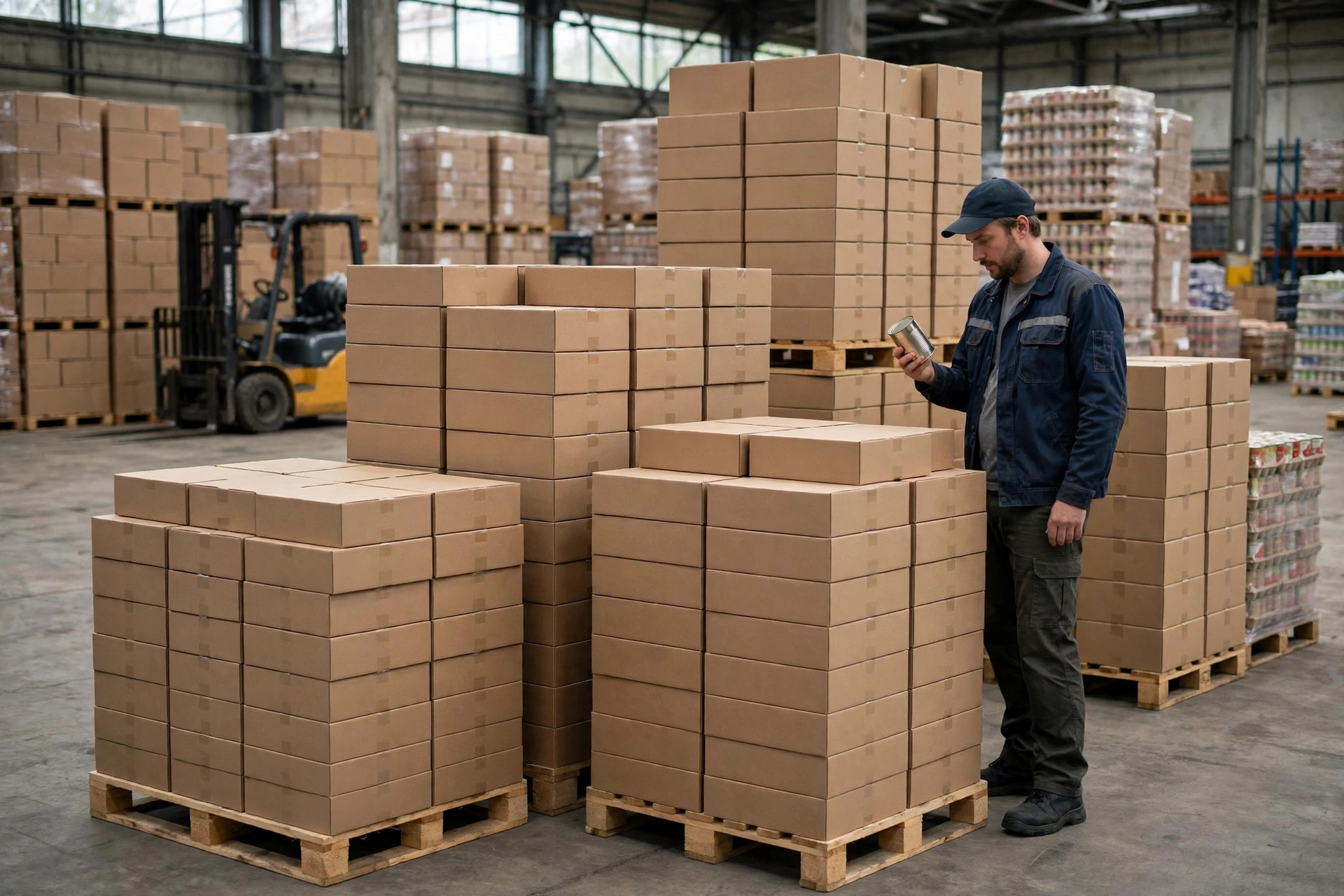
I saw this play out in an ambient warehouse near a processing plant in southern Italy. During the peak season, pallet after pallet of Roma canned tomatoes arrived, and the crew, trying to save time, pushed later pallets in front of earlier ones, with batch labels turned inward where even their own staff could not read them. Months later, at dispatch, pickers took whatever was easiest to reach, and the earliest batch stayed behind. When the buyer reported insufficient remaining shelf life, the warehouse went back through its receiving records, but the time was already spent, and so was a measure of trust. Nobody in this story was lazy, and no equipment failed. The failure was simpler: the batch had never become the unit of warehousing action, and receiving order had quietly replaced expiry order.
Two concepts are routinely confused here, and the distinction matters. First-in-first-out governs receiving time. First-expired-first-out governs the expiry endpoint. The two usually coincide, but they are not the same thing. For canned tomato exports, first-expired-first-out must be the rule, because batches of the same variety produced on different dates start their shelf life at different points. Dispatching purely by receiving order will eventually leave the stock with the least remaining life until last. The remedy is unglamorous: separate batches on receipt, keep labels facing outward, make the batch field mandatory in the system, and sort by expiry before picking by location. A little clumsiness here is acceptable. Batch clarity is itself part of warehousing quality.
Italy canned tomato export warehouse storage and the rejection ledger: what is one can worth
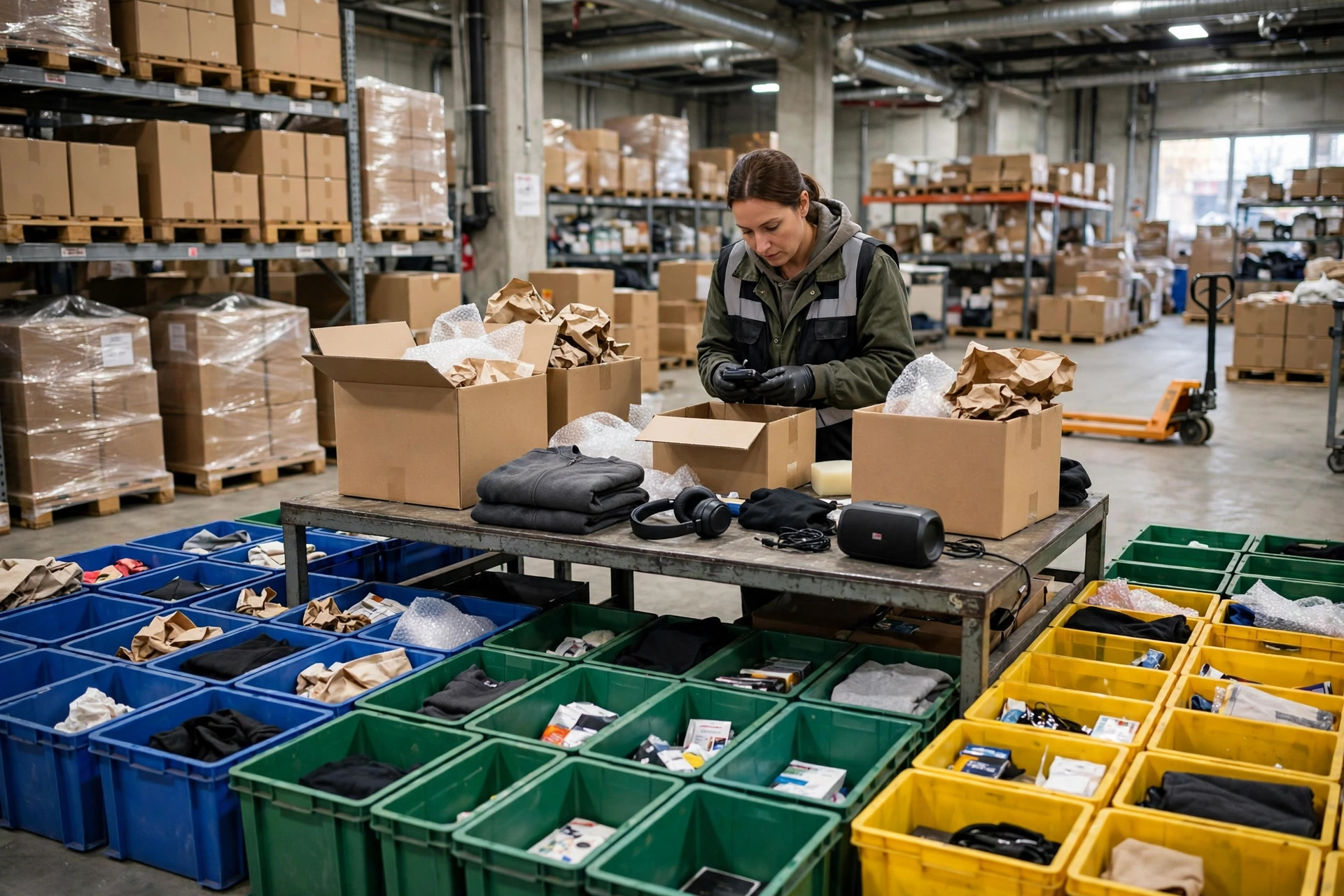
If shelf life is the slow ledger, rejection is the fast one. Four can conditions show up most often in ambient storage: dented cans, rusted cans, swollen cans, and damaged labels that leave the batch unclear. Their severity differs completely, and so must their handling. The table below is a decision framework the floor can actually use. Final disposition always follows the buyer's specification.
| Can condition | Floor action | What it really costs |
|---|---|---|
| Light dent, seal untouched | Segregate and report to the buyer | Low release risk, but mixing it with sound stock contaminates the credibility of the whole lot |
| Dent at the seal, or rust | Isolate and reject from dispatch | Once a seal is compromised, contents safety cannot be demonstrated, and keeping the can costs more than discarding it |
| Swollen can | Isolate immediately, escalate, and expand inspection across the batch | One can may signal a batch-wide processing or storage anomaly, and checking the batch costs far less than a recall |
| Damaged label, batch unclear | Freeze the pallet and reconstruct the receiving record | Stock without a batch is stock without traceability, and dispatching it cuts the traceability chain by hand |
A second case comes from a distribution warehouse in northern Italy. One winter, a lot of San Marzano DOP canned tomatoes sat in bays against an outside wall. Night temperatures fell sharply, daytime warming followed, condensation formed on the wall, a few cartons got damp, and rust spots gradually appeared on individual cans. At first only a handful of cans were affected, and the temptation was to wipe them clean and ship them. The supervisor stopped the whole pallet, for a reason worth pausing over: rust is not a cosmetic problem. It is evidence that the sealing environment was once damp, and wiping away the rust does not prove the seal is sound. That lot was rejected under the buyer's specification. A few pallets were lost, but the traceability record for the whole order survived. The miscalculation warehouses most often make is treating one can's value as the whole cost of rejection. The real cost is the credibility of the entire lot.
The same logic governs ambient storage itself. Canned tomatoes need no refrigeration, but ambient does not mean unattended. Protection against freezing matters just as much as protection against heat, and bays beside walls, doors, or heat sources should be avoided. When temperature or humidity drifts, check the location before blaming the goods. Damp cartons usually appear before rusted cans, so a warehouse walk that inspects cartons catches trouble earlier than one that inspects cans alone. Areas where pallets sit untouched for months deserve scheduled turning and inspection, because a pallet nobody moves is the most likely place for a quiet problem to develop underneath.
Two processing belts, two warehousing jobs
Tomato processing in Italy is not concentrated in one place, and the northern and southern clusters place different demands on a warehouse. The south sits close to the raw-material regions, so plants ship in step with the processing season, and the warehouse's pressure arrives all at once: sort the batches correctly during a short, intense receiving window. The north functions more as a distribution and reprocessing node, drawing stock from several plants, so batches are more mixed, and the pressure concentrates on separation and traceability at dispatch. The response should differ accordingly. A southern warehouse should invest its effort at receiving, while a northern warehouse should add its checks at dispatch.
This division supports a counter-intuitive judgment: the longer canned goods keep, the less a warehouse can afford to treat them as forgettable stock. Fresh goods are watched every day, which paradoxically protects them from systemic neglect. Canned goods left untouched for months lose information value day by day, as batch, location, and condition records quietly decay. Regular inspection is not distrust of the goods. It is recognition that time itself is a warehousing cost. Cutting canned-goods management to a minimum looks like saved labour, but it really stores up risk to be settled all at once on dispatch day.
The trend: buyer specifications are becoming the warehouse standard
The direction of travel is clear. Buyers are asking for more specific things: complete batch information, rejection records kept on file, and explanations for any temperature or humidity anomaly. Warehouses used to deliver on experience. Increasingly, they will have to deliver on records. A warehouse that can produce a batch list, an inspection record, and a rejection log carries more weight in a negotiation. A warehouse that cannot produce them struggles to prove a negative, even when its goods are perfectly sound.
That raises an open question rather than a conclusion. If buyer specifications keep getting more detailed, will the warehouse's role shift from a place where goods are stored into the first checkpoint that defends shelf life and the traceability chain on the buyer's behalf? If the answer is yes, then every extra effort spent today on batches and rejection records is not a cost at all. It is the part of a warehouse's work that will be hardest to replace.
By Dr. Chen, Supply Chain Researcher