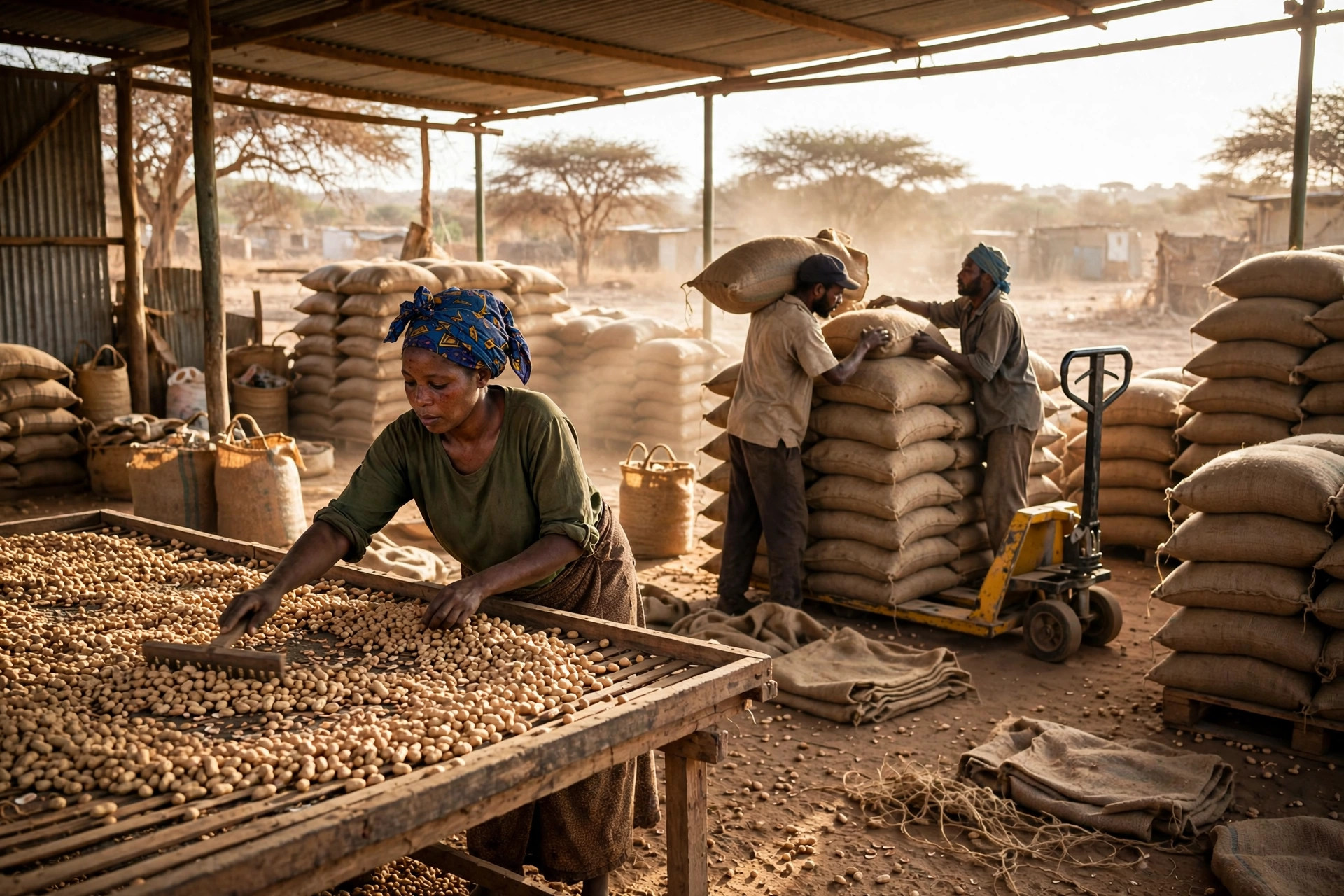
Let me be blunt: Ecuador cacao export warehousing is not really a rent calculation. It is a fermentation and drying calculation. I have seen too many people treat cacao like any other dry cargo, stack the bags in a warehouse, and assume the job is done, only for the buyer to open a bag at the other end and find the flavor off. Once that happens, the whole shipment gets repriced in the buyer's head, and no amount of explaining at the port will put it back. So here is my conclusion up front: a problem that starts in the warehouse almost never gets fixed at Guayaquil port. The effort you skip early on gets paid back later, with interest.
Ecuador Cacao Export Warehousing, Ledger One: Fermentation Is Not a Case of Longer Is Better
A few years back I spent several days at a cooperative warehouse inland from Guayaquil. The fermentation boxes were lined up neatly and the crew worked hard, but one lot of beans kept coming out sour. Nobody was lazy. The trouble was the turning rhythm: some boxes were turned on schedule, others sat too long, and beans from the same harvest ended up tasting different from one box to the next. A buyer does not want one lucky batch. A buyer wants consistency, and fermentation is where consistency is won or lost.
This cuts both ways. Under-ferment and the beans carry a raw, sour edge that no variety can rescue. Over-ferment and the flavor turns dull and muddy, which is just as hard to sell. The usual working range is three to seven days of fermentation, with the exact number depending on variety, weather, and the buyer's specification. There is no single magic number, and anyone selling you one is guessing. Nacional, better known as Arriba, and CCN-51 do not even behave the same way: the first is prized for its flavor layers, the second for steadiness and yield. Ferment them together and store them together, and you have built yourself a problem that only shows up when it is too late to separate them.
My approach is unfashionable, but it works: ferment each variety and each harvest lot separately, stack them separately, and mark every box with its date and origin. When something goes wrong, you can trace it to one lot instead of tearing the whole warehouse apart. There is also a handover detail that gets ignored far too often. Fermentation runs over several days, and the state of each box has to be passed from one shift to the next: whether it was turned, how it smelled, whether anything heated up oddly. If the handover is a shrug, the next person works on guesswork, and the same lot gets handled two different ways by two different people. Plenty of warehouse problems are not technical problems at all. They are broken handovers.
Ecuador Cacao Export Warehousing, Ledger Two: Mold Prevention Comes from Drying, Not Luck
I learned the mold ledger the hard way, in the rainy season. The air around Guayaquil in the wet months is heavy enough to feel on your skin, and one year I walked into a port-side warehouse where jute bags were stacked straight on the floor. The bottom layer had taken up damp. The outside of the bags looked fine, but once one was opened, the musty smell had already worked its way in. What that seller lost was not just a few dozen bags. It was the buyer's trust for the next order, and trust is much harder to re-dry than beans.
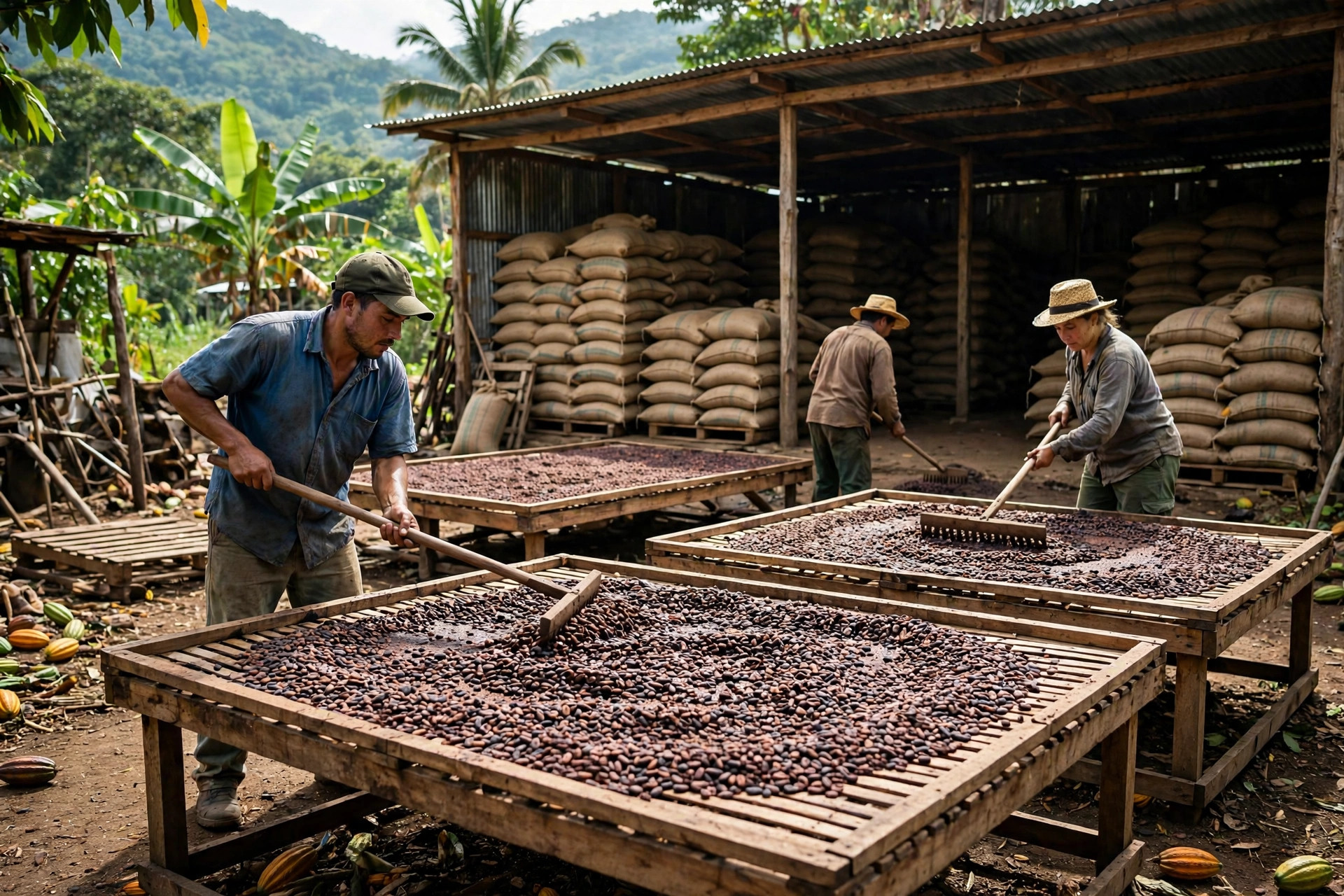
Drying has to be finished before the beans go into storage, and the usual target is around seven percent moisture, always measured against the buyer's specification rather than anyone's hand. The hand is a liar here: beans can feel dry on the surface while the center is still damp. Once the beans are in, the basics are jute bags with a moisture-proof liner, bags raised on pallets off the floor, and space left against the walls for air to move. None of this is clever. Mold prevention was never about cleverness. It is about whether the boring routines actually happen every day. And here is the counter-intuitive part: the most expensive thing in the warehouse is usually not the rent. It is rework and downgrading. One shipment knocked down a grade over mustiness can cost more than a whole season of storage, which means every shortcut taken earlier gets repaid in a single blow.
| Approach | What it saves | What it costs | Who it suits |
|---|---|---|---|
| Bags straight on the floor, no pallets | The hassle of pallets and extra handling | Damp bottom layers, mustiness that spreads to the whole lot | Only the briefest transit, and only with someone inspecting daily |
| Pallets off the floor, moisture-proof liner inside | Protection from ground damp, damage confined to individual bags | The cost of pallets and liners, more careful stacking | The standard approach for most export warehouses |
| Separate lots, marked origin and date | A problem isolated to one small lot instead of the whole store | An extra sorting and recording step at intake | Warehouses handling mixed varieties or many small suppliers, above all |
What separates the rows of that table in practice is execution. Every day the warehouse is opened, somebody should smell the air first, then check the corners and the bottom bags for any sign of damp, and pull any suspect bag out on its own before the smell reaches its neighbors. In the rainy season the rounds have to be more frequent, because one leak in the roof can quietly ruin the bags underneath it. I have seen too many warehouses with beautiful procedures on paper and pure improvisation in practice, and mold is exactly the kind of problem that punishes that gap. Prevention is not a piece of equipment you buy. It is a person walking the stacks, looking, smelling, and writing it down.
The Last Stretch to Guayaquil Port: Where Good Shipments Go Wrong
There is one more trap, and it sits right before shipment. A small craft-chocolate buyer once told me how he inspects: he ignores what the warehouse claims and judges the beans on flavor, foreign matter, and any sign of mold once the bag is open. Any one of those wrong, and the lot's reputation is set. So a seller should run that same check before the goods leave, using the buyer's own standard, and pull the bad bags out early rather than hoping the problem disappears somewhere between the warehouse and the destination port.
Labels matter here too, more than people think. If the marks wear off a bag, or a restack leaves nobody sure which pile is which lot, the inspection turns into guesswork, and buyers always guess in their own favor. My habit is to mark in two places, on the bag and on the paperwork, and to stop if the two do not agree.
One more thing that people only think about after trouble arrives: agree the inspection standard with the buyer in advance. Whether flavor or appearance matters most, and how much tolerance there is for mold and foreign matter, should be settled before shipping, in conversation or on paper. Keep lot records so that every batch can be traced to its origin and its fermentation, and the buyer never has to take your word for it. Good beans are not afraid of questions.
So the whole Ecuador cacao export warehousing ledger comes down to three lines: ferment lots separately and never mix them for convenience; dry to the buyer's specification before storage, never by feel; and once stored, keep bags off the floor, lined against damp, and marked lot by lot, so a problem stays small. None of it is glamorous, and all of it is slightly tedious, but it decides whether a shipment arrives as good beans or as a problem shipment. Before your next lot leaves, ask yourself this: would you rather spend half a day extra beside the fermentation boxes, or explain to a buyer at the port why the whole shipment has to be downgraded?
By Lao Mi, Supply Chain Veteran (20 yrs)