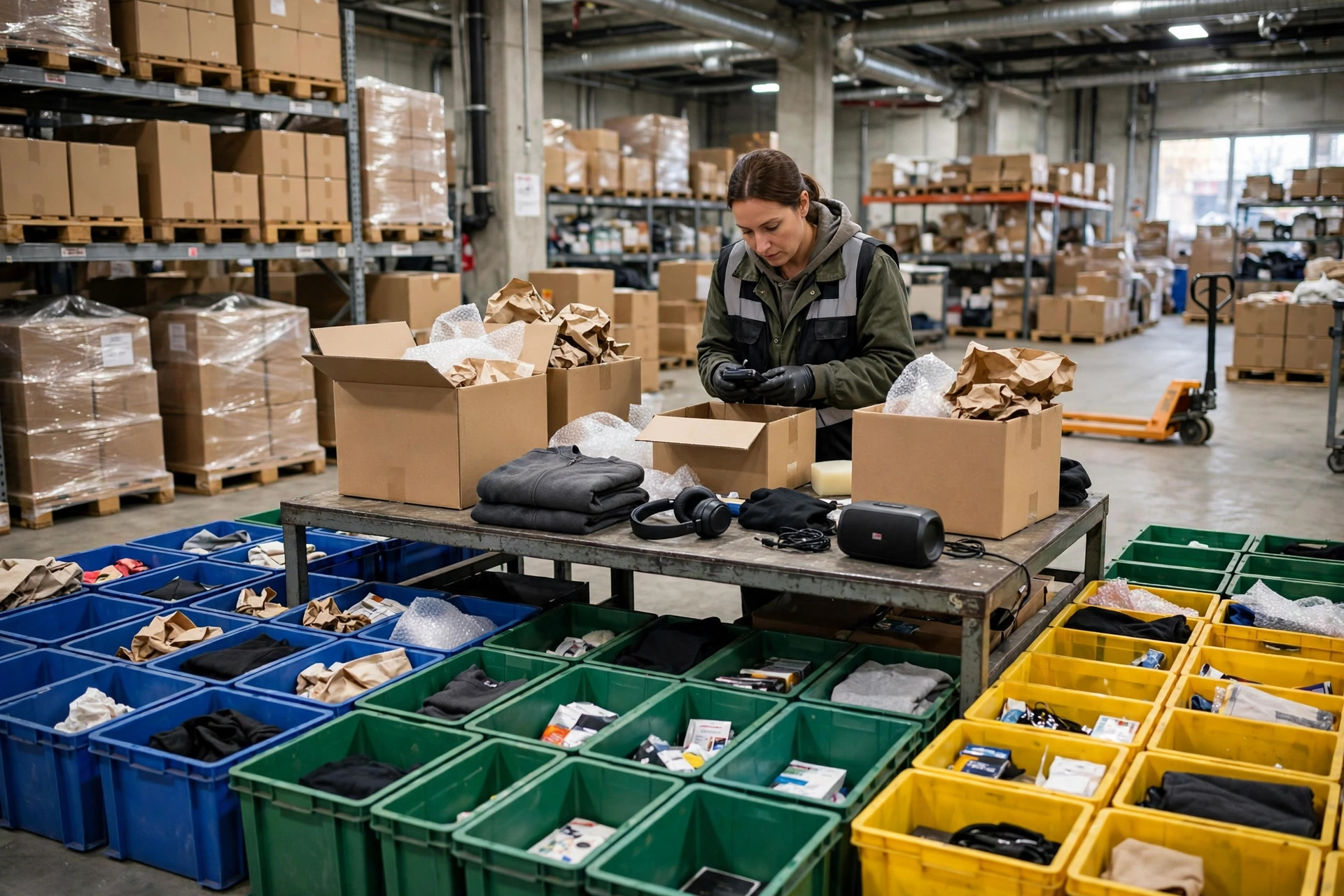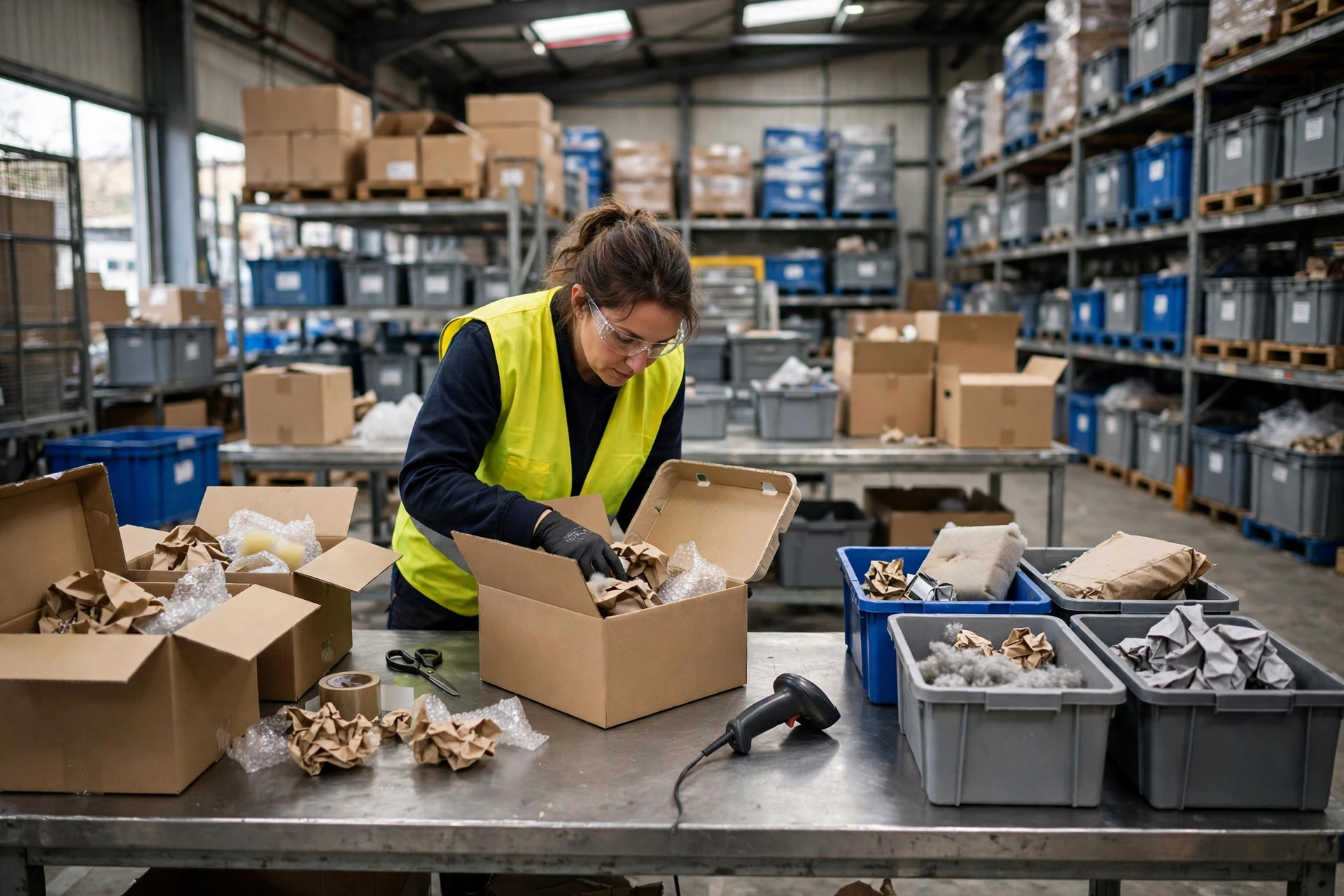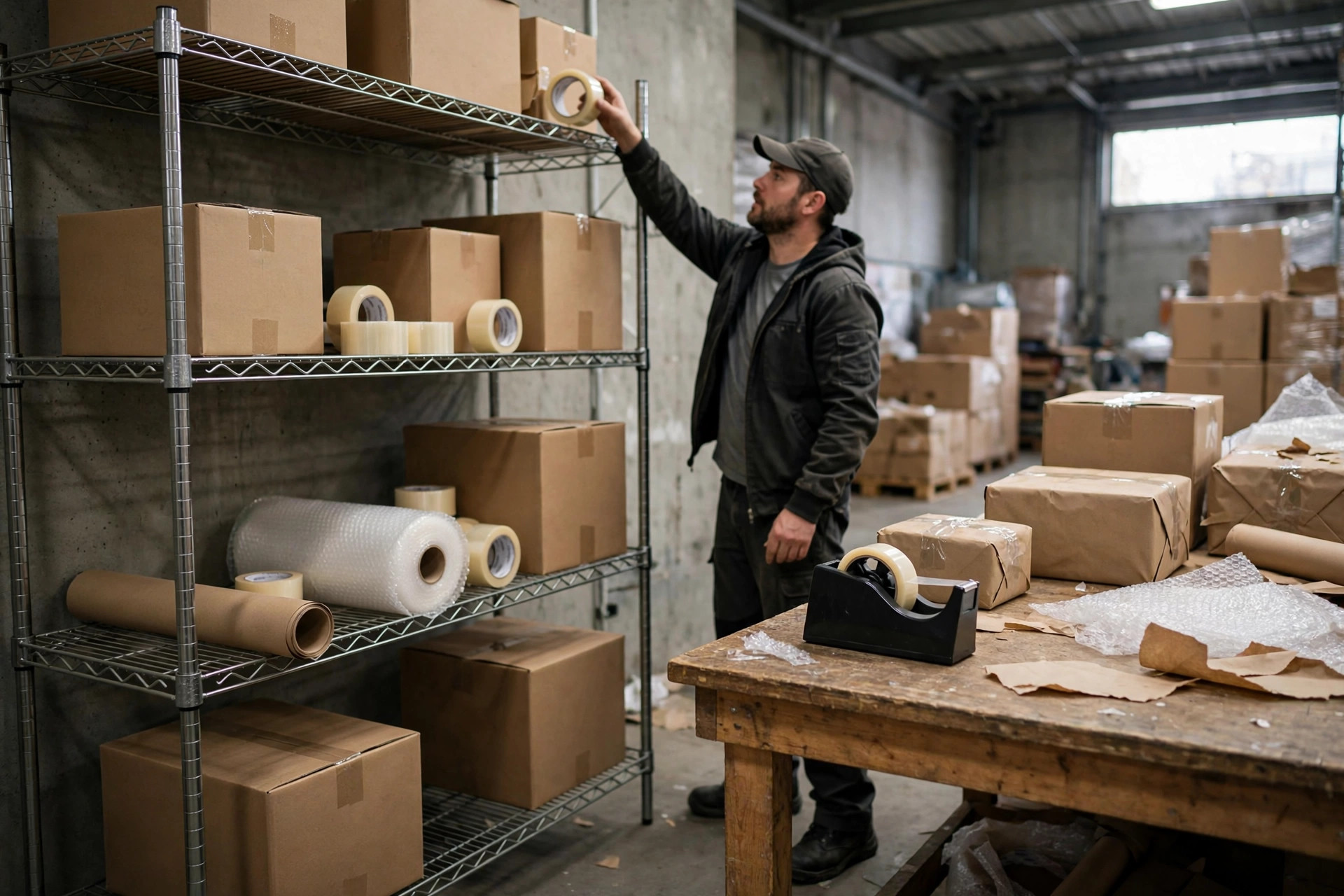
Let me be honest up front: we cannot afford to burn money in our little warehouse. Every dollar in a small operation is earned the hard way, and packing supplies are exactly the kind of cost that slips away quietly. Big warehouses have systems and dedicated staff, so an open shelf works for them. We have an iron rack beside two packing tables, stacked with cartons, tape, bubble wrap, and filler paper, and anyone walking past can grab whatever they want. By month-end the book count and the real count never agree. That is why warehouse packing consumables issue inventory control matters even for a team as small as ours: without a few simple rules, the supplies just bleed away unnoticed.
The mess: an open rack and a count that never ties out. Our warehouse sits on the second floor of an old factory building on the edge of town. Before the busy season last autumn, I loaded a whole new delivery of cartons and tape onto the rack, thinking easy access would speed up packing. It backfired within days. A new packer, afraid of running out mid-shift, grabbed a whole stack of medium cartons and stashed them beside his station. When the next person found the rack empty, they broke open large cartons instead, and small items in large cartons needed a pile of filler. By the time I noticed, the medium cartons were gone and a big chunk of the large ones had gone too.
Month-end was worse. The book said half a roll of bubble wrap was left, but the rack had none, and the tape count was off the other way. Nobody could explain it. That is when it clicked: without any record, every count becomes a guessing game. An open rack sounds like trust. In practice, it spreads confusion, and even honest people cannot explain where things went.
Packing Consumables Issue Control Starts With Par Levels at Each Station
The first thing I changed was setting a par level at each packing station. The method is almost embarrassingly simple: every morning, each station gets only that day's supply. A stack of medium cartons, a couple of tape rolls, a roll of bubble wrap cut to the usual length, and a bag of filler paper. When a station runs out, the packer comes to the rack for a refill. Nobody hauls a pile back to their station to hoard.
At first, a few people grumbled that I was being fussy. Within days, though, the stations looked tidier and finding the right carton got faster. Shortages also became visible early: a low station gets flagged the same day, instead of nobody speaking up until the rack is empty and the last person getting the blame.
How do you set a par level without a fancy formula? I looked at what a station actually used over the previous stretch, added a little headroom, and left slack for busy days. If a station normally goes through about a stack of cartons a day, I put out a stack and a half. A par level is not there to trap people. It is there to make "normal" visible. If someone runs short on a heavy day, they call out and get a refill. What we want to stop is silent stockpiling.
| Approach | Who can take | What the station looks like | What month-end feels like |
|---|---|---|---|
| Open rack | Anyone passing by | Messier by the hour | Book and reality never match |
| Station par levels | Daily amount only, refills on request | Tidy and easy to search | Gaps show up clearly |
| Locked cabinet with approval | Only after asking the lead | Neatest of all | Saves supplies, but breaks packing rhythm |
That table shows a trade-off: a locked cabinet looks most disciplined, but every refill means waiting for someone with a key, and during a rush that kills your pace. Our compromise is par levels plus bulk stock managed by one person.
Issue Logs for Packing Consumables: Writing Your Name Is Not an Accusation
Once par levels were in place, the second step was an issue log. Do not picture a big-company barcode system. We cannot afford one, and we do not need one. I nailed a small whiteboard beside the rack with columns for date, name, item, quantity, and purpose. Whoever refilled wrote a line.
The hardest part is getting people to write in it. At first, some felt writing their name meant suspicion, so I went first, logging my own tape and cartons. After a few days it became routine, and people added notes like "medium cartons short, used large instead." That note was worth more than the entry itself, because it told me the par level was wrong.
After the spring holiday, the log earned its keep. Order volume was light, yet large cartons were disappearing fast. Day after day, the notebook said "small item packed in large carton": the medium par was too low for the post-holiday mix, so people grabbed the large size for convenience. I bumped up the medium par, and large carton use fell straight back. Without that notebook, I would only have found out at month-end.
Another time, the count showed a big gap in bubble wrap, but the log showed nobody taking that much. I found sheets of it cut up and laid under the bottom shelf as damp-proof padding. The person was not stealing; they just thought, "it is all warehouse stuff anyway." New rule: divert supplies to another use, log that too. Writing "shelf padding" takes five seconds, and without it the gap can never be explained. A log does not stop thieves. It stops confusion, especially the well-meaning kind.
Month-End Shrinkage Counts: Do Not Just Count, Chase the Story
With par levels and a log in place, the month-end count finally means something. On the last working day of the month, the team lead and I count everything left on the rack and at the stations, one calling numbers and the other writing them down. Then we compare the result with the log and the delivery notes, and where the gap is big, we ask whether the par was wrong, the wrong size was picked, or the material was diverted elsewhere.
Here is the counterintuitive part, and I know it sounds backwards: tighter control actually makes people grab less, not more. When the rack was open, everyone hoarded, because everyone was afraid of running out halfway through a job. Now that each station has a par, the bulk stock has a keeper, and a shout gets you a refill, nobody feels the need to stockpile. People relax because they know the supply will not suddenly vanish. Warehouse packing consumables issue inventory control, done this way, is not about policing hands. It is about removing the anxiety that makes hands grabby.
We also have a house rule: chase the cause, not the person. Was the par level wrong? Was the wrong size stored in the wrong place? Was the material used for something else? Those three questions explain almost every gap. If one still cannot be explained, write it down and watch that item next month. A roll of tape is not worth an interrogation, and grilled people stop writing honest log entries.
Wrong sizes deserve a note: we once stored two similar tape widths side by side, and packers kept grabbing the wrong one. Now sizes sit on different shelves, with a handwritten card saying which carton each belongs to.
Advice for Warehouses Like Ours: Three Rules First, Systems Later
If your consumables rack is still wide open, do not rush to buy a system. Start with three homegrown rules. First, put only the day's par level on each station, keep bulk stock with one keeper, and make refills as easy as calling out. Second, hang a notebook by the rack and log every refill, including diversions. Third, spend half an hour at month-end counting, and care less about how big the gap is than about why it happened.
None of those three rules costs money, just a few minutes of patience a day. Stick with them for a couple of months and the count goes from "completely unexplainable" to "a small gap, but we know where it went." That is enough. For a small warehouse, the goal of warehouse packing consumables issue inventory control was never zero shrinkage. It is knowing where things went, how much to stock next month, and which size gets picked wrong most often.
Big companies have their systems. A whiteboard, a notebook, and a handwritten card can untangle a consumables mess without slowing packing down. Small warehouses have their own way of surviving, and that is nothing to be embarrassed about.
By Xiao Ma, Small Warehouse Owner