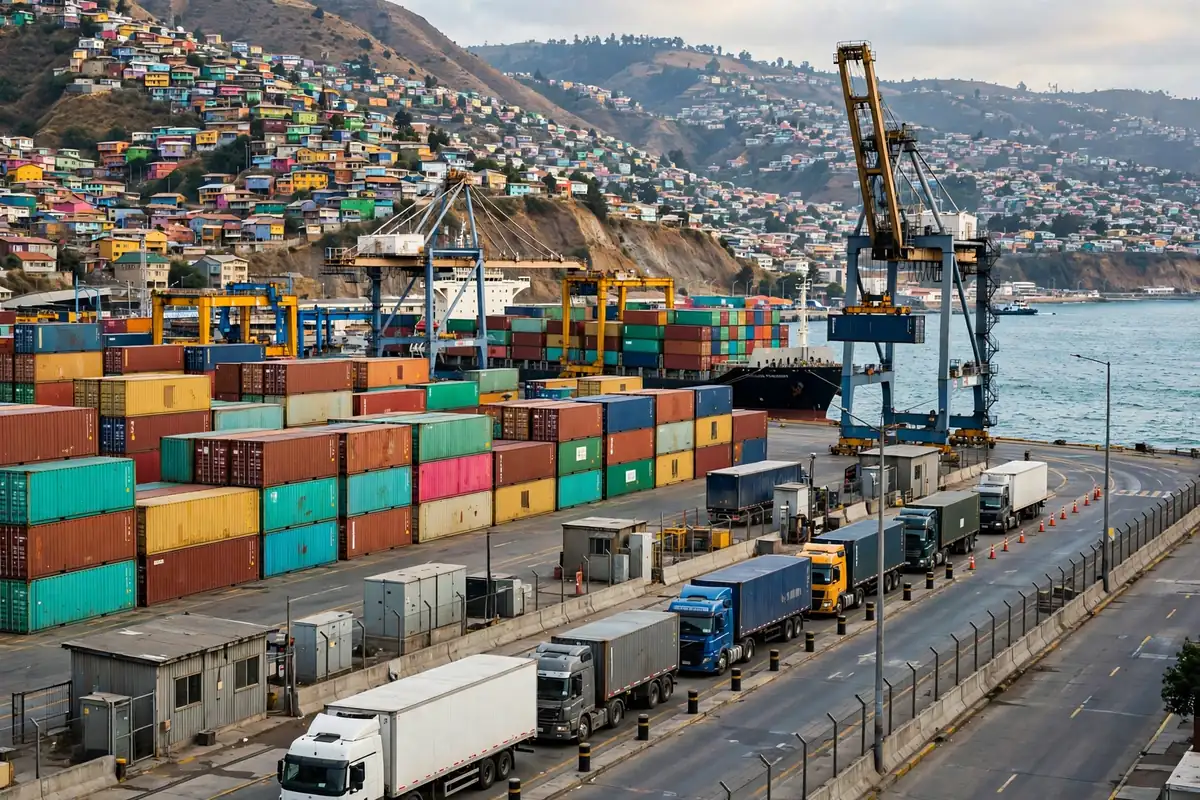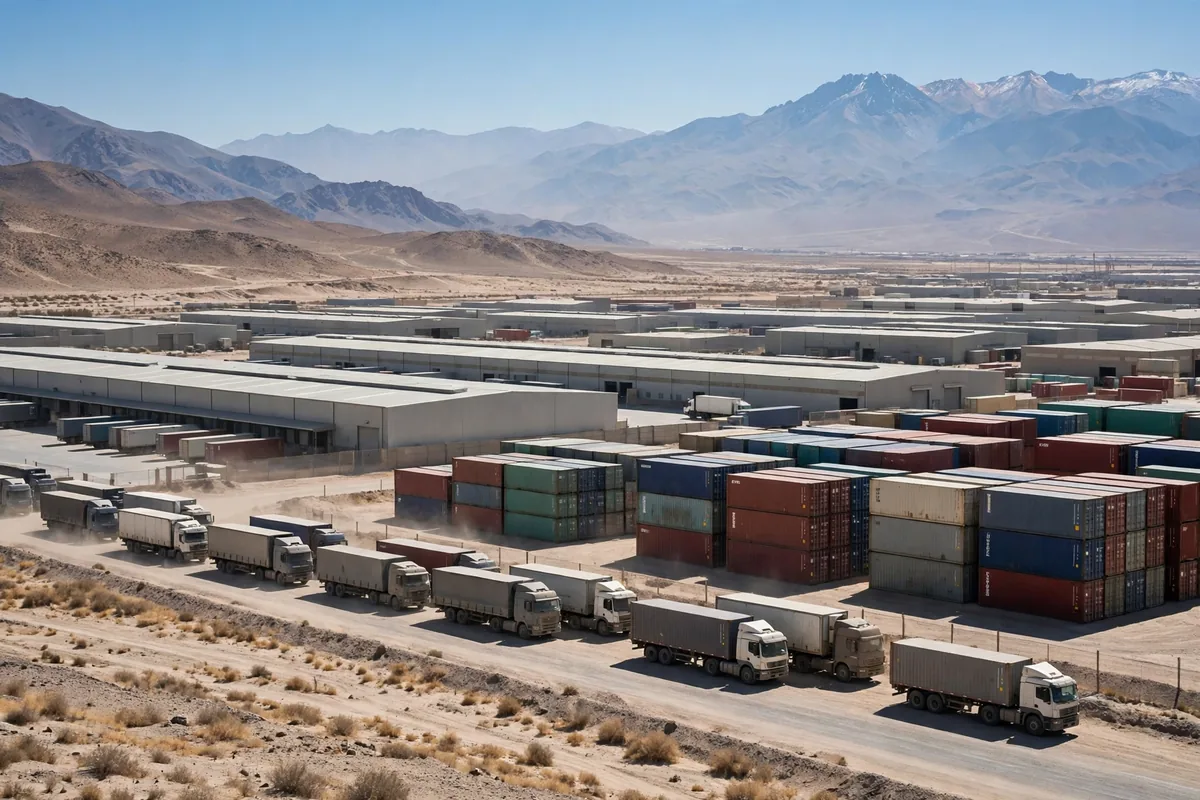
Let me tell you how I first learned Iquique. More than ten years ago, riding along before dawn, trucks were already lined up outside the port waiting to get into the zone. Drivers squatted by their cabs drinking coffee, nobody in a hurry, because hurry does nothing when the paperwork is not ready and the gate stays shut. That is where iquique chile free trade zone warehouse economics got taught to me, one queue at a time. The rent inside the zone may look cheap. What you are really buying is a corridor.
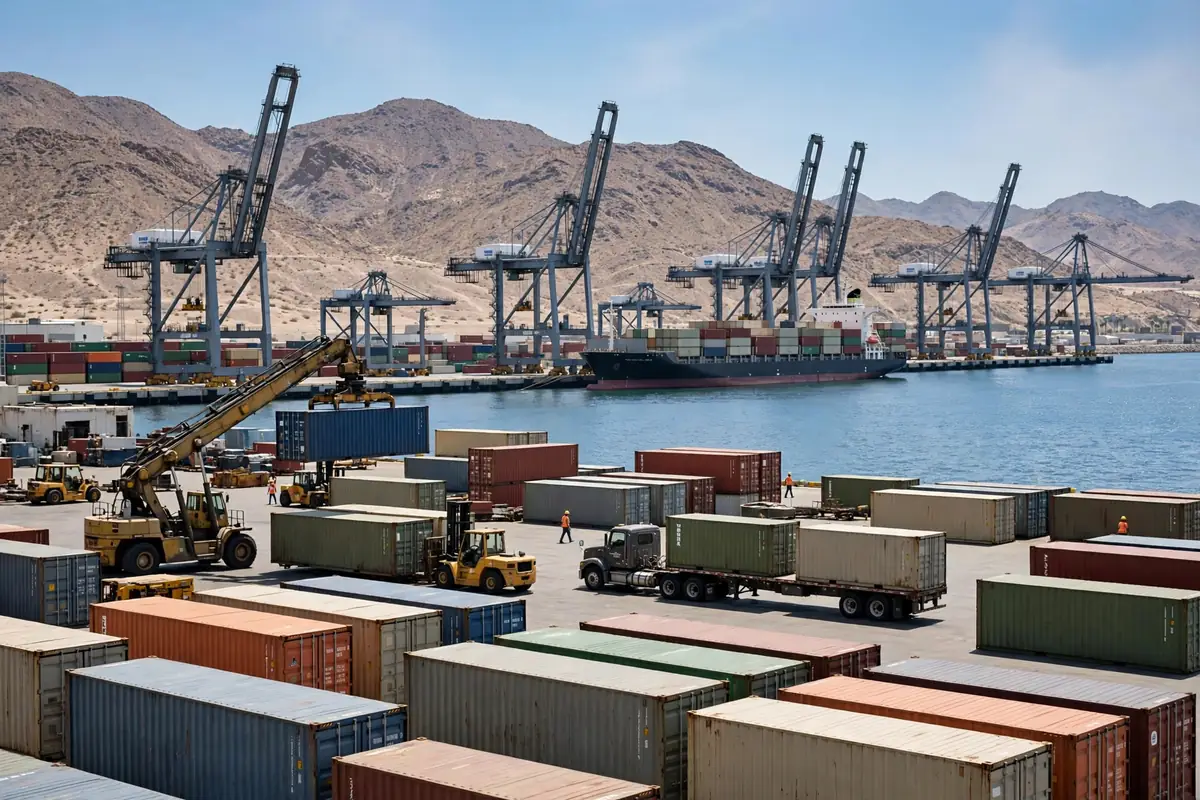
Iquique sits in Chile's far north, on the Pacific, with the Atacama Desert behind it and Bolivia over the mountains to the east. That geography decides everything. Cargo sails in from Asia and North America. Some sells in Chile. A lot does not stay. It passes through the ZOFRI free trade zone and heads inland, to Bolivia, to southern Peru, and on longer routings toward Paraguay. A warehouse here is not just storage. It is the first step of a road.
How freight moves through the iquique free trade zone corridor
Walk the route with me. A container comes off the ship at Iquique. From there it either clears into the local market or goes into a free zone warehouse, and that choice matters more than any rent quote. Freight sitting inside the zone is, in a practical sense, still undecided. It has not entered Chilean consumption, so its onward paths stay open.
The Bolivia run is the old road. Trucks climb out of Iquique into the Andes, cross the border, and push on toward La Paz and Cochabamba. I have ridden that climb more than once. The altitude is real, the speed drops away, and in bad weather you can sit on that mountain longer than anyone planned. When a shipper asks me how long it takes, I tell them to count the days drivers actually run, not the distance on a map. Map distance lies in the mountains. Drivers do not.
Southern Peru is the shorter hop, with Tacna picking up freight comparatively quickly. Paraguay is the long game, with handovers and document changes along the way. Cargo only takes that route when the total math genuinely works. And freight sold inside Chile still has to complete its formal import steps when it leaves the zone. On duties and tax treatment I will not quote numbers here. Treat all of that as governed by the latest official rules from Chilean customs and ZOFRI, and check them fresh. Acting on dockside gossip about rates is how people lose money.
A fleet owner I knew in 2019 ran electronics out of the zone toward La Paz on a regular schedule. His whole philosophy fit in one sentence: he would rather wait one extra day in Iquique getting the documents fully straight than leave with half-ready paperwork. His reasoning was simple. Once the truck is rolling, a document problem at the border traps you in the worst possible place. The truck burns money by the day, and the cargo owner shouting down a phone changes nothing. That waiting day in Iquique, he said, is the cheapest day of the whole trip. I have repeated that line to shippers ever since.
Inside the zone or outside it: the warehouse decision is the total, not the rent
Every shipper arriving in Iquique asks me the same question. Shifu, surely inside the zone is always cheaper? I tell them the question is backwards. Cheap depends on where the freight is going, not on the rent line of a quote.
| Question | Warehouse inside the free zone | Warehouse outside, in Iquique |
|---|---|---|
| Best suited freight | Cargo re-exporting toward Bolivia, southern Peru, and beyond | Cargo mainly sold inside Chile |
| Status of the goods | Held in a suspended, flexible position | Arranged for local sale |
| Biggest advantage | Clean onward path for re-export | Close to local customers, flexible local delivery |
| Biggest trap | Local-sale freight stored inside takes a needless detour | Re-export freight stored outside creates awkward extra steps |
| Driver's view | Queues and document checks at the gates, slower rhythm | Easier in and out, more legwork when re-exporting |
The choice behind iquique chile free trade zone warehouse decisions is really this: pick the corridor first, then pick the warehouse. Freight ending abroad belongs inside, where the onward path is smooth. Freight ending in Chilean stores often belongs outside, where local distribution is simpler. Shippers who stuff local-sale cargo into the zone chasing a nominal saving usually pay it back in exit procedures and local delivery friction, with interest, in time.
Here is an illustrative example, with invented numbers. Say a shipment sits 30 days, and storage plus handling inside the zone saves the equivalent of 800 dollars against an outside warehouse. But if that freight ends up sold locally in Chile, the extra coordination, waiting, and second handling on the way out costs about 1,200 dollars. Net result: inside is 400 dollars more expensive. A teaching example, not anyone's quote. Run yours with your volumes, dwell time, and real quotes, line by line.
In 2022 I watched a small-appliance shipper learn this the hard way. He had heard the free zone was the smart play, so he put everything inside, including stock meant for Chilean retail chains. The first two months felt fine. Then the selling season came, and every outbound batch needed an extra round of procedures. Local drivers did not love the fragmented exit work either, and his shelf dates slipped in peak season. His fix was simple. Local freight moved to an outside warehouse. Only the Bolivia-bound share stayed inside. Both flows ran better within a month. There is no good or bad warehouse. There is only freight matched or mismatched to its road.
What drivers see: queues, paper, and the cost of a wasted trip
Drivers have standing to talk about this part, because we pay for it in hours. Around Iquique, trucks do not fear distance. We fear waiting, and the waiting rarely happens on the open road. It happens at gates and in document folders.
First, the queues in and out of the zone. At peak times the line of trucks can stretch a long way. There is no trick to this. Align arrivals with the warehouse's actual working windows, and do not leave drivers baking outside at midday. The desert sun up there is no joke. A driver who has cooked in a cab all day climbs a mountain road the next morning with his alertness already spent. That trades safety for schedule, and it is a bad trade.
Second, the paper. Re-export freight needs documents that match the goods, and the destination country's requirements need checking before the truck moves, not after. For current requirements, rely on the latest official rules from Chilean customs and ZOFRI, plus the destination customs authority. Last year's experience is not this year's permission slip. The most pointless delay I ever saw was in 2023: a load with nothing wrong with it lost half a day at the gate because one document had not been prepared in enough copies. The driver called me and said, Shifu, the freight is fine. The paper is broken. After enough years out here, you learn the competition is often not truck against truck. It is paper against paper.
Third, the wasted trip. A truck arrives as agreed, the freight is not ready, and the truck leaves empty. Do that once and a driver remembers your name. Do it three times and nobody on that lane wants your loads, or they take yours only after everyone else's. In a corridor city like Iquique, a warehouse that ships on time is building credit. On long-haul lanes, that credit is worth more than a small rate difference.
My whole view of iquique chile free trade zone warehouse work fits in one line. It rewards people who have done their road math. If your freight is using that corridor into the interior, it can save you real money and real days. If you came only because the words free trade zone sounded cheap, all that is waiting for you is the queue and the paperwork.
Old road advice to finish: fix the route first, then the warehouse, then argue about price. Reverse that order and you redo the math later. Shipping tomorrow? Write your freight's final destination on paper, then look at your warehouse choice again. Ten minutes. It can save you ten days.
By Shifu Zhao, Trucking Veteran (15 yrs)