Last month, Lao Zhou slammed his pay slip on my desk.
Lao Zhou has been picking in my warehouse for five years. That month he picked over 9,000 units and only messed up 2 orders. Xiao Li, the new guy, picked 3,000 units and messed up 5. When bonuses came out, Xiao Li got 200 yuan more than Lao Zhou. "I pick more and screw up less — how does he get a bigger bonus?" Lao Zhou demanded.
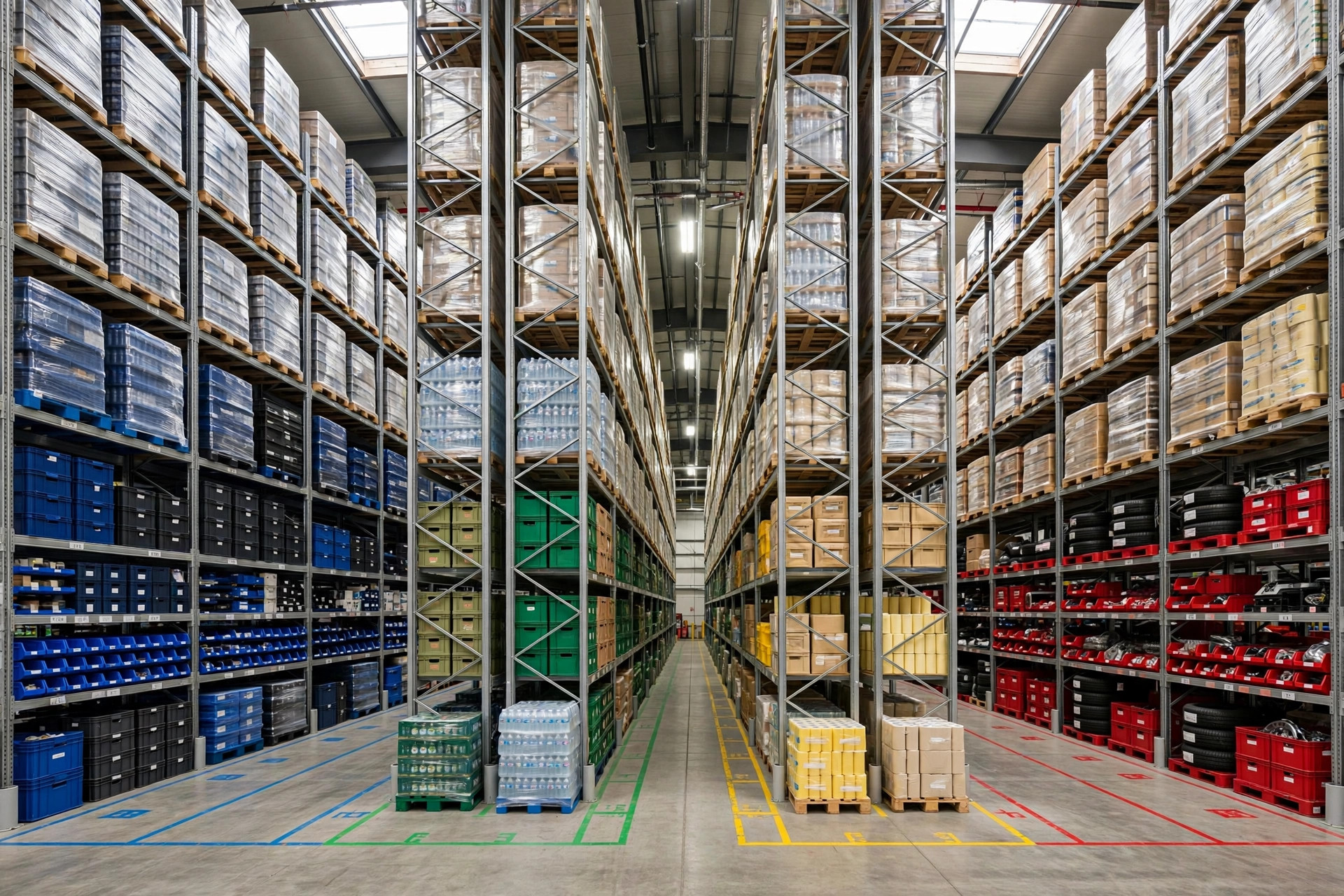
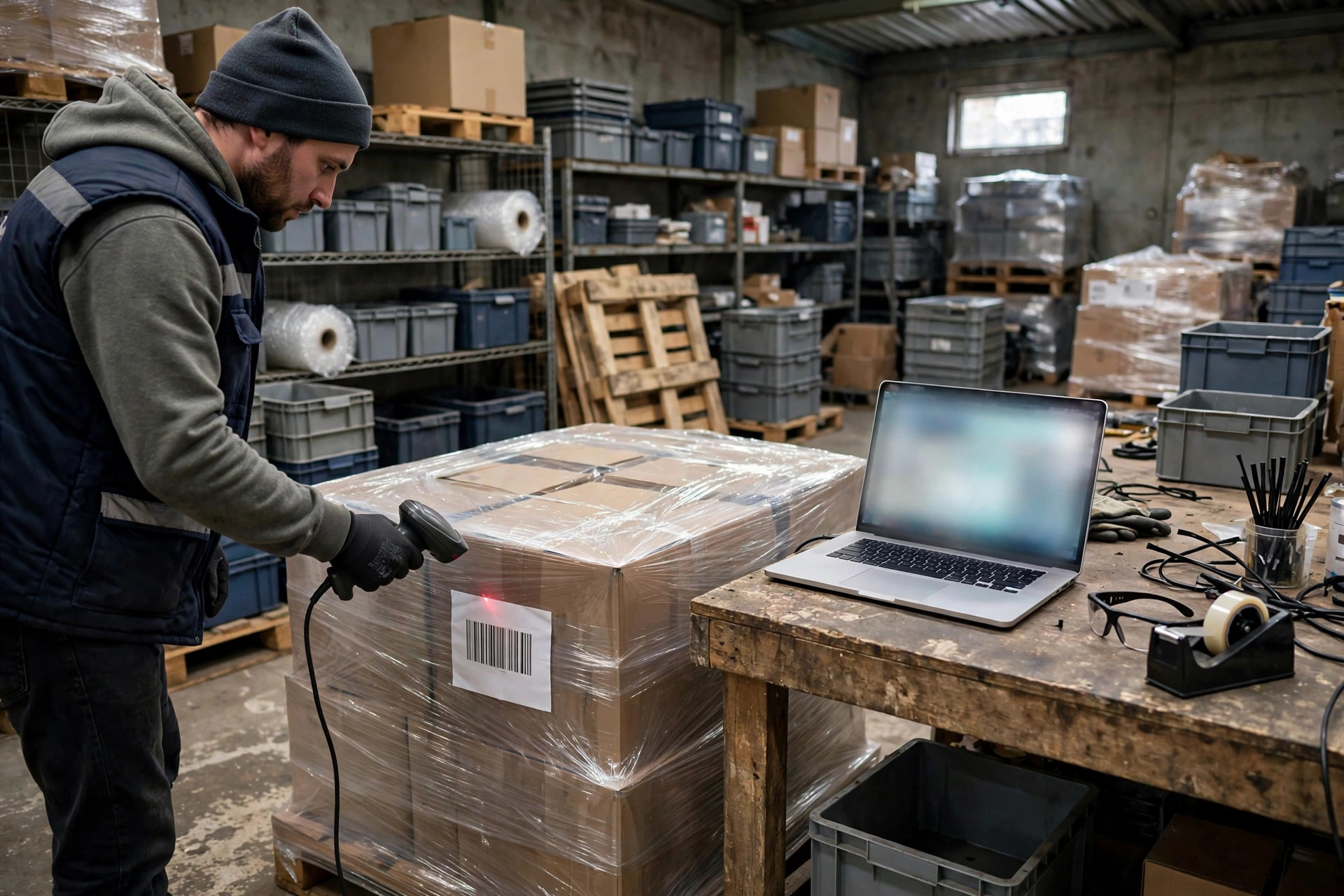
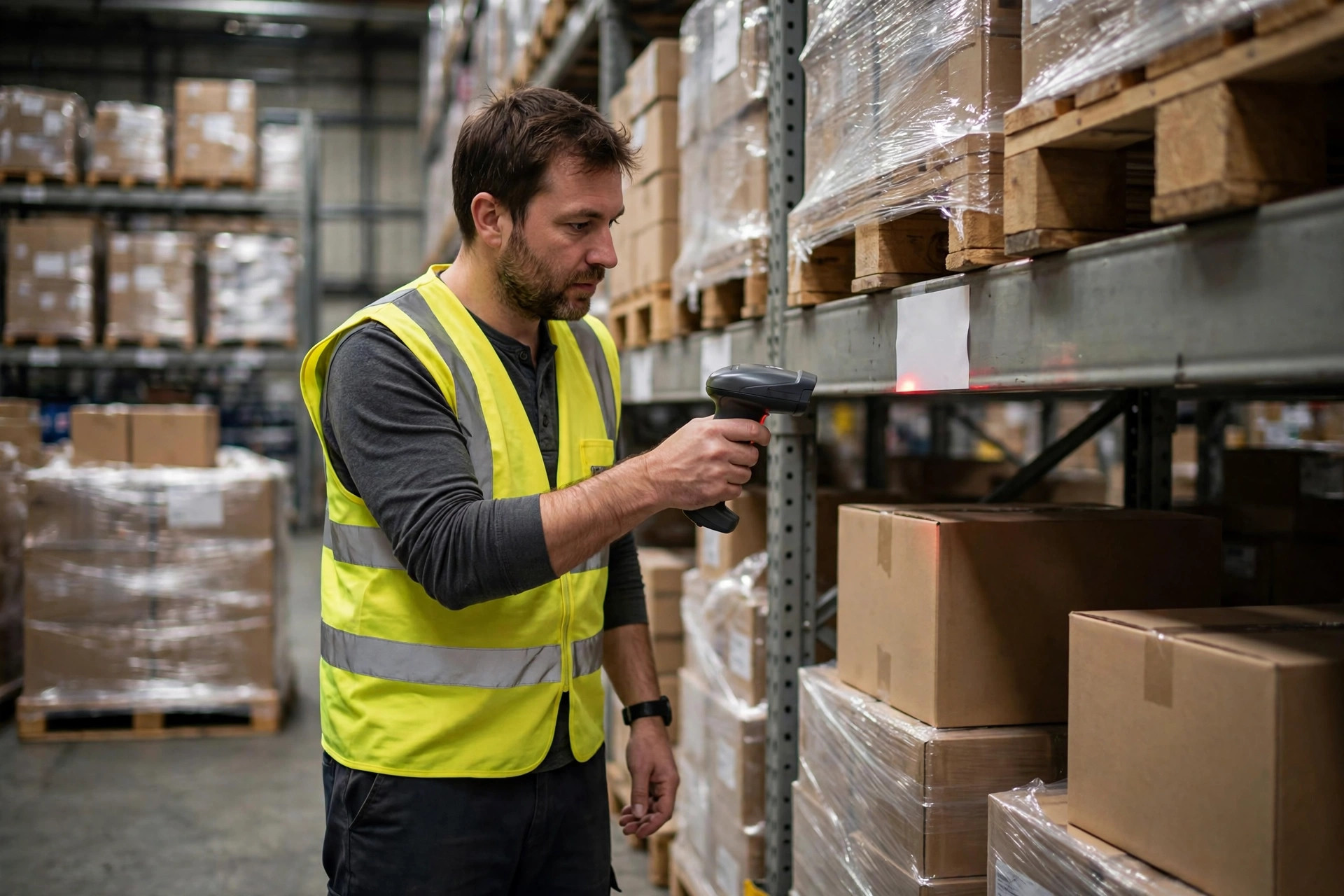
I had no answer. Because our bonus was paid per unit picked — the more you pick, the more you get, and nobody counted the mistakes. That's the reality of my little operation: a 3,000-square-meter warehouse, twelve people, no WMS, just spreadsheets and two secondhand barcode scanners. Bonuses were handed out by gut feeling. "Inventory accuracy" sounded like something from a big corporation's slide deck, not our world.
Then we paid for that attitude. Twice. In cash.
Cycle count variance and pick errors are two different animals
The first lesson cost us in November 2024, peak season. We normally run with twelve people, and we'd brought in four temps for the rush. That month our pick error rate jumped from the usual 0.3% to 1.2% (our own numbers: bad orders divided by total orders). The worst one: a full carton went to the wrong address for an e-commerce client. Return shipping plus reshipping ran over 400 yuan (my estimate). At month-end the client docked 2,000 yuan straight off our service fee. That's about half a month of profit for us. I still feel that one.
The second lesson came in March 2025, during a count. The system said we had 320 units of a Bluetooth earbud model. The shelf said 287. Thirty-three units missing. Three days of digging through receiving paperwork, and the truth came out: somebody had keyed the wrong quantity at receiving back in late January. The mistake was made upstream — but at the time, we'd lazily spread the count variance across everyone's bonus. Lao Zhou blew up: "Receiving screwed up — why are the pickers paying for it?" He nearly quit.
That day I made a rule: cycle count variance and pick errors must be measured and bonused separately.
Count variance means the books don't match the shelves, and the root cause is usually buried upstream — a receiving typo, a misplaced putaway, a return that never got booked back in. That's a team responsibility, so it goes to the team, never to an individual. Pick errors — wrong item, wrong shipment, missed line — happen in the picker's hands, so they go to the individual. Blending the two punishes honest people for someone else's mistakes, and your crew will walk.
Get the definitions locked down before month-end, or you'll spend every bonus day arguing. Ours are dead simple:
- Cycle count variance rate = |system qty − counted qty| ÷ system qty. We don't do wall-to-wall counts — shutting down a 3,000 sqm warehouse for two days is a luxury we can't afford. Instead we cycle count 30 SKUs a week: A-movers get fully covered every month, B-movers half, C-movers whenever.
- Pick error rate = bad orders ÷ total orders × 1,000, tracked as errors per thousand orders. With our volume, per-thousand reads better than a percentage. Wrong picks, wrong shipments, short picks, damaged goods shipped — all count.
One more rule: only hold people accountable for what's in their control. If putaway slapped the wrong barcode on a location and the picker grabbed the wrong item, that's putaway's fault, not the picker's. My supervisor or I spend 20 minutes a week going through the error log and assigning ownership. Those 20 minutes are the most valuable 20 minutes in this whole system.

The bonus formula — steal it, it's yours
The big-company performance review software? We can't burn money on that. So here's our dirt-cheap version: every person gets a monthly "accuracy bonus," capped at 1,000 yuan (about $140). Why 1,000? Our crew earns 6,000–8,000 a month, and a 1,000–1,500 bonus is the sweet spot where people actually care. Higher would break our little budget; lower and nobody bothers.
The scorecard:
| Metric | Weight | Full marks | Zero |
|---|---|---|---|
| Pick errors (individual) | 50%, 500 yuan | ≤2 errors per 1,000 orders | ≥8 |
| Cycle count variance (team) | 30%, 300 yuan | Monthly variance ≤0.5% | ≥2% |
| Floor cooperation (supervisor rating) | 20%, 200 yuan | 5S, handoffs, mentoring new hires | — |
Between full marks and zero, it's linear. Say your error rate is 5 per thousand: that slice pays 500 × (8−5) ÷ (8−2) = 250 yuan. The team slice is identical for everyone — counting is collective work, nobody gets to dodge it and nobody gets to hog it.
Let me show you Xiao Li's actual math from October. He picked 5,200 orders, messed up 3 — that's 0.58 per thousand, full 500 yuan. The month's cycle count variance was 0.8%, so the team slice paid 300 × (2−0.8) ÷ (2−0.5) = 240 yuan. I rated his floor cooperation 80 out of 100, so 160 yuan. Total: 900 yuan. His base pay that month was 6,500, so the bonus was nearly 14% extra. His own words: "This money feels earned."
The results: we launched in April 2025, reviewed in July. Pick error rate fell from 0.9% to 0.4%, cycle count variance from 1.6% to 0.7% (our own numbers, three straight months). Total extra bonus payout per month: under 8,000 yuan. What we saved in reshipping costs and client deductions each month: comfortably more than that. The math works.
Three counterintuitive lessons, each bought with real money
First, bonuses beat fines. We used to fine 50 yuan per bad order. What happened? People hid their mistakes — if the wrong parcel went out and the customer didn't complain, it never happened. Our error rate looked beautiful on paper and the operation was a mess. After switching to "do it right and get paid," errors started getting reported voluntarily: reporting costs you a small slice of bonus, but getting caught hiding one wipes out the whole month. You have to work with human nature, not against it.
Second, don't chase 100% — chase 99.5%. Big companies brag about 99.9% with their fancy systems. We can't burn that kind of money. We target 99.5% on cycle counts (variance ≤0.5%), and handle the rest with a monthly 15-minute "variance huddle": standing meeting, one question only — "how did this variance happen?" No blame, no deductions. Separate finding the cause from punishing people, and the truth actually surfaces.
Third, give new hires a two-week grace period. Temps and rookies will have high error rates — that's physics, not attitude. Including them in the metrics from day one just drives them away. Our rule now: two weeks of training and shadowing only, metrics kick in from week three. That rule was purchased with the 2,000 yuan we lost in November 2024.
If you run a small warehouse like mine, three pieces of advice: first, split "the team's fault" from "the individual's fault" before you talk about reviews — get the order wrong and the whole thing backfires. Second, cap the bonus where people can feel it — at our pay levels, 1,000 yuan is the number. Third, don't skip those 20 minutes a week assigning error ownership. That's the foundation the entire system stands on.
So here's the thing: inventory accuracy doesn't require enterprise software. One scorecard, two numbers, a 1,000-yuan-capped bonus — and a 3,000 sqm warehouse like ours can drive error rates down just fine. The big-company playbook isn't for us, and we're not jealous. Small warehouses have their own way of surviving: spend money where it counts, and aim your reviews at people's hearts.
By Xiao Ma, Small Warehouse Owner