
Let me open with the money.
September 2024. A 120,000-square-foot 3PL warehouse in California's Inland Empire closes its quarterly cycle count with an $112,000 variance: the books say the inventory is there, the racks say otherwise. Management's first instinct is cameras and a witch hunt for theft. Three months later the truth lands: no theft. One picker, cutting corners for four straight months, pulled product first and backfilled the system transactions later. Over 400 outbound lines never reconciled. The company recovered $28,000 — and burned 320 investigation hours doing it, roughly $19,000 in labor cost. Do the math and the verdict is cold: chasing cycle-count variances to a person can itself be a loss-making business, unless you know exactly what's worth chasing and when to stop.
Count the cost of cycle-count variances before you chase anyone
Before any accountability conversation, I make the team fill in a three-column sheet. No sheet, no investigation.
Column one: the variance amount, split into two buckets — variances with a located failure point (we know which step broke, just haven't assigned responsibility) and net unexplained variances (book vs. physical, cause unknown). Only the second bucket actually burns money. The first is fixed with process repair; assigning blame is incidental.
Column two: the cost of the chase. Investigation hours times hourly rate is the visible part. The invisible parts are bigger: the slowdown or shutdown of the area under investigation, and the morale tax. A crew interrogated repeatedly with no conclusion doesn't get more careful — next month's pick error rate usually goes up, because everyone is busy proving their innocence instead of watching the freight.
Column three: opportunity cost. The same 300 hours spent redesigning the process in high-variance locations versus spent chasing an $800 variance — which pays better? Most warehouses never run this comparison, so accountability is permanently stuck in firefighting mode.
Early 2025, an auto-parts distributor in the Midwest showed me their answer. High-value small parts (sensors, $40 to $80 apiece) were running a 3–5% variance rate year after year, and management wanted every variance investigated. We ran the numbers: below about $120 per variance, the investigation cost ate the recovery. They switched to tiered accountability — under $50 gets logged, no person chased; $50–$500 gets a written finding from the supervisor within 48 hours; above $500, or over $1,000 cumulative for one person in a month, triggers a joint investigation by the warehouse manager and finance. Six months later, inventory accuracy rose from 96.2% to 98.7%, while total investigation spend dropped roughly 40%. The savings lever wasn't "chase harder." It was "chase smarter."
The historical recovery rate is a number most warehouses just guess. The correct calculation: over the past 12 months, total dollars recovered divided by total dollars of variances opened for investigation. That Midwest distributor came out at 0.34 — for every dollar of variance they opened a case on, they got back 34 cents on average. Plug 0.34 into the break-even formula and the tier lines draw themselves: a $500 variance has an expected recovery of only $170, so any investigation costing more than $170 is a loss. Once the numbers are on the table, the arguments stop.
The evidence chain: four timestamps that turn "nobody knows" into "we can prove it"
Accountability fails when the evidence chain is broken. And the chain isn't the security camera — it's timestamps. A defensible chain needs four logged nodes:
First, task assignment: who was sent, at what time, to count which location. A verbal assignment is no assignment; when something breaks, it's a mess with no owner.
Second, scan logs: every location-label scan and item-barcode scan from the PDA, with timestamp and operator ID. This is the backbone of the whole chain. In that California case, how did they finally characterize 400-plus lines of "pick first, transact later"? By lining up the system creation timestamps of the pick tasks against the physical outbound scan timestamps, row by row. Tasks created after the pick happened — case closed. Without those timestamps, three months of investigation would have been pure argument.
Third, blind recount records: every variance line gets a second count by a different person, stored separately. Having the original counter recount their own work is self-certification, not evidence.
Fourth, the written conclusion: every investigated variance ends with a classification — process error, operator error, system error, or unexplained — countersigned by the responsible party. If "unexplained" exceeds 30% of your cases, your first three nodes are decoration.
Evidence also needs a retention budget. Variances often surface only at the quarterly count, while camera footage gets overwritten in 30 days — by the time you want to look, it's gone. Timestamp data is cheap to store; keep it at least 13 months to cover four quarterly cycles. Plenty of WMS setups keep only 90 days of operator logs, so when the quarterly variance appears, the evidence has already expired and the investigation is over before it starts. That's paying for a system without buying the evidence function.
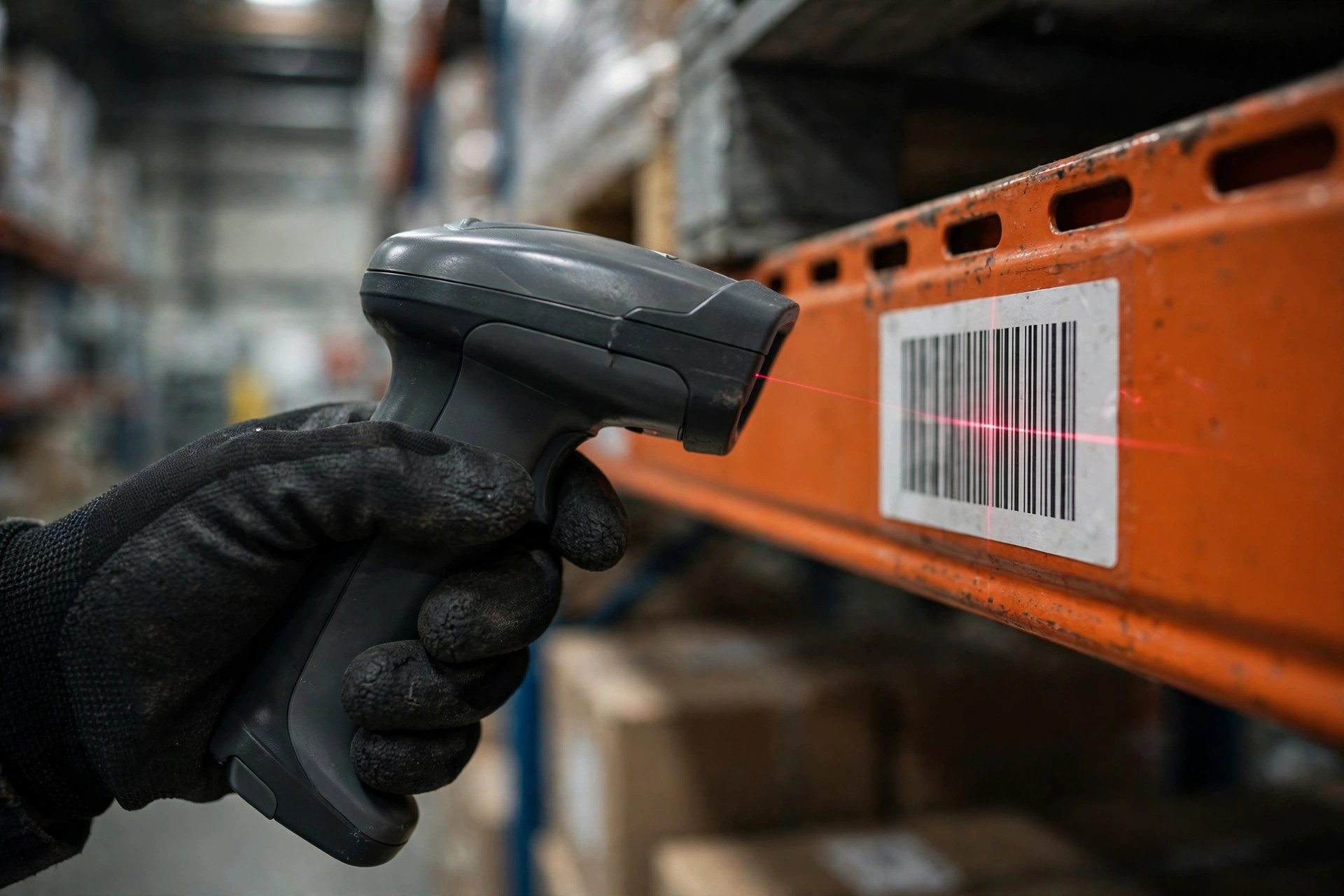
These four nodes buy you something else: the right to not chase. A variance classified as "process error" redirects the investigation budget straight into process fixes. Money spent where it works.
Tiered accountability for inventory variances: not every dollar deserves a name
Here's the counterintuitive one: the smallest variances usually consume the most investigation hours. Small cases are easy to close, so investigators naturally chew the soft bones first. The result is a $50 variance that ate $600 of labor — plus a warm feeling of "strict management." That money was wasted.
Tiered accountability isn't leniency; it's loss control. My table:
| Variance amount | Action | Deadline | Owner |
|---|---|---|---|
| Under $50 | Log it, watch the monthly trend | Monthly | Cycle-count lead |
| $50–$500 | Written finding, classified to the step | 48 hours | Area supervisor |
| Over $500 | Joint investigation, cameras and interviews allowed | 5 business days | Warehouse manager + finance |
| One person, over $1,000 cumulative in a month | Escalate; suspend their solo operating rights | Immediate | Warehouse manager |
Two traps show up when the tier table goes live. First, the "48-hour written finding" turns into copy-paste — supervisors write "operator error, verbally reminded" to get it off their desk. The fix: the conclusion must be binary — either it names the exact step with timestamp evidence, or it says "insufficient evidence, moved to monthly trend watch." No middle ground. Second, the escalation line gets bypassed by splitting: a $600 variance gets logged as two $300 entries and never triggers a joint investigation. The fix: escalation lines run on per-person, per-step monthly cumulative totals, not per transaction. A rule that can be bypassed by splitting isn't a rule; it's a suggestion.
But there's a trade-off that has to be said out loud: chase too hard and your experienced people quit. Replacing a picker — recruiting, training, the ramp-up efficiency loss — costs roughly two to three months of their wages. Chase too soft and the variance rate creeps up half a point to a point a year, which compounds into real money over three years. The tier table exists to concentrate the "hard" on what deserves it — large, repeated, same-person — and leave the "soft" for one-off small amounts. That keeps both the team and the money.
One last word on the review meeting. No blame sessions. Answer three computable questions: what share of this month's investigated variances came back "unexplained," and is it falling? For every $1 of investigation cost, how many dollars did we recover? Are repeat variances at the same step rising or falling? If all three trend well for two straight quarters, your accountability system makes money. Otherwise you're paying for peace of mind — and that's a bad purchase.
The computable conclusion: for every cycle-count variance, run the break-even first — expected recovery × historical recovery rate must exceed the investigation cost before you start chasing a person. Otherwise log it, classify it, fix the process. The KPI of accountability is not "how much did we recover." It's "how many dollars did we recover per dollar of investigation cost." If that ratio stays below 1.5 for two consecutive quarters, your process is chasing variances at a loss. That's money spent badly.
By Lao Zhou, Logistics Cost Analyst