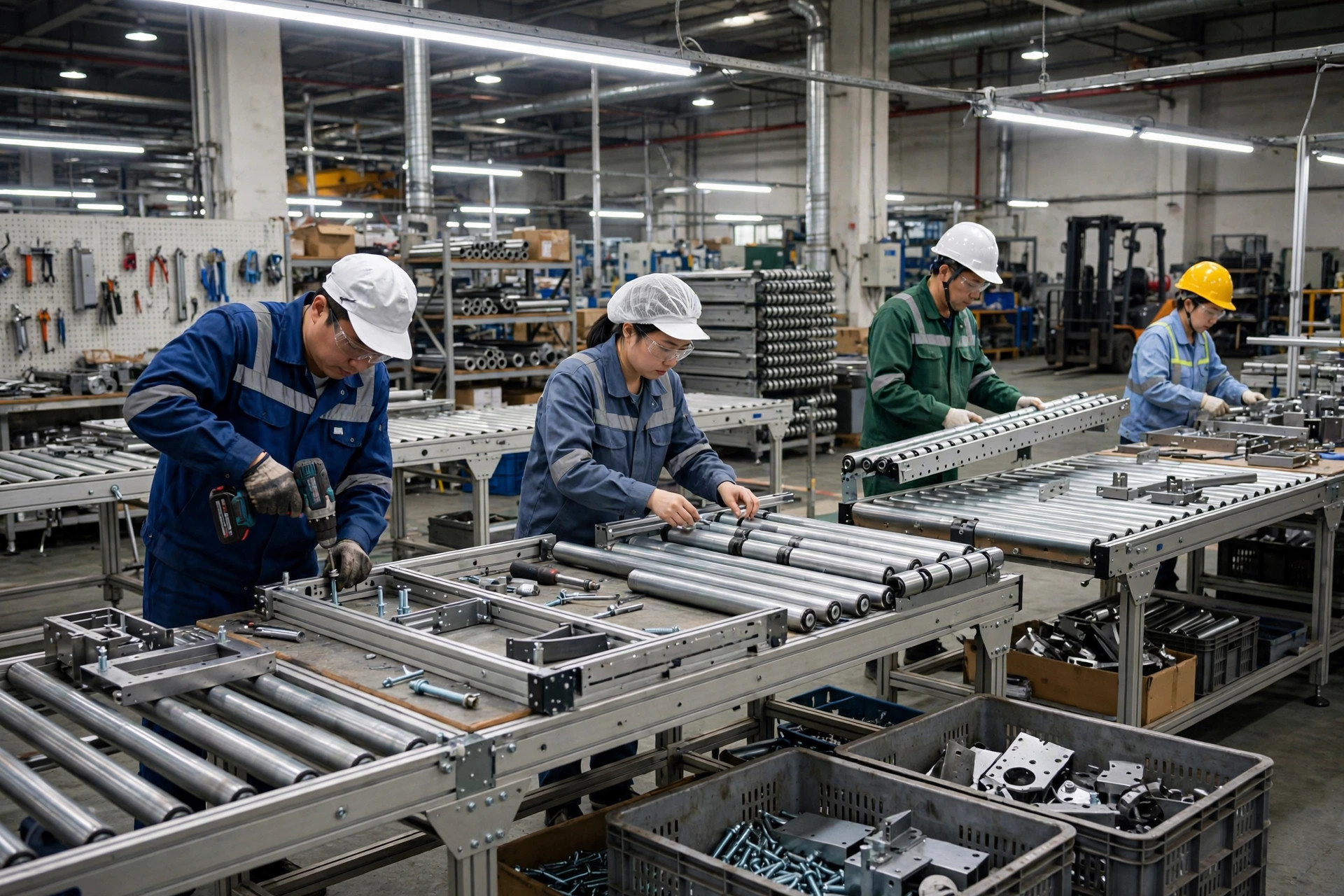
Last fall I walked a client through a forklift-AGV factory in Dongguan. The conference room pitch was polished, three demo units in the showroom gleamed under the lights, and the sales director swore they shipped two hundred units a month. My client was ready to talk price on the spot. I asked to see the production floor first. Forty minutes later, our entire read on that supplier had flipped.
Ignore the tour. Count heads instead.
Chinese factories have a fixed routine for visiting buyers: conference room, showroom, wall of honors, dinner. Everything in that routine is what they want you to see. The real information lives outside it. The moment I walk into a plant I do two things. First, I count people. How many workers are actually on the floor versus sitting in offices? A shop claiming two hundred AGVs a month with a dozen people on the assembly line fails basic math — an AGV is not a commodity, and the labor hours from chassis welding to controls commissioning don't compress. Second, I look at work in progress. Three shiny showroom units prove nothing; the units being assembled, the half-finished chassis stacked in staging, the crated machines with shipping labels in the dispatch area — that is the real order book. In Dongguan, the dispatch area held two machines and staging was half empty. The "booked through next March" line died on the spot.
I have a mental profile of the Potemkin factory by now: the office is nicer than the shop floor; the showroom carries a wider product line than what's actually in production; every request to see an unplanned test gets "the engineer isn't here today"; and the electrical panels are look-but-don't-touch. Any factory that won't let you open a cabinet has something to hide. A real manufacturer wants you to look closer.
One corner buyers almost always skip: the raw-material warehouse and the incoming-goods area. A glance at the steel, extrusions, and cable on the racks tells you whether the plant manages its sub-suppliers at all — mixed brands, chaotic batches, no labels, no incoming control. Half of an automation system's quality is bought, not built. If they put a no-name gearbox in, the machine's life is set by the cheapest component. I always ask: how many qualified suppliers for the critical parts, and do you audit them annually? If they can't answer, the spare-parts risk lands on you three years from now.
Forty minutes on the floor: five things that decide your next three years
Time is short, so don't try to audit everything. Focus on the five things that determine your maintenance bill for the next three years.
First, welding and mechanical assembly. On an AGV chassis or a racking upright, weld quality is the difference between a ten-year machine and a three-year one. Crouch down and look: are the beads even and continuous, any undercut, porosity, uncleaned spatter? Welds don't lie. On assembly, check the bolts at critical joints for torque-seal marks — that painted line across the nut means somebody thought about loosening and built a recheck into the process.
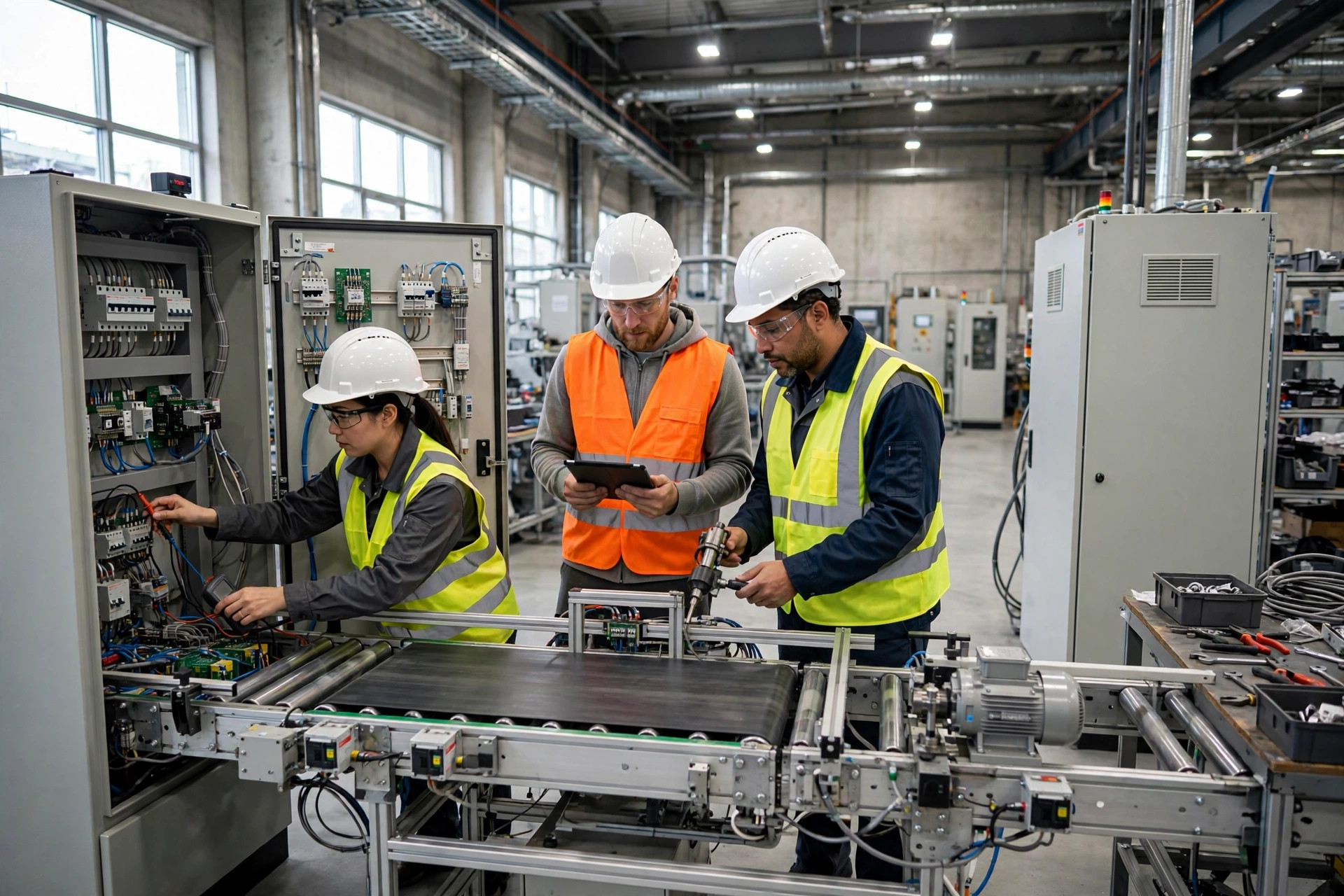
Second, panel wiring. Open one control cabinet at random and thirty seconds tells you the shop's electrical discipline: are the conductors in the ducts run square and tidy, are terminal blocks numbered and labeled, is power separated from signal, are there loose wire ends in the cabinet? Equipment bound for the US market needs industrial control panels built to standards like UL 508A — ask directly whether they hold a listing or do field evaluations, and don't accept a verbal promise without paperwork. A shop that wires sloppy will hand you electrical gremlins at commissioning. I've paid that tuition on a client's site.

Third, the factory test routine. Three questions: does every unit get a loaded continuous-run test before it ships? Can I see last month's test records? What is the rework loop when a test finds a problem? Plenty of shops define "testing" as powering up and driving in a circle. A serious shop has a fixed test area, a written test plan, log sheets, and a closed-loop rework process. I once saw a logbook showing three straight months of "100% pass, zero rework" — that's the tell. Real production never has zero rework.
Fourth, QC records and traceability. Ask to see incoming-inspection records and batch traceability for critical parts. Motors, reducers, controllers, LiDAR units — can they trace from one machine's serial number back to the component batches? If they can't, the quality system is decoration. Get this into the contract and you'll have something to stand on when a batch problem surfaces later.
Fifth, the engineers and the after-sales people. Ask the engineer across the table two questions: what changed in the last revision of this model and why; and what's the most common field failure your US customers see, and how do you support it remotely? Vague answers mean the shop probably bought someone else's design. Good luck finding spare parts in three years.
Put the audit in the contract, or it didn't happen
The biggest waste in factory audits is a report that dies in someone's inbox. My rule: every finding in the audit report becomes one sentence in the purchase contract. Messy panel wiring becomes "control panels shall comply with UL 508A; supplier to provide certification or evaluation documentation." Missing test records becomes "each unit ships with its factory test report; buyer may witness retesting of sampled units before shipment." Tie the payment terms to the audit too — down payment, pre-shipment acceptance payment, retention — each released against a verifiable milestone.
A few legal lines that have to be said plainly. First, declare duties honestly. Most automation equipment falls under the US Section 301 lists — Lists 1 through 3 at 25% and List 4A at 7.5% have been in place for years, the US added targeted hikes on EVs and batteries in 2024, and de minimis treatment for small parcels from China was suspended in 2025. Have your broker run your exact product against the current lists; don't budget off remembered rates, and don't entertain undervaluation or split-shipment games. The penalties and back duties from one customs exam will cost you ten times what you "saved." Second, drawings and IP. Put ownership and use restrictions for every drawing and process spec you share into the confidentiality and IP clauses — don't rely on a handshake over "this is our design." Third, origin documents. Require genuine certificates of origin from the supplier. Transshipment and re-labeling through third countries is a line you don't cross.
The takeaway checklist
- Walk in and count heads; sanity-check claimed capacity against labor hours and visible orders
- Crouch down at the welds; look for torque-seal marks on critical bolts
- Open one panel at random: routing, labeling, power/signal separation; ask for the UL 508A paperwork
- Pull last month's factory test logs and the rework records
- Trace one serial number back to its critical component batches
- Ask the engineer: what changed in the last revision, and what's the top field failure in the US
- Translate every audit finding into a contract clause; tie each payment to a verifiable milestone
- Have your broker confirm duties against the current lists — no undervaluation, no split shipments; lock drawing ownership and origin documents into the contract