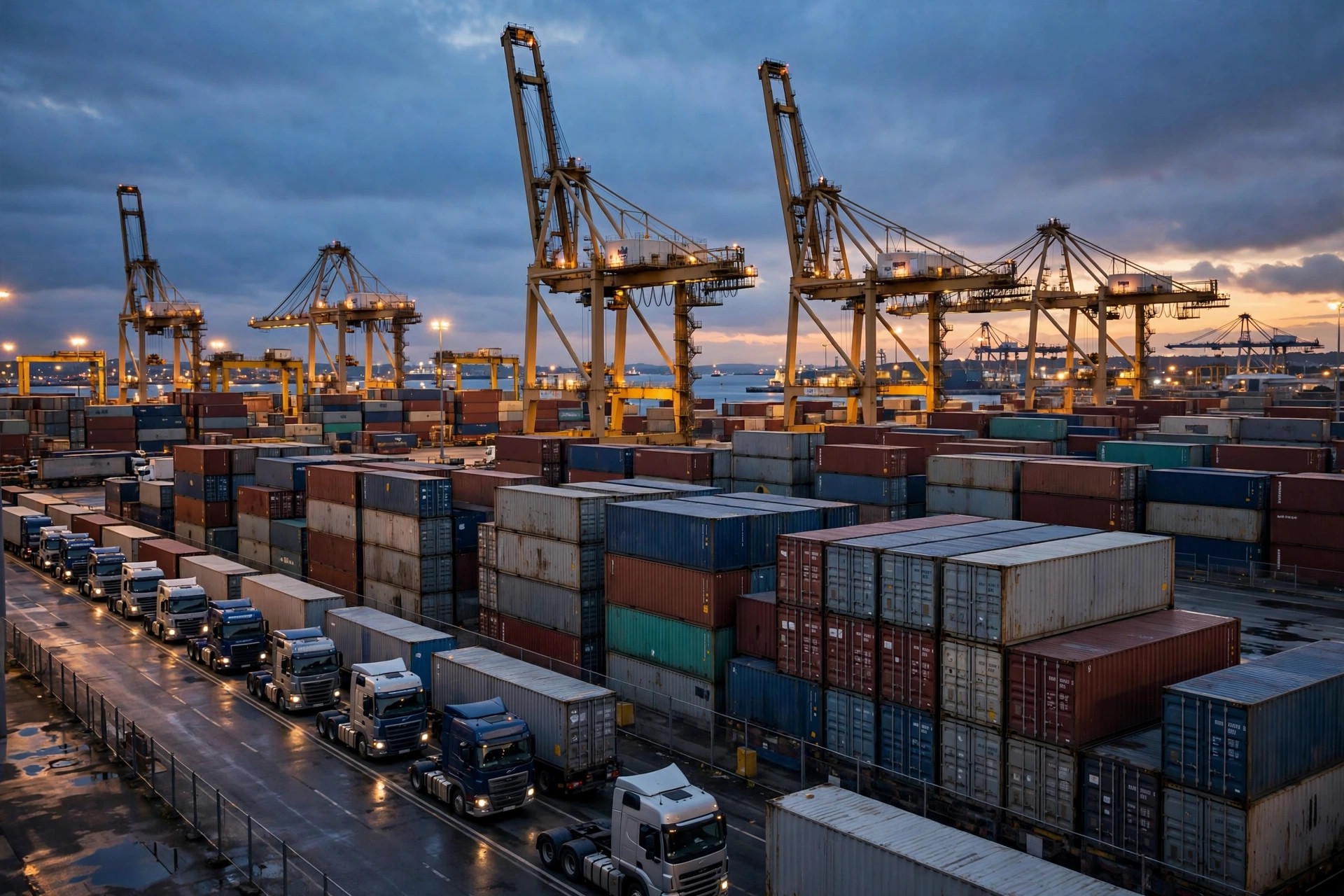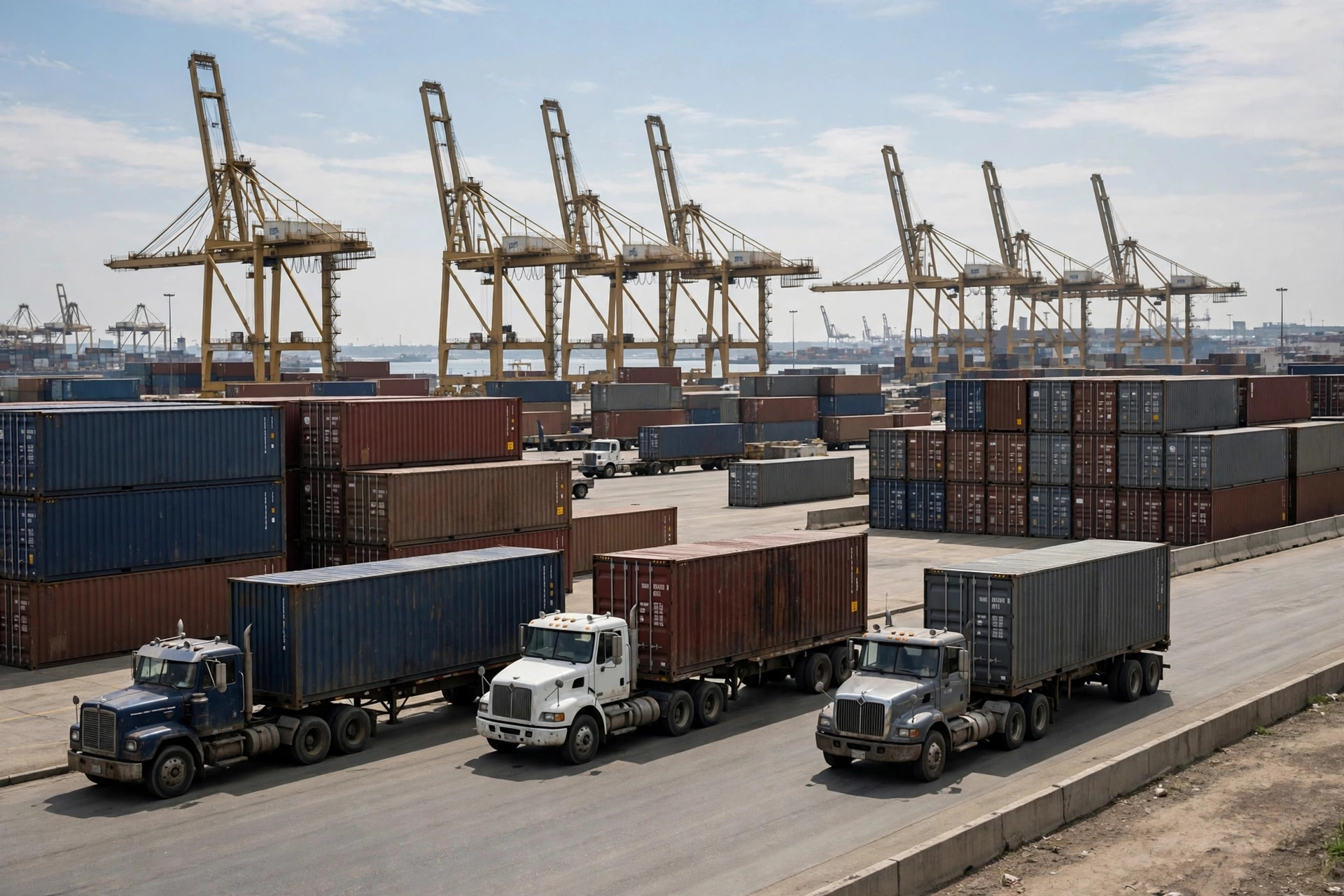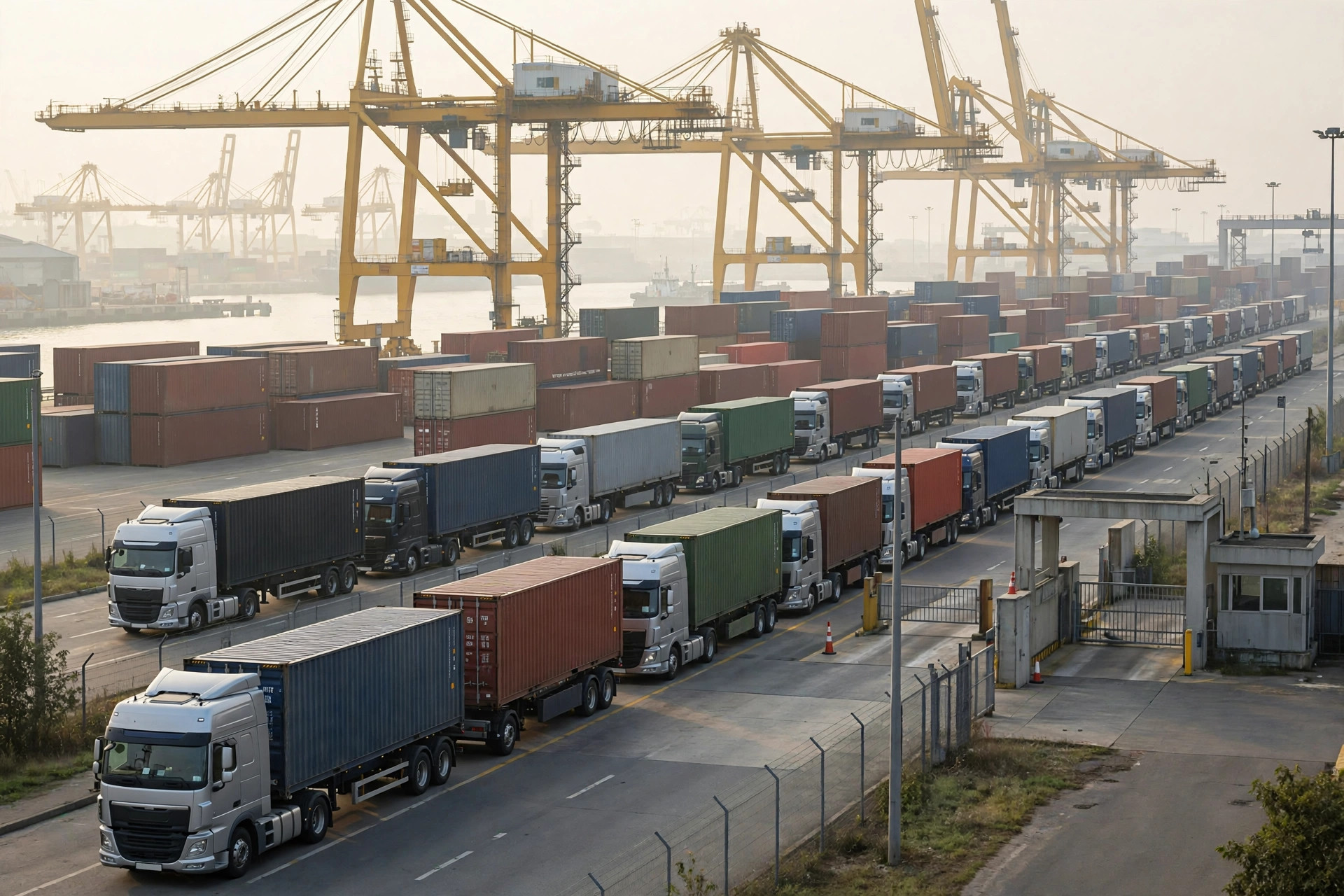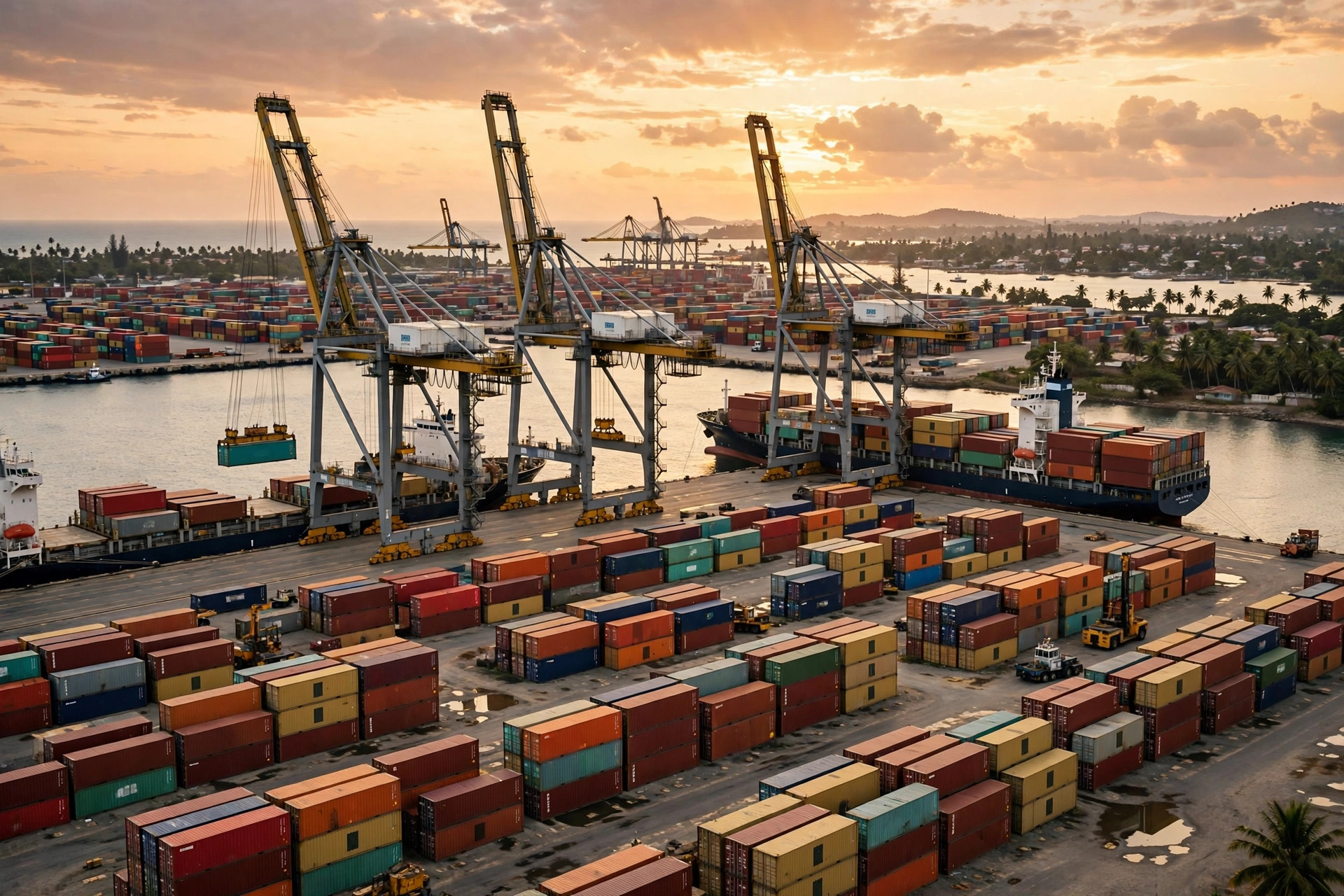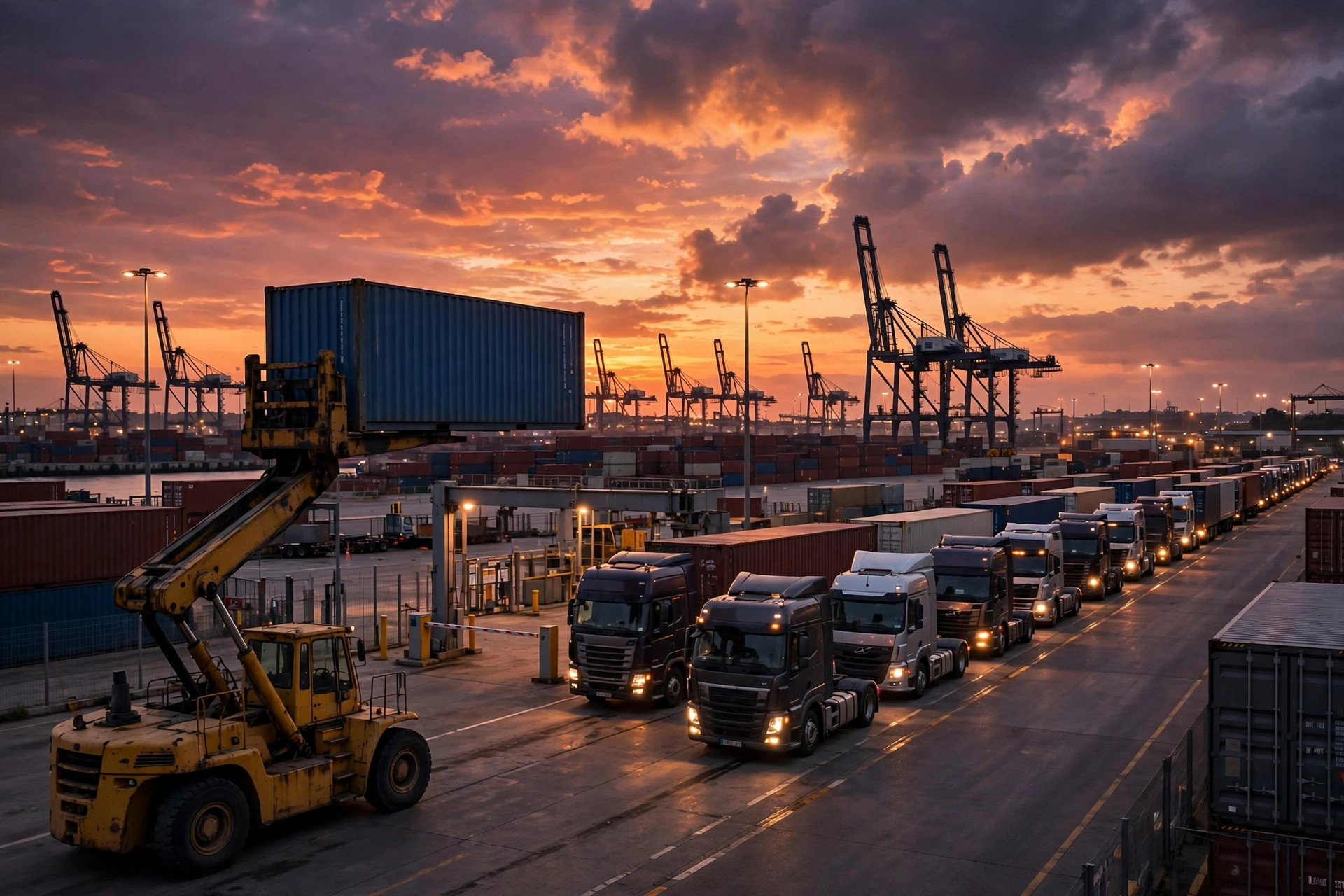
A 40-foot box lands at the Port of Los Angeles, and the clock starts immediately. Under CMA CGM's published U.S. import tariff, a standard container gets 4 free days. From day 5, demurrage runs $275 a day, stepping up to $345 from day 10 and $370 from day 14. Ten extra days on the terminal: $3,125 — demurrage alone. Once the box leaves the gate, detention (the daily charge for holding the carrier's box too long) starts its own meter. Since May 28, 2024, the Federal Maritime Commission's billing rules under the Ocean Shipping Reform Act of 2022 (OSRA-22) have rewritten how these charges may be invoiced, yet many importers and warehouse operators still play by the old rules. This piece separates the two charges, works the math, and lays out what actually helps during the free-time countdown.
Demurrage and detention bill two different things
Demurrage and detention are routinely lumped together as "port storage fees," but they bill different things under different logic. Demurrage accrues while the container sits inside the marine terminal past free time — the box occupies terminal space, and the meter runs per day. Detention accrues after the container has left the terminal, when the empty is not returned within the carrier's free period — the importer is occupying the carrier's equipment. Demurrage is a land charge; detention an equipment charge.
Per CMA CGM's published U.S. import tariff: 4 free days for both demurrage and detention on standard boxes; reefers get only 2 free demurrage days, with a far steeper curve ($485/day for days 3–5, $600/day from day 10). One California-specific detail matters later: at California terminals, no demurrage accrues on days the terminal is closed — including weekends and holidays — even after free time has expired.
Under OSRA-22, the FMC's final rule of February 26, 2024 (effective May 28, 2024, 46 CFR Part 541) limits billing parties to vessel-operating carriers, NVOCCs, and marine terminal operators — and a single invoice may go to either the contracting party or the consignee, not both, and no longer to truckers or brokers as a matter of course.
What ten extra days actually cost
The modal case: a 40-foot standard box through Los Angeles, free time exhausted, then 10 more days on the terminal (days 5–14):
| Days | Tier | Daily rate | Subtotal |
|---|---|---|---|
| Days 5–9 (5 days) | Tier 1 | $275 | $1,375 |
| Days 10–13 (4 days) | Tier 2 | $345 | $1,380 |
| Day 14 (1 day) | Tier 3 | $370 | $370 |
| Total | $3,125 |
That $3,125 is demurrage only. If the warehouse is slow to unload and the empty returns on day 9 after gate-out, detention stacks on top: 4 free days, then $150/day for days 5–8 and $230/day from day 9. Combined, a single box easily clears $4,000; a ten-box shipment two weeks late runs well into five figures.
Four OSRA-22 billing changes matter operationally. First, a 30-day invoicing deadline: invoices must be issued within 30 calendar days of the last charge incurred (NVOCCs get the same clock from receipt of the upstream invoice) — miss the window, lose the right to bill. Second, incomplete invoices are unenforceable: invoices must carry roughly 20 data elements — container numbers, charge date ranges, free-time start/end dates and calculation basis, applicable rates and their basis, total due, and a dispute contact. Omitting the minimum information eliminates the billed party's obligation to pay (46 CFR 541.5). Third, a 30-day dispute window for written challenges. Fourth, restricted billed parties: invoices may go only to the contracting party or the consignee.
The free-time countdown: five things that actually work
Rewind to seven days before arrival: with four free days, every move must be front-loaded, and the LFD (last free day) anchors the timeline.
1. Clear customs before the vessel berths. Entry filings, ISF, and supporting documents must be ready before arrival. Exams are uncontrollable; document-driven delays are not. The forwarder tracks ETA and LFD daily — the moment LFD is fixed, drayage appointments get booked backward from it.
2. Pin the pickup appointment 48 hours before LFD. U.S. ports run on appointment systems, and peak-season slots fill 2–3 days out. Target LFD-minus-two, keeping a day of buffer for rolled appointments or exams.
3. Size the warehouse's receiving capacity first. This is the lesson of the Peloton case. In 2024, Peloton sued its forwarder Flexport before the FMC, seeking $33.7 million — $13.8 million in demurrage, $16.2 million in equipment detention, $3.7 million in yard and warehouse storage — covering thousands of shipments during the pandemic port congestion. On September 9, 2025, an FMC administrative law judge rejected the claim: email evidence showed Peloton repeatedly lacked warehouse space or failed to unload delivered cargo, making it impossible for the forwarder to return containers and chassis. A large share of that $33.7 million traces back not to the carrier but to the importer's own warehouse. Count inbound boxes over the next seven days against unload crews and open slots; if the building cannot absorb them, add a shift, free up space, or tell the forwarder to hold the box — do not let it burn demurrage while the warehouse is the bottleneck.
4. Negotiate free time; don't beg for mitigation after. Free days live in the ocean contract — the window to push for 5–7 days is before peak season, at annual-contract time. Post-hoc mitigation has low hit rates and long cycles. In disputes, the FMC rule requires every invoice to carry a dispute contact: file in writing within 30 days, attach gate records, reconcile container by container — the Peloton judge held disputes must be examined container-by-container and day-by-day. On September 1, 2026, Samsung filed an FMC complaint against CMA CGM disputing $186 million ($148 million in contested demurrage, detention, and rail storage, plus $8.1 million in workaround costs and $30 million in prejudgment interest) across 121,000-plus charges under 2020–2023 "store door" contracts; an initial decision is not due until September 2027.
5. Audit three things before paying. Against the FMC's roughly 20 required elements, check: (a) free-time start/end dates — were closed-terminal days at California ports wrongly counted? (b) tier escalation — did the rate step up on the right day? (c) billed party — is the invoice even addressed to you? A non-compliant invoice carries no payment obligation — flag the gaps in writing first, then talk amounts. A 2025 precedent: COSCO's improperly issued invoices drew a $24,328.80 award; after 223 days of non-payment, the Commission issued a show-cause order in early October 2026 warning of substantial civil penalties.
The counterintuitive call: sometimes the box should stay
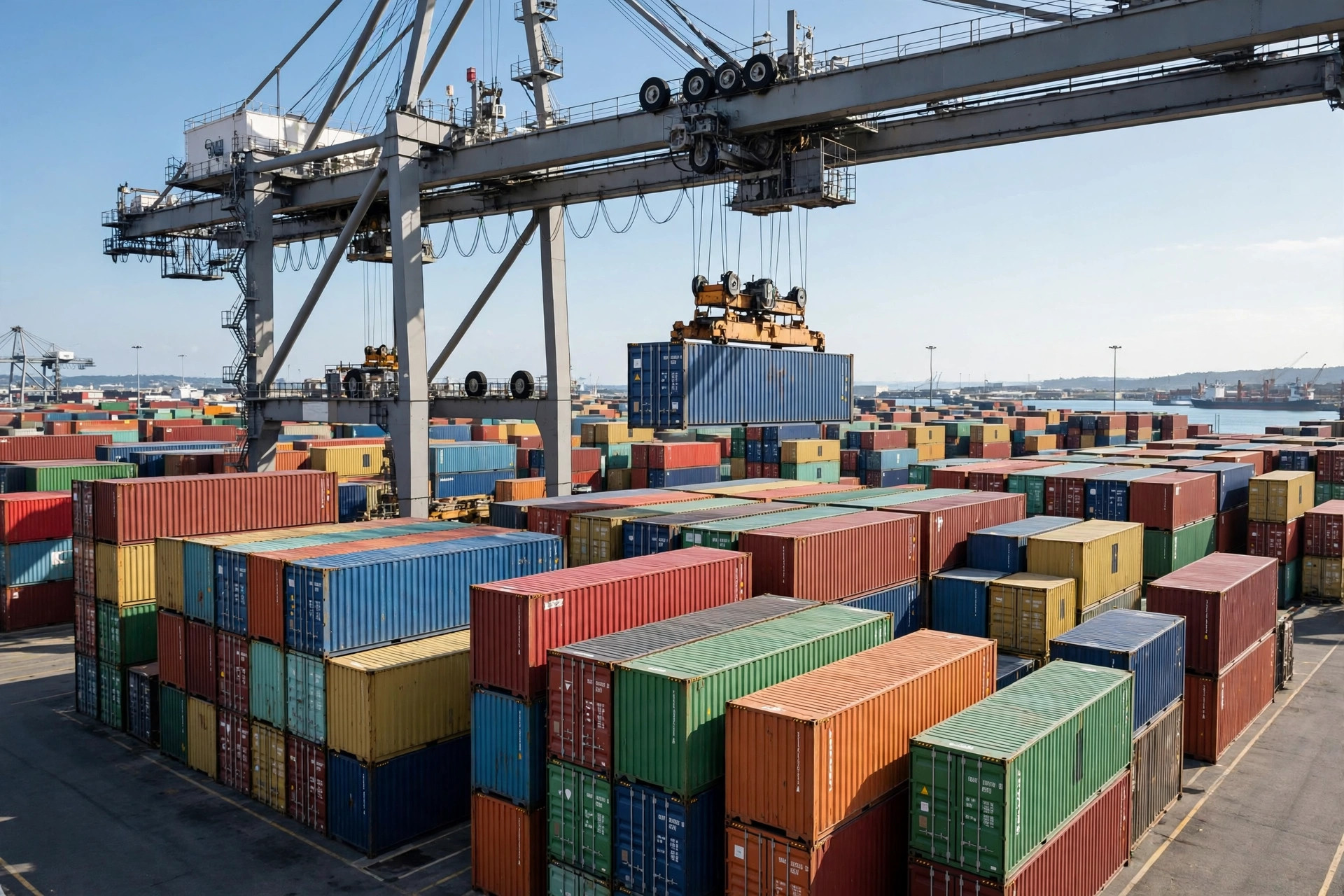
Instinct says the box should move as fast as possible. But the pickup decision is a marginal comparison: the marginal cost of one more demurrage day versus the premium paid to pull the box early.
Two concrete cases. First, the California closed-day rule: if LFD falls on a Friday and the terminal is closed on the weekend, the marginal demurrage cost of sitting Saturday and Sunday is zero — paying weekend overtime for drayage is pure waste; a normal Monday pull costs less overall. Second, when peak-season drayage capacity is tight, an expedited pull can cost several hundred dollars above the normal rate, while one or two extra demurrage days at the tier-1 rate of $275/day may be the cheaper total. The comparison only holds inside the tier-1 band — once the meter steps to $345 and $370, delay costs overtake quickly.
One level deeper: demurrage invoices are often a lagging indicator of warehouse problems — the box arrives, nobody unloads, detention burns anyway. The free-time countdown is not a race against the carrier; it is an exercise in synchronizing customs clearance, drayage, and warehouse receiving. Synchronized, four free days are enough. Unsynchronized, seven will burn just as fast.
Two things worth watching: whether FMC billing-rule compliance has actually improved — no systematic public data exists yet, two years in — and the Samsung–CMA CGM initial decision due September 2027, the first real test of tactics like "finance holds" under OSRA-22. Until then, the safest strategy is unchanged: front-load everything that can be front-loaded, and keep every charge reconstructable down to the container and the day.
By Dr. Chen, Supply Chain Researcher