In June 2024, GXO Logistics signed the humanoid robotics industry's first commercial deployment deal — Digit robots from Agility Robotics, headed for a Spanx distribution center. Read the fine print: it's a multi-year Robots-as-a-Service agreement. GXO isn't buying robots. It's renting robot-hours. That single detail tells you more about where this technology really stands than any keynote video ever will.
I've tracked humanoids in logistics for three years, and I've watched the pilots up close. My verdict comes in two parts: don't count on them to cut your labor bill anytime soon, and don't pretend they won't matter. The next few years are the preparation window — and preparation is the part most warehouses are skipping entirely.
What They're Actually Doing: Three Real Deployments
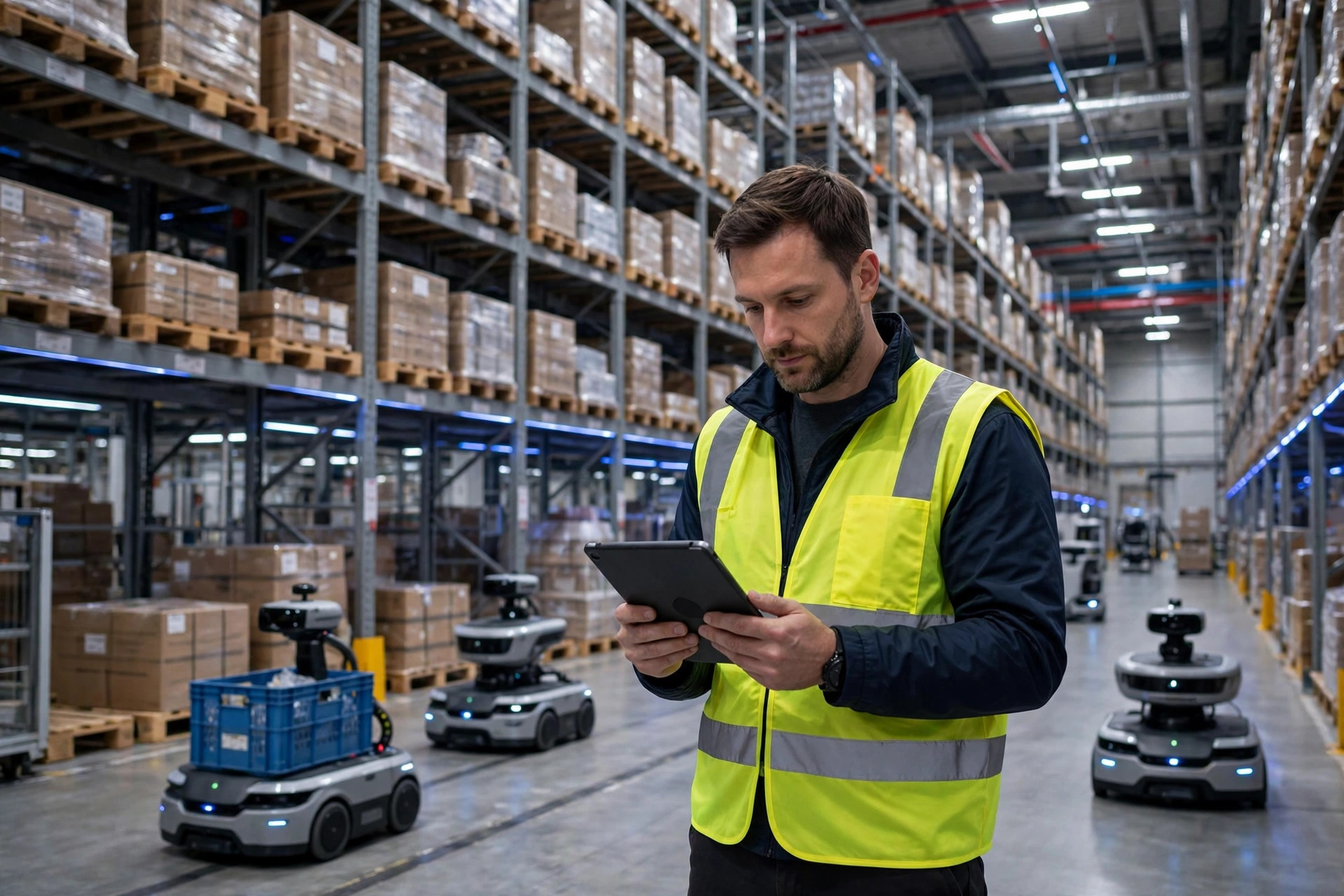
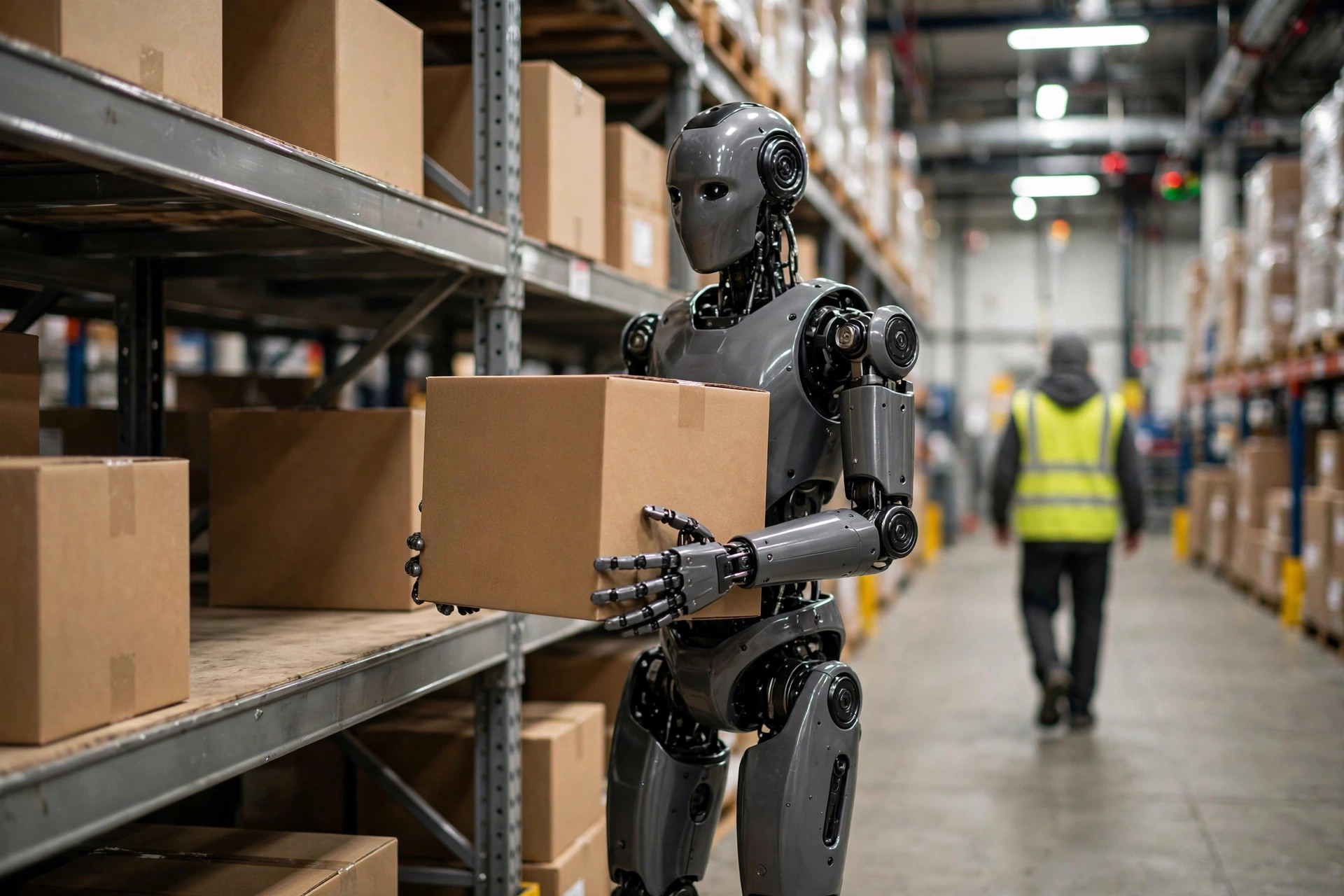
Deployment one: a Spanx apparel distribution center in the southeastern US. After a proof-of-concept pilot in late 2023, GXO and Agility signed the multi-year deal on June 27, 2024 — the first time a humanoid entered a warehouse under a commercial contract instead of a research partnership. The job is narrow and specific: Digit stands beside a conveyor and moves totes off autonomous mobile carts onto the belt. Empty or loaded, high or low, it reaches them all. The carts do the traveling; the humanoid does the handoff. One motion, repeated all shift: pick up, set down.
Deployment two is the most documented pilot in the industry. In January 2024, Figure AI signed a commercial agreement with BMW and sent robots into the automaker's Spartanburg, South Carolina plant. By August, a Figure 02 was inserting sheet-metal parts into welding fixtures in the body shop. Note the setting: not a warehouse, but a body shop — a far more structured environment than any distribution center. Eleven months in, the published numbers read well: more than 1,250 operating hours, over 90,000 parts moved, a contribution to 30,000-plus vehicles assembled, and an 84-second cycle-time target met consistently. Then you read the same company's own debrief, and it names the robot's wrist as its top failure point — tight packaging, wrist degrees of freedom, thermal management, all of it a problem. The next-generation Figure 03 was redesigned around exactly those lessons, and in June 2026 it moved into Hall 52 at the same site to do logistics sequencing: pulling loaded carts, sorting unordered components, feeding workstations in precise order.
Deployment three is my favorite. In Salem, Oregon, Agility opened the world's first humanoid robot factory — 70,000 square feet, production started in 2024, planned capacity above 10,000 units a year. And the workers on that factory floor include Digit robots themselves, moving totes and loading equipment. Eating your own cooking. I respect that.
Amazon, for its part, tested Digit at a Seattle R&D facility back in 2023. Then — no large order followed. That silence tells you the industry's collective posture right now: watch closely, pilot small, commit to nothing.
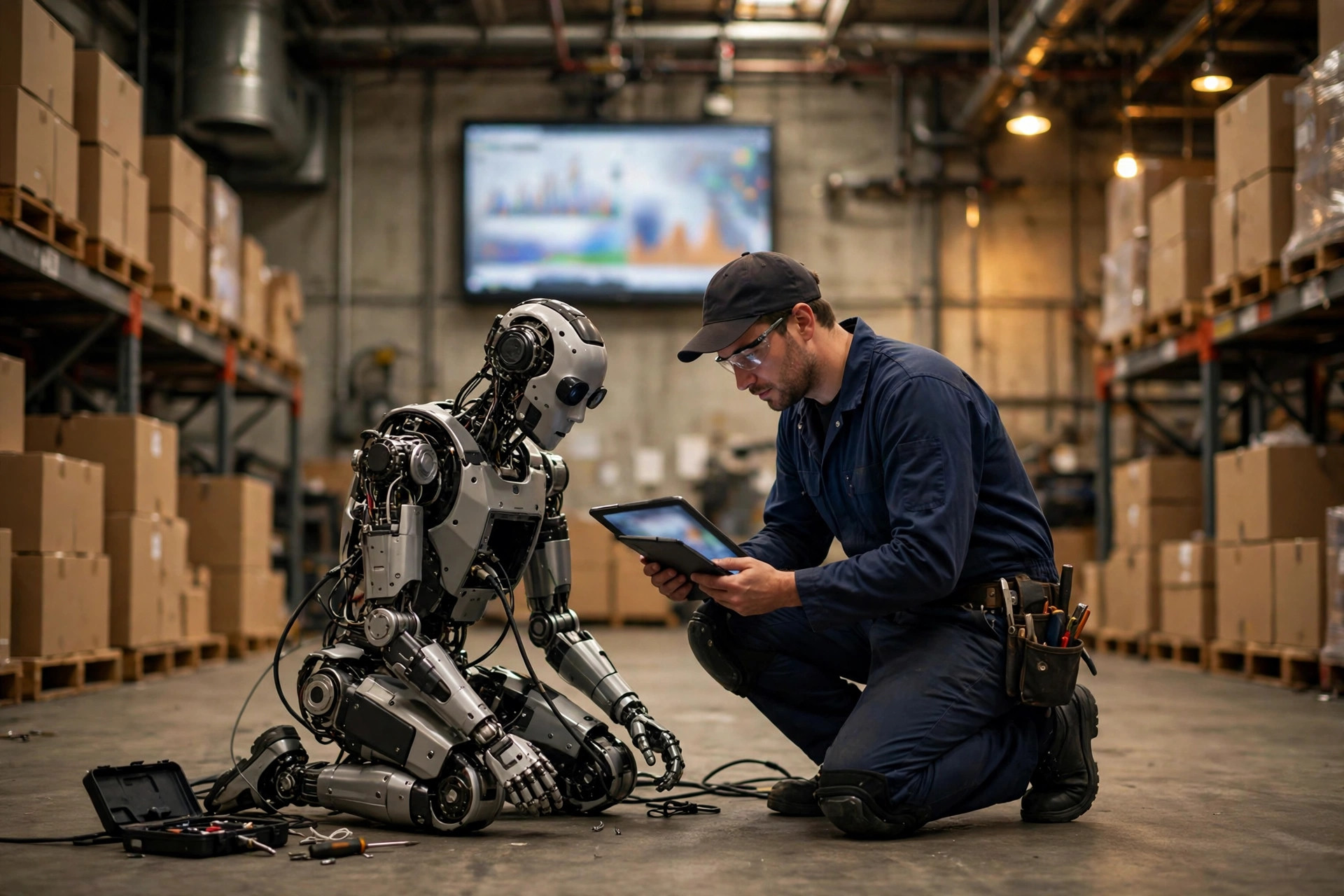
For a sense of scale: today's warehouse bipeds stand about 5 feet 9 inches, weigh roughly 65 kilograms, and carry around 35 pounds per lift. In other words, they map one-to-one onto an adult picker's "walk plus carry" capacity — no more, no less. Vendors cite 65,000-plus hours logged in real workplaces, which sounds massive until you divide it across machines and task types. The sample is thinner than the headline suggests.
The Gaps Between Here and Real Picking
Let's be precise about what exists today. The all-capable general-purpose humanoid from the keynote and the machine you can actually deploy are two different things. What you can rent right now is a bipedal single-task material handler. Hand it a new task and it needs retraining and redeployment. It does not watch once and learn the way a person does.
Gap one: dexterity. Picking isn't moving boxes. It's identifying the right item among lookalikes and grasping it without crushing it. The human wrist-and-fingers combination is still far ahead of anything shipping today. Remember the BMW pilot: the wrist became the single biggest failure point — while handling standardized sheet-metal parts, one of the most structured tasks you can imagine. Warehouse SKUs vary wildly in shape, weight, and fragility. Harder, not easier.
Gap two: reliability. 1,250 hours and 90,000 parts is a genuine achievement, and it also says everything: one machine, eleven months, one task, with engineers nearby. A warehouse needs round-the-clock uptime through a peak season pushing 20,000 orders a day. Current maturity is at least one hardware generation short of that bar.
Gap three: the math. Vendors rarely publish prices; nearly everything runs through RaaS. Robot-hours sound elegant until you price the alternative: moving a tote from point A to point B is a solved problem. A fixed robotic arm plus a conveyor, or an AMR, has a cost structure you can put in a spreadsheet today. The humanoid premium buys an option on "someday it will do more tasks." Paying that premium now means funding the vendor's R&D budget.
Gap four — the one everyone underestimates: the demo is not the deployment. Keynote footage flows like water; the real pilot runs inside a safety zone, on fixed routes, with engineers on standby. In twenty years I have watched too many "works great on video" systems die on the warehouse floor.
There is also a quieter gap nobody likes to mention: a humanoid is not always the best answer. Most warehouse work is highly structured — fixed slots, fixed routes, fixed motions — and for those jobs a robotic arm plus conveyor, or an AMR, is already the cheaper and more reliable solution. The humanoid's real value is in the unstructured zones: routes that change daily, tasks that change hourly, areas where people and machines mix. Paying the humanoid premium for a structured job is like buying a sports car for parcel delivery.
So here is my timeline — and to be clear, this is my judgment, not a vendor roadmap:
2026 to 2027: single-task pilots go small-scale commercial. Tote handling, conveyor load and unload, simple sequencing — the "walk plus carry" jobs land first, mostly on rental terms.
2027 to 2029: multi-task pilots expand. One machine chaining two or three related motions, with costs approaching honest competition against labor-plus-existing-automation.
After 2029: true multi-SKU picking at scale — and only if dexterity, reliability, and cost all clear. If any one of the three stalls, the whole timeline slides.
What Your Warehouse Should Do Right Now
Don't read this as permission to wait three years. The opposite: these are the preparation years, and the prepared will take the first wave.
First, make your processes robot-friendly. Embodied AI learns by watching human demonstrations. The more standardized your workflows, the more uniform your tote sizes, the more fixed your handoff points, the faster a robot learns. Start now — and even if robots never arrive, standardization saves labor on its own merits.
Second, rent, don't buy. Hardware iterates yearly; buying today means owning last year's model at this year's price. RaaS is already the industry's proven pattern — that 2024 commercial agreement was signed exactly that way. Spend on pilots and process redesign, not on depreciating assets.
Third, start with one single-task pilot. Not a "lights-out warehouse" — find the most repetitive manual transfer station in your building, say the returns area feeding a conveyor, and pilot there. If it works, replicate it. If it doesn't, the loss is contained. One tip for picking the station: prioritize the shifts with the worst hiring and highest turnover — night shifts, heavy lifting. Labor costs there rise every year, so a pilot that works produces the cleanest ROI story and the easiest case for the next round of budget.
One thing you can do tomorrow: have your supervisor film the three most repetitive manual transfer stations in your warehouse — phone camera, one continuous take each, no editing. Today those videos are training material. In three years, they will be the first training dataset for your robots.