Let me give you the straight answer first: how much does ASRS cost for a small warehouse? Not one number — a price ladder that runs from the low hundreds of thousands of yuan (or roughly $75,000 and up) to well over ten million yuan. Last year an auto-parts distributor friend asked me: "Lao Zhou, does a small ASRS always cost millions?" I told him he was asking the wrong question. The right question isn't what the system costs — it's whether your order volume can carry any tier of it at all. Anyone can get a vendor quote. Almost nobody bothers to calculate what the system costs per pick line once it lands in their building.
Today I'll walk that math all the way through: five price tiers, starting from a single VLM, each grounded in real installed projects, and a break-even formula at the end you can run yourself.
How Much Does a VLM Cost? The Cheapest ASRS Tier for Small Warehouses
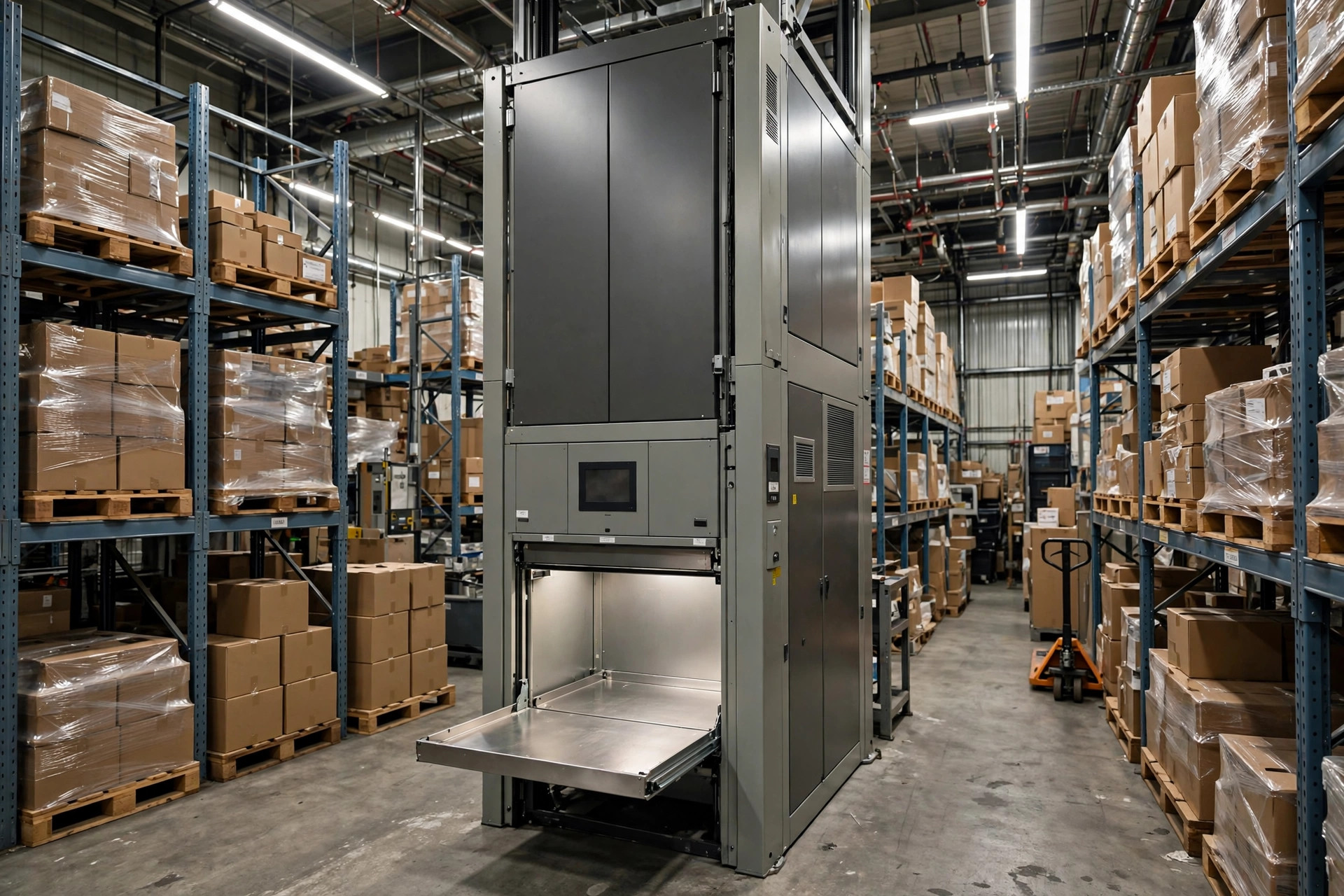
A VLM (vertical lift module) is the cheapest automated storage a small warehouse can realistically buy. It looks like a tall steel cabinet; trays rotate vertically inside and present goods at an ergonomic pick window. In 2024, an auto-parts distributor in Foshan, China — a warehouse under 4,000 square meters, more than 8,000 small-part SKUs, pickers walking the floor all day hunting for screws and clips — installed two domestically made VLMs. Total bill, including installation and a basic WMS interface: a little over 900,000 RMB.
The interesting part is the breakdown. Their small-parts zone had 8 pickers before; after go-live, 5. At roughly 70,000 RMB per person per year, that's 210,000 RMB in annual labor savings. 900,000 divided by 210,000 gives a payback period of just over four years. Not dazzling on paper — but the real return was elsewhere: the mis-pick rate in small parts fell from 6 per thousand to under 1 per thousand. Fewer returns, fewer angry customers, and that's pure margin.
So the entry tier: a single VLM starts in the hundreds of thousands of RMB in China (import brands cost meaningfully more — check current vendor quotes). That's the machine alone. Installation, floor reinforcement, and system integration are all separate line items. If your problem is "too many small parts, too much walking," one VLM is the cheapest ticket into automated storage.
How Much Does Mini-Load Cost? The Real Bill for a Full System
Two VLMs with a simple conveyor tie-in pushes you into the million-RMB range — the actual choice of many 3,000–8,000 square meter warehouses. No civil works, no racking changes, the equipment lands and runs.
Above that sits mini-load: the crane-in-an-aisle automated storage and retrieval system built for totes and small cases. This is where prices jump the hardest. In 2023, a medical-supplies 3PL outside Chicago — about 1,500 pick lines a day, 12-meter clear height — installed a single-aisle mini-load: two stacker cranes, more than 6,000 tote positions, conveyor loop, and pick stations. Total project cost: around $1.8 million. Ten-plus times the VLM option.
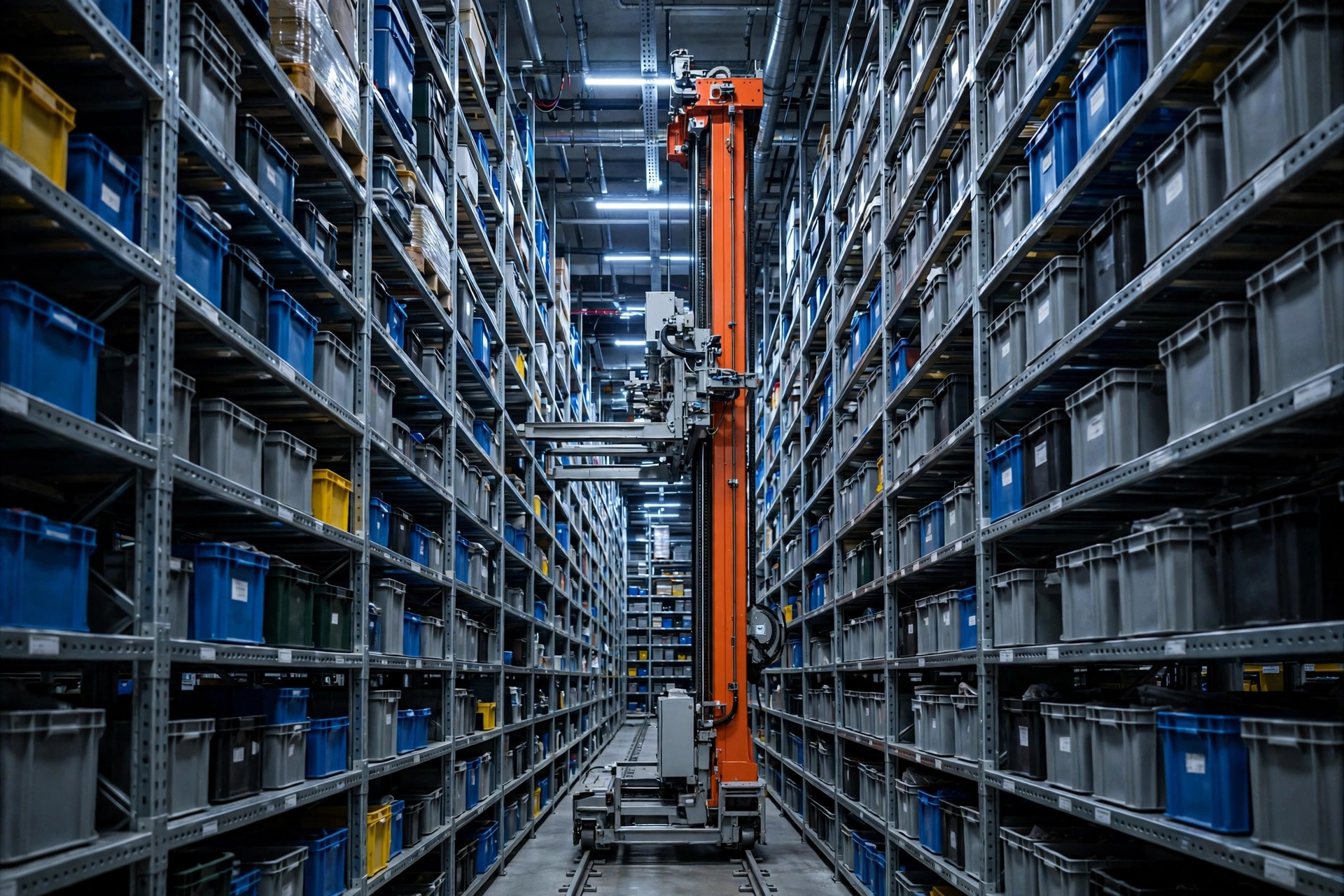
Why the gap? Because with mini-load, only about 60% of the money goes to the equipment. The other 40%: installation and commissioning over 10%, software integration with the WMS (order batching logic, interfaces) close to 10%, civil works and floor tolerance requirements (crane rails are brutally sensitive to floor flatness) another 10%, plus first-year maintenance and spares. The glossy equipment price on the quote is never more than three-fifths of the real total. This is the most common budget trap I see: the project gets approved on the equipment price and lands 40% over budget.
So the mini-load entry tier: in the US market, entry mini-load configurations typically start in the mid-hundreds of thousands of dollars, and a complete project crosses a million dollars without trying; comparable projects in China start at several million RMB. Treat any quote older than a year as expired — build this year's budget on this year's numbers.
The Full Price Ladder: Five Tiers at a Glance
| Tier | System | All-in project cost | Who it's for |
|---|---|---|---|
| 1 | Single VLM | Hundreds of thousands of RMB | Concentrated small-parts SKUs |
| 2 | Two VLMs + simple integration | Million-RMB range | 3,000–8,000 m² small warehouses |
| 3 | Mini-load, entry (single aisle) | Several million RMB | 2,000+ pick lines/day |
| 4 | Full multi-aisle mini-load | 10M+ RMB | 10,000+ lines/day |
| 5 | Full ASRS + goods-to-person robots | 10M+ RMB | Large 3PLs, big e-commerce DCs |
Read this table right to left, not left to right. The point isn't the price — it's the "who it's for" column. Buying too much or too little is a technical mistake. Buying the wrong tier is a financial disaster.
The Counterintuitive Truth: For a Small Warehouse, the Expensive Part Is Buying Too Early
If there's one thing twenty years of cost analysis has taught me, it's this: for a small warehouse, the most expensive part of ASRS isn't the equipment price — it's your volume failing to carry its fixed depreciation.
Run the numbers. A 3-million-RMB entry mini-load, depreciated over 8 years: 375,000 RMB a year. Add maintenance, power, and spares, and annual fixed cost approaches 450,000 RMB. If you pick 500 lines a day, 300 working days, that's 150,000 lines a year — 3 RMB per line. What does a manual pick cost? A small-parts picker does 400–500 lines a day at a daily cost of about 250 RMB — roughly 0.5–0.6 RMB per line. Equipment: 3 RMB per line. Labor: 0.5 RMB. The earlier you install that system, the more money you lose.
Flip it around, though, and once volume crosses the line, ASRS becomes the poor man's automation. At 3,000 pick lines a day, manual needs 7–8 pickers — over half a million RMB a year in labor you increasingly can't hire or manage. A 3-million-RMB system pays back in six years, and every year after that is pure gain. ASRS is never a question of expensive or cheap. It's a question of whether your volume deserves it.
Three Levers That Actually Save Money
First, used VLMs. A VLM is a steel mechanism with a 15-plus-year life, and the secondhand market is liquid. In 2024 I looked at a 6-year-old used VLM for an electronics components trader in Shenzhen — good condition, about 40% of new price. For a small warehouse, a used VLM plus tote standardization is the lowest-cost automated storage you can get. Nothing else comes close.
Second, don't pay for "future-proofing." Vendors love selling the multi-aisle system, arguing you won't need another project when volume grows. But for a small warehouse, any volume forecast beyond three years is fiction. Install one aisle, reserve the interface and the floor space. You save not just on equipment, but on depreciation and tied-up capital.
Third, squeeze the software integration. In mini-load projects, the WMS interface is a notorious budget overrun. If your WMS has no standard API, custom integration can eat 5–8% of the total project. Before approving anything, ask IT one question: does our WMS already have an ASRS integration module? If not, put that cost in the total before you sign.
A Calculable Conclusion: Three Lines, Pick Your Number
No slogans at the end — three rules you can apply directly:
- Under 500 pick lines a day: don't touch any ASRS. Labor plus tote standardization is your best answer; fixed depreciation would push your per-line cost 3–5x higher.
- 500–2,000 lines: look only at VLMs, not mini-load. Prefer used units; keep payback under 4 years.
- Over 2,000 lines: mini-load is on the table. But before approval, run this formula — cost per pick line = (total equipment investment + 5 years of maintenance) ÷ (5 years × 300 days × daily pick lines). If the result is above your current manual cost per line, shelve the project. If it's 30% or more below manual cost, sign.
Words like "probably" and "roughly" are worthless in cost analysis. Pick up a calculator, plug your own volumes into these three lines, and the answer will come out by itself.
By Lao Zhou, Logistics Cost Analyst