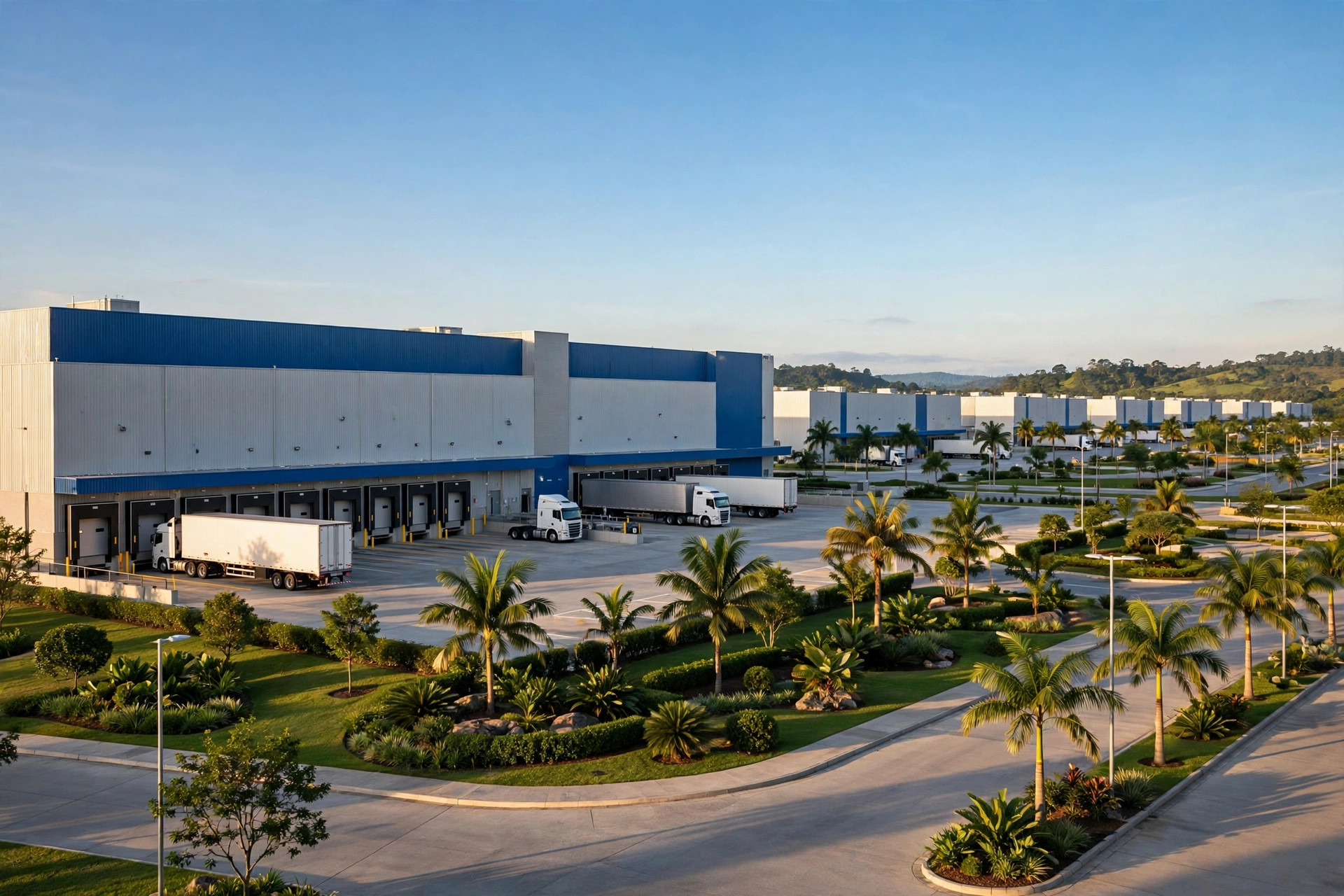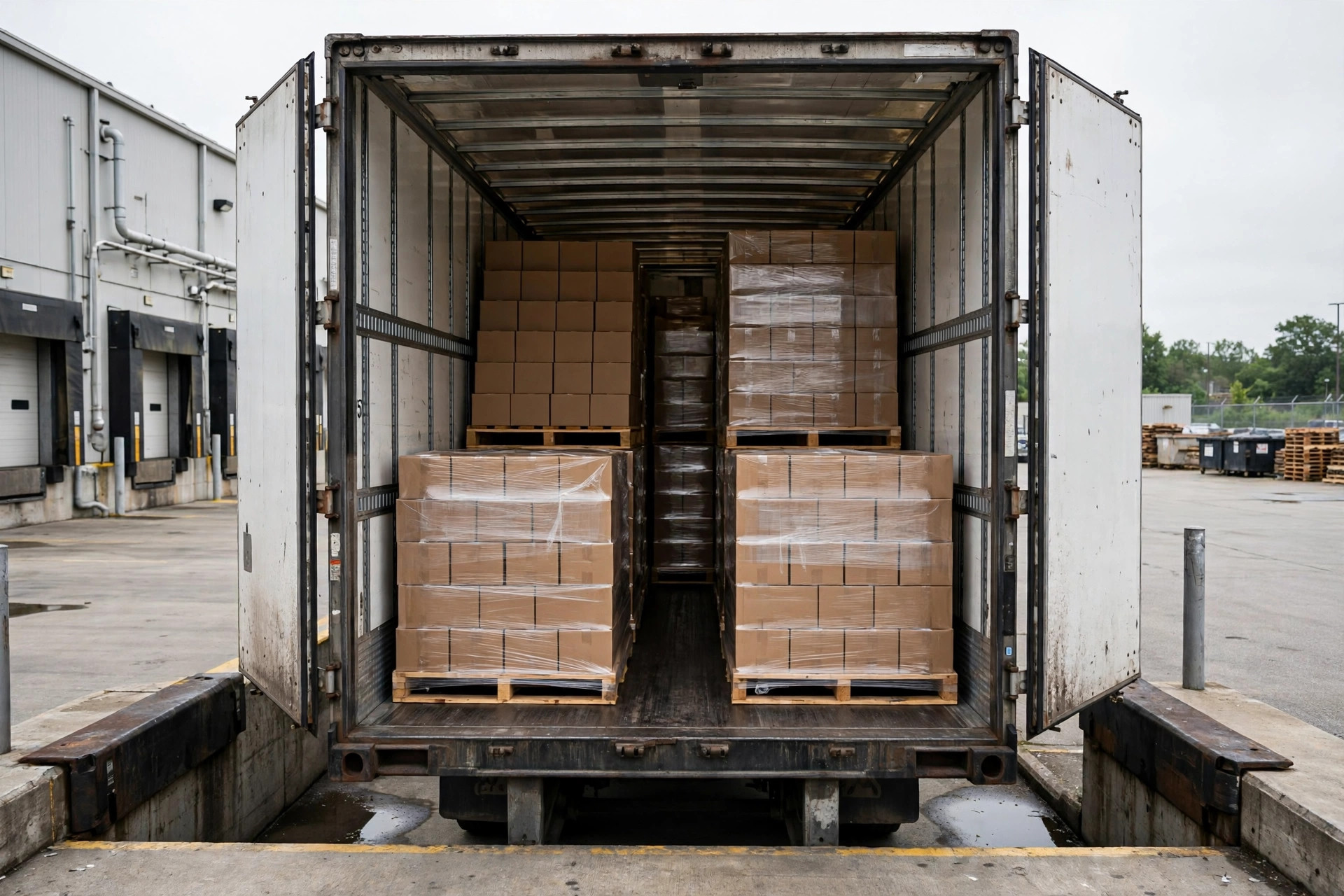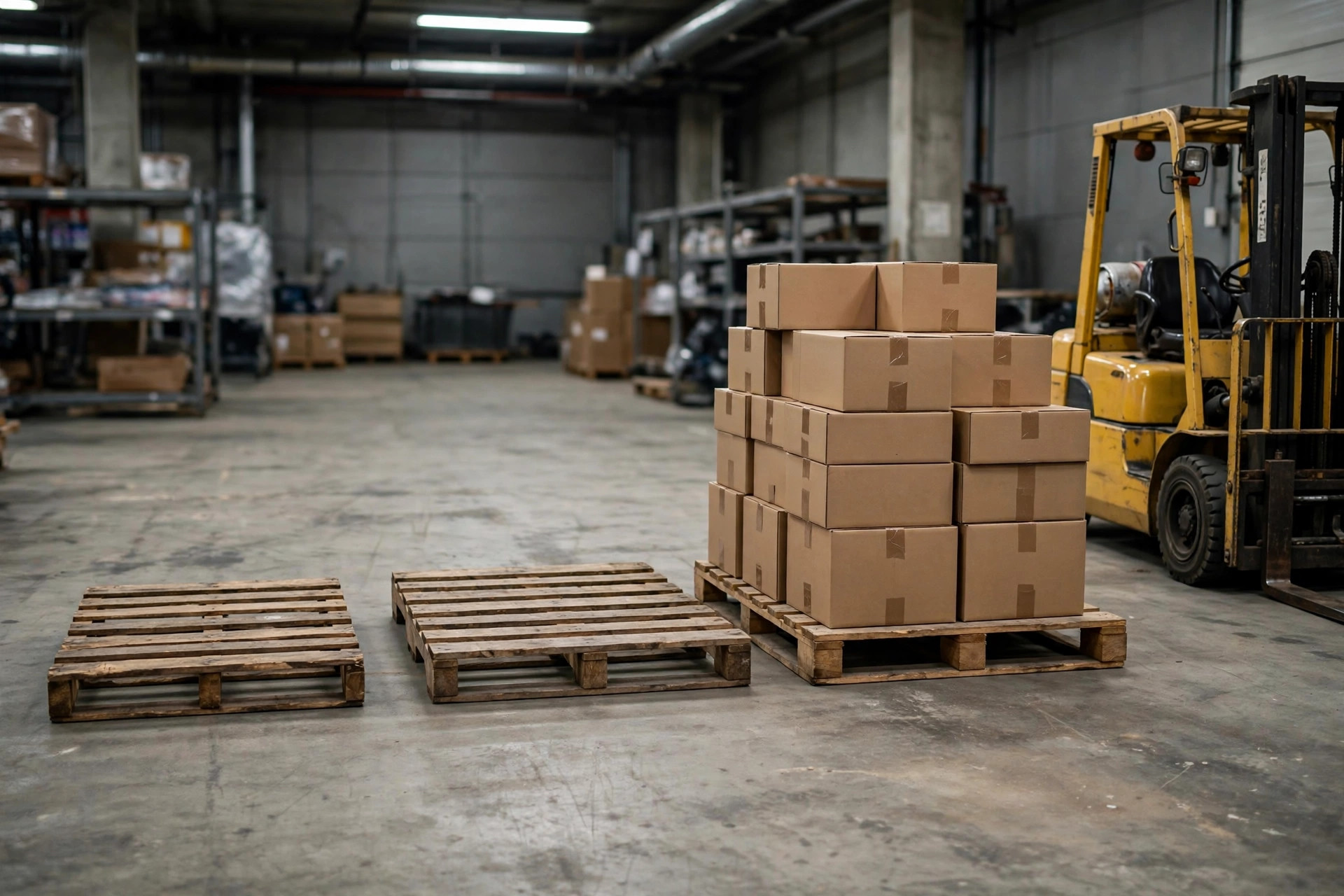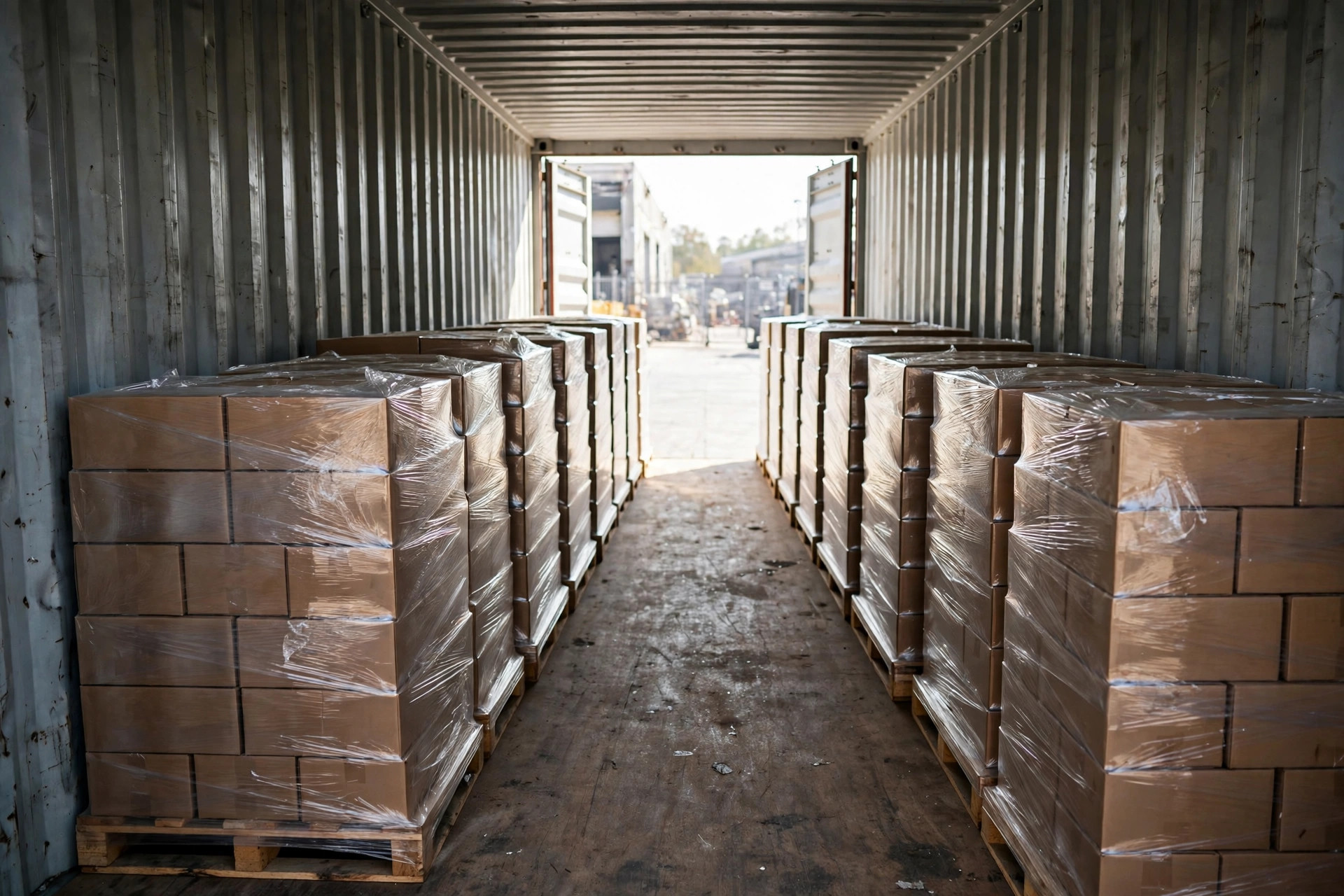
June 2023, a container yard outside the Port of Long Beach. I'm there to pick up a box, and I watch a small tragedy unfold. A furniture exporter has 22 GMA pallets and a loading diagram that swears they all fit in one 40-footer. The forklift driver gets to pallet number 21 and it's game over — misses by less than four inches at the door. The shipper's hopping mad, the driver kills the forklift and says, "You think you can do better? Be my guest." Pallet 22 spends the night alone in the yard. The shipper pays an extra night of storage and sends another truck the next day for one single pallet. That one pallet cost him enough to buy barbecue for the whole warehouse crew, three times over.
Fifteen years behind the wheel teaches you this: the math on paper and the math at the container door are two different animals. So here's the straight answer to how many pallets fit in a 40ft container — the numbers, and the traps nobody puts in the brochure.
How many pallets fit in a 40ft container? Start with the box itself
Before you count pallets, know the box. A standard 40-footer (40GP), across the major carriers' published specs: 12.03 m long, 2.35 m wide, 2.39 m high inside, max payload around 26.5–26.7 tonnes (carriers differ in the decimals — always check your line's latest spec).
A 20-footer: 5.90 m inside length, same 2.35 m width and 2.39 m height. A 40ft high cube: same length and width as the standard, but 2.69 m of interior height — 30 cm more.
Two numbers matter more at the dock than all of the above: door width 2.34 m, door height 2.28 m. Pallets can fit the interior all day long; if they don't clear the door, you're done. I've watched guys measure the inside six times and never once check the door, then try to shave cardboard off boxes at the threshold. Don't be that guy.
The cheat sheet: three pallets, three boxes
Here's the table. Screenshot it, keep it on your phone, check it before you book:
| Pallet | 20ft | 40ft standard | 40ft high cube | Double-stacked (if cargo allows) |
|---|---|---|---|---|
| GMA 48×40 in | 10 | 20 (21 turned) | 20 (21 turned) | 40 (42 turned) |
| Euro 1200×800 mm | 11 | 24 (25 mixed pattern) | 24 (25 mixed) | 48 (50 mixed) |
| 1100×1100 mm | 10 | 20 | 20 | 40 |
One more row for the industrial 1200×1000 mm pallet: it loads like a GMA — 10 in a 20ft, 20 in a 40ft (21 turned). Just read the GMA line.
Where does the table come from? It's division, nothing fancier: interior floor divided by pallet footprint. The 2.35 m interior width is the hard constraint. A GMA pallet (1.22×1.02 m) goes two-across at 2.04 m with room to spare; ten rows deep at 1.22 m each fills the 12.03 m length. Twenty pallets, straight load, no drama.
Euro pallets are narrower, so you can get clever: turn some 90 degrees, mix the pattern, and in places you squeeze three narrow edges across the width. An optimized 40ft takes 25. But "optimized" means somebody planned it row by row — it doesn't happen by shoving freight in and hoping. I've seen a crew straight-load a 40ft and land 23, and the shipper accused them of stealing space. They weren't stealing anything; they just never did the math, and two pallet positions went to waste.
The 1100×1100 is the honest one: two across (2.2 m), ten rows (12.03 ÷ 1.1), twenty pallets. Nothing more, nothing less — there's no extra inch to argue about.
About turning pallets 90° to gain one or two: on paper you just earned the freight of an extra pallet. In real life you added half an hour or more to the load, the two pallets at the door take the squeeze worst, and the receiving crew has to puzzle out your pattern at the other end. When ocean rates are through the roof, worth it. For ordinary freight? Load straight and spend the saved time loading half another box.
Weight caps everything: the 26.5-tonne ceiling
That table assumes light freight, where space is the limit. Half the freight I haul is the other kind — where weight calls the shots.
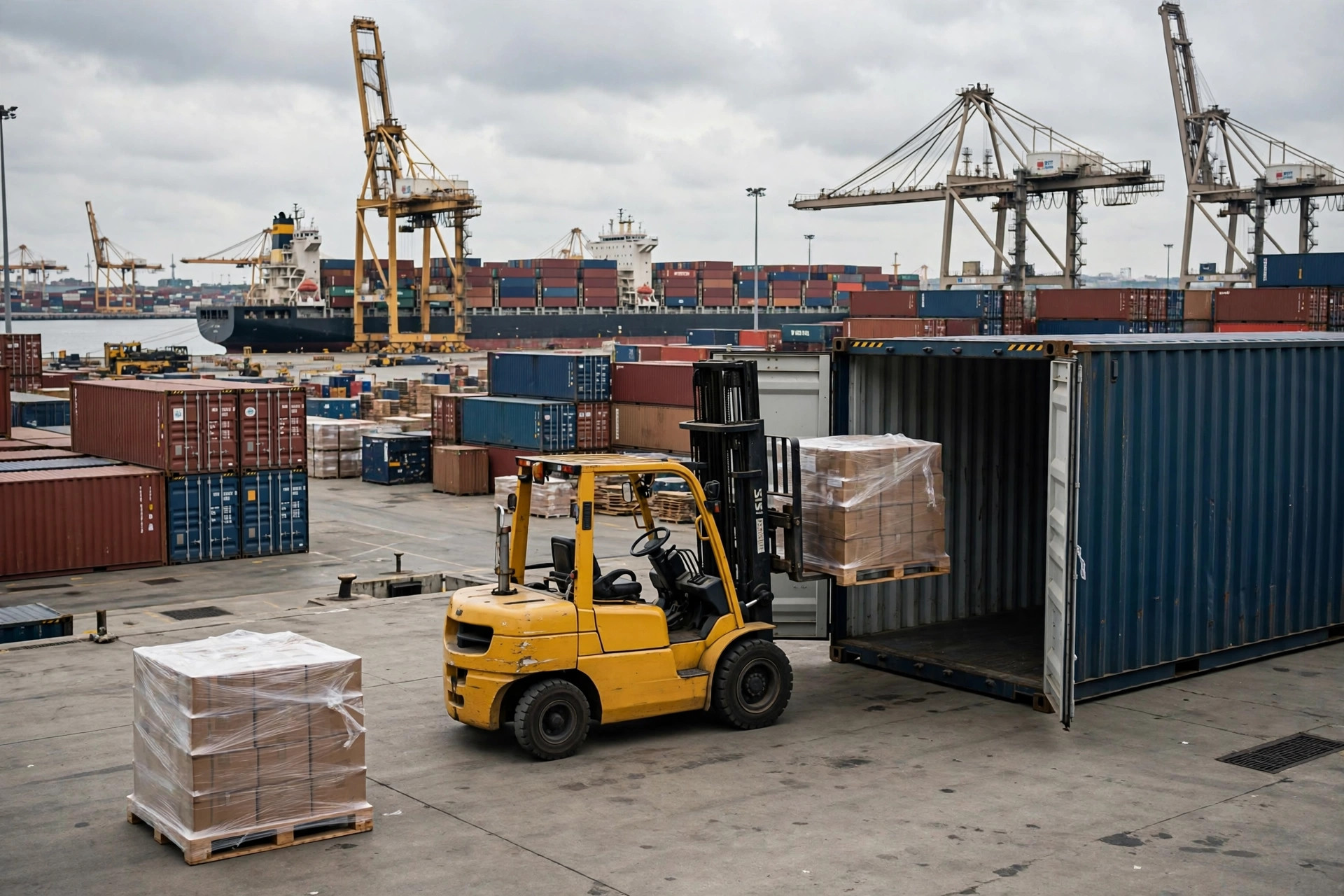
October 2024, Ontario, California. A bottled-water customer: 20 GMA pallets in a 40ft, neat as you like, plenty of headroom left. We put it on the scale: just over 26 tonnes, kissing the 26.5-tonne ceiling. The customer wanted two more pallets on top. I stopped him cold — over that number, the VGM (verified gross mass, mandatory under SOLAS) fails at the terminal, the box gets held in the yard, and the penalties plus rebooking cost more than those two pallets are worth.
The formula is simple: cargo limit ≈ 26.5 tonnes. Max weight per pallet = 26,500 kg ÷ pallet count. Twenty GMA pallets means no more than 1,325 kg gross each. Run that division before you book. Over the limit, forget about floor space — drop pallets or rethink the box.
Rethink how? Heavy freight doesn't belong in a 40ft. Look at the 20ft: smaller box, but rated payloads run up to around 28 tonnes depending on the line — the little guy punches above its weight. Tile, stone, bottled water, metal parts: two 20-footers often beat one 40-footer. No overweight drama, no mid-load repacking, no headaches.
And here's the part only drivers know: 26.5 tonnes is the ocean leg's ceiling. On US highways, the road caps you first. Federal limit is 80,000 lbs gross (about 36.3 tonnes). Tractor, chassis, and the empty box eat 33,000–35,000 lbs of that, leaving roughly 45,000 lbs — about 20.4 tonnes — for cargo. Load 26 tonnes in the box and you're overweight the moment you roll out of the terminal: tri-axle chassis or split the load, and the meter's running on both. That's why any old driver reads a loading plan weight-first, pallet count second. Fits in the box but illegal on the road is the same as not fitting at all.
Double-stacking: the 2.39 m ceiling decides
Light freight doubles up — but only if the height works. A standard 40ft gives you 2.39 m inside; split it and each tier gets 1.195 m. After the pallet itself and forklift clearance, anything over about 1.15 m per unit load is a no-go. Force it and you'll punch a hole in the roof — and the container repair bill that lands on your desk costs more than the freight did.
The 40HC's 2.69 m buys roughly 1.3 m per tier, so unit loads at 1.2–1.25 m double-stack just fine. That's what the extra 30 cm is actually for — not more pallets (same floor as the standard, same single-tier count), but making double-stack possible.
Late 2024, a paper-towel exporter in LA: unit loads at 1.25 m, had been running two standard boxes single-tier. Switched to 40HCs double-stacked — 40 pallets in one box, doing the work of two. Ocean freight basically cut in half. For him, those 30 cm paid for themselves many times over.
When is it not worth it? A 40HC typically runs a few hundred dollars more than a standard on ocean freight (varies by lane and season — check your quote). If your freight is single-tier anyway, or your unit loads are 1.4 m (2.8 m doubled — won't fit even in a high cube), those 30 cm are a pure vanity tax. Book the standard.
Bottom line: the high cube exists for freight that's "almost double-stackable," not for looking impressive on the booking.
Loading a container is like buying shoes — only the foot knows if it fits. That, in one page, is the full answer to how many pallets fit in a 40ft container — not just the count, but the weight ceiling, the height limit, and the door you have to clear. Before you book, run it in this order: weight first (26.5-tonne ceiling; over it, drop pallets or switch to 20ft), height second (interior height decides double-stacking), pallet count last (check the table). Run it backwards and you'll pay extra at best and lose the box at worst.
Fifteen years on the road, one rule I trust: however pretty the math looks on paper, go stand at the container door before you sign. Door's 2.34 m wide, 2.28 m high. Measure your pallets against that, then sign.
By Shifu Zhao, Trucking Veteran (15 yrs)