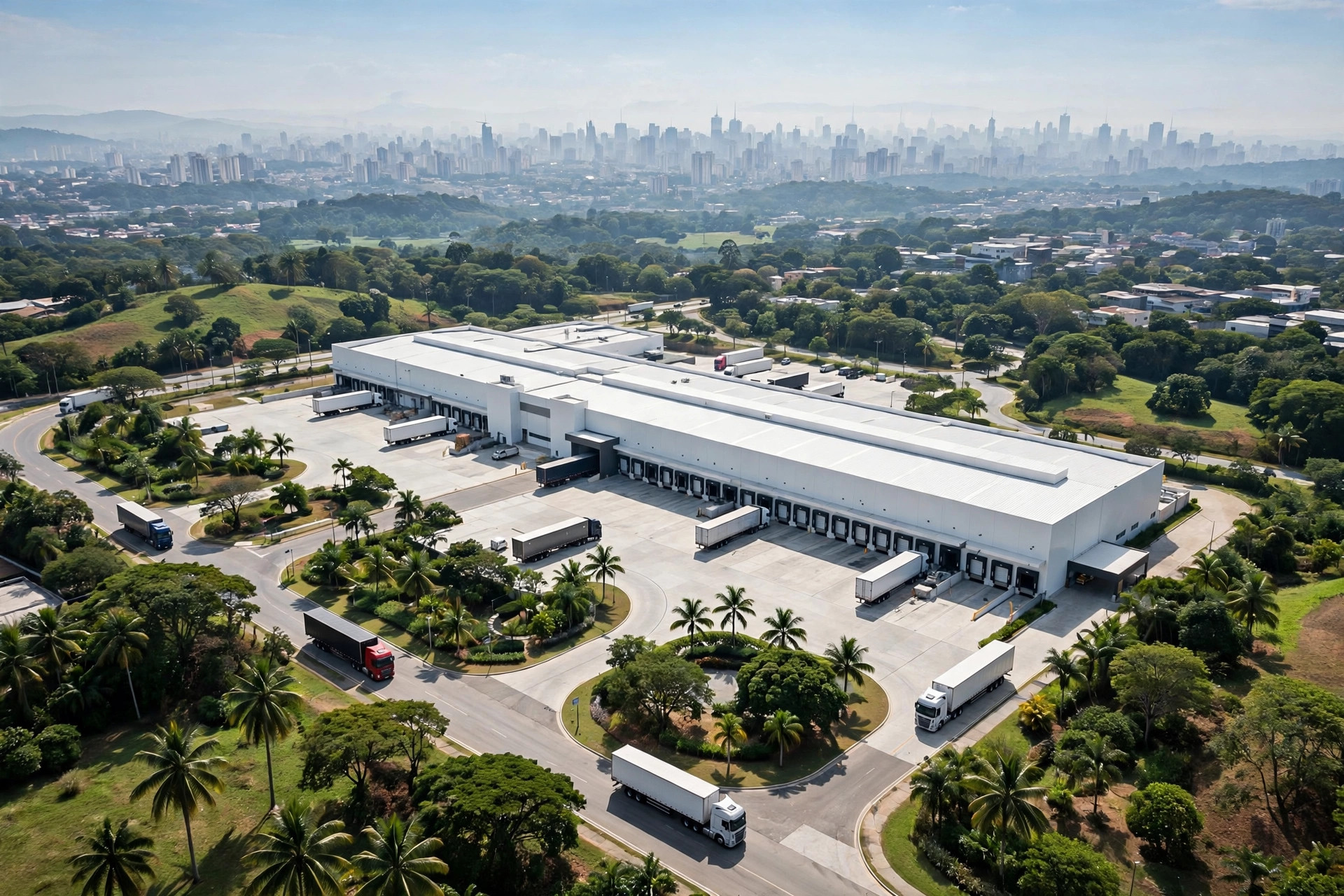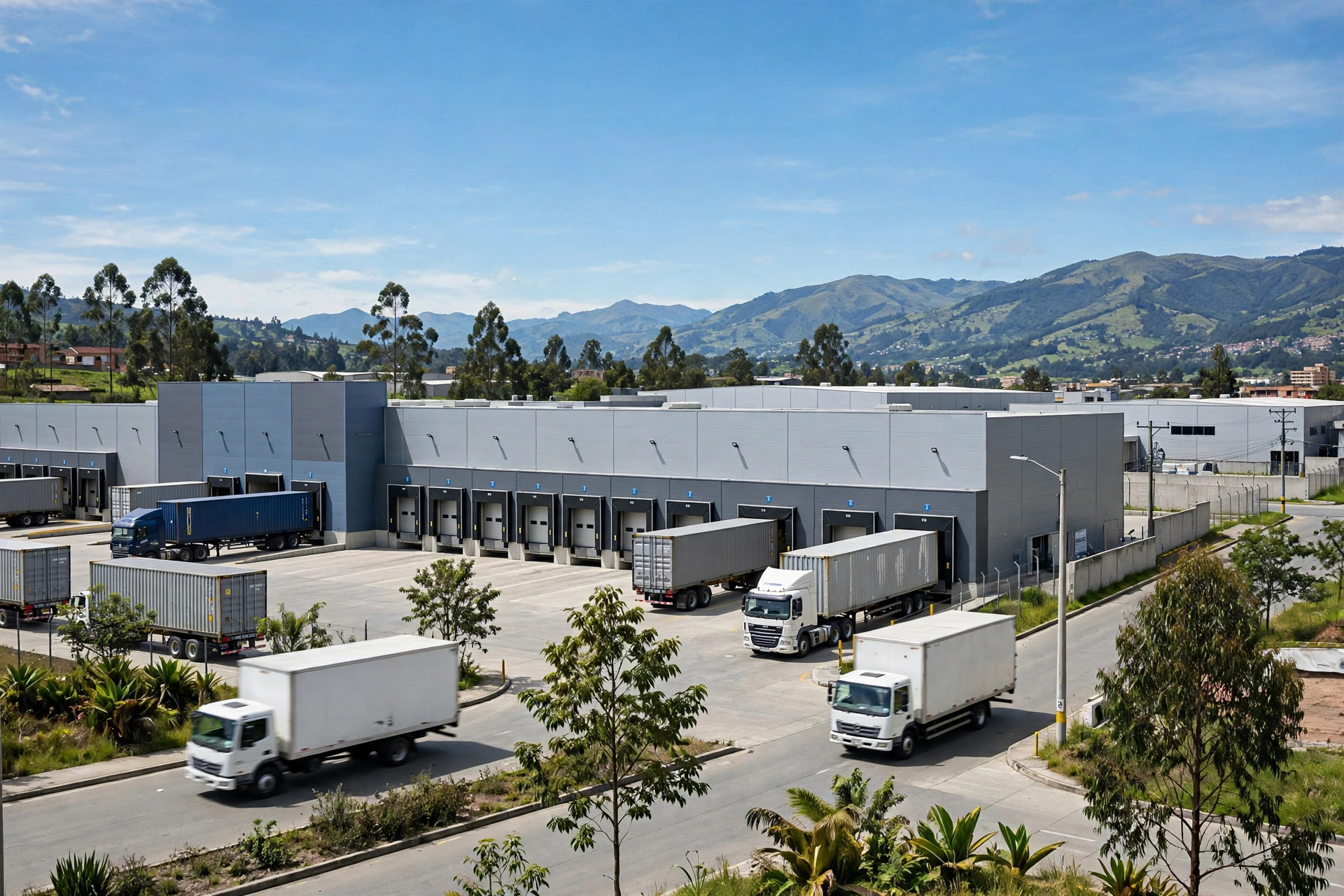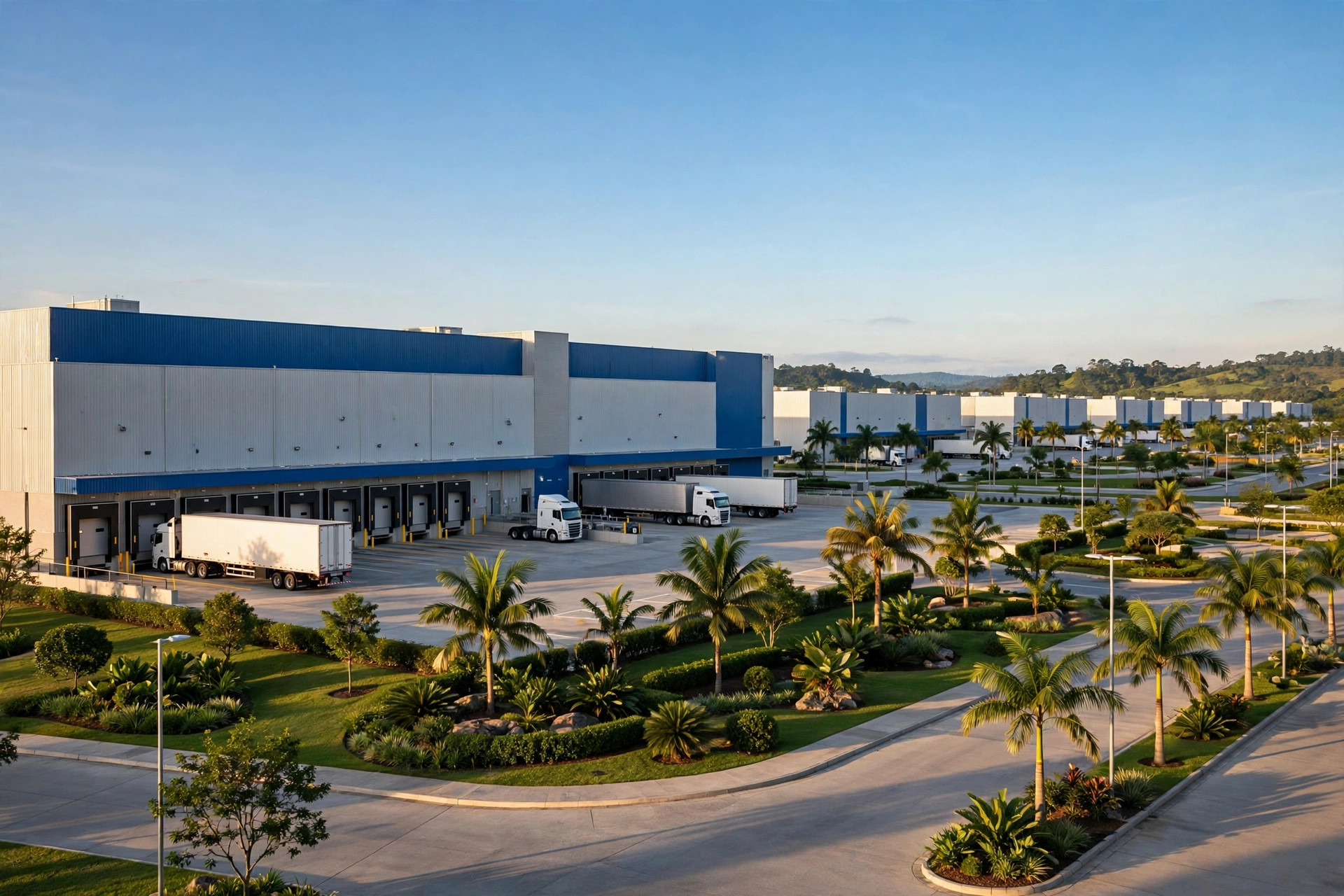
We have a client — a Shenzhen-based 3C accessories seller — who jumped into the Brazil warehouse rental market last November, looking for 8,000 square meters near São Paulo for a local fulfillment warehouse. I said, sure, I know Guarulhos well. A week later he forwarded the broker's quote: a Class-A warehouse in Guarulhos at R$42 per square meter per month. He was stunned. "Susan, that's more than double what I pay in Shenzhen. Are Brazilian landlords robbing people?"
I told him: hold the outrage. The Brazil warehouse rental market in 2026 doesn't work the way you'd expect. Whether the money is worth spending, where to spend it, and how to negotiate the lease — let's work through it line by line.
Brazil's Warehouse Rental Market in 2026: 3.89% Vacancy — Landlords Hold the Cards
Start with the Q2 2026 research. Cushman & Wakefield reports São Paulo state's logistics vacancy down to 3.89%, a historic low, with average asking rent at R$32.37 per sqm per month. Newmark's reading for the same quarter: R$33.70 per sqm per month, an all-time high. So the "R$32–42 per square meter" band for prime Brazilian warehouse space isn't made up — R$32 is the state average (both firms' numbers, side by side), R$42 is what top submarkets like Guarulhos ask (R$42.02).
The submarket split is dramatic: Atibaia at 0.4% vacancy, Barueri at 0.8%, Guarulhos at 1.7% — effectively nothing available. Cajamar (5.1%) and Campinas (4.5%) still offer choices. Embu sits at 14.9%, the highest in the state — a price pocket, but cheap for a reason, as I'll explain.
Rent growth is startling too: Cushman's May 2026 global logistics report flagged São Paulo rents up 36% year-on-year, among the sharpest in the Americas — the region is shifting fast to a landlord-led market. Translation: in 2026, when you lease in São Paulo, the landlord — not you, dear client — holds the strong hand.
On supply: Newmark reports 188,000 sqm delivered in São Paulo in Q2 2026, with roughly 1.4 million sqm under construction. But at 3.89% vacancy, new deliveries are pre-leased practically on arrival. The best space never hits the open market; it circulates inside brokers' and developers' inner circles.
Rio is a different story: 12.2% vacancy, average asking rent R$24.25 per sqm per month (Cushman Q2 2026), broadly stable — but polarized. Pavuna's prime assets ask R$55 per sqm, pricier than Guarulhos; Zona Oeste posts 36.4% vacancy: cheap because nobody wants it.
Headline Rent Is the Tip of the Iceberg: How Brazilian Warehouse Quotes Really Work
Back to my Shenzhen client. He was fixated on the R$42 headline figure. After signing more than a hundred warehouse contracts: the headline is the tip of the iceberg. In a Brazilian warehouse lease, the real game is underwater.
First, the structure is triple-net: the asking rent you see is usually net rent only, with the condominium fee (condomínio) and property tax (IPTU) billed separately. Plenty of clients have taken a broker's quote straight to their boss for budget approval, only to discover another monthly charge at signing — and the newer the park, the bigger that number. Negotiation rule number one: always ask "does this price include condomínio and IPTU?" Get the gross number before you budget.
Second, escalation. Five-year terms are standard — the 3+2 structure (three fixed years plus a two-year renewal option) — with annual adjustments indexed to IGP-M or IPCA. IGP-M is notoriously volatile, with past single-year spikes above 20% (FGV data). Whether your contract says IGP-M or IPCA is real money. My advice: push for IPCA, with an annual cap. A client of mine in Barueri signed a five-year deal indexed to IGP-M to save time; the adjustment hurt enough that he called me just to vent.
Third, free rent and fit-out contributions. At 3.89% vacancy, headline rent barely moves — the gap between asking and transacted rent is typically 3–5%. But a landlord who won't budge on rent has other things to give: 60–90 days of free rent, landlord-funded dock levelers or sprinkler upgrades, expansion options and renewal caps in the contract. Here's the contrarian take: in a landlord's market, the battlefield isn't the rent — it's the clauses.
Fourth, brokerage commission. Brazilian convention: the landlord pays (usually one month's rent); the tenant pays nothing. But the broker earns on closing — he's wired to close the deal, not to squeeze the price for you. In tight submarkets, the good space (think Atibaia at 0.4% vacancy) never gets publicly listed. Pre-lease access means long-term relationships with local brokers. That's the insider truth from the tenant side of the table.

Doing the Location Math in the Brazil Warehouse Rental Market 2026: Guarulhos vs. Campinas vs. Rio
With the market and mechanics covered: where should a Chinese seller or 3PL put a warehouse? Here's a scorecard built on Cushman's Q2 2026 data:
| Submarket | Asking rent (R$/sqm/mo) | Vacancy | Location profile | Best for |
|---|---|---|---|---|
| Guarulhos | 42.02 | 1.7% | Next to GRU international airport, closest to São Paulo | E-commerce, time-sensitive fulfillment |
| Barueri | 36.86 | 0.8% | Western gateway of São Paulo, Class-A parks | Brand regional distribution |
| Cajamar | 36.77 | 5.1% | Logistics hub, strongest 2026 absorption | Large footprints, stable long-term demand |
| Campinas | 22.42 | 4.5% | ~100 km from São Paulo, best value | Cost-sensitive, moderate speed needs |
| Rio Pavuna | 55.00 | 6.5% | Rio's prime logistics cluster | Serving the Rio market locally |
| Rio average | 24.25 | 12.2% | Polarized: prime is pricey, remote is cheap | Enter with caution |
(Source: Cushman & Wakefield Brazil Industrial/Logistics Market Report, Q2 2026)
How did my Shenzhen client decide? 8,000 sqm: Guarulhos at R$42 = R$336,000 per month; Campinas at R$22.42 = roughly R$179,000. That's about R$157,000 less per month — nearly R$1.88 million a year saved. He sells 3C accessories at modest price points with no next-day promise, so Campinas won.
But Campinas is ~100 km from São Paulo, so an extra daily linehaul — fuel, driver hours, delivery-time penalty — goes into total cost. Second contrarian take: for high-ticket sellers promising same-day delivery in São Paulo, the priciest Guarulhos may be the cheapest total-cost option. Location math is always about total cost, never the headline rate.
And Rio? Unless you mainly serve the Rio local market, don't chase Rio for "cheap." R$24.25 looks 30% cheaper than São Paulo, but Brazil's consumption gravity sits in the Southeast — you'll truck to São Paulo daily and linehaul will eat the rent savings. Rio's genuinely cheap space clusters in remote Zona Oeste (36.4% vacancy); prime Pavuna asks R$55, more than São Paulo's priciest submarket. In Brazil's warehouse rental market, "cheap" and "good value" are two different things.
Then Embu — 14.9% vacancy, the state's highest, a genuine price pocket for tenants who aren't in a hurry: flexible landlords, 90+ days of free rent, fit-out subsidies on the table. But high vacancy means the market voted with its feet — remote location or dated parks. Bottom-fishing is fine; just don't buy halfway down the dip.
One tax note: Brazil's new CBS/IBS dual VAT enters transition in 2026 — spell out tax pass-through in the lease or new taxes quietly become your cost. The tax logic behind site selection got its own article on October 17; this one covers rental market conditions and lease terms only.
Negotiation Playbook: Get These Right Before You Sign
Brazilian warehouse negotiations come down to four things:
First, always negotiate the gross number. Make the landlord break out net rent, condomínio, and IPTU separately. Most disputes start with "I thought it was included."
Second, push for IPCA indexation with a cap. IGP-M is too volatile; a contract without a cap is a blank check.
Third, watch the 1.4 million sqm under construction. Pre-leasing before delivery beats negotiating after — cheaper, more choice. Stay close to two or three local brokers; the good space is placed internally.
Fourth, negotiate term and exit together. Under a 3+2 structure, the renewal option, early-termination penalties, and subletting consent decide whether you're flexible or trapped three years out. In year one abroad, the exit matters more than the rent.
Next time you negotiate, ask these three questions:
- "Does this price include condomínio and IPTU? Which index drives the annual adjustment — and is there a cap?"
- "How many days of free rent? Can the expansion option and the renewal cap go into the contract?"
- "How are early-termination penalties calculated? Does subletting require the landlord's written consent?"
Ask those three, and the landlord will know this isn't a rookie. People who know the game don't just save on rent in Brazil.
By Susan, 3PL Sales Director