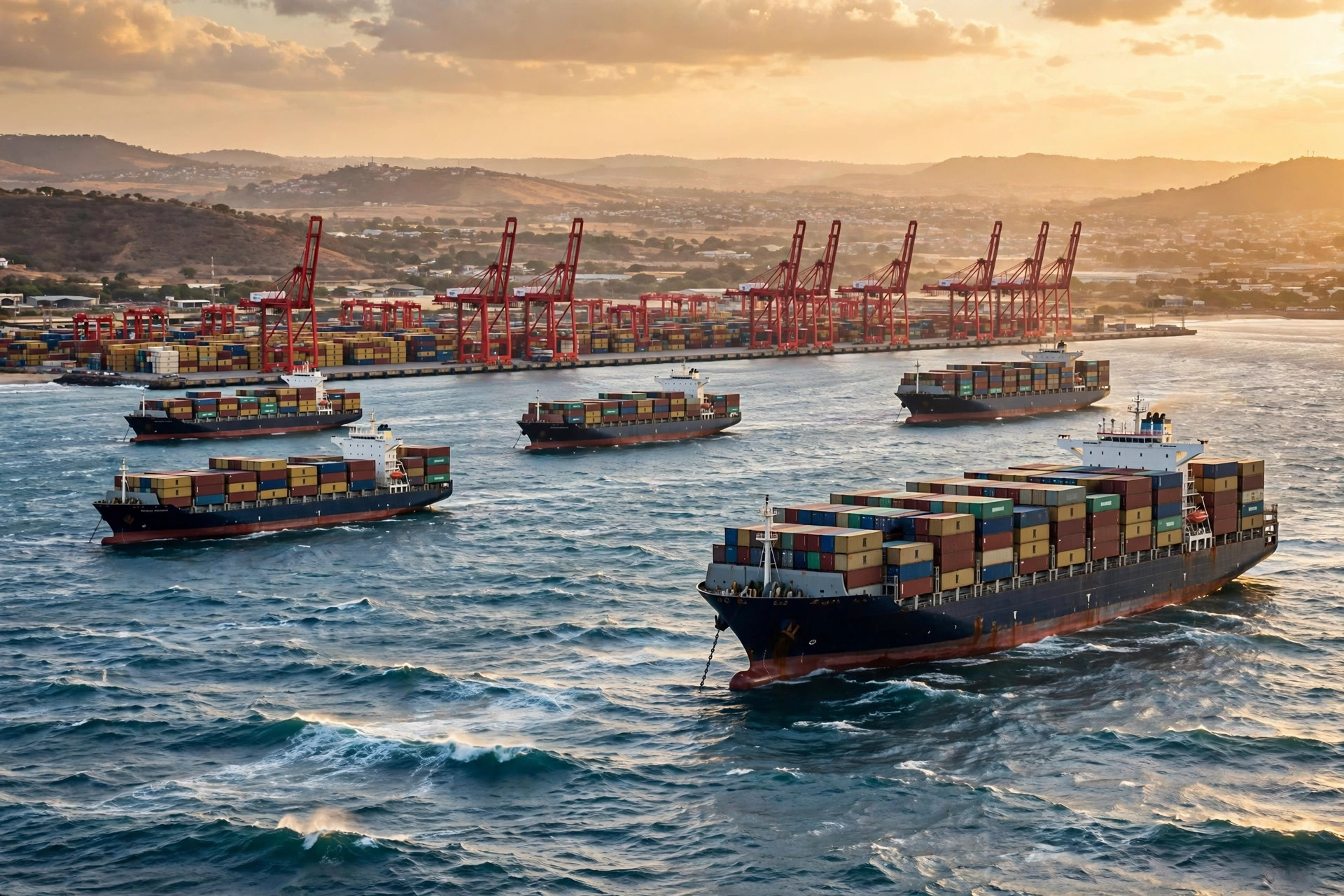
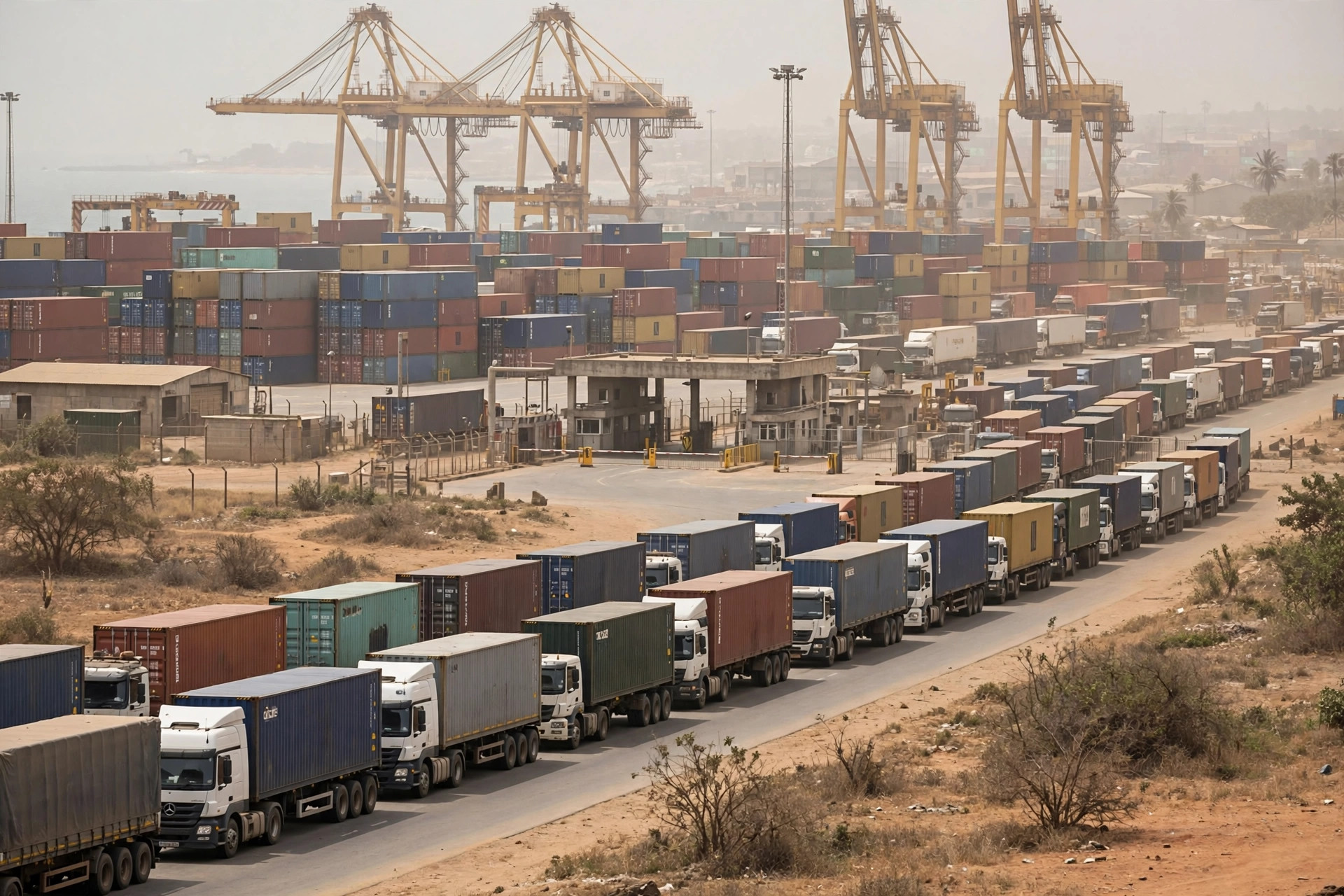
Fifteen years behind the wheel teaches you one thing: distance you can plan for, but cargo stuck at one node — that's what kills you. Last week I got a call from an old buddy who runs the South Africa lane, and he was venting about Durban port congestion: eleven ships sitting at anchor, waiting ten-plus days on average, while his trucks sat idle for three days outside the port gate, drivers living out of their cabs, burning fuel and wages, with cargo owners calling every hour asking where their goods were.
"Shifu," he said, "the cargo's floating at sea, my trucks are parked at the gate — money burning at both ends. Who do I even complain to?"
Sounded familiar. So let me break it down: how bad the Durban mess really is, what it costs on the warehouse side, and how to set your buffer.
The numbers: how bad is Durban port congestion, really
SAAFF and BUSA put out a weekly Cargo Movement Update. The latest one (Update No.303, data through 15 October) is sobering:
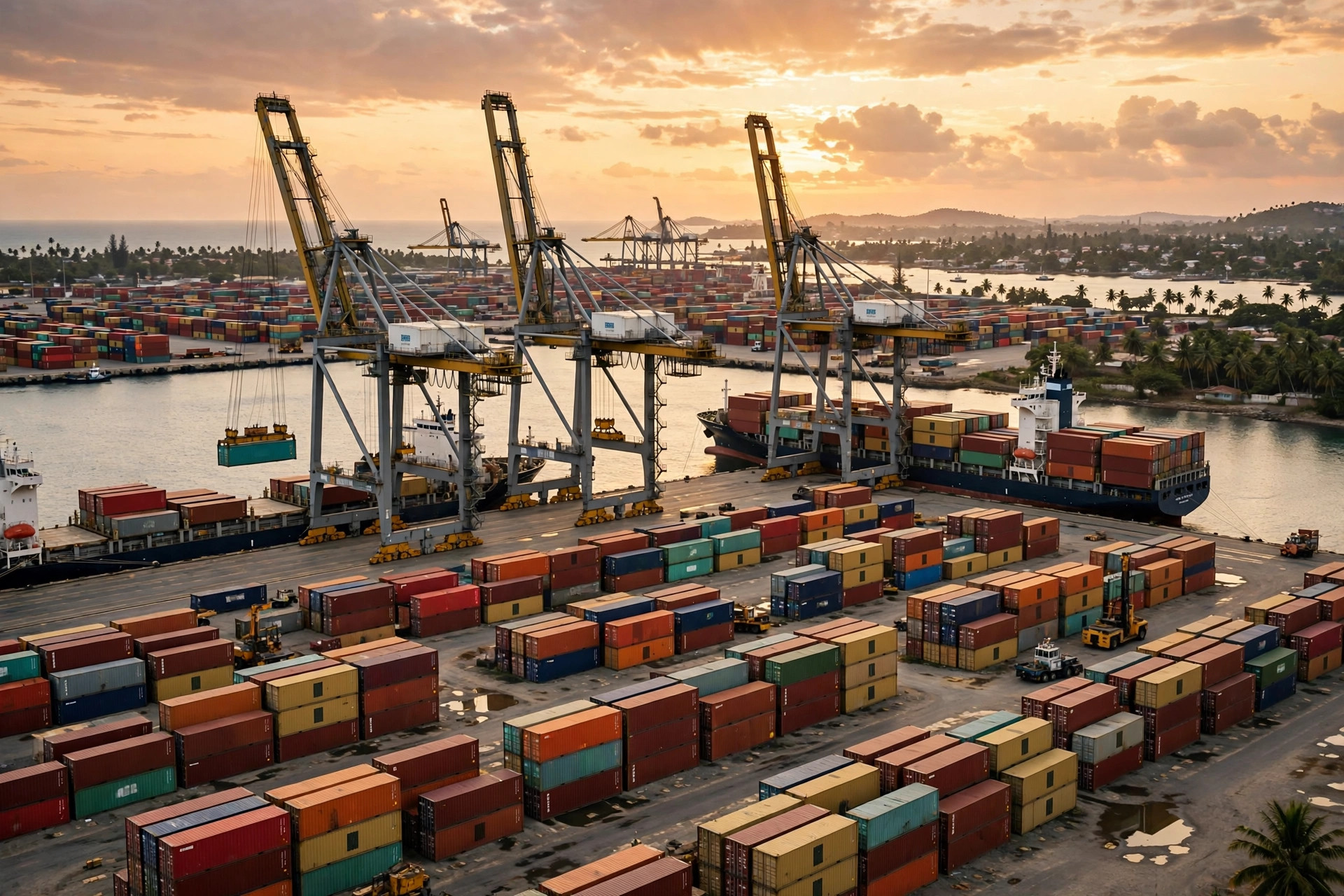
- 11 vessels at anchor off the Durban Gateway Terminal (DGT), averaging about 251 hours at anchorage — over ten days — plus another 127 hours of waiting after berthing;
- roughly 30,352 container moves still stuck on those ships, about 11.3 days of quayside work;
- some 10,000 containers had to be diverted through the Pier 1 and Point terminals to relieve the pressure.
Transport Minister Barbara Creecy went to see the terminal herself in early October and came back with one line: average waiting time is around 8.3 days; the target is 24 hours. When the minister shows up in person, you know it's serious — she's now demanding a detailed backlog-clearing plan from the operator.
Here's the thing: this isn't bad weather or bad luck. It's a system change gone wrong. At the start of the year, the Philippines' ICTSI took over DGT (the old Pier 2) in a 25-year joint venture with Transnet. In mid-August they cut over to the Navis N4 terminal operating system — and the terminal turned into a rookie overnight. They were already short on straddle carriers (need about 70, running with roughly half), and then the new software threw everything into chaos. Ships just sat at anchor watching the sea.
The ripple effects are already here: some vessels are skipping Durban entirely — 11,550 containers were rerouted in September — and Cape Town's port is feeling the knock-on effects on berths and equipment. On the landside it's worse: truck bookings take 1–2 days to secure, and even with a booking, trucks wait 4–22 hours at the gate. Rail is trying to help — trains between DGT and the Bayhead back-of-port yard are going from 2–3 a day to about five — but that's a bandage on a broken leg.
Ten days at anchor: the three bills on the warehouse side
Cargo owners always ask me: a ship ten days late — what does it actually cost? Three separate bills, each hurting somewhere different.
Bill one: the port's bill — burning money by the day. Free time at the terminal is only a few days. Every day the ship floats at anchor, every extra hour the box sits in the yard, is money. Demurrage and storage pile up daily — check the latest published tariffs with your line and terminal, but the logic is simple: the ship doesn't move, the meter keeps running.
Bill two: the trucking bill — the truck is idle, the driver isn't. A truck parked at the port gate for days still costs driver wages, depreciation, and fuel (idling burns diesel too). Hauliers won't swallow that; it lands in your freight rate. Some South African hauliers are already adding port-congestion surcharges — don't be surprised when the invoice arrives. Their costs are real.
Bill three: the worst one — stockout. The first two bills you can calculate. This one you can't, and it hurts the most. Your Johannesburg warehouse is empty, the next shipment is floating ten days out at sea. One day of a stopped production line or empty retail shelves costs more than a month of extra warehouse rent. In fifteen years I've watched too many bosses pinch pennies on freight and then get destroyed by a stockout.
Add the three bills together and the conclusion is simple: a ten-day port delay means carrying about 20 extra days of stock. Cargo owners are already being told to plan for an extra 18–21 days across their supply chains; add 3–5 days for customs and the Durban–Johannesburg landside swing. Say your Joburg warehouse ships 100 pallets a day — 20 days is 2,000 pallets of safety stock. That rent is a visible bill; a stockout is an invisible one. Between the two, the rent is cheaper.
How to set the warehouse buffer: four practical tips
That's the Durban port congestion playbook — enough theory. Here's what you can actually do.
First, don't stack your buffer next to the Durban port. Sounds backwards — closer to the port should be safer, right? Wrong. Port-area warehouses right now have totally unpredictable pickup times and premium rents. Put the safety stock at the consumption end instead — Johannesburg/Gauteng, close to your customers. Once the port unclogs, it's a straight line haul up. Use Durban warehouses only as fast cross-dock transit, never for stockpiling. Remember: the closer to the choke point, the less your buffer protects you.
Second, negotiate free time with the shipping line — in writing. In times like these, ask for extra free storage and free container-return days; don't be shy. Verbal promises don't count — get it in the contract. The lines know they're in the wrong on this one, which makes now the best time to ask.
Third, get detention terms with your haulier — and keep a backup haulier. Trucks sitting days at the port gate: your contract needs clear detention rates and trigger points, or you'll argue till sunrise. And never bet everything on one haulier — keep one or two backups. In peak season plus congestion, hauliers pick their jobs; without a backup you're just paying surge rates.
Fourth, read the SAAFF/BUSA weekly update yourself. Don't wait for your forwarder to tell you. Anchorage vessel counts, average waiting hours — it's all published weekly. Learn to read it and do your own math. Update No.303 is public; your forwarder reads it, and so can you. The week anchorage waiting starts dropping from 251 hours is your signal to start trimming the buffer back.
I'll leave you with an old driver's saying: slow you can plan around; stopped, you can't. In Chinese we say 行船走马三分险 — on the road, a third is luck and the rest is the margin you leave yourself. The whole South African supply chain is paying tuition for this Durban lesson — but tuition paid should mean a lesson learned. The port will unclog, congestion will pass, and when it does, don't throw away that 20-day buffer math. Keep it. You'll need it again.
By Shifu Zhao, Trucking Veteran (15 yrs)