Anyone planning ho chi minh city warehouse logistics vietnam operations needs to start with the new map, because the old one is wrong. On 1 July 2025, Ho Chi Minh City absorbed Binh Duong and Ba Ria–Vung Tau provinces and became Vietnam's first multi-centre megacity. The map changed, so the warehouse playbook has to change with it. Renting by the old rules now means renting in the wrong place.
Here is the blunt version: plenty of sellers are still hunting for space with a three-year-old map in their hands. Binh Duong's factories, Vung Tau's deep-water ports and the old city's delivery points all sit under one Ho Chi Minh City now. If you still split the world into "city warehouse versus suburban warehouse" when you negotiate rent and plan truck routes, you are driving a new road with an old satnav.
Ho Chi Minh City Warehouse Map: Three Provinces in One Big Board
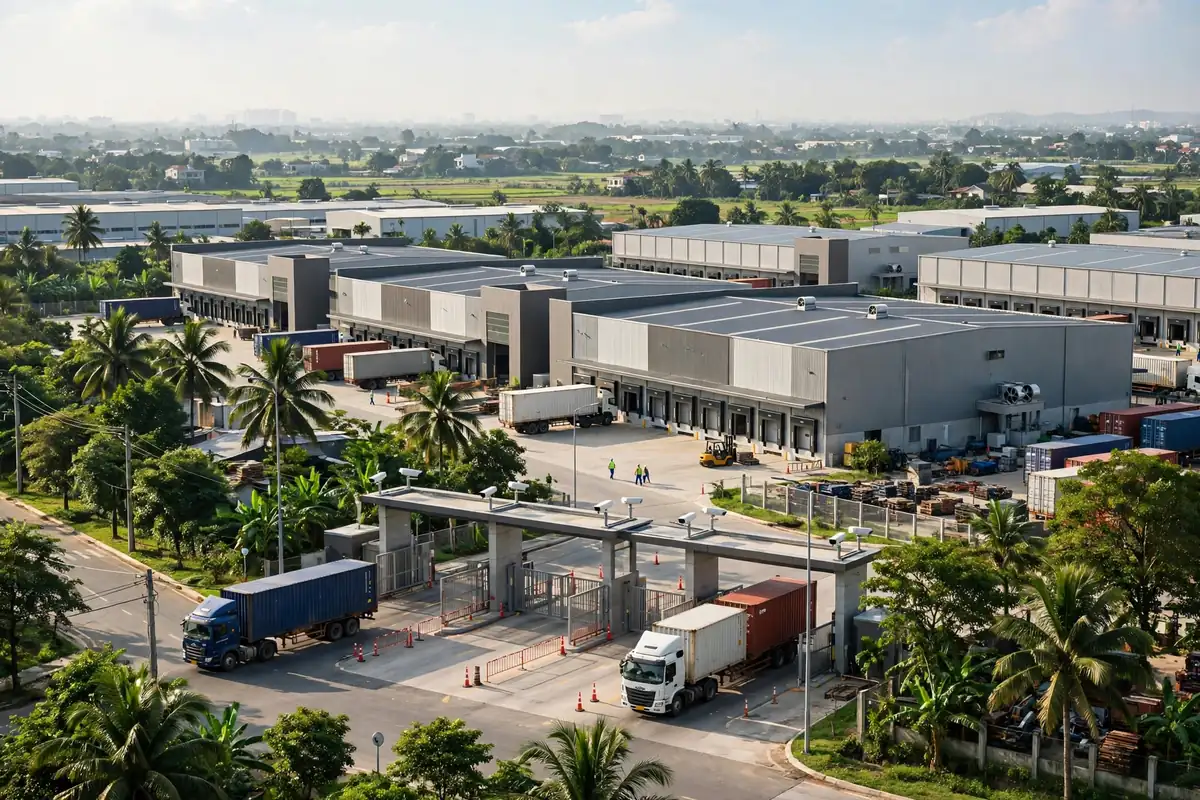
After the merger, Ho Chi Minh City counts 66 industrial parks and export processing zones, covering more than 27,000 hectares. That is the new baseline for ho chi minh city warehouse logistics vietnam: industrial parks are no longer scattered plots of land, they form continuous industrial belts, and the port list no longer stops at the city docks, because the Ba Ria–Vung Tau deep-water port cluster came along with the merger. One city holding industrial parks, deep-water ports and a consumer market of millions is a rare combination in Southeast Asia.
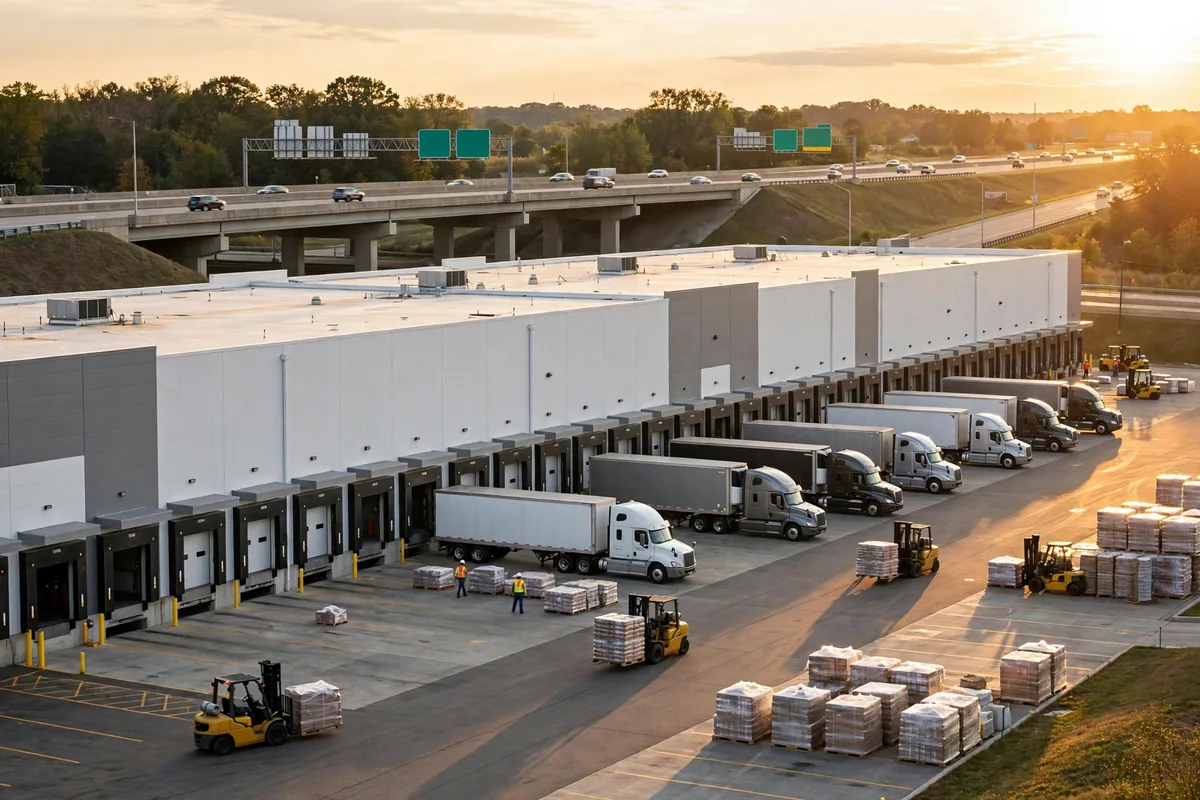
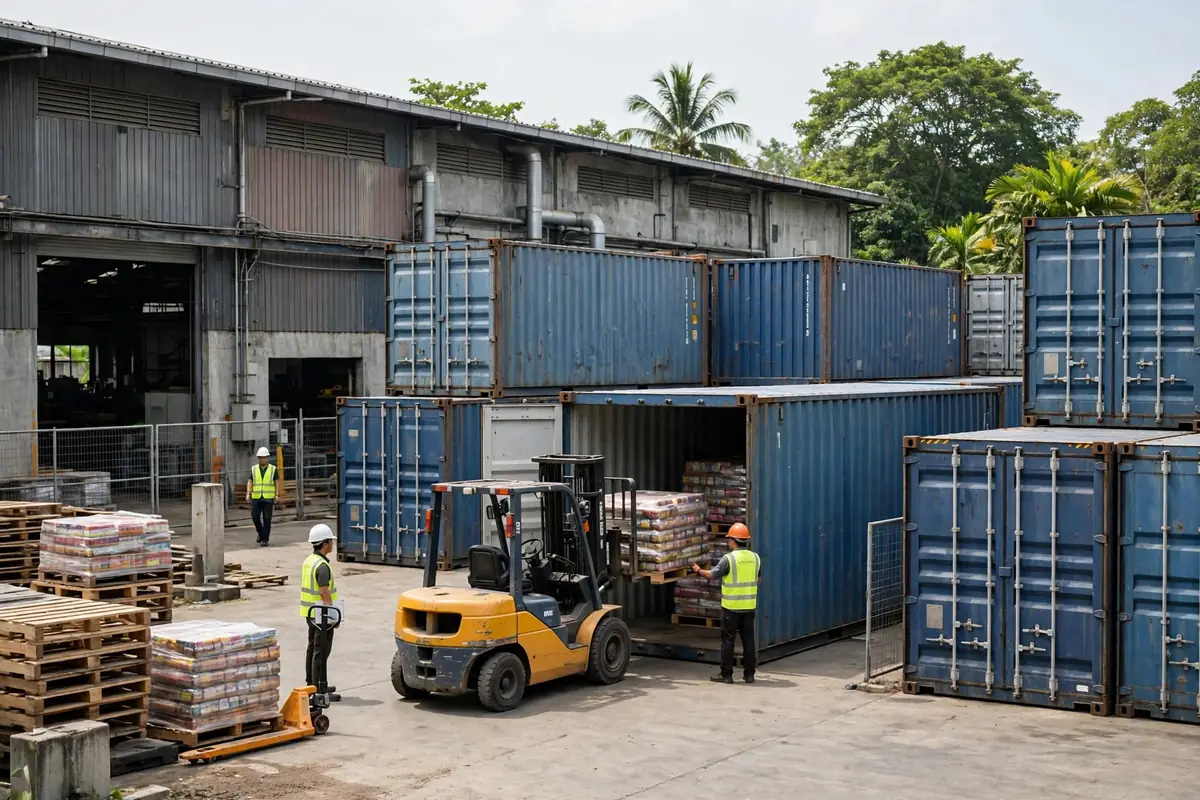
My own rule is to split the goods into two buckets before talking about location. Bucket one is sea freight and full containers, where the port decides everything, because drayage cost and sailing schedules are the lifeline. Bucket two is local delivery and small e-commerce parcels, where you want to sit close to people and industrial parks, because last-mile speed decides repeat orders. Stuff both buckets into one warehouse and it looks efficient. In practice the two flows fight over the same dock doors, and when peak season hits, the whole place jams up. I have watched sellers do exactly this to save one rent payment, then lose a week of shipments to dock congestion.
The Rent Math: 5.3 Dollars Is a Dividing Line, Not a Bargain
Let's talk numbers. Savills data from August 2025 puts Grade A warehouse rent in Hanoi at about 5.5 US dollars per square metre per month in the first half of 2025, and Ho Chi Minh City at about 5.3 dollars. Ho Chi Minh City looks 0.2 dollars cheaper than Hanoi. That 0.2 dollars tells you nothing on its own. Rent per square metre was never the whole cost, and anyone who treats it as the only number ends up paying the difference somewhere else.
The real calculation is a different one. Ready-built factory rent runs about 4–7 dollars per square metre per month, and that range hides a lot: location, clear height, fire protection, dock equipment, all of it. Worked example: take 1,000 square metres. At 5.3 dollars the monthly rent is 5,300 dollars. At 7 dollars it is 7,000 dollars, a gap of 1,700 dollars a month. A cheap warehouse with low clear height cannot take high-bay racking, and a warehouse short on dock doors queues trucks in peak season. The money you saved on rent comes straight back as lost efficiency. If you only ask "how much per square metre" and never ask "what does that price include," the extra cost is on you.
There is also a long-term bill to weigh. Industrial land in Ho Chi Minh City tops out at about 300 dollars per square metre for the whole lease term, with the southern average at about 191 dollars. Leasing land and building your own warehouse is a completely different road from renting ready-built space: the first locks in decades of cost, the second buys flexibility. My call is simple. Until your volume is stable, do not build. Rent ready-built space, run it for a year, get real peak-season and low-season data, and then decide about the long term. Too many sellers want to build from day one because "own land feels safe," and then a volume swing turns fixed cost into a profit eater.
| Option | Upfront cost | Flexibility | Best for |
|---|---|---|---|
| Rent ready-built factory | Low, monthly rent | High, move when the lease ends | Sellers testing Vietnam, volume not yet stable |
| Lease land and build | High, big one-off spend | Low, location and cost locked in for decades | Big sellers with stable volume, here for the long haul |
| Short lease plus split stock | Medium, spread across sites | Highest, shift stock with the seasons | Categories with big peak-season swings |
Ho Chi Minh City Warehouse Location: Three Lines to Check
The port line starts with the Cai Mep–Thi Vai port cluster. It is one of Vietnam's deepest and most modern port clusters, and its Gemalink terminal covers 72 hectares with annual handling capacity of 2.4 million TEU. Illustrative scenario: in October 2025, a shipment leaves Gemalink on a US-bound sailing. If the warehouse sits within a two-hour drive of the port, a truck can do the round trip the same day. Park the stock further out and the same shipment loses a day on the road, with the sailing schedule left to luck. Catching a sailing once is luck. Missing one costs real money.
The second line is the river. The Tan Phuoc area has 13 seaports and 16 inland ports, a number most people skim past. It means your cargo does not have to leave through a seaport at all: inland barges cover plenty of routes, and when the seaports jam up in peak season, the river is your backup channel. Here is the counterintuitive part: the warehouse closest to the deep-water port is not always the cheapest. Land near the port costs more, and peak-hour truck traffic around the port can be brutal. Sometimes driving a few dozen extra kilometres and dodging the congestion costs less overall. Price the whole trip, not the straight-line distance.
The third line is supply. Modern warehouse space in the south stood at about 2.5 million square metres in 2020 and is expected to reach 7.3 million square metres by the second quarter of 2025. In under five years, supply nearly tripled. My read on this: this is not a "not enough warehouse" market, it is a "more and more warehouse, tenants with more and more choice" market. Do not be shy when you negotiate rent. Walk in with the supply numbers and negotiate from data, which beats haggling from thin air. Landlords know new warehouses keep coming onto the market, and if the terms do not work, the next building is right there.
Pitfalls: The Ones I Stepped In So You Don't Have To
First, never judge by rent per square metre alone. Inside that 4–7 dollar range, a cheap warehouse can hide weak fire protection, low clear height and too few dock doors, and the retrofit bill ends up higher than the expensive warehouse. Check the hardware list before the price list.
Second, do not treat the port as the only standard. Gemalink is big, but if your cargo does not sail that lane, being near it buys you nothing. Look at which lane your goods actually travel, then pick the location. Get the order right.
Third, treat policy numbers as moving targets and check the official source before you sign. Tax, customs clearance and land policy all change, so confirm against the latest official policy before signing anything, and do not trust an agent's "it has always been this price." A verbal promise that never makes it into the contract does not exist.
Fourth, the merged administration is still bedding in. Three provinces became one city, so ask upfront which department handles your licences and park paperwork. Do not discover you need to run between two offices after your goods have already arrived.
The board for ho chi minh city warehouse logistics vietnam has been redrawn, and the numbers are all on the table: the rents, the ports, the supply. Split your goods into buckets, pin the location against the port, the river and the industrial parks, and negotiate with data in hand. This one I tested myself, and it works. It beats renting blind, anyway.
By Ah K, E-commerce Seller (5 yrs)