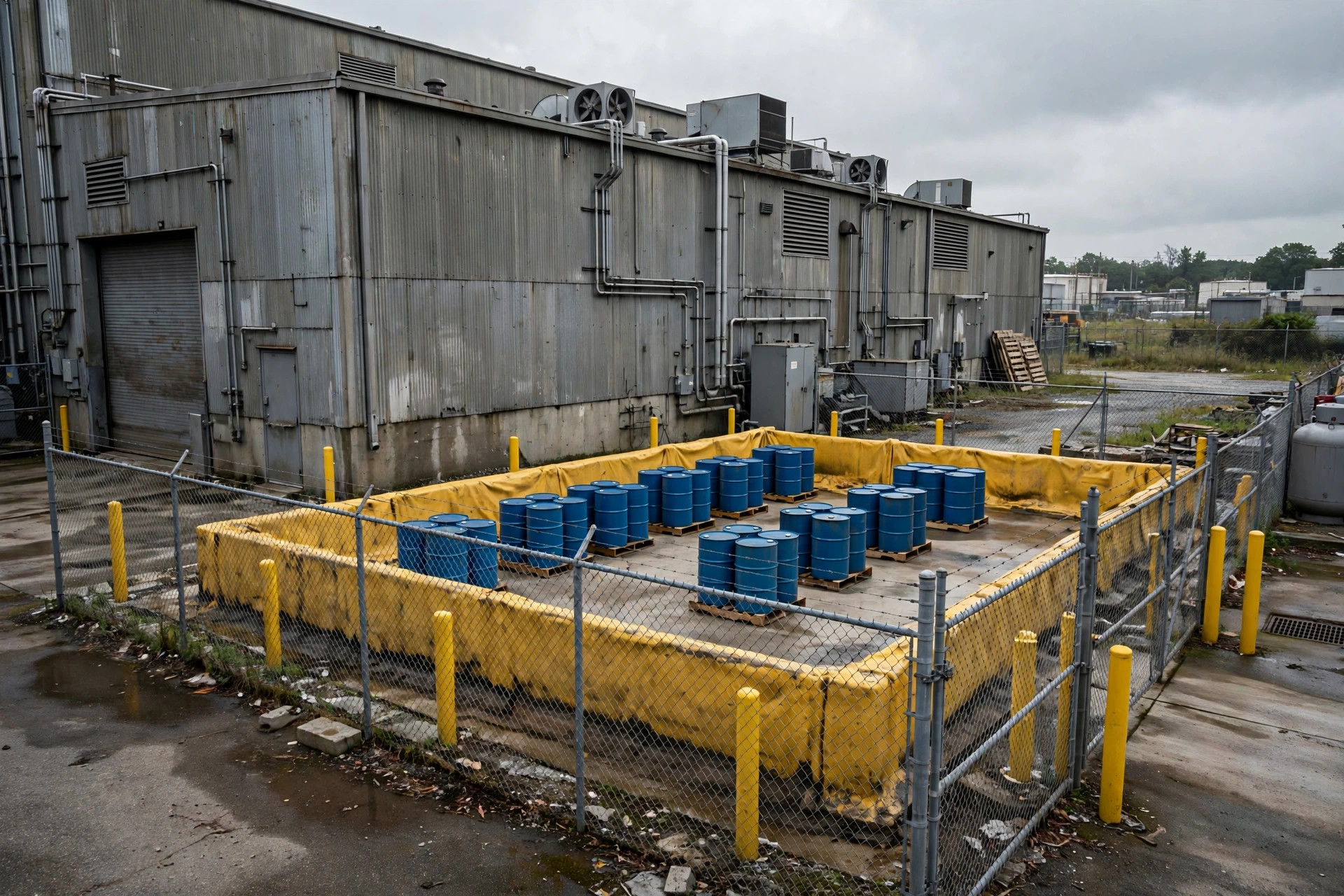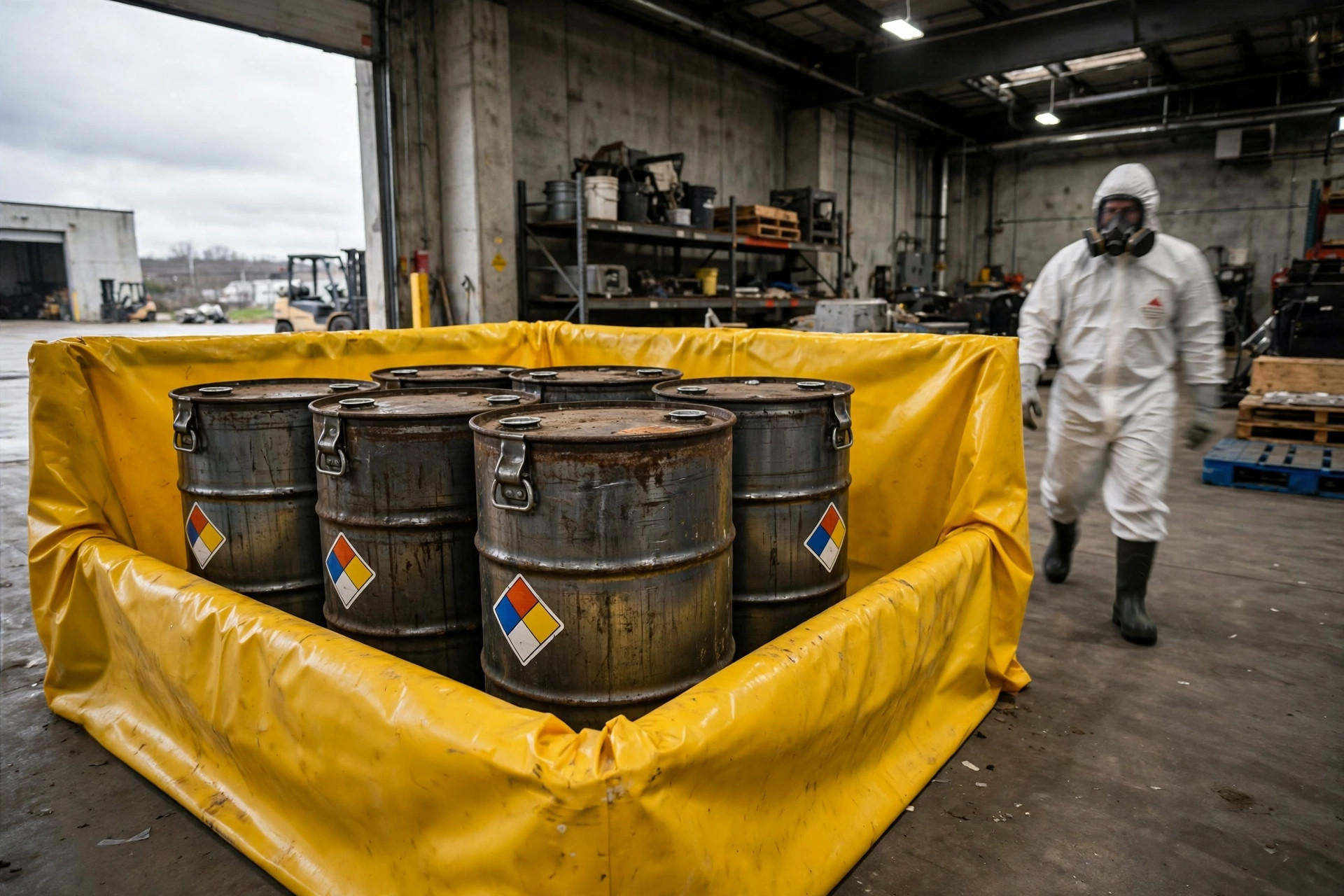
2021, Fontana. I was walking a 400,000-square-foot distribution center with a prospective tenant — standard pre-lease walkthrough: dock doors, racking, sprinklers. Then we opened the back cage, and there they were. Fourteen 55-gallon drums, labels bleached pale by years of skylight sun, stacked two high against the back wall. The previous tenant had moved out eight months earlier.
"Nobody knows what's in them," the property manager said. "Probably just old cleaning stuff."
That sentence — nobody knows what's in them — is the most expensive sentence in warehousing. Unidentified chemical waste sitting in your building is your problem now, whether you put it there or not.
You signed for it. You own it. Forever.
The Resource Conservation and Recovery Act — RCRA, on the books since 1976 — runs on a principle called cradle-to-grave liability. Whoever generates hazardous waste owns responsibility for it from the moment it's created until its final destruction. Not until it leaves your dock. Until it's destroyed.
Most warehouse people hear this wrong the first time. You hire a licensed hauler. You ship to a permitted facility. Ten years later that facility leaks solvents into groundwater, and the EPA traces the paper trail back up the chain. The first knock on the door is yours, because your signature is on the manifest. The liability traveled with the drum.
For 3PLs there's a nasty wrinkle: the goods belong to your client, but the waste sits in your building. Legally the generator is usually the client — it's their product that expired. But EPA inspectors don't sort out your contract language before they start writing violations. Get it in writing before the first pallet arrives: hazardous waste generated from a client's goods is the client's responsibility and the client's bill, and the 3PL provides compliant temporary storage, nothing more. I watched a 3PL eat a five-figure disposal bill because the contract was silent and the client had since dissolved. The drums of waste paint thinner just sat there, rusting, getting more expensive every month they stayed.
Here's the trade-off nobody wants to say out loud: compliant disposal is brutally expensive. Running one 55-gallon drum of spent solvent through a fully licensed chain — pickup, transport, incineration — routinely costs multiples of what the fresh solvent cost new. The other side of the ledger: RCRA penalties stack per day, per violation, and EPA revises the figures on a regular cycle, so check the current schedule on EPA's website rather than trusting any number printed in an article — including this one. Knowing violations can go criminal. Whatever the unlicensed guy with a pickup truck quoted you, it rounds to zero against that.
The manifest is your alibi
Every hazardous waste shipment in the United States travels with a Uniform Hazardous Waste Manifest. Since June 30, 2018, EPA's e-Manifest system has been the standard channel — the paper era is effectively over, and EPA charges a per-manifest system fee.
What goes on it: your EPA ID number as the generator, the waste codes (D001 for ignitable waste, for example), quantities and container types, the transporter's EPA ID, and the receiving facility's EPA ID. That receiver must be a permitted TSDF — a Treatment, Storage, and Disposal Facility. Verify the permit yourself in RCRAInfo. Never take a sales rep's word for it.
Two deadlines most generators miss: if the signed copy doesn't come back from the TSDF within 35 days, you are required to chase it down. At 45 days with nothing in hand, you must file an exception report with the EPA. These are not suggestions. They are in the regulations, and inspectors ask about them.
Keep every manifest for at least three years. I have seen inspections go sideways because manifests were scattered across three people's desks and two departed employees' inboxes. The inspector does not care about your org chart. If you cannot produce it, it does not exist.
The 90-day clock starts the day you write the date
Generators come in three sizes: large quantity generators (1,000 kg or more of hazardous waste per month), small quantity generators (100 to 1,000 kg), and very small quantity generators (under 100 kg). A large quantity generator may hold waste on-site for up to 90 days without a storage permit. A small quantity generator gets 180 days, stretched to 270 if the disposal facility is more than 200 miles away.
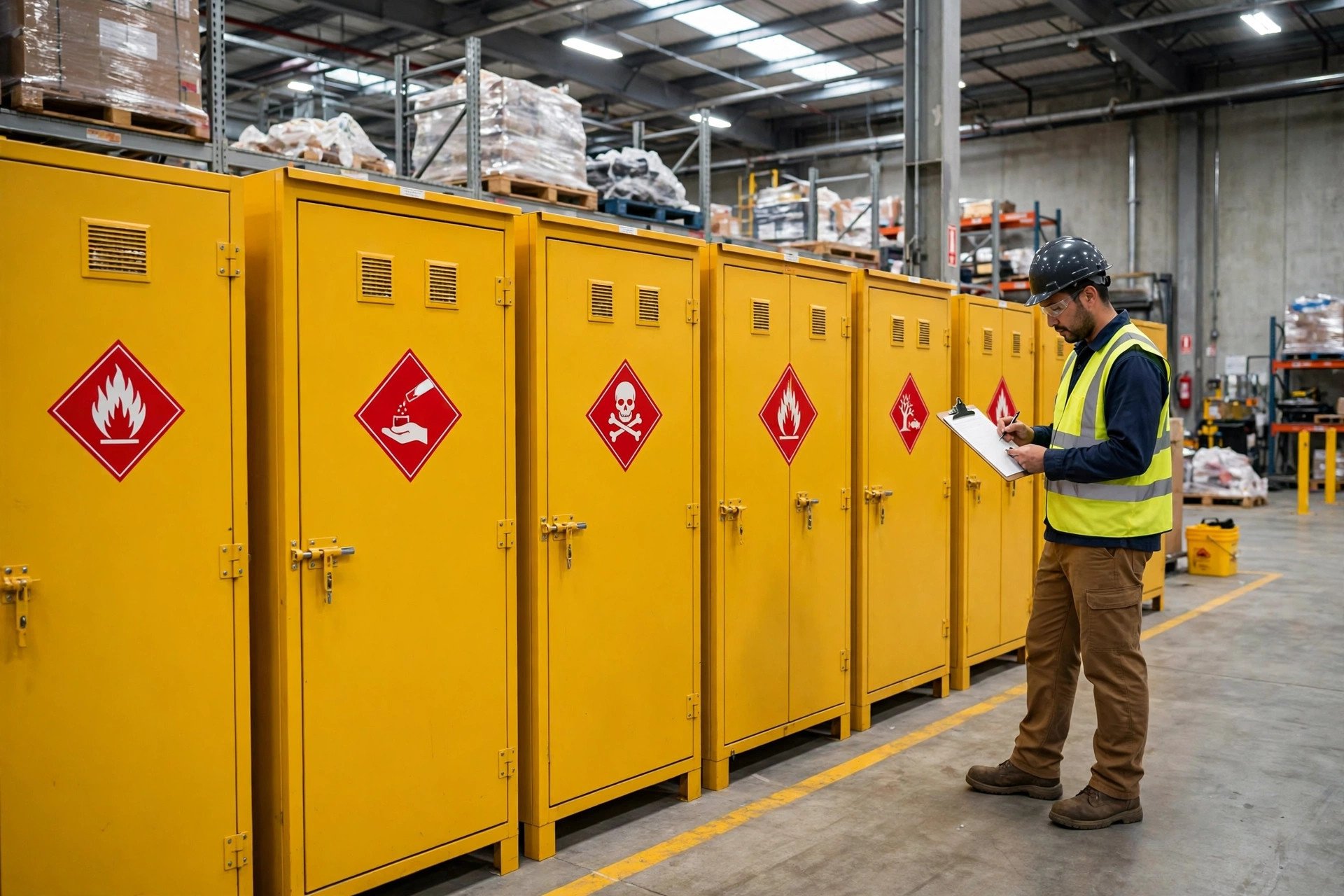
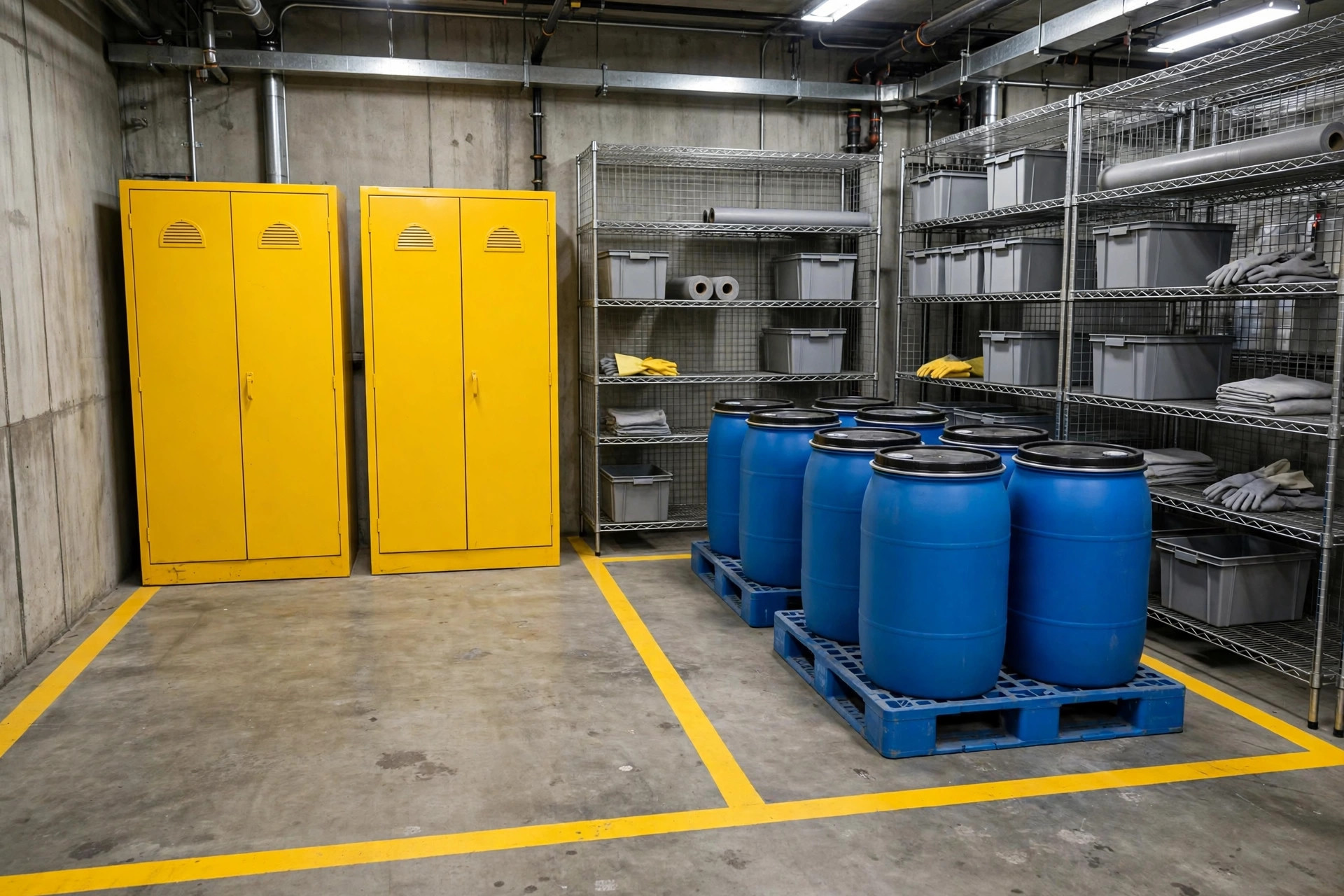
The clock starts the day you write the accumulation start date on the container. Every container gets a HAZARDOUS WASTE label, and since the 2016 generator improvements rule, the label must also state the waste's hazard characteristics — ignitable, corrosive, reactive, toxic. In my experience, most warehouses get the label up and skip the hazard line. Inspectors notice.
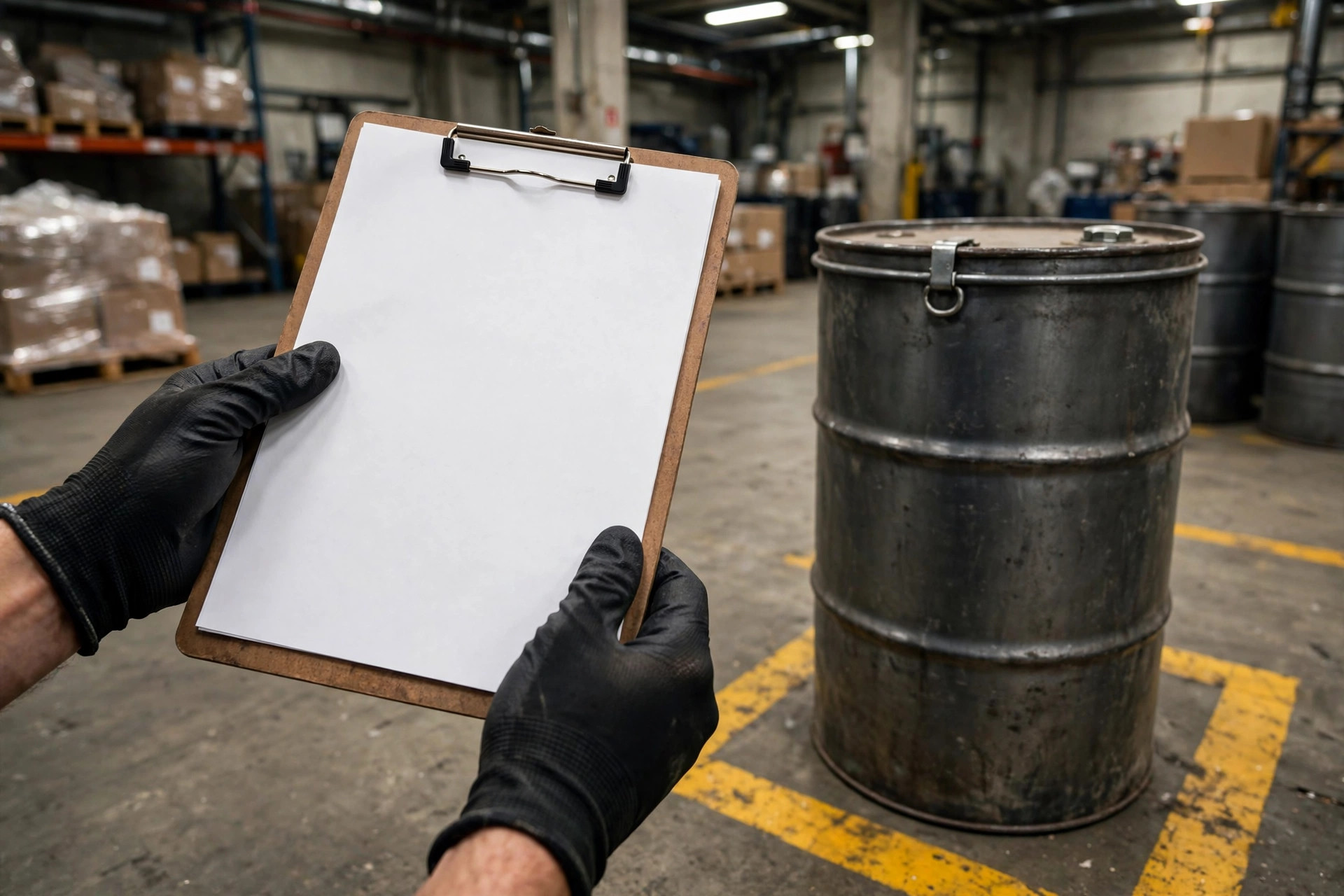
Large quantity generators also owe the accumulation area a weekly inspection: walk it, check every container for leaks and rust-through, write it in the log. That logbook is the first thing an inspector asks for. Unbroken dates in normal handwriting say you are actually managing the area. A three-month gap says you are performing compliance theater.
The greatest-hits list of violations, drawn from what I have actually seen: no accumulation start date on the label. Waste sitting past day 90. A cut-rate hauler with no credentials. Lost manifests. Expired aerosol cans and dead batteries tossed in the regular dumpster. I have seen every one of these more than once, and none of them are cheap.
Before the truck rolls
When it is time to move a batch of expired chemicals out, work this list in order. Get two or three quotes while you are at it — TSDF pricing varies wildly, and the cheapest compliant option is usually far cheaper than the most expensive one.
- Confirm the waste codes. Know exactly what classification you are shipping.
- Confirm your EPA ID is current. Moved warehouses or changed the company name? Check RCRAInfo first.
- Verify the hauler and the TSDF hold valid credentials, and the TSDF's RCRA permit is active.
- Containers intact and leak-free, labeled HAZARDOUS WASTE, start date and hazard characteristics marked.
- Manifest complete, signed by both parties, submitted through e-Manifest.
- Ask the TSDF for a certificate of destruction, and keep it with the manifest.
- Calendar reminder set for the 35-day receipt chase.
- Filed copies archived for at least three years.
Closing question, and I mean it literally: who in your company owns the EPA ID number? If nobody can answer in ten seconds, that — not the drums in the corner — is your first problem. Fix that this week, and the drums get a lot less scary.