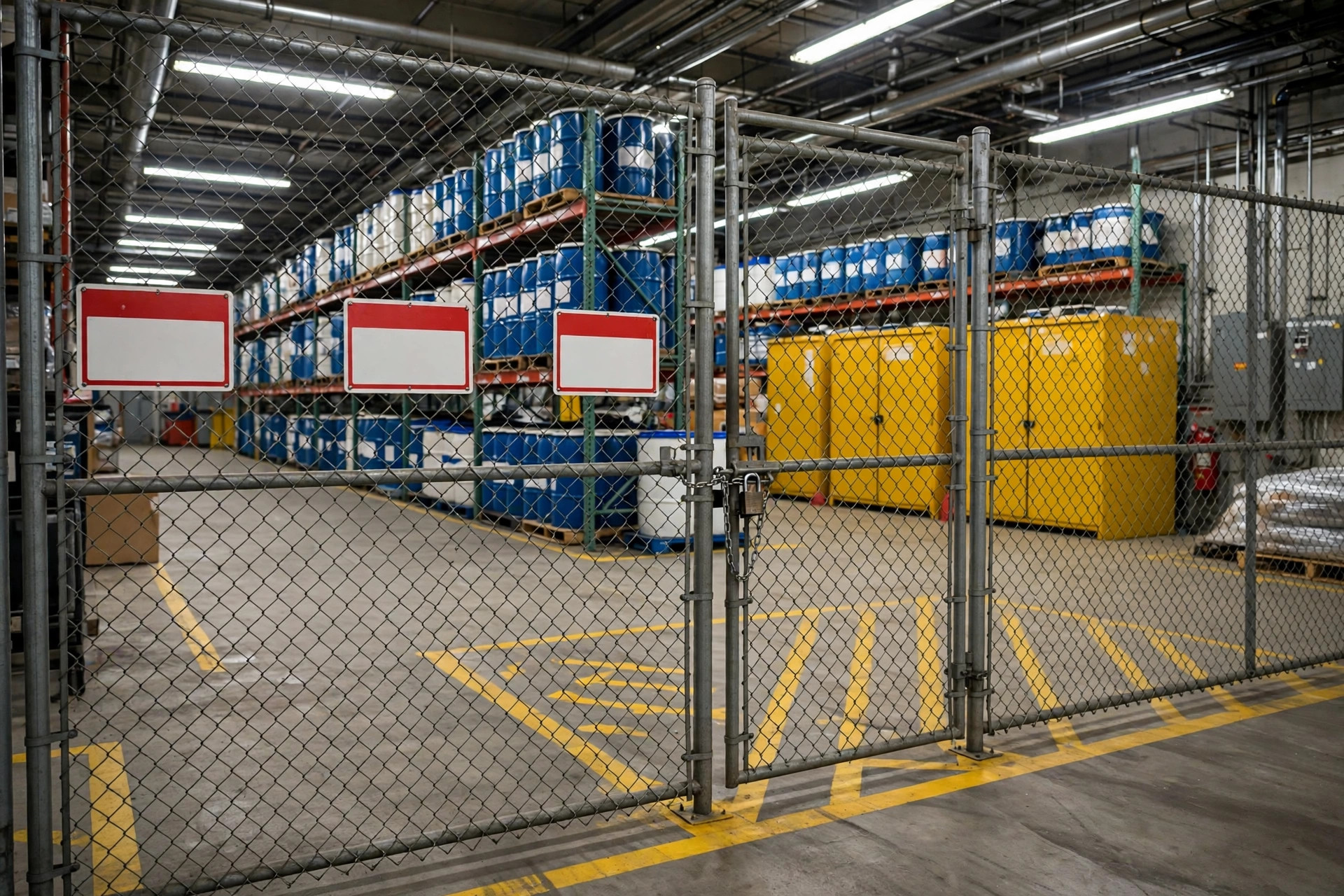
Eight times out of ten, a hazmat incident is a people problem.
That's not an exaggeration. Over the years, the hazmat warehouse incidents I've looked into rarely came down to faulty equipment. Most of the time it's one of two things: someone who shouldn't have been in the zone walked in, or someone who should have been trained wasn't. Was the door locked? Did the person inside know the stuff on the shelves could burn skin or knock them out? If something started smoking, would they know which button to hit and who to call? Get those three things wrong, and the fanciest racks and alarm systems in the world are decoration.
Years ago, at a 60,000-square-foot chemical distribution warehouse in the Inland Empire, I watched a delivery driver's helper stroll straight toward the hazmat zone, bag in hand, looking for a restroom. What stopped him wasn't the access gate — it was a shift lead who happened to walk by. The gate worked fine. It was just heavy, and during a busy unloading shift nobody had bothered to close it.
Since then I've held a stubborn view: hazmat zone safety is half equipment, half people. The equipment half has drawings and standards. The people half comes down to three things — access control, training, and the emergency contact chain. Let's take them apart.
Locking the door, the right way
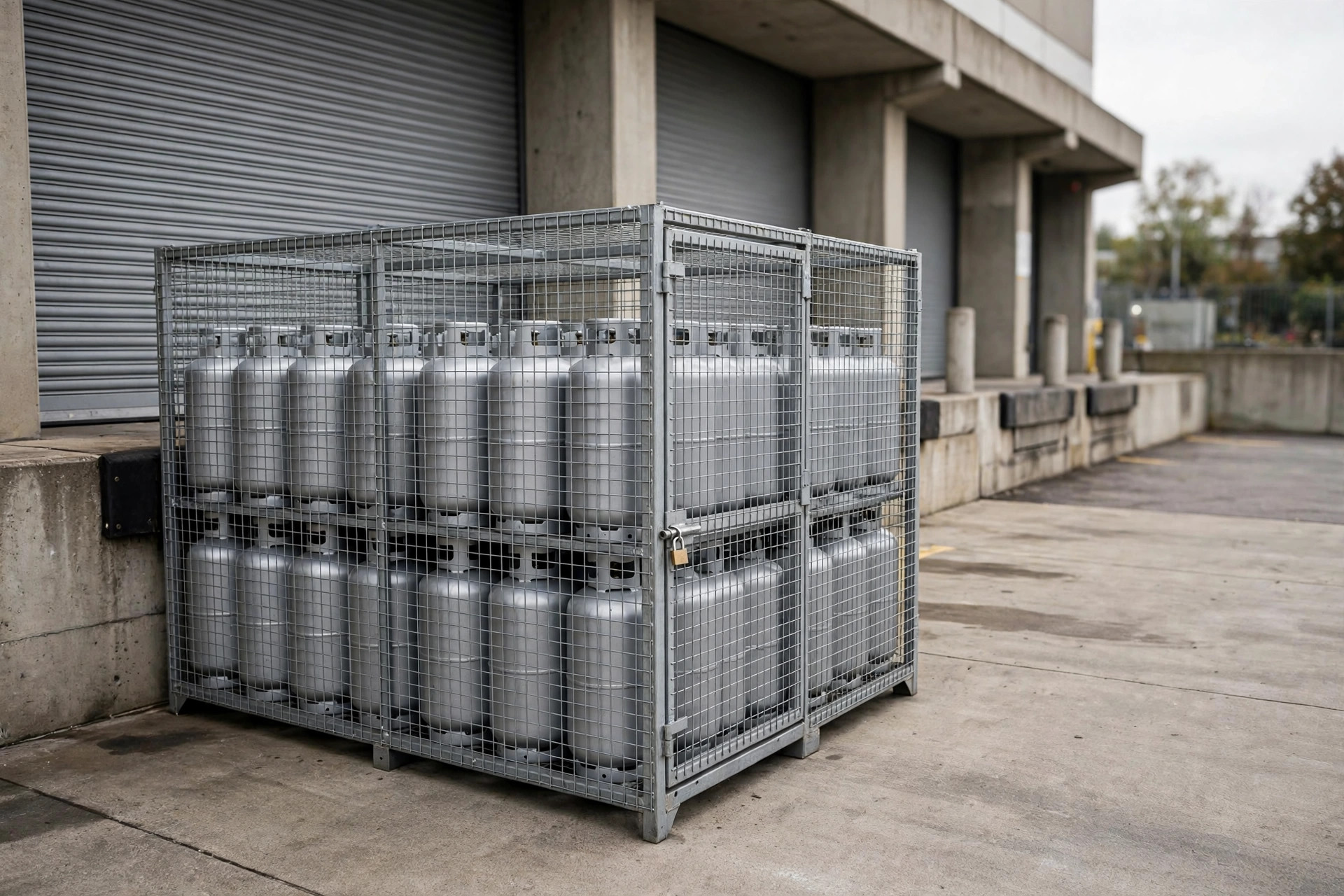
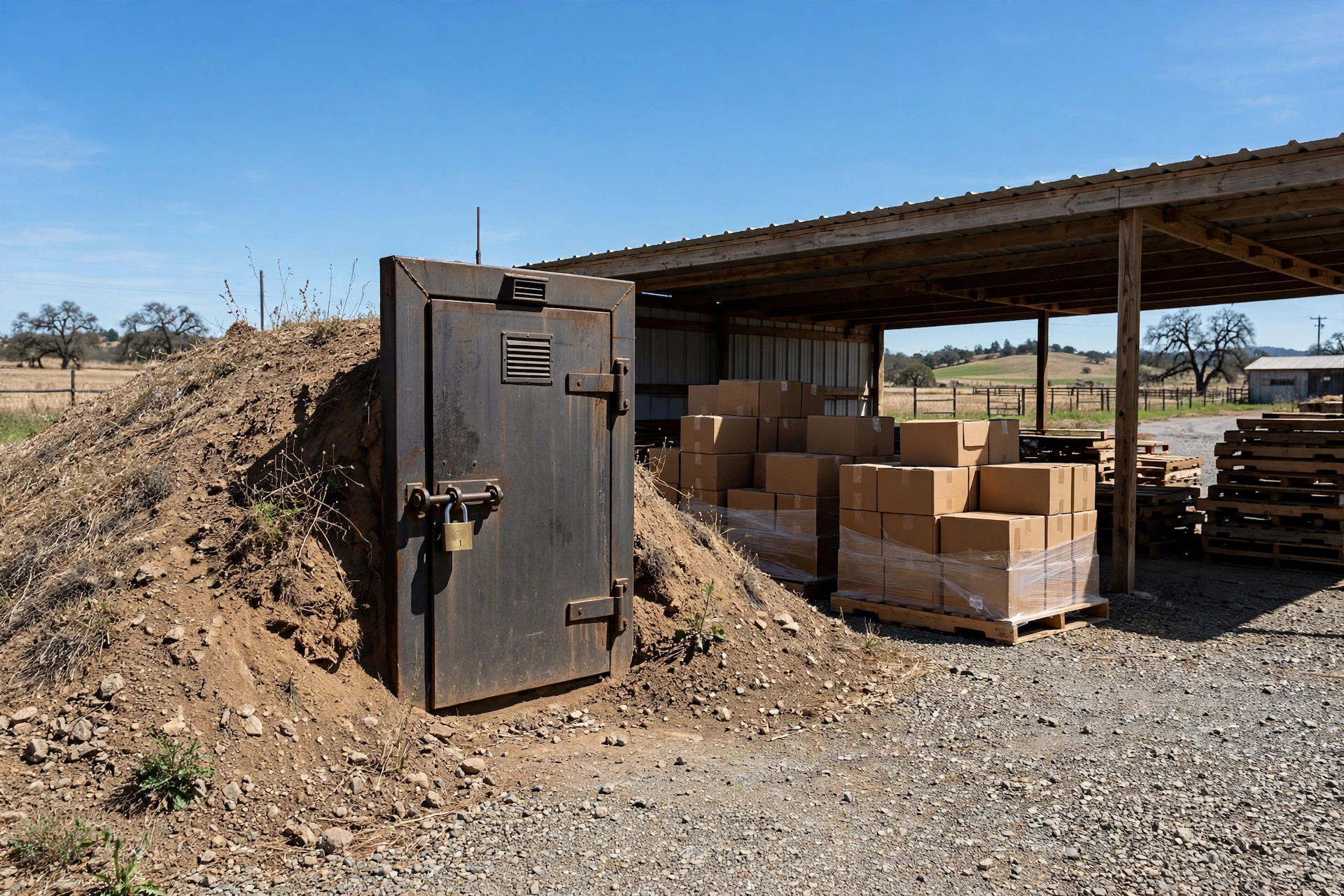
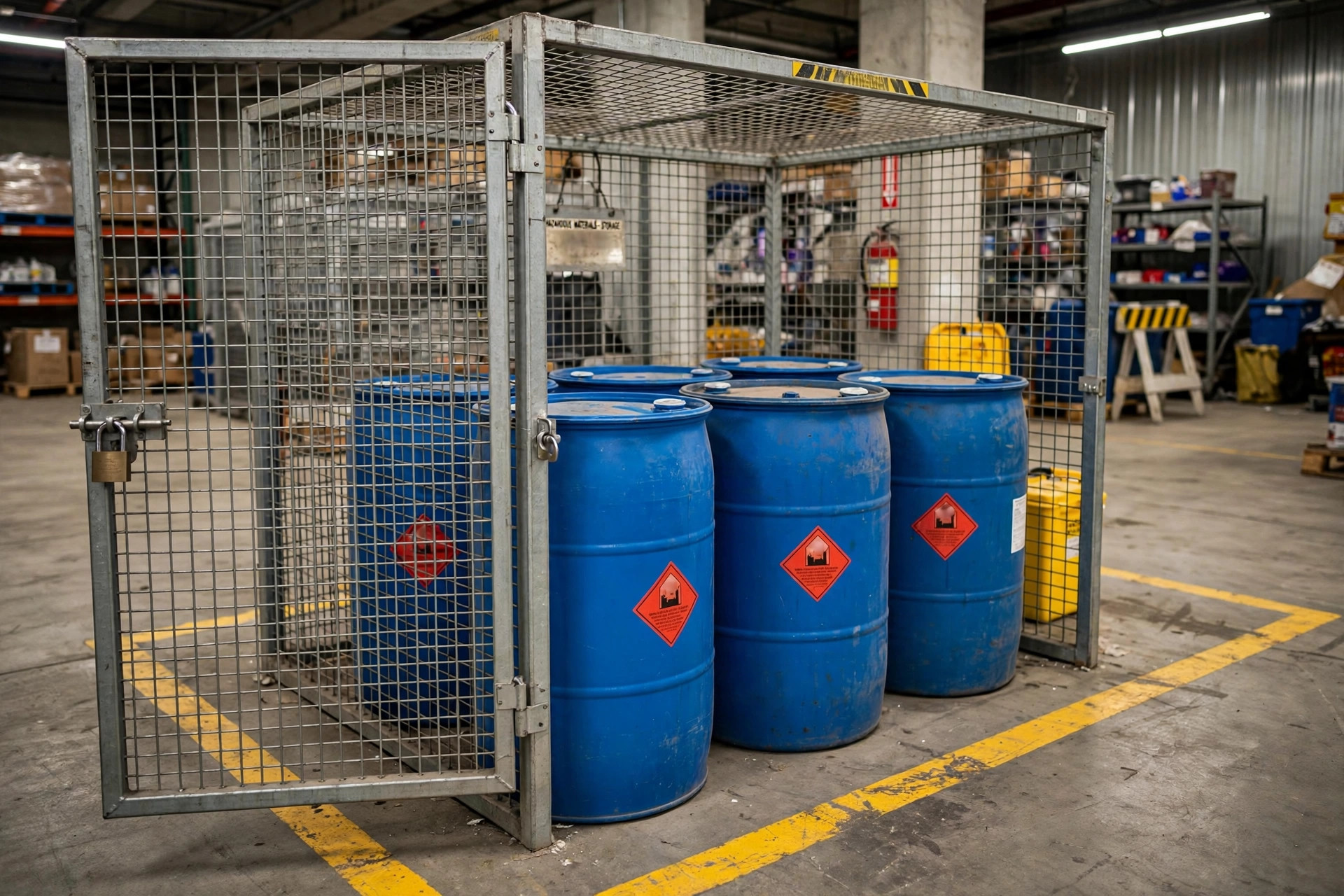
Bottom line first: between the hazmat zone and the rest of the warehouse, there needs to be a door that physically exists and is actually enforced.
"Physically exists" means this: don't treat a painted yellow line as a door. Plenty of smaller warehouses draw a yellow box on the floor and call it a zone. That works for disciplined veterans. It does nothing for visitors, contractors, or new hires. The worst case I ever saw had a proper door with a fingerprint lock — propped open with a wooden wedge, around the clock, because outbound was too busy to badge in and out.
Here are my hard rules:
Grant access by role, not by person. Hazmat zone operators, the designated forklift drivers, the shift supervisor, the emergency response team — those roles get access. Everyone else goes through an approval process. And access isn't forever: revoke it the day someone quits or transfers. I recommend auditing the access list quarterly, the same way you cycle-count inventory — count who can still walk in.
Visitors and contractors: log them in and escort them, no exceptions. A supplier coming to inspect goods, a technician fixing a light — they sign in with time and purpose, and a warehouse employee stays with them the whole time. Escort means walking with them, not waiting at the gate. This isn't about being difficult; it protects the visitor. If something goes wrong, at least they know which way to run.
Door activity has to be traceable. Don't let electronic access logs rot in a database. Glance at them weekly: anyone badging in after hours? Anyone going in and out dozens of times a day? If you're on mechanical locks, rekey regularly — especially after a contractor crew rotates out.
One more thing people miss: nights and weekends. Plenty of warehouses run tight access control on weekdays, then relax on weekends when only a skeleton crew is on. The hazmat zone standard on a Saturday has to match a Tuesday. Put lockup responsibility on the weekend roster, in writing.
Training that isn't just a signature
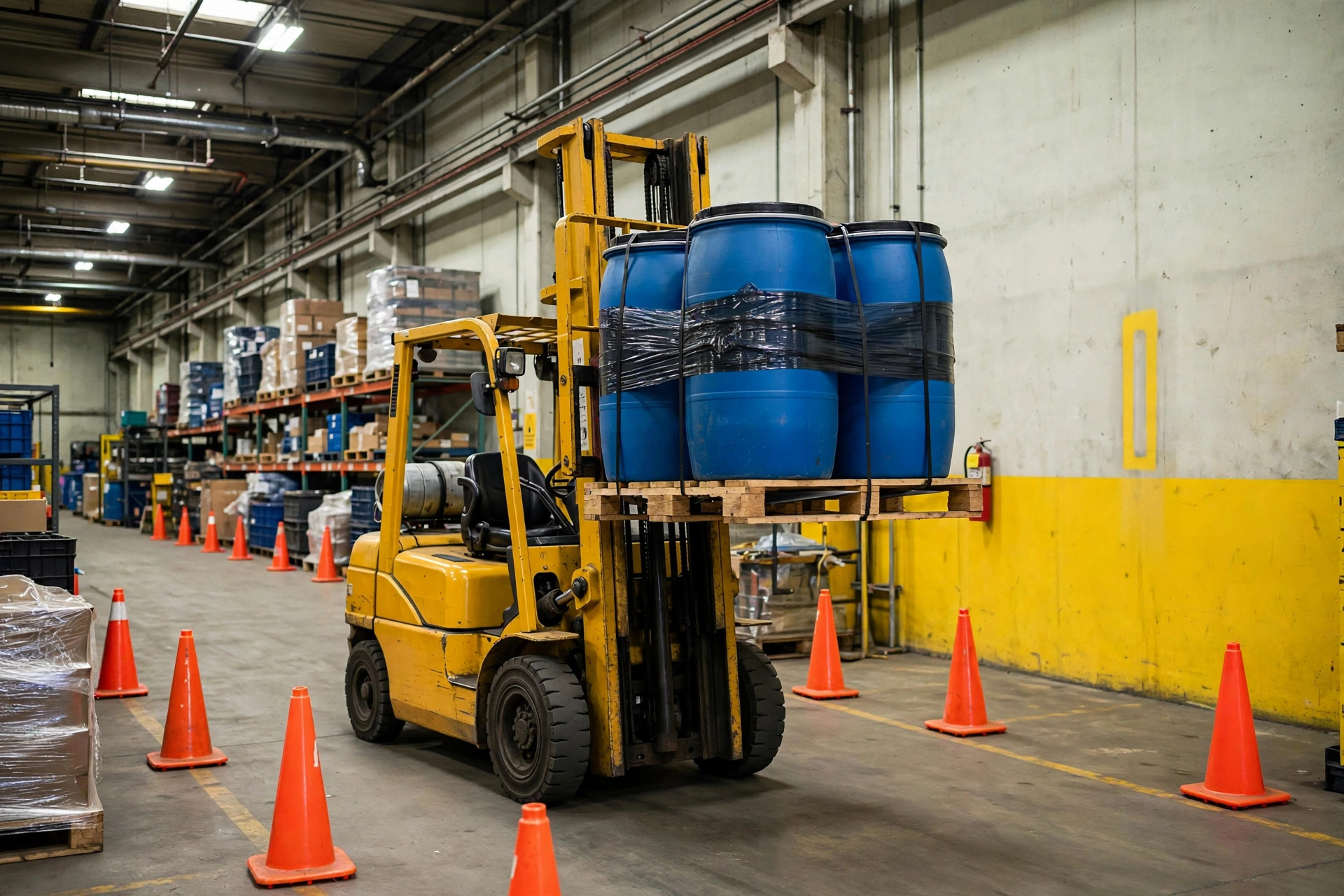
For hazmat workers, the regulators set a clear direction. Under OSHA's Hazard Communication standard, employees must be trained before they're assigned to work with hazardous chemicals, and trained again whenever a new health or physical hazard enters the work area. At minimum, training has to cover how to detect a release, how to protect yourself, and how your employer's hazard communication program works — including how to read labels and where to find safety data sheets.
Note that's the direction, not a number. Hours and retraining intervals vary by jurisdiction — check the current OSHA and EPA requirements for your location. I won't quote a figure here; state-level enforcement differs, and a stale number does more harm than good.
But I can tell you what training looks like when it's real:
Three gates for new hires: learn the basics before day one (where the SDSs live, how to spot a leak, how to wear the protective gear), shadow a veteran for three working days, then pass a verbal check before going solo. Skip the multiple-choice quizzes — ask them face to face: "This drum is leaking. What's your first move?" If they can't answer, they go back and learn it again.
Retraining and drills are a different animal. Too many warehouses treat training as a one-time event: sign a form at onboarding, never hear about it again for three years. People forget, and people turn over. Run a full emergency drill at least once a year, rotating through three scenarios: spill, fire, injured worker. Debrief afterward and keep the records — they're what proves diligence if something ever goes wrong.
Training records are part of access control. My approach: tie training files to badge permissions. If someone's refresher lapses, their access downgrades automatically. It's a small change to the permission workflow. The era of signature-only training is over; what you need is a closed loop of train, test, and authorize.
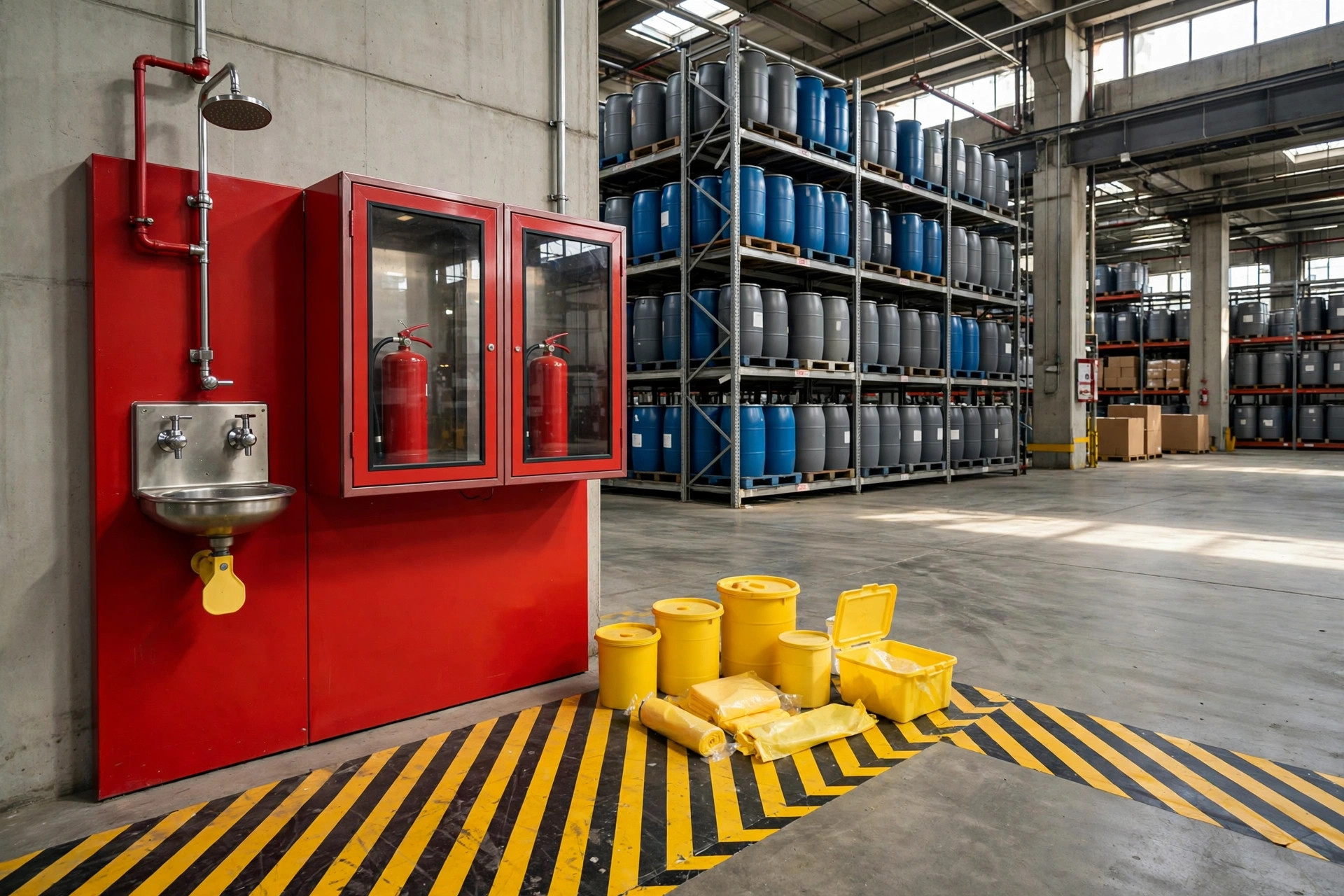
The emergency call chain can't break
The first two layers stop incidents from happening. This one contains the damage when they do.
Keep the internal chain short. From the person who spots a leak to the person who can make the call, there should be at most one layer in between. Shift lead to duty manager to emergency coordinator. Every phone number in that chain goes on the wall at the hazmat zone entrance and into everyone's phone. A long chain means ten minutes pass before the decision-maker even hears about it.
Have the outside numbers ready before you need them. Fire department, local emergency management, your chemical suppliers' 24-hour emergency lines, the nearest ER — put them on one sheet, posted in two places: the hazmat zone entrance and the office. The supplier line matters most: in a spill, asking the supplier "how do I handle this stuff" beats digging through documents. Recheck the sheet every six months; phone numbers change.
Safety data sheet access points have to be close to the zone. The SDS is the single most important document in an emergency: composition, hazards, first aid, spill response, all in one place. The rule is "available to employees at all times." My take: one SDS cabinet at the hazmat zone entrance, one copy in the office. Digital is fine, but don't go digital-only — when the power's out, paper saves lives. New chemical arrives, its SDS arrives first.
One thing you can do tomorrow
If you only do one thing, do this tomorrow morning: pull last month's hazmat zone access logs and read every entry.
Look at who went in, whether any strangers show up, whether anyone badged in after hours, whether a former employee's name is still on the list. That one read tells you whether your access control is real or decorative. Revoke anything suspicious the same day. If the logs themselves are full of gaps, your access system needs an upgrade.
Access control, training, the emergency contact chain — none of these are high-tech, and none of them cost much. They're hard only because they have to be real every single day. Hazmat zone safety is never a one-time project. It's the result of every door closed, every training signed off, every emergency number kept current — day after day.