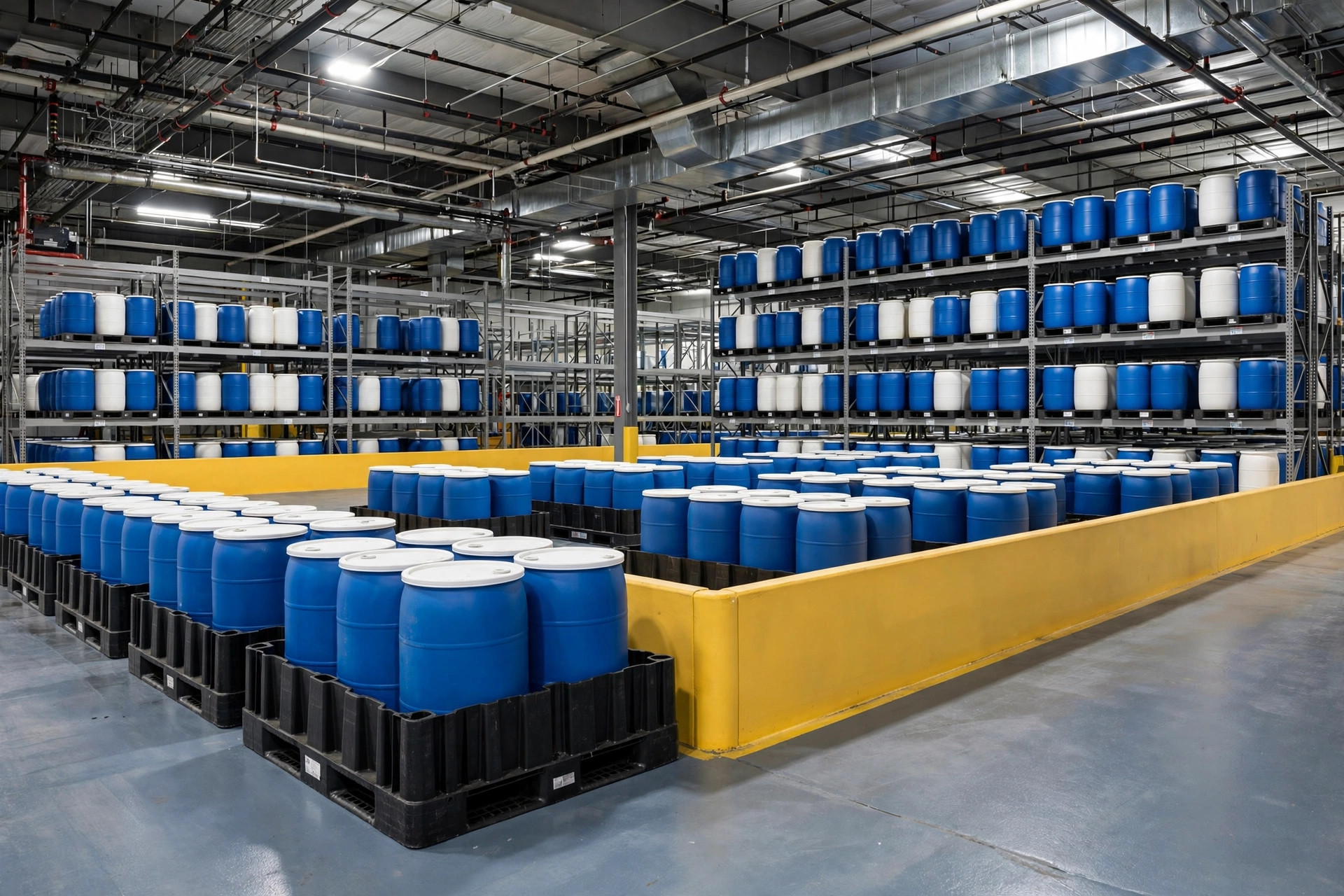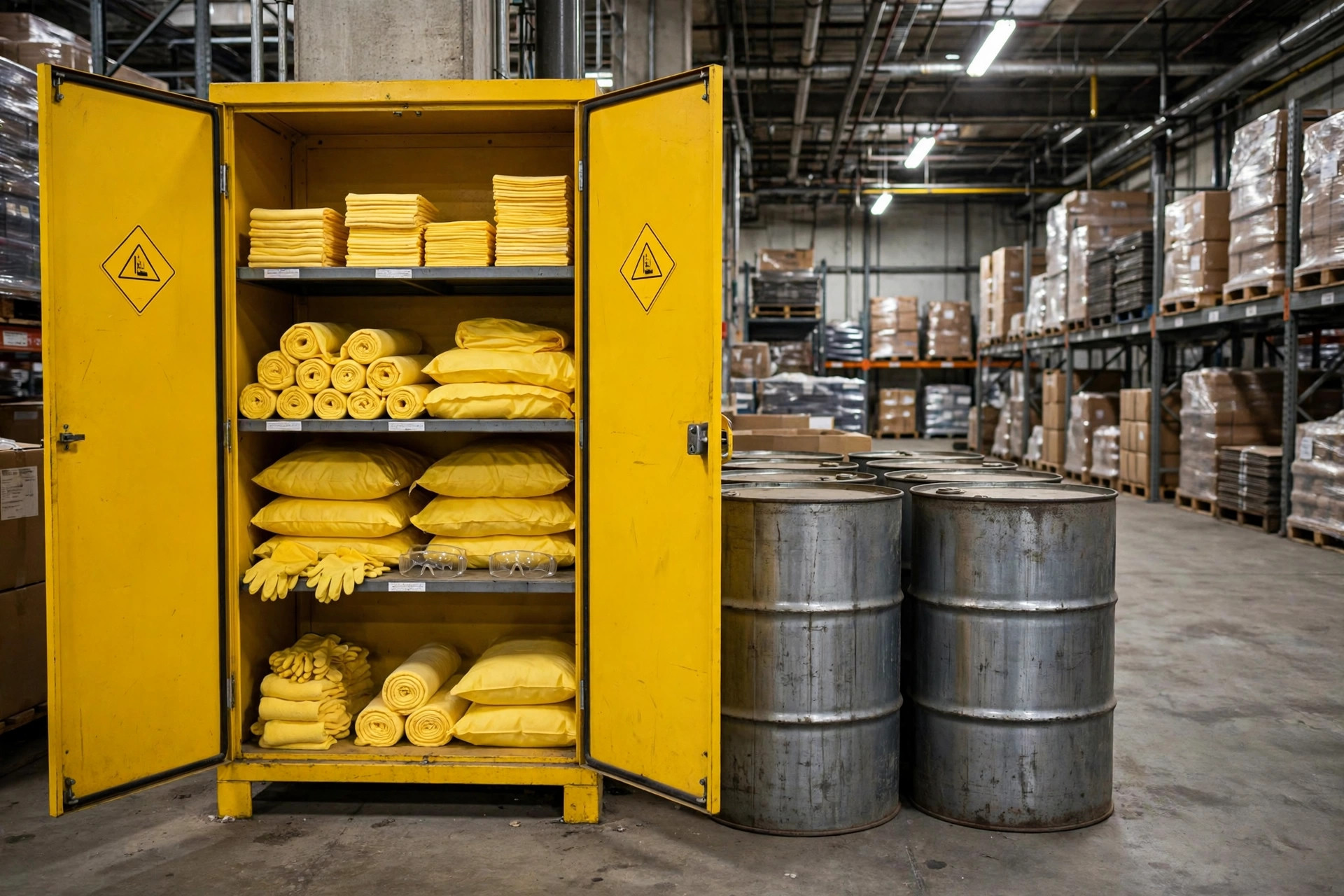
One EPA penalty notice can cost you ten times what it would take to outfit your entire warehouse with proper spill supplies. I've done this math more than once: six-figure fines for hazmat spills are not rare, while a decent spill kit runs a few hundred dollars. Anyone who has actually run the numbers stops treating the spill cabinet as decoration.
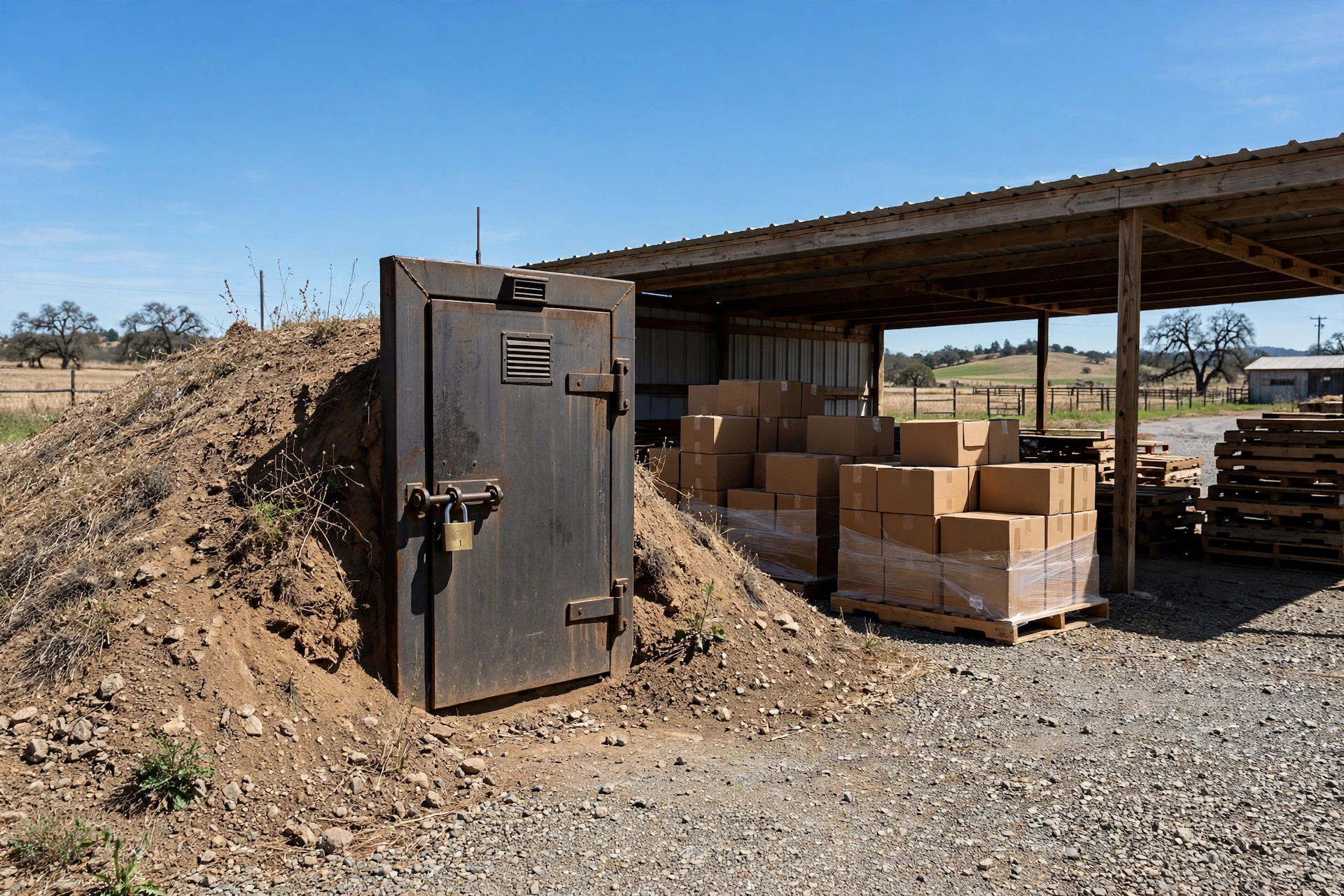
But here's the reality from twenty years of walking warehouses: eight out of ten spill cabinets I open are decorative. The worst one I saw was at a 3PL in the Inland Empire — cabinet locked, key sitting in an office drawer, absorbents inside five or six years old, damp and hardened into something you could build a wall with. If hydraulic oil had hit the floor that day, that cabinet would have been good for passing an inspection and nothing else. Spills don't wait. Liquid starts seeping into floor cracks and heading for the storm drain the second it lands, and every ten minutes you lose adds a zero to the bill.
Start Here: Buy the Wrong Color and You Bought Nothing
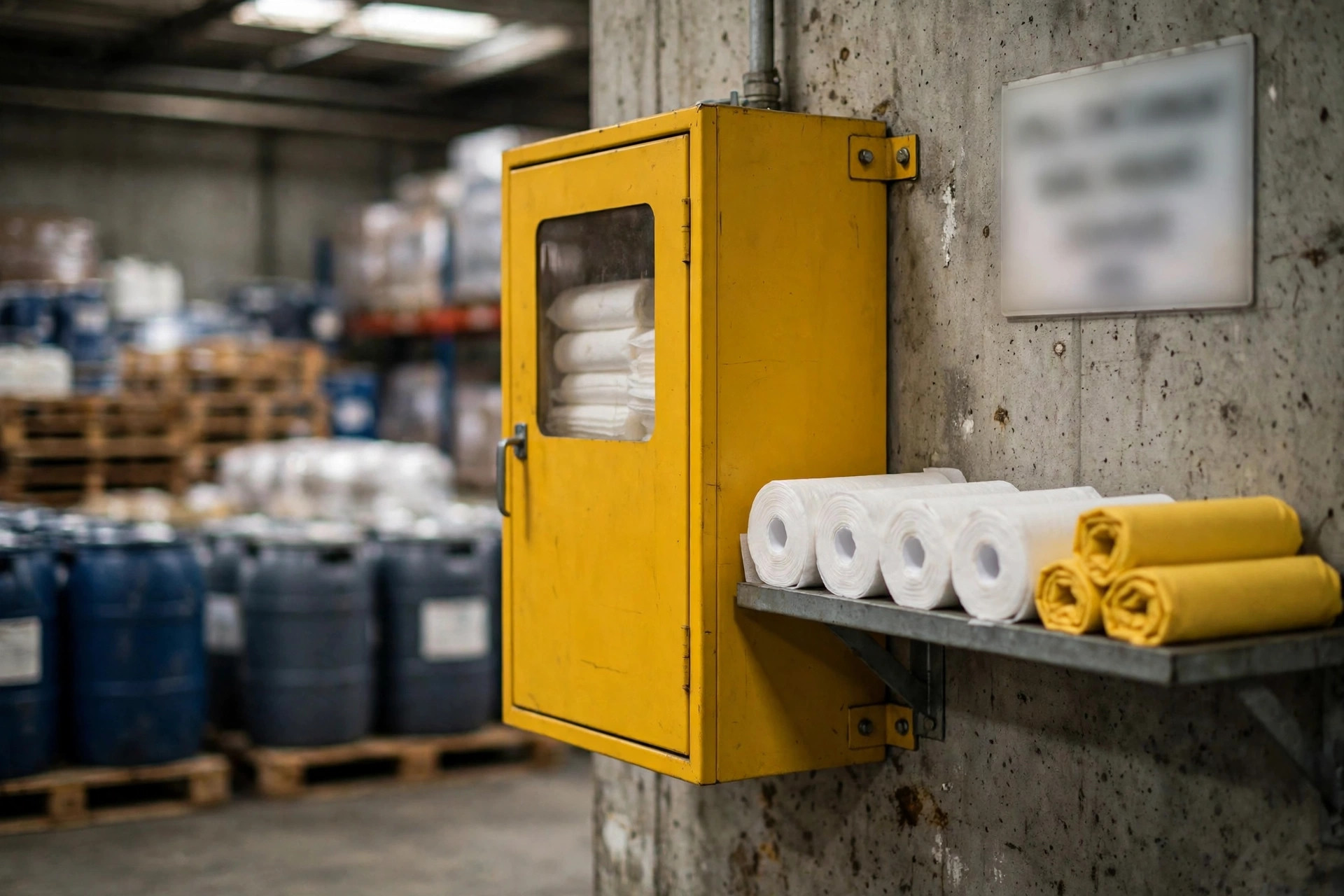
Absorbents come in three colors, and this is the most basic — and most commonly botched — fact in spill response. White is oil-only: it repels water and picks up hydrocarbons, so you can throw it on a puddle and pull the oil right off the water. Yellow is hazmat-rated: it handles acids, bases, and corrosives, and it absorbs oils too. Gray is universal: it absorbs a bit of everything and excels at nothing.
Where people go wrong: buying all gray "to keep it simple," or worse, buying the wrong color entirely. Take white oil pads to a chemical spill and they'll float on top of the acid while it keeps spreading. Use yellow hazmat pads on a plain oil leak and they'll work — but yellow costs noticeably more than white, so you're burning money on every routine drip. My rule is blunt: white where you store oils, yellow where you store chemicals, both where you have both. Don't try to make one product cover everything. And before ordering, check Section 9 of the SDS (physical and chemical properties) — it tells you more than any sales brochure.
One more thing people skip: absorbency capacity. Your kit's total absorbency should at minimum swallow the full contents of the largest single container on site. A 55-gallon drum lets go and your kit handles 20 gallons? The other 35 are going wherever gravity takes them. Don't be seduced by the word "kit" on the box — flip to the spec sheet, check total absorbency, and upsize if it falls short.
What a Working Spill Kit Actually Contains
Forget the deluxe kits with forty line items. These are the things that matter, and every missing one is a hole in your plan:
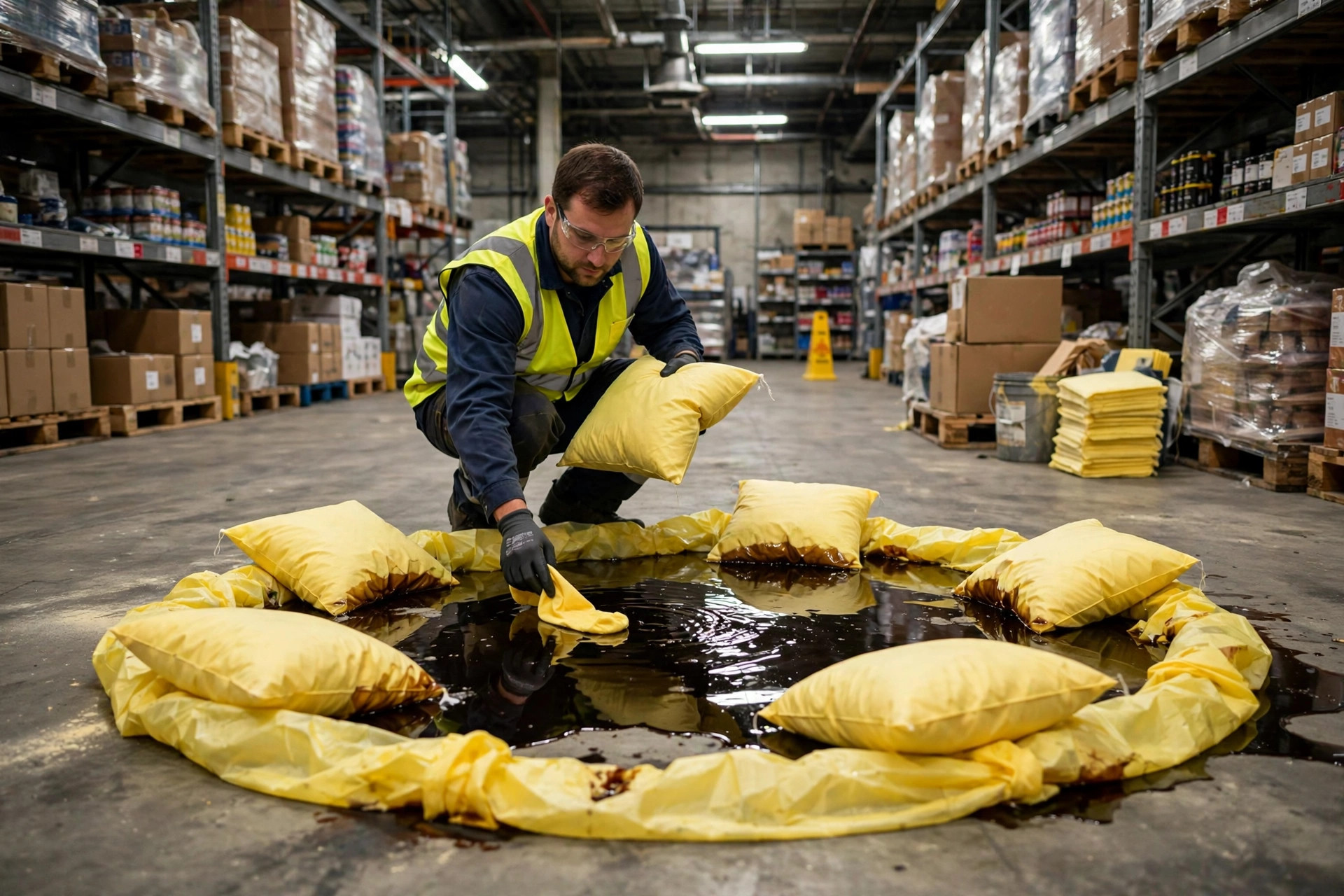
Containment socks (absorbent booms) come first. The first thing you do in a spill is not wipe — it's contain. Ring the spill with socks to stop it reaching the floor drain and the door. Stock enough to circle your largest drum with room to spare; running short mid-spill is the failure mode you're buying against. Pillows go in the middle for the deep pool, pads finish the edges. The order is contain, absorb, wipe — never the reverse.
Chemical-resistant gloves and goggles live in the same cabinet as the absorbents, full stop. Nobody has time to walk back to the office for gloves when liquid is spreading, and bare hands on an unknown chemical can mean anything from a rash to a chemical burn. Nitrile is fine — but stock multiple sizes. An S-sized hand in an XL glove works about as well as wearing oven mitts.
The collection step is where most plans quietly die: saturated absorbents are hazardous waste. They don't go in the regular dumpster. Keep lidded collection drums and hazmat bags in the cabinet, bag everything used, label it, and hand it to a licensed waste hauler. Federal rules under 40 CFR 262 require a hazardous waste manifest for the handoff — break that chain and all your good work upstream counts for nothing when the inspector arrives.
One item most people never think of: a printed SDS binder in the cabinet. Print the SDS for every chemical on site and keep it there. In a spill, flip to Section 4 (first aid) and Section 6 (accidental release measures) and follow them. A PDF on someone's computer might as well not exist — nobody is booting up a laptop at a spill scene.
Placement and Inspection Decide Whether It's Real or Theater
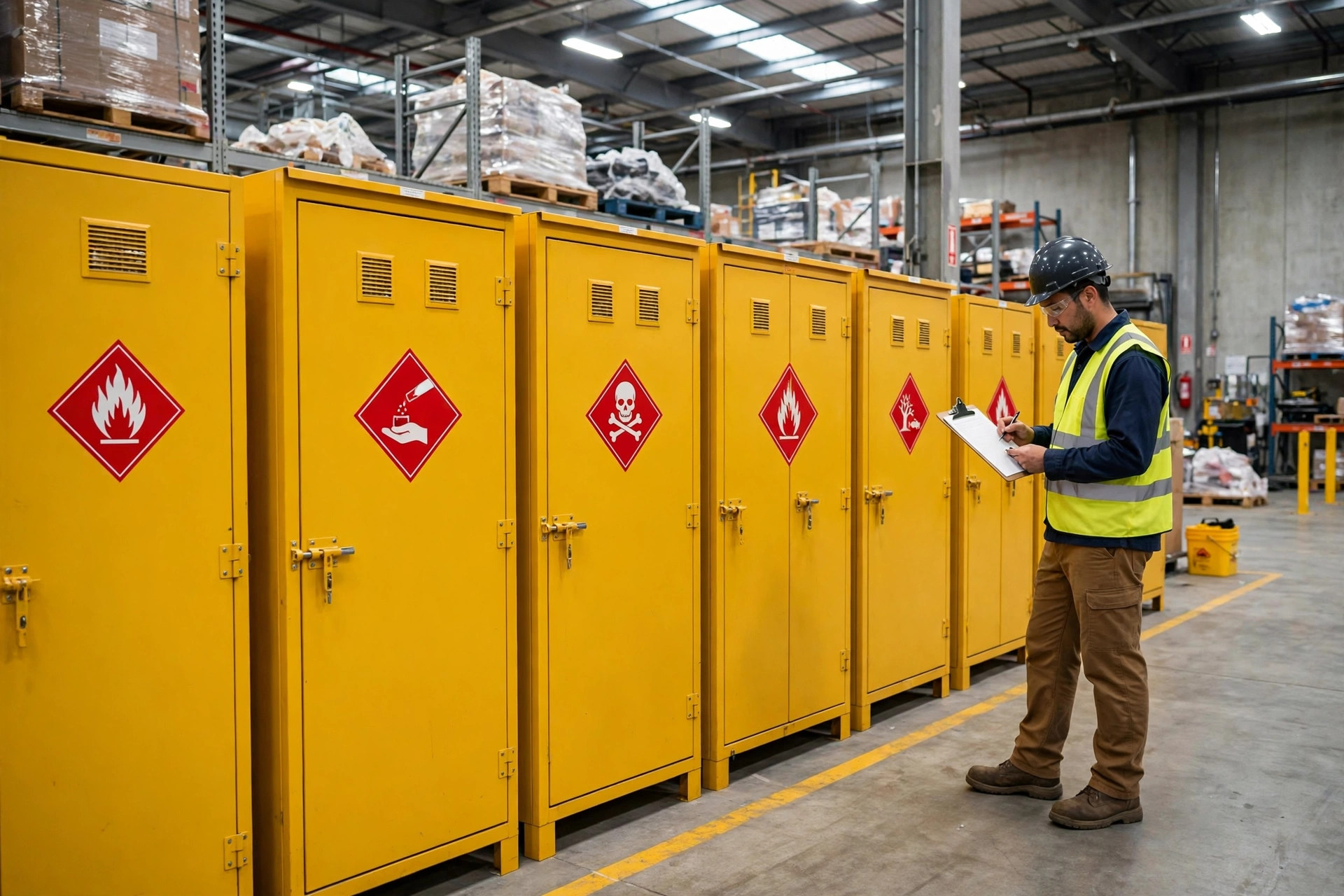
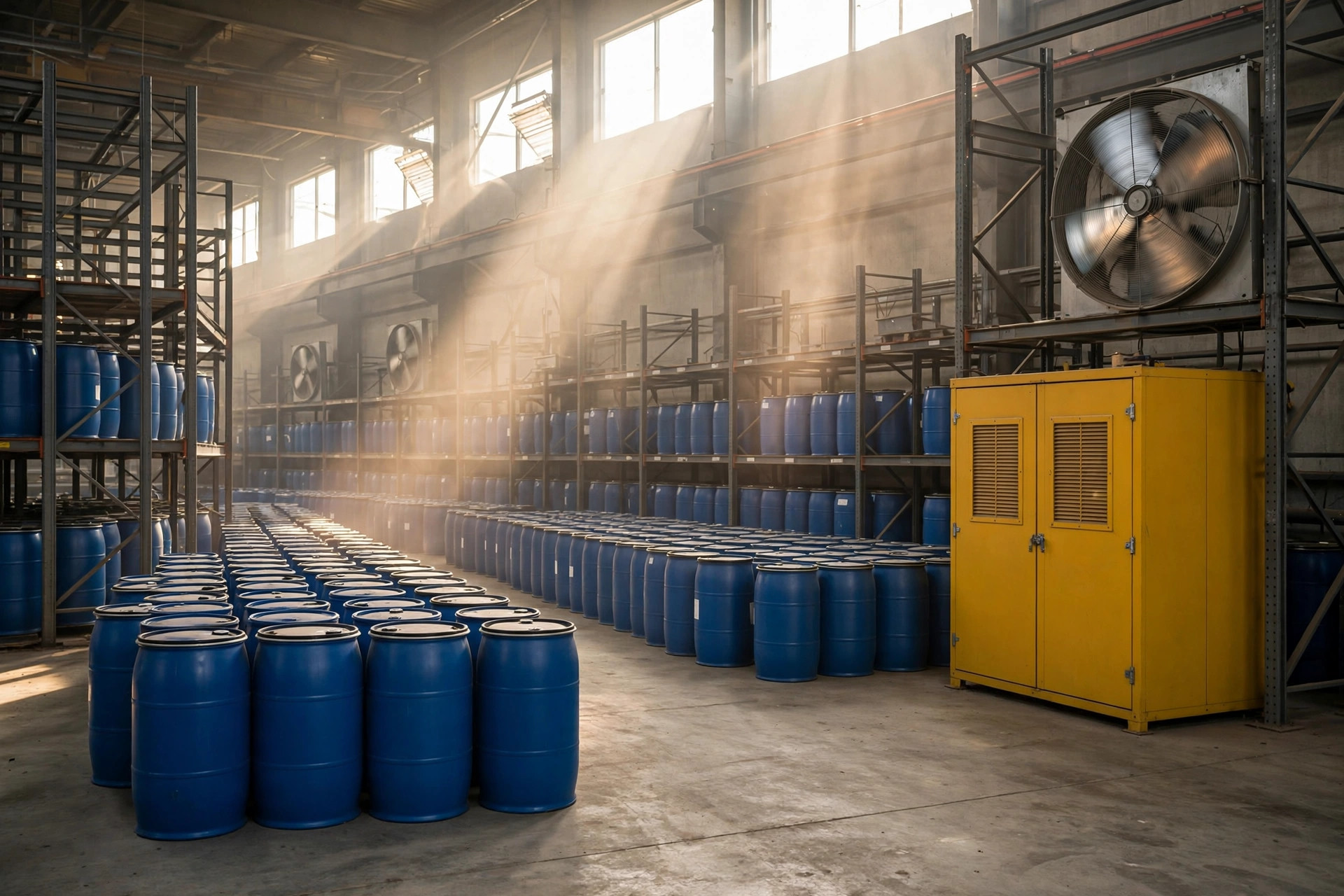
One iron rule on placement: put the cabinet as close to the spill source as you can reach without thinking. Next to the hazmat cage, beside the drum storage, by the forklift fueling point — one kit per risk zone, not one kit per building. Liquid doesn't wait while someone jogs two hundred feet for supplies. Don't lock the cabinet, or use a breakaway latch at most. Nobody hunting for a key during an emergency.
I inspect monthly, no exceptions. Three things: are the absorbents dry and soft, are the sock wrappers intact, are the gloves and goggles all there. Anything used gets restocked within 48 hours — don't wait for the next inspection. Facilities covered by the federal SPCC rule (40 CFR 112) already owe monthly inspections anyway; checking the spill cabinet takes one extra minute on the same walk.
One more: tape a one-page response procedure to the cabinet door, written in plain language, not quoted regulation. People at a spill scene are running on adrenaline. Nobody reads paragraphs.
The First Three Minutes Decide How Many Zeros Are on the Bill
Minute one: protect people. Identify the liquid and estimate the volume. Can't identify it, smells sharp, smoking or fizzing — don't be a hero, pull back and call a professional response company. OSHA's HAZWOPER standard (29 CFR 1910.120) has hard training requirements for hazmat emergency responders for exactly this reason. An untrained person charging in doesn't help and can become a second victim.
Minute two: contain. Ring the spill with socks, and block the floor drain and the doorway first. This is the highest-ROI move in the entire playbook. Once liquid reaches the storm drain, the incident graduates from "small warehouse accident" to "environmental release," and that's when the EPA and the state agency show up with penalties a full order of magnitude larger.
Minutes three and on: absorb, collect, document. Pillows for the pool, pads for the residue, everything into labeled hazmat drums. Then write it down: time, substance, approximate quantity, what you did. Inspectors will ask for that record. Your insurer will too.
The honest trade-off: small spills you can identify and handle with one kit — do it yourself, fast. Big spills, unknown liquids, anything already in the drain — call a licensed emergency response contractor without hesitating. Doing it yourself saves a few thousand in service fees and gambles a six-figure penalty plus your people's health. Bad bet.
Something you can do tomorrow: walk to your hazmat area, open the spill cabinet, and squeeze the absorbents inside. If they're hard, damp, or the cabinet won't open — replace them this week. Spills never schedule themselves for a day you're ready.