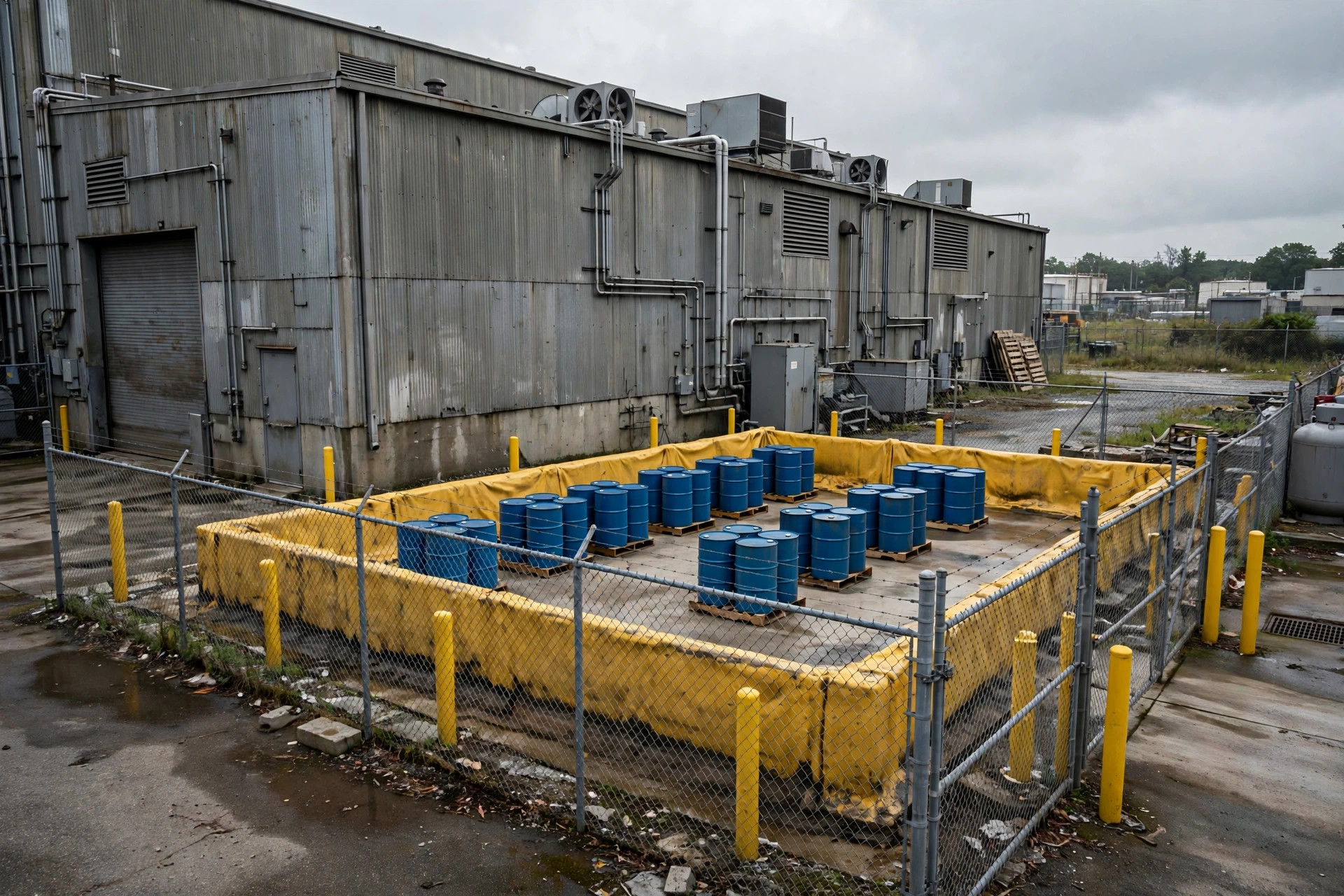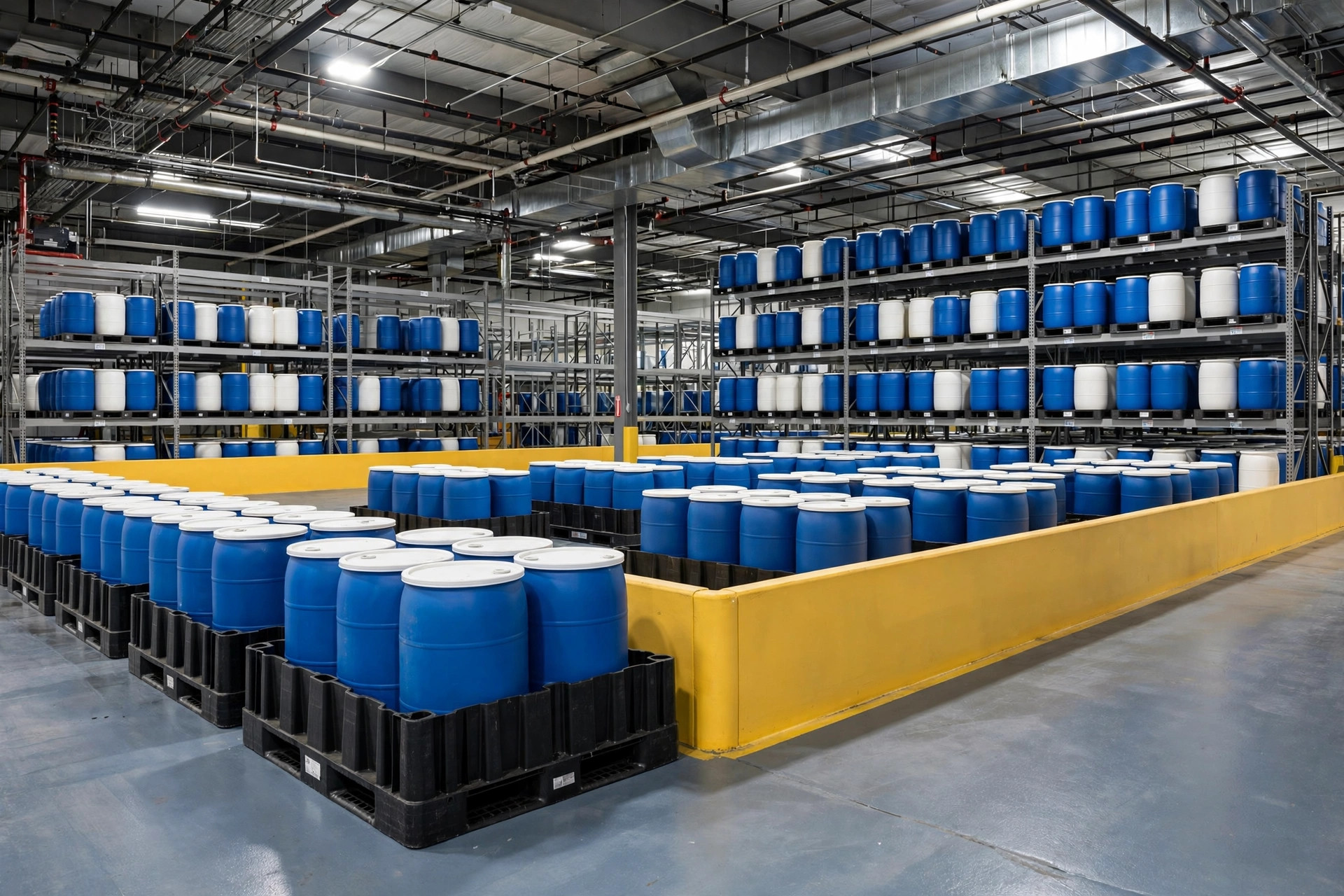
In 2022 I walked the corrosives area of a chemical distributor's warehouse in Texas during an automation project, and it scared me: 31% hydrochloric acid and caustic soda (sodium hydroxide) sitting on the same rack row, about a foot apart. When it comes to corrosive chemicals warehouse storage compatibility, that warehouse had basically turned in a blank exam.
Acids and Bases on the Same Rack Is a Buried Landmine
The chemistry first. Mix an acid with a base and you don't just get a mess — you get a reaction: heat, gas, and in bad cases boiling and splatter. HCl hitting sodium hydroxide can push local temperatures past 80°C; mix nitric acid with organics and the off-gassing can deform a sealed container. Think of it this way: those aren't two drums of liquid on the rack, they're two bombs that hate each other, and the fuse is a single leak.
I've seen the aftermath. In 2019, a raw-materials warehouse at an electroplating plant in Guangdong had a forklift knock over a drum of 31% HCl. The acid ran into a stack of caustic soda, started smoking and heating on contact, and three workers who rushed in to upright the drum came out choking on acid fumes. The whole warehouse evacuated for half a day, the floor was eaten into a pitted mess, and cleanup plus floor repair ran close to 200,000 yuan. One lesson: acid–base segregation isn't a suggestion, it's a red line.
The engineering line is simple: acids, bases, and oxidizers each get their own zone, physically separated — a firewall between them, or an aisle wide enough that a spill can't flow into the neighboring zone. Anyone who says "putting acids and bases in one zone saves space" gets both barrels from me: will the few square feet of rack you saved cover one runaway reaction? You're saving rent money and risking the whole warehouse.
Corrosive Chemicals Storage Compatibility: How to Pick Container Materials
The wrong container turns your chemical into a slow-motion leak. The selection logic is one line: figure out what the chemical attacks, then pick a material it can't attack.
| Chemical family | Typical examples | Recommended container | Never use |
|---|---|---|---|
| Inorganic acids | HCl, sulfuric acid | HDPE or PP drums, FRP-lined | Plain carbon-steel drums (HCl eats steel fast) |
| Bases | Sodium hydroxide, potassium hydroxide | HDPE, PP, carbon steel (fine for concentrated caustic) | Aluminum drums (bases dissolve aluminum and release hydrogen) |
| Oxidizers | Hydrogen peroxide, nitric acid | HDPE, fluoropolymer-lined | Copper or iron metals (catalyze decomposition) |
Three hard boundaries to remember. One: metal drums and acids are fundamentally incompatible unless the lining is right. Two: aluminum and bases are mortal enemies — and they generate hydrogen, an explosion hazard. Three: oxidizers get their own corner; they're trouble next to everything.
And one more trap: repackaging. Plenty of warehouses decant bulk acid into smaller drums for convenience, grabbing whatever old metal drum is handy. Slap a label on it, and three months later the bottom gives out. Repack containers must meet the same material standard as the original — that's a non-negotiable selection rule.
Corrosive Chemicals Warehouse Storage Compatibility: Engineering Spill Containment
A spill isn't a question of if — it's when. Design like the leak is guaranteed. Four layers.
Layer one: the floor. The corrosives area needs chemical-resistant flooring — epoxy coatings rated against the specific chemicals you store are the common answer. Bare concrete pits and spalls after one good acid soak; after the second, aggregate shows through. Once the floor fails, spilled liquid seeps everywhere and cleanup costs double.
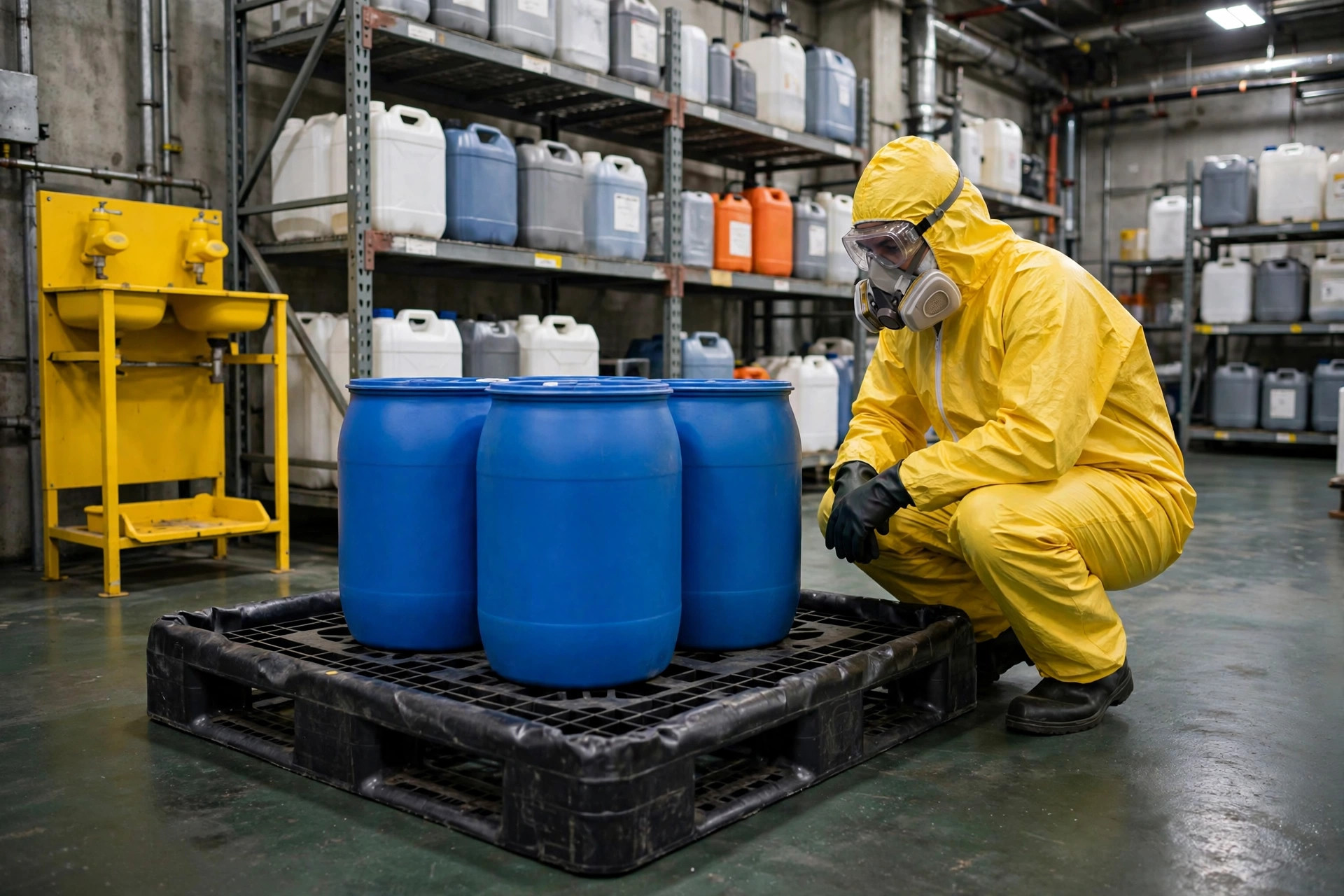
Layer two: berms and spill pallets. Every storage position gets a spill pallet, sized by the rule of thumb I use: 110% of the largest single container. A full 55-gallon drum of acid lets go, the pallet has to catch it all with margin to spare. It's the cheapest insurance in the whole design.
Layer three: emergency gear. Eyewash and safety showers within a 10-second walk (check the latest requirements on OSHA's official site for exact placement rules), neutralizers staged by zone — alkaline neutralizer for acids, acidic for bases, and never the wrong way around — plus absorbent pads and socks within arm's reach. The thing that kills emergency gear isn't cost, it's "we have it but nobody can find it."
Layer four: ventilation and signage. Vent the acid zone properly; acid fumes will eat racking and electrical over time. Post a chemical compatibility chart at every zone so any forklift driver walking past can see what must never sit together.
In 2023 I did a corrosion-proofing retrofit for a 3PL warehouse in California: 5,000 square feet of corrosives area, epoxy floor redone, 60 spill pallets, eyewash stations relocated, and a low wall built between the acid and base zones for physical separation. Total: about $55,000. Before the retrofit they averaged three or four minor spills a year, each costing close to $10,000 in cleanup and downtime. The math isn't hard.
The Maintenance Trap: Coatings Don't Last Forever
Principles covered, selection covered — now the maintenance traps, the part an automation engineer can't stop talking about.
Epoxy floors age. Forklift tires grind them, chemicals soak them; plan on inspection and patching every 3–5 years. Leave a crack unpatched and acid wicks down through it — fixing that costs more than the original coating job. HDPE spill pallets embrittle too; two years of UV exposure and you need to check for cracking. Eyewash stations need a weekly test flush; rusted pipes and seized valves mean the station might as well not exist when someone needs it.
My practice: put corrosives-area facilities on the same PM (preventive maintenance) schedule as the equipment — quarterly floor checks, monthly pallet checks, weekly eyewash tests. Skip maintenance and every dollar you spent on the engineering is wasted.
So is the money worth it? Look at this one number: a 55-gallon HDPE spill pallet runs four or five hundred dollars. One drum of acid on a bare floor — cleanup, floor repair, downtime, plus a possible OSHA fine — and the bill easily clears tens of thousands of dollars. Corrosion-proofing looks expensive until you realize one medium spill costs enough to redo the whole warehouse's protection three times over.
By Da Liu, Automation Engineer