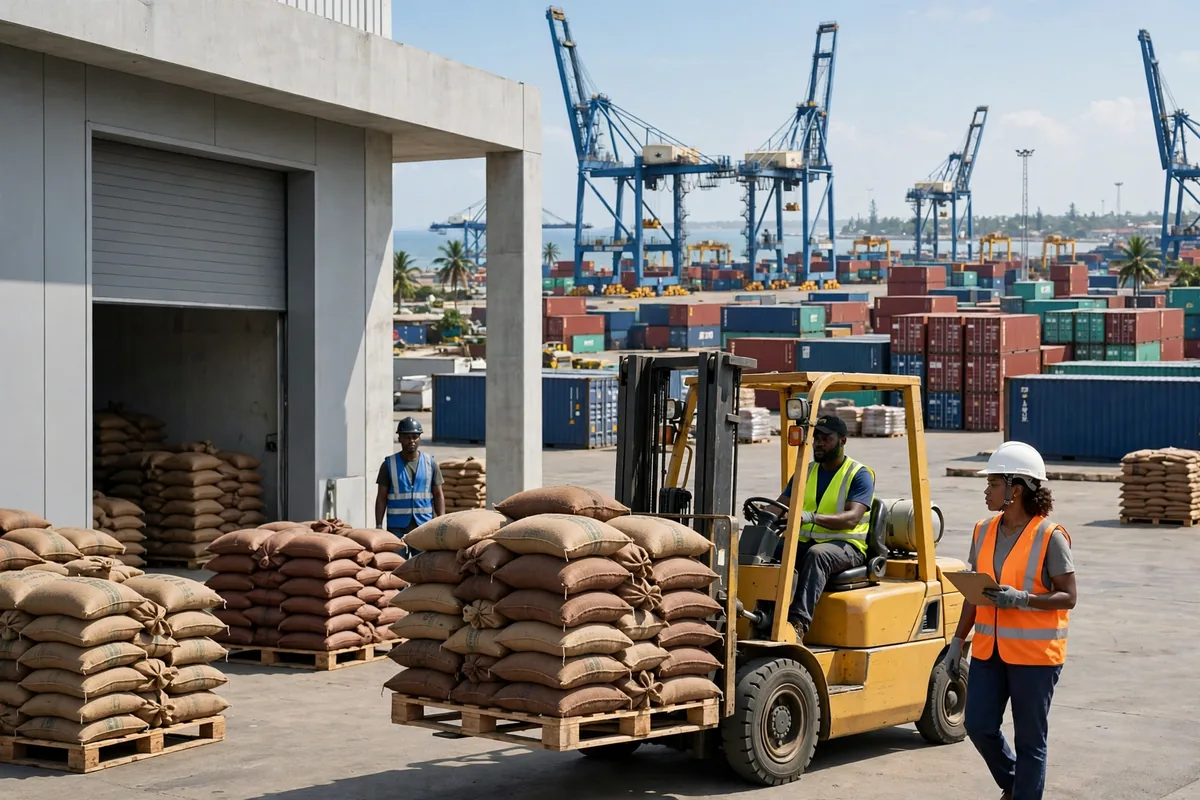
We had a client ask about ghana tema port warehouse logistics last year, and that one question changed his whole West Africa plan. He sold consumer goods, had spent years focused on southern and eastern Africa, and suddenly wanted to know whether Ghana could be his first step west. That single question turned a line on a quotation into two months of warehouse visits, customs conversations, and contract work. My conclusion up front: Tema works well as a West African entry point, but choose the wrong type of warehouse, or sign a vague contract, and every shipment after that will charge you tuition.
ghana tema port warehouse logistics begins with one question: bonded or general?
We had a client whose opening idea sounded perfectly reasonable. Find a big, affordable warehouse, bring the goods in, and distribute them gradually. To him, a warehouse was just a place to put boxes, and whether it was bonded or general made little difference. Then we walked through his actual flows. Part of his cargo was meant for sale inside Ghana. Another part was only passing through, with onward distribution to neighbouring markets still undecided. Those two kinds of cargo do not belong in the same arrangement, and no single rate quote can price them honestly.
The value of a bonded warehouse is timing and flexibility. Goods can sit in bond while their final destination is decided, and the related duty treatment is handled when the goods actually enter the local market — confirm the current rules in writing with a local customs broker before you rely on them, because the detail follows the latest local policy, not a sales brochure. The trade-off is discipline. Bonded operations demand clean in-and-out records and a warehouse operator whose compliance work you can trust, because their paperwork becomes your risk. A general warehouse is the opposite bargain: simpler and more direct for goods that have completed their formalities and are definitely being sold locally, but far less flexible once the cargo is inside.
Here is the counter-intuitive part I tell every client. Bonded space is not automatically the sophisticated choice, and not every shipment belongs in it. If the great majority of your goods are for local sale and they turn quickly, a general warehouse plus a competent customs broker is often the calmer and cheaper answer. What you pay for in a bonded facility is optionality — the ability to change your mind about where and when goods are sold. If your destination is already certain, you are paying for flexibility you will never use.
Tema port as a West Africa entry: listen for cocoa and gold
To do business in Ghana, you need to understand the two cargoes that shape the country's logistics rhythm: cocoa and gold. I am not suggesting you trade either of them. I am saying they influence everything around you — seasonal pressure on trucks and warehouse labour, the payment habits of buyers, and how seriously people take security and handover records.
Cocoa moves from producing regions toward the coast for export, and when its season peaks, port-area resources tighten for everyone. Gold-related cargo, high in value by nature, is one reason local operators are accustomed to strict access control, careful segregation inside warehouses, and detailed custody records. A newcomer who ignores that background will misread both the calendar and the culture of the warehouses he is negotiating with.
We had a packaging materials client who learned the calendar lesson the hard way. He signed his warehouse agreement in the quiet season, when docks were empty, trucks were easy to book, and every request was answered with a smile. His contract, written in that relaxed mood, contained no peak-season service commitments at all. When the export peak arrived, his outbound orders queued behind time-critical export cargo fighting for the same docks and vehicles. He ended up paying premium rates for emergency transport, and his margin on that quarter's Ghana business largely disappeared. When I renegotiated his agreement, the first clause we added covered peak-season dispatch timing and dock priority, and what would happen if the operator missed them. Clients often treat such clauses as boilerplate. In peak season, anything not written in the contract is something you will have to buy again, at the worst possible price.
So position Tema correctly. It is a sensible landing point for regional distribution: goods arrive, are broken down, and move onward into Ghana and, where the arrangements support it, toward surrounding markets. But accept that pressure on port-area resources is seasonal, and write your warehouse contract for the busiest month, not the month in which you happened to sign it.
The ghana warehouse contract: three clauses matter more than the rent
After a hundred or so warehouse contracts, I read agreements in a particular order, and rent is not first. The table below is the framework I use with clients evaluating a distribution warehouse in Ghana. All figures in it are a labelled hypothetical example, not real local rates; actual charges and rules must be confirmed against the operator's current quotation and the latest local policy.
| Clause | What to pin down | Hypothetical example: two ways of writing it |
|---|---|---|
| Charging basis | By floor area, by pallet, or by volume — and whether peak and off-peak are priced the same | Assume peak volume is roughly double the quiet season: paying by area means paying for empty space in quiet months; paying by volume reverses the pattern, so model the full-year volume curve |
| Dispatch timing | How quickly orders leave in peak season, and the remedy if they do not | An agreement stating a timing commitment with a remedy behaves very differently in peak season from one that merely promises to ship "as soon as possible" |
| Records and custody | Who keeps in-and-out records, for how long, and how loss or damage is established | Records held only by the operator leave you without evidence in a dispute; dual-retention records make disagreements far cheaper to resolve |
Two more questions belong in every negotiation. First, can bonded and general cargo be managed in clearly separated zones within the same facility, with separate records that would stand up to an audit? Second, what exactly happens at the end of the contract — how is inventory handed over, and within what period — so that an exit does not turn into a hostage negotiation with your own stock?
We had a client who avoided a real problem by asking exactly these questions. He was comparing two warehouses. One quoted noticeably lower, but under questioning it could not explain how it separated bonded and general records, and its dispatch promises stayed stubbornly verbal. The other operator cost a little more and put every answer into a contract annex. He chose the more expensive building. His peak season ran without drama, and he later told me the cheapest quotation would have been the most expensive decision he made that year, because everything left vague in it would have been priced later, under pressure.
One more clause clients forget: stock counts. Goods sitting in someone else's building cannot live on a monthly spreadsheet alone. Write down how often counts happen, whether your own people may attend, and what process follows when the book stock and the physical stock disagree. A client of mine once found months of mismatched batch records only after the staff involved had rotated away, and nobody could say where the error began. Now I put a monthly reconciliation and a quarterly warehouse walk into every distribution agreement. In ghana tema port warehouse logistics, the operator whose records survive your surprise visit is worth more than the operator with the biggest building.
One last piece of honest advice. When you enter Ghanaian distribution, you are not really renting floor space. You are choosing the partner who will carry your problems in the busiest month of the year. Visit more than once, negotiate more than one round, and get bonded versus general, peak-season timing, records, and exit handover written down in plain language. When that work is done, your cargo landing at Tema has genuinely landed. And next time you negotiate a contract, remember to ask these three questions: which part of my cargo truly needs bond, is peak-season dispatch written into the agreement, and are the records kept in duplicate?
By Susan, 3PL Sales Director