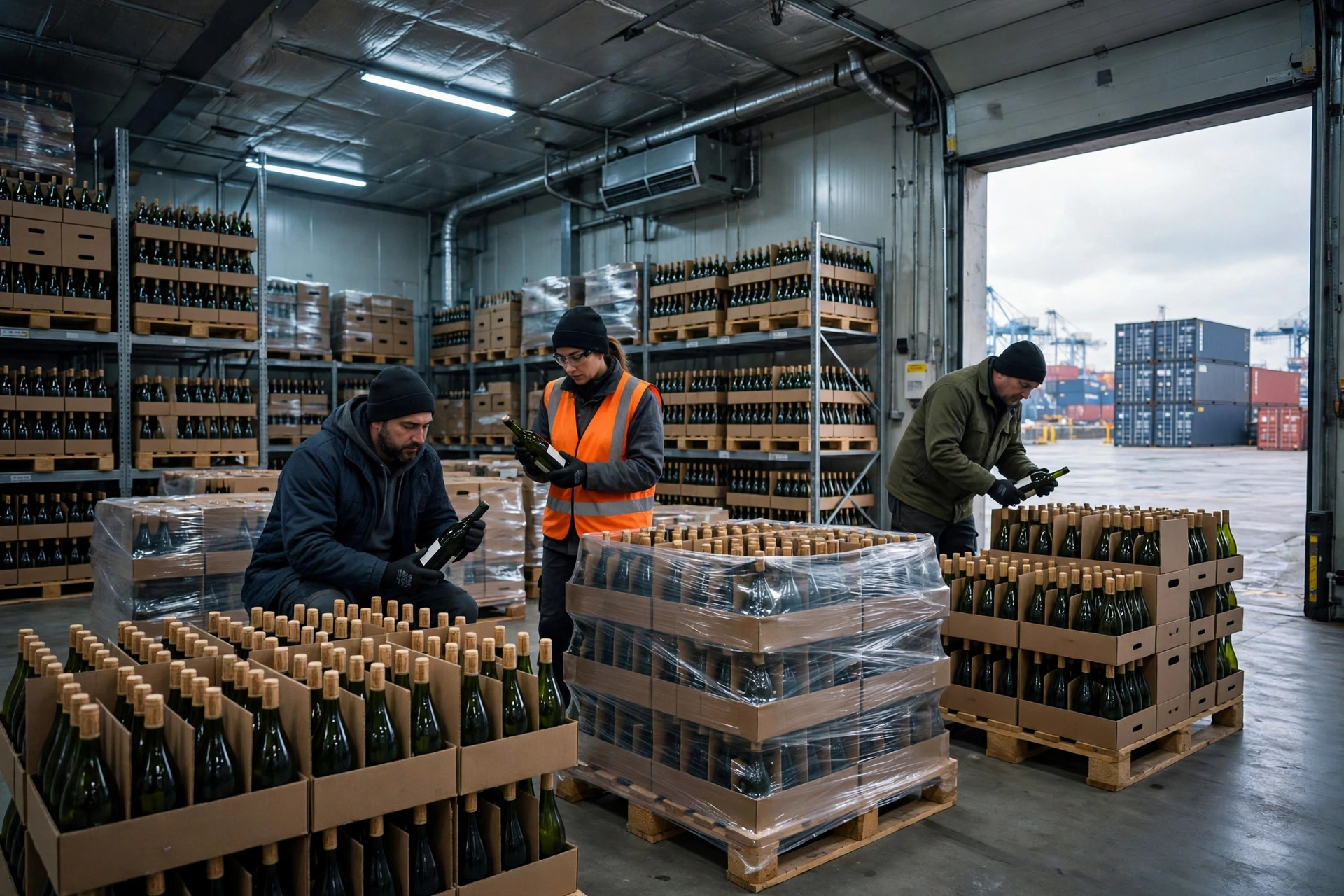
Argentina wine export warehouse storage is not really about the wine. The wine is usually fine when it leaves the winery. The damage happens in the gaps after that: the unconditioned warehouse, the two weeks waiting on a vessel, the labels swapped between two small producers sharing a container. My conclusion up front: for Argentine wine going overseas, you have to price temperature control, labeling, and consolidation as three separate bills. The moment you let savings on one cover sloppiness on another, you lose money.
I have seen too many exporters learn this the expensive way. In the fall of 2023, a mid-sized Mendoza winery shipped Malbec to Asia. Its own cellar was solid, temperature and humidity controlled, and pre-shipment samples checked out fine. The trouble was the middle leg. The wine sat for nearly two weeks in an ordinary warehouse near Buenos Aires waiting for a sailing, and afternoon temperatures inside climbed toward thirty degrees. By the time the container reached its destination, the importer found the same vintage tasting inconsistent from bottle to bottle, with a few corks sitting slightly proud. The shipment was sold at a discount, and the loss would have paid for years of conditioned storage. There are two sides to this story. The winery was not ignorant about temperature. It simply figured that a couple of weeks "should be fine" — and in this business, "should be fine" is the most expensive phrase there is.
The second pitfall was labeling and consolidation. In 2024, a freight consolidator near the port of Buenos Aires packed wine from three small wineries into one container. Each winery's front labels, back labels, and carton marks were different, but the warehouse stacked cartons in arrival order and mixed pallets to save space. During labeling, one batch of back labels got swapped between two producers. At the destination port, documents did not match the physical goods, the whole container was held for inspection, and detention charges piled up day by day. The three wineries split the extra bill and parted on bad terms. The lesson is blunt: consolidation saves freight, but it buys you management complexity. Before small producers share a container, someone has to write down whose goods are whose, what labels go where, and who pays when something goes wrong.
Argentina wine export warehouse storage, bill one: what temperature control is really worth
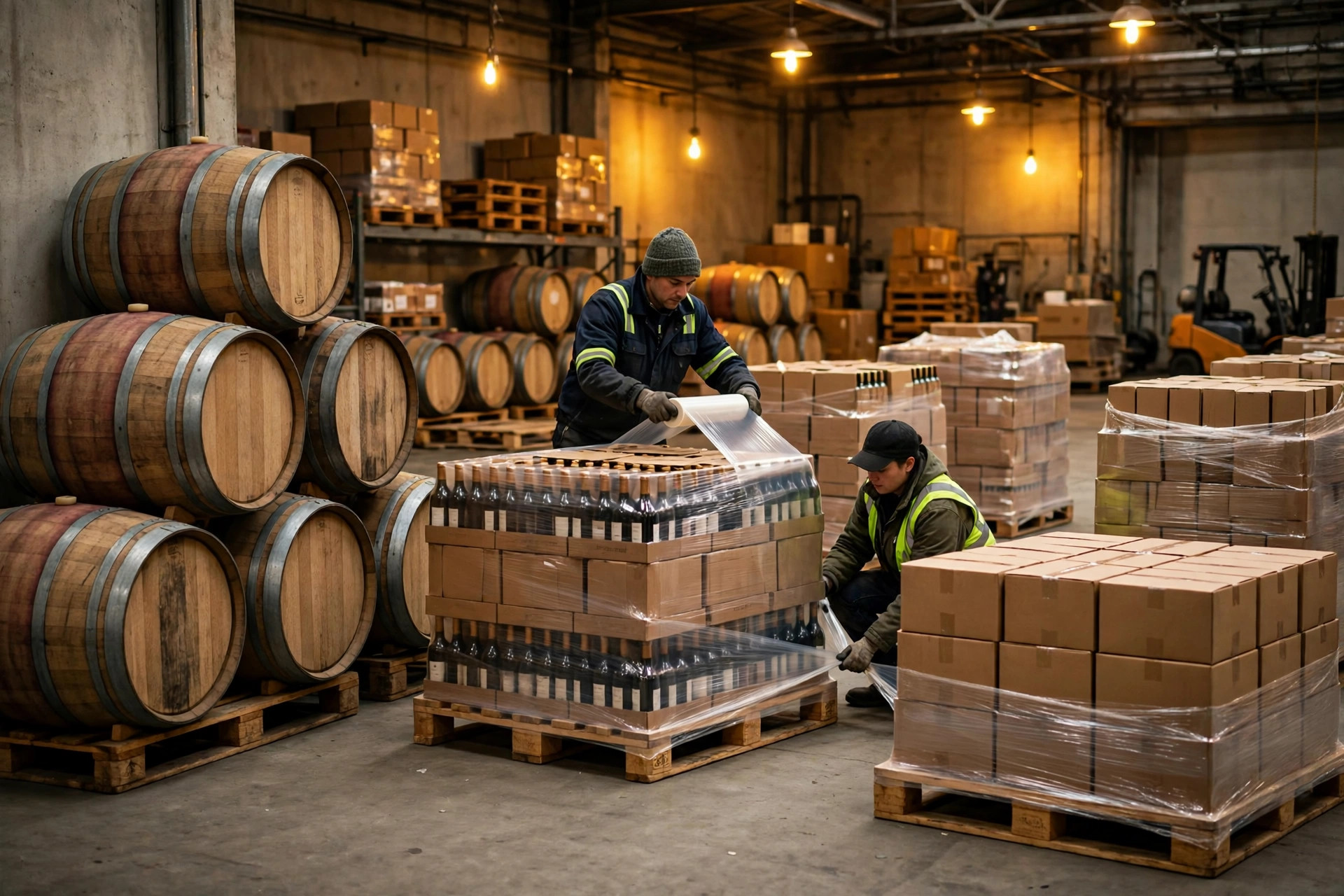
Conditioned storage costs more than an ordinary warehouse. That is a fact. But the comparison is wrong if you only compare rents. You have to compare the rent against the value of the goods at risk. A full container of export-grade Malbec discounted for heat damage loses multiples of what a few months of conditioned storage would have cost. My approach is to control temperature in segments: a temperature-controlled truck from the winery to the port warehouse, conditioned storage while waiting for the vessel, with temperature held in the range generally suitable for red wine and humidity watched as well. Too dry and corks can shrink; too damp and labels grow mold. When a sailing slips, I would rather pay extra days of conditioned storage than gamble the wine in an ordinary warehouse and hope for cool weather. There is also a paperwork point that matters more than people think: record temperatures at handover. The winery's cellar temperature at dispatch, the transit temperature, and the receiving check at the warehouse should all be on record, by batch. If a shipment arrives damaged and you cannot show the chain of readings, good luck assigning responsibility.
Argentina wine export warehouse storage, bill two: labels and consolidation need separate owners
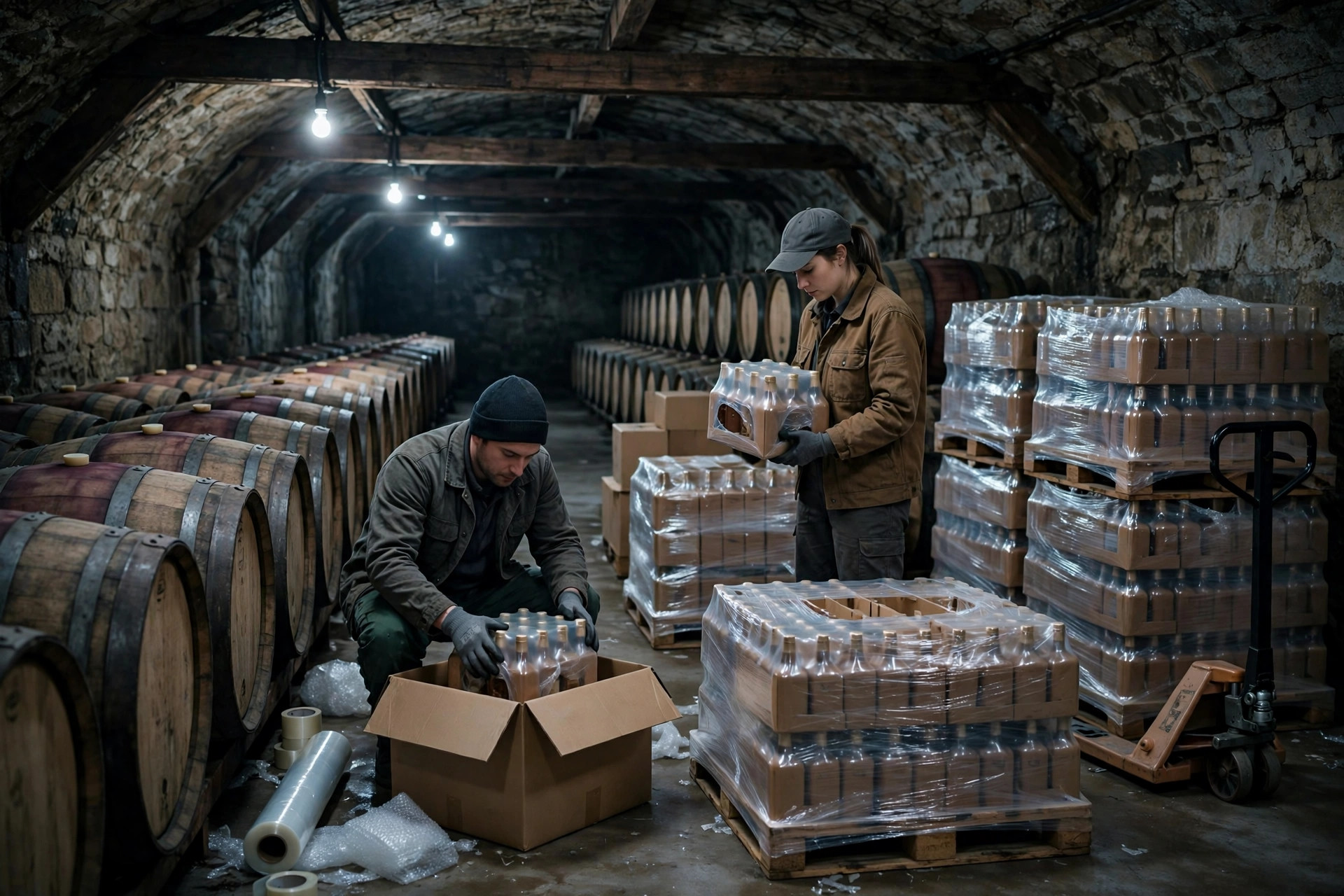
Labeling should never be improvised at the port warehouse. The most reliable practice I have seen is to get labels right before the wine reaches the port: front labels, back labels, and carton marks applied to the destination market's requirements at the winery or a dedicated labeling step, with the port warehouse doing verification only, not rework. The verification checklist has to be specific: wine name, vintage, region, volume, alcohol content, importer details — documents, carton marks, and physical goods all matching before release. Consolidation needs its own set of rules: different wineries' goods stored in separate stacks, pallets never mixed, carton marks distinguished by code or color, and the consolidation sheet spelling out each producer's volume and where its liability ends. Consolidation is not the problem; vague consolidation is. As for export documents, origin certificates, and health certificates, requirements change — check the latest official guidance for the destination market rather than copying what worked on your last shipment.
Cost comparison: three ways to hold the wine
Here is the framework I hand to small wineries and mid-sized importers. The figures are orders of magnitude, not quotes; get real numbers from the warehouse you actually use:
| Approach | Cost | Benefit | Best for |
|---|---|---|---|
| Ship direct from the winery cellar | No intermediate rent, but a slipped sailing leaves you exposed | Clean chain of custody, few handovers | Large wineries with stable sailings |
| Conditioned storage near the port | Extra rent plus a short temperature-controlled transfer | Waiting for a vessel without gambling on weather, plus room for label checks | Most small and mid-sized exporters; the safest default |
| Ordinary warehouse near the port | Cheapest rent | The rent saved will not cover a single heat-damaged shipment | Only very short holds of temperature-tolerant goods |
There are two sides to the cheap option. An ordinary warehouse is not forbidden — it is conditional. Short hold, cool season, modest cargo value: miss any one of those three and do not use it. And here is the counterintuitive part: colder is not automatically better. Red wine held too cold for a long time gains nothing, and what really hurts wine is fluctuation. A stable temperature a few degrees above ideal beats a warehouse that swings hot and cold. The enemy is not a single temperature number. It is variation.
Receiving inspection deserves its own paragraph, because too much damage gets waved through at this step. When wine arrives at the warehouse, check before you shelve it: crushed or damp cartons, torn shrink-wrap, scuffed bottles or labels. Photograph anything odd and write it into the receiving record with the driver and the warehouse both signing. Count by the carton, and log broken bottles, shortages, and loose bottles separately. A receiving log that lumps everything together is worthless when you file a claim. Outbound checks mirror this: verify wine name, vintage, and quantity pallet by pallet against the order, and photograph the loaded container before it closes. Done properly, this adds maybe half an hour per batch, and it buys you traceability when something goes wrong. I have seen too many disputes decided not by the quality of the wine, but by the completeness of the records.
So here is my advice, not a slogan: before your next shipment goes into a warehouse, ask one question — can you give me temperature records by batch? If the answer is a shrug, find another warehouse.
By Lao Mi, Supply Chain Veteran (20 yrs)