Start with the numbers behind Morocco argan oil export warehouse storage. A cooperative in the Souss Valley ships twenty tons of argan oil a year, split between food grade and cosmetic grade, and cosmetic grade sells for far more. Suppose one ton is downgraded because storage let it oxidize. At an illustrative price gap of twenty thousand yuan a ton, that single ton costs twenty thousand yuan. A full year of light-proofing, temperature control, and anti-adulteration storage usually costs less than half of that. Once you run that calculation, the priority of Morocco argan oil export warehouse storage is obvious. This is oil sold by the gram, and a storage failure does not cost a few drums. It costs the grade gap on a whole lot.
The Cost Structure: Three Places the Money Goes
Argan oil storage cost sits in three buckets. First, light protection. Oil oxidizes in light, and transparent containers and open racks are the enemy. Opaque packaging and a shaded storage zone cost little, but skipping them is not an option. Second, temperature control. Heat accelerates rancidity, and a warehouse that loses temperature control in summer degrades oil faster than most people expect. The electricity and equipment depreciation for temperature control are fixed costs. Third, anti-adulteration. Argan oil is expensive, which creates the temptation to adulterate, and lot sealing, retained samples, and two-person checks on inbound and outbound movements are the cost of defending against it. Of the three, the third is the easiest to cut, because money spent on anti-adulteration shows no visible result. But when it fails, the loss is not one lot. It is the cooperative's qualification as a supplier to beauty plants. I have seen a cooperative save a few thousand yuan a year by skipping sample testing, then lose a long-term customer over one questioned lot. No version of that arithmetic comes out ahead.
Morocco Argan Oil Export Warehouse Storage: Light and Temperature Guard Quality
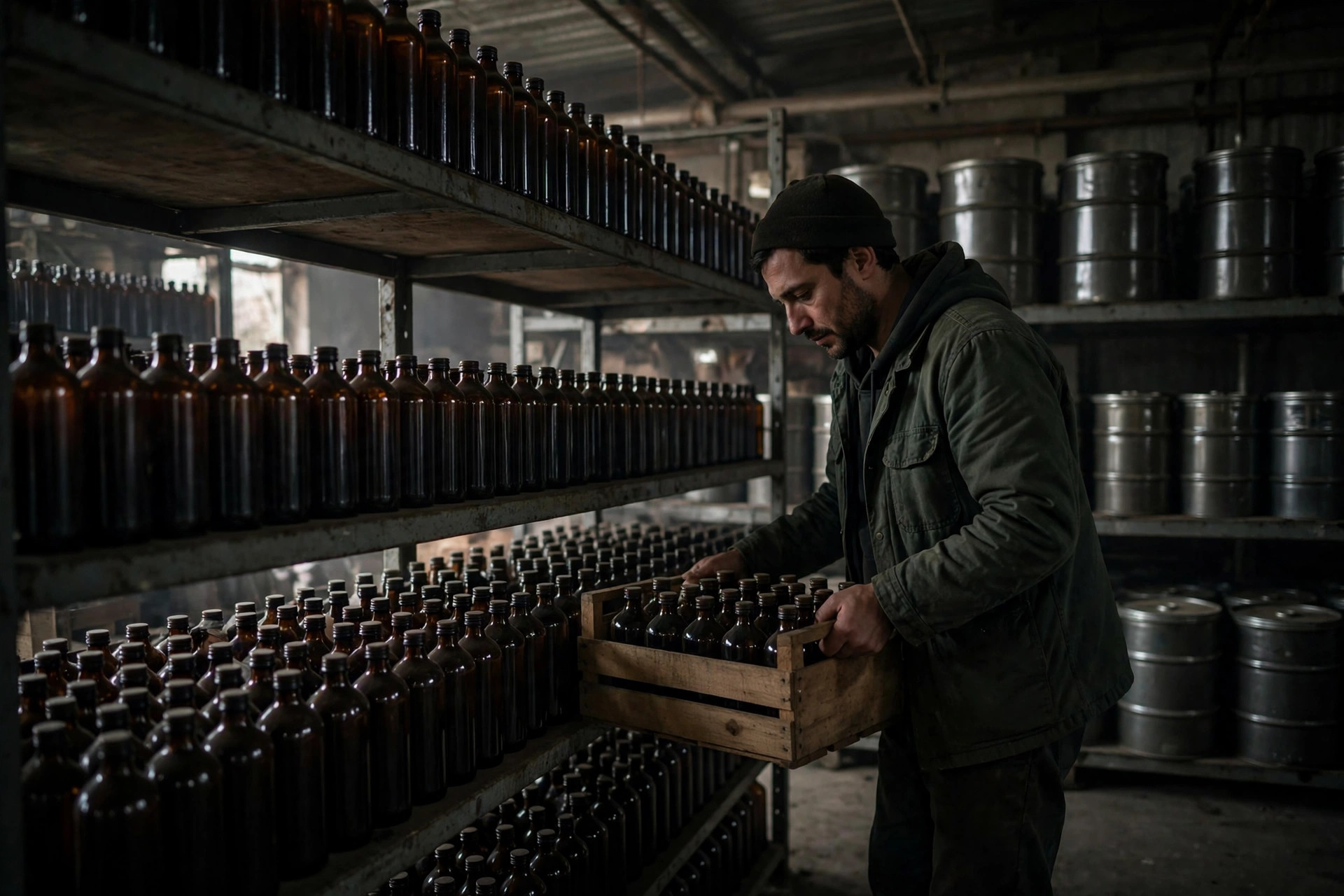
Light protection is concrete. Use opaque containers on intake, shade the warehouse windows, separate the picking zone from the storage zone, and never leave drums sitting in direct sun at the dock. Temperature control means zoning: cosmetic-grade oil goes in the temperature-controlled zone, food-grade oil in a cool ambient zone, and managing them separately costs less than managing them as one. Take the summer of 2023. A cooperative's warehouse lost temperature control during a run of hot weeks, and drums against the wall ran noticeably hotter than drums in the middle. Testing showed the wall-side lots already drifting on acidity, and they had to be downgraded. After that the cooperative insulated the wall positions and moved all high-grade lots to the inside of the warehouse, and the problem never returned. The counterintuitive point: the danger to argan oil is not winter cold. Cold only solidifies oil. Heat plus light is the quality killer.
Running the Full-Year Total: Cutting the Wrong Cost Is the Most Expensive
Run all three buckets across a full year and the picture sharpens. Assume twenty tons a year. Light-proof packaging and shading amortize at eight thousand yuan a year. Temperature zoning, power plus depreciation, amortizes at fifteen thousand yuan a year. Lot sealing, sample testing, and two-person checks amortize at ten thousand yuan a year in labor. The total is thirty-three thousand yuan. On the other side, preventing just two tons of cosmetic-grade downgrade, at the illustrative gap of twenty thousand yuan a ton, saves forty thousand yuan, which already covers the whole program. Add the value of keeping a long-term customer and the return is clearer still. A second cooperative proved the same point in reverse in 2023: to save power, it raised the temperature setpoint in its controlled zone during summer, saved under three thousand yuan in electricity, and then downgraded two lots at a loss above thirty thousand yuan. That money was spent badly, badly in the specific sense that a visible small saving bought an invisible large loss. My rule is simple: quantify first, then decide what to cut. Cutting by feel is how high-value oil gets ruined.
Morocco Argan Oil Anti-Adulteration Line: Sealed Lots Decide
Anti-adulteration runs on lots, not trust. Every inbound lot gets a sealed retained sample labeled with cooperative, pressing date, and lot number, stored separately, untouchable without two signatures. Outbound shipments move by lot, and any buyer sample must match the retained sample. In 2024 an exporter kept this system complete, and when a buyer questioned the purity of a lot, the exporter sent the retained sample for testing, proved the lot, and kept the order. Another cooperative with no retained-sample system faced the same question and could only argue, and lost the order. Retained samples cost almost nothing and protect a whole commercial relationship. One more detail: inbound and outbound records must be precise to the drum. Bulk oil gets weighed, drummed oil gets numbered, and any gap between records and stock beyond reasonable loss gets investigated at once, not discovered at year-end stocktaking.
| Cost item | What you spend on | Cost of skipping it (example) |
|---|---|---|
| Light-proof packaging and shading | Opaque containers plus shading | Light oxidation, whole-lot downgrade |
| Temperature zoning | High-grade oil in the controlled zone | Summer heat, acidity drift, downgrade |
| Lot sealing and retained samples | One sealed sample per lot, two-person checks | No proof when challenged, lost customer |
| Precise drum-level records | Numbered drums plus weighing | Unexplained shrinkage, no audit trail |
The Conclusion, in Calculable Form
Whether Morocco argan oil export warehouse storage is worth it comes down to three numbers: downgrade loss, meaning downgraded tons times the grade gap; light and temperature spend; and adulteration risk loss, meaning the probability of losing a customer times that customer's annual order value. If the spend is smaller than the downgrade loss plus the expected risk loss, the spend is justified. For cooperatives I have run this for, the answer is almost always yes, because the grade gap is so large and the storage spend is relatively fixed. The two ways to waste money here are mirror images: spending where it is not needed, such as full climate control for bulk food-grade oil, and not spending where it is needed, such as skipping retained-sample testing and losing a long-term customer. The first is waste. The second is short-sightedness. Oil sold by the gram deserves storage accounted by the gram, with every yuan of spend carrying a reason.
By Lao Zhou, Logistics Cost Analyst