Here is my verdict up front: most warehouses today should stop at stage two. I have not yet seen a single operation run stage four smoothly. That is not a knock on the technology. It is a fact about warehouses: the tolerance for error on a warehouse floor is far lower than in an office.
Put plainly, generative AI in the warehouse moves from "can talk" to "can decide." What sits between those two points is not better algorithms. It is data, accountability, and a fallback plan. Skip a step and the losses are real money.
Stage One: The Generative AI Q&A Assistant — Worth It or Not
I have seen too many warehouses spend good money on a Q&A assistant first. A worker asks where a product sits, and the system pulls the answer from the operating manual. A new hire asks how returns are handled, and the system pastes the procedure. It sounds great. In practice it goes one of two ways.
The first way: the warehouse's own manuals are a mess, scattered across a dozen documents with conflicting versions. The assistant learns the mess faithfully and answers with total confidence — and gets it wrong. An auto parts warehouse rolled out a Q&A assistant in the summer of 2025. A new hire followed its answer and moved a batch of returns straight into the inspection zone. The procedure actually required photos as evidence first. When the customer filed a claim, the warehouse had no photos and paid out more than $20,000. The AI was not the problem. The data fed into it was wrong.
The second way: the documentation is clean, and the assistant genuinely saves time. A 3PL handling home goods brought in more than 40 temporary workers during peak season, and the shift lead was fielding a hundred repeat questions a day. After the assistant went live, the lead's interruptions fell by roughly half, and the freed time went to watching exception orders. That math works.
So the test for stage one is simple: are your operating documents presentable? If they are a mess, fix the documents first and skip the AI. Cleaning up documents costs far less than paying for AI mistakes.
Stage Two: The Copilot — Where Humans Are the Brake
Stage two is the copilot. The system does more than answer; it suggests. Which slot this batch should go to, how to build the next wave, which order is likely to miss its cutoff. More useful, and more dangerous.
Early in 2026 I visited an apparel warehouse whose system suggested pick paths. The suggestions were fine in theory. The problem was accountability: when a suggestion was wrong, nobody owned it. The system once suggested moving fast-moving winter apparel into a far aisle because space was open there. Pickers followed the advice for two weeks and walked extra distance every day. Peak season labor was already tight, and the supervisor switched the feature off in frustration.
There are two sides to this. A copilot earns its keep where it sees the whole picture: which zones are filling up, how the order mix in a wave has shifted. But it cannot see plenty of things that matter: an urgent shipment arriving tomorrow, a customer who just changed packaging requirements, a forklift that broke down this morning. If that information is not in the system, the AI cannot know it.
So stage two needs a hard rule: a suggestion is only a suggestion. The person executing it can override it, and every override gets logged. The log is not for blame. It is how the system learns where it went wrong. A suggestion feature with no override and no feedback loop will be ignored by floor staff within three months.
Stage Three: Semi-Autonomous, Human in the Loop
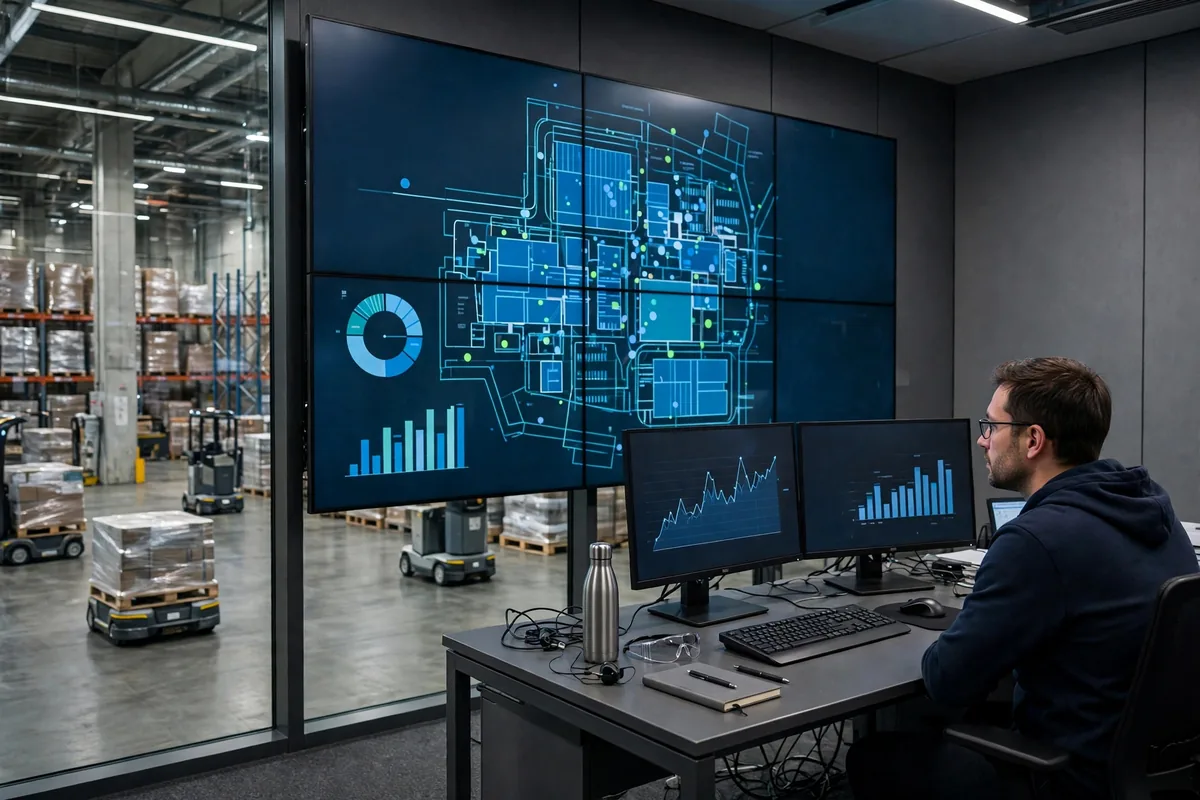
Stage three is semi-autonomous with a human in the loop. The system acts on its own within set limits while a person watches and can stop it at any time. It reprioritizes replenishment tasks, flags exception orders, drafts tomorrow's wave plan, and the supervisor reviews it each morning and approves it.
The closest thing to a working example I have seen is an electronics distributor. Replenishment used to depend on a supervisor's experience and took more than an hour every morning. After the system started drafting the sequence and the supervisor reviewed it, morning planning dropped to under 20 minutes. The key was a clear boundary: the system only touched routine replenishment. Orders involving high-value goods or customer-specified batches stayed manual, no exceptions.
A food warehouse was not so lucky. They let the system automatically sequence near-expiry goods to cut waste. The system also pushed out a batch that a customer had specified by lot number. The customer found the wrong lot on arrival and returned the whole container. The loss was not enormous, but trust evaporated overnight, and the project sat idle for six months.
Here is the counterintuitive part: at the semi-autonomous stage, the hardest thing is not the technology. It is writing down, precisely, the conditions under which the system must stop and ask a human. That stop-list matters ten times more than the algorithm. The more specific the list, the further the system can go. A vague list guarantees a serious incident sooner or later.
There is also a trade-off to face honestly: where do the saved hours go? Saving a supervisor an hour of morning planning is a win. Cutting quality-check headcount to watch the system instead is a risk. My advice is to reinvest the saved time into exception handling, not into headcount cuts. The more autonomous the system, the rarer exceptions become — and the more expensive each one is.
Stage Four: Restricted Autonomous Decisions — What Generative AI Still Can't Do
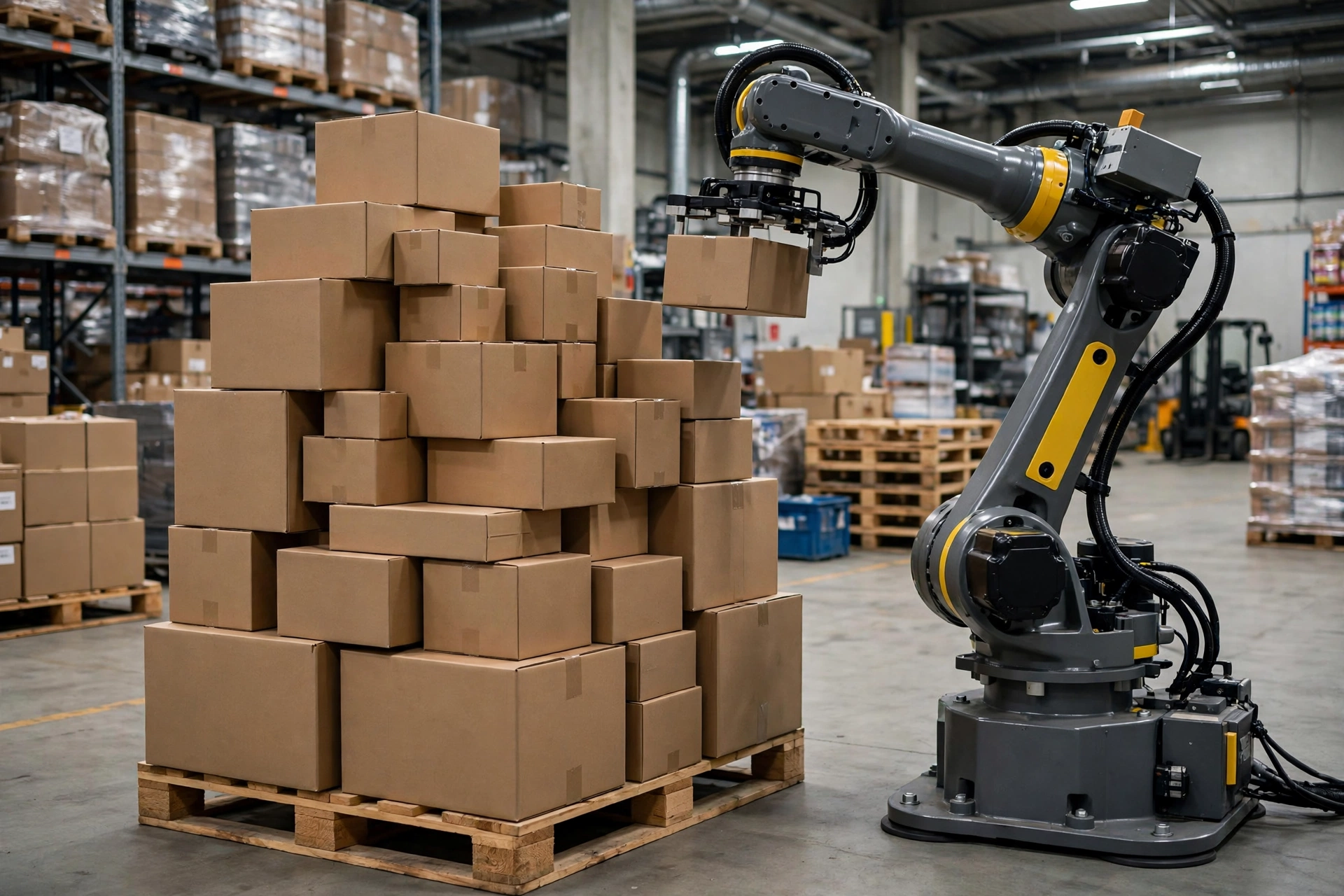
Stage four is restricted autonomous decision making. Within a defined scope, the system decides and executes on its own, leaving an audit trail, with no per-order human approval. Automatic replenishment of low-value consumables, automatic release of routine waves, automatic handling of standard exceptions.
To this day, I have not seen any warehouse claim to run this fully. Three obstacles stand in the way, and none can be dodged.
First, data. Autonomous decisions need inventory, orders, slotting, and equipment status all live and all accurate at the same time. If any one of those four is unreliable, the decision is built on sand. Plenty of warehouses cannot vouch for their own inventory accuracy. Talking about autonomous decisions on top of that is building in the air.
Second, accountability. When a shipment goes out wrong, is it the system's fault or the supervisor's? What does the contract say, what does insurance recognize, who does the customer claim against? Until those questions are settled, no warehouse owner will hand signing authority to a system.
Third, the fallback. When the system fails, is there a switch back to manual operation, how long does the switch take, and what happens to orders in between? If you cannot answer those three questions, stage four is decoration.
My judgment is this: over the next three to five years, most warehouses will end up running stage three well, with stage four piloted only in tiny enclosed scenarios — a single product category, low value, highly standardized replenishment. Anyone expecting generative AI to run the warehouse next year is likely to be disappointed.
Four questions for your own warehouse: Forget what vendors say and ask yourself four questions. First, are your operating documents and master data accurate enough that you would put your inventory accuracy in writing? Second, who owns exception handling today, and who gets the call when something goes wrong? Third, when the system's suggestion is wrong, do floor staff feel safe saying no? Fourth, if the system goes down, can manual operation take over within half an hour?
If you can answer all four, stage two is fair game and stage three is worth piloting. If any one of them has no answer, fix that problem first. Generative AI in the warehouse is not a race over who has the newest model. It is a contest over whose foundations are clean and whose rules are clear.
Where is your warehouse today, and which question is it stuck on?
By Lao Mi, Supply Chain Veteran (20 yrs)