We had a client — a flower e-commerce brand, warehouse in Los Angeles. A week before Valentine's Day last year, their founder called me, voice completely shot: "Susan, if another batch arrives dead, I might as well shut down the store."
Here's what happened. They'd set their order cutoff at 10 PM — marketing wanted to chase GMV, ops just had to absorb it. That week, out of 20,000-plus orders, nearly one in five arrived wilted. And the one-star reviews all came with photos. The homepage promised "48-hour delivery." What customers got was a 48-hour time-lapse of flowers dying.
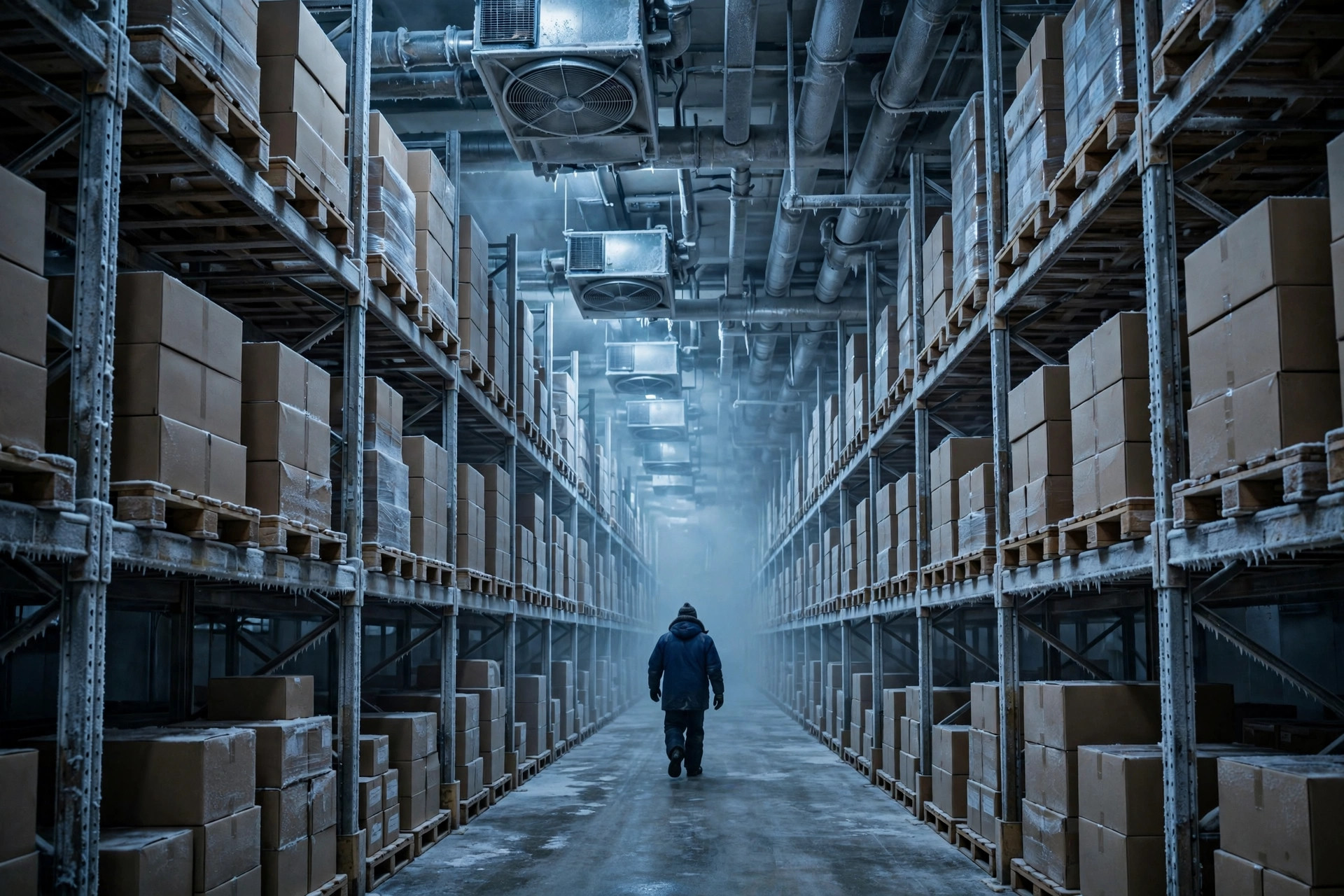
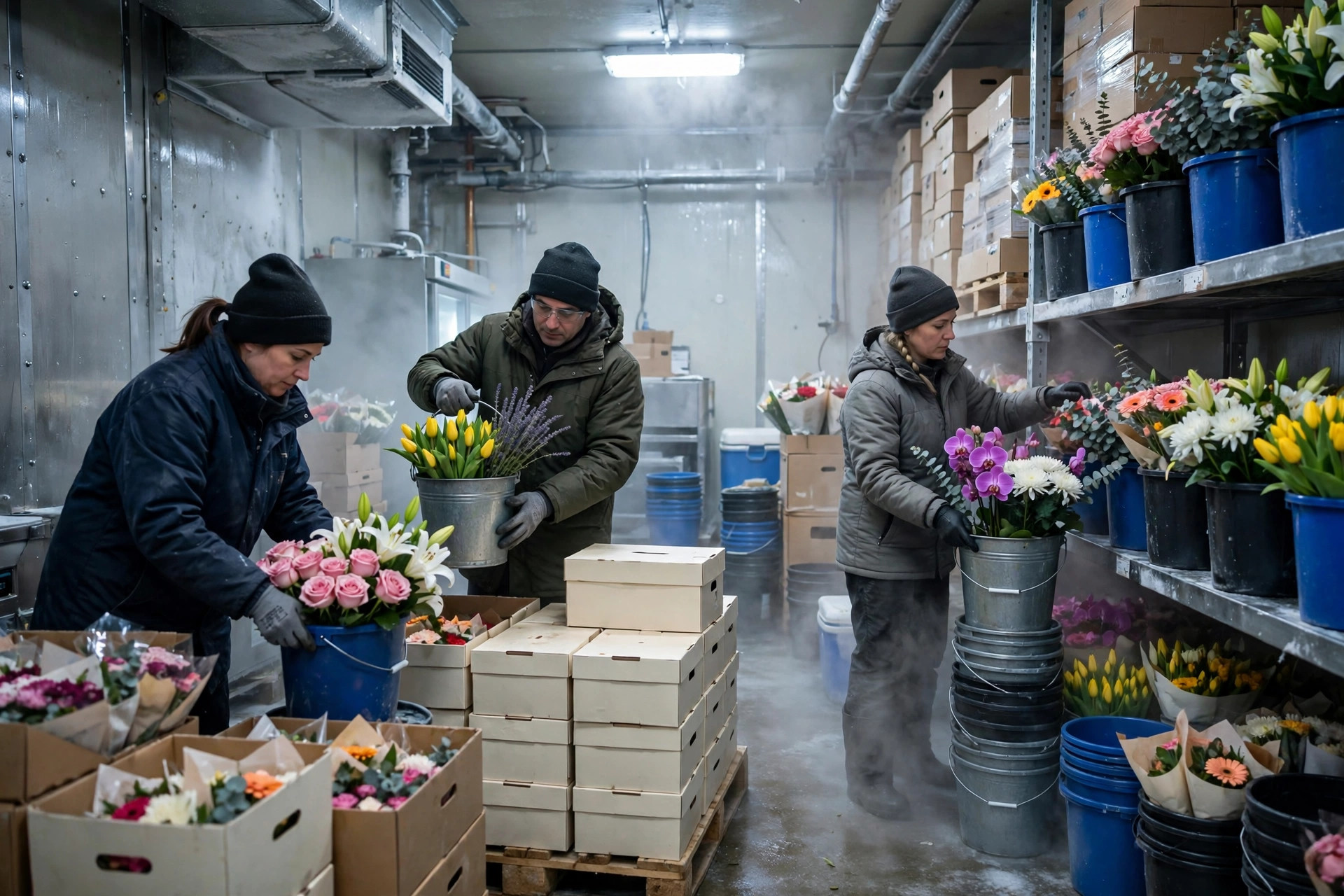
When we did the postmortem, the problem wasn't the linehaul at all. Their flowers fly in from Ecuador to LA, full cold chain, 2–8°C, temperature loggers the whole way. The breakage happened in the last mile before the last mile: product sitting at the cross-dock waiting for a trailer, a 90°F-plus week in California, a queue at the cooler door, trailers that were never pre-cooled. Flowers baked at ambient temperature for four or five hours. Everything the linehaul had protected, those four hours gave back.
That's the fundamental difference between flower e-commerce and regular e-commerce: the lifeline isn't seven days, it's 48 hours. The countdown starts at the moment of harvest. We ended up re-running three sets of books for this client — cold chain, cutoffs, and shrinkage, all tied together.
Cold chain: freeze damage kills just as dead as heat
Most people assume colder is better. Wrong. Cut roses chill below 2°C and the petals develop water-soaked spots — they arrive looking scalded. Bake them above 30°C for a few hours and vase life gets cut in half. The safe band is roughly 2–8°C, and it varies by species. Running a flower warehouse on standard reefer specs is asking for trouble.
We laid out three packaging tiers for the client. The selection logic is simple: work backward from your delivery promise.
| Option | Cost per order | Hold time | Best for |
|---|---|---|---|
| Insulated box + gel packs | Lowest | approx. 24–36 hours | Local, next-day |
| Insulated box + phase-change coolant | Mid | approx. 48 hours | Cross-state 2-day |
| Active temperature-controlled box (reusable) | Highest | 72+ hours | High AOV, custom bouquets |
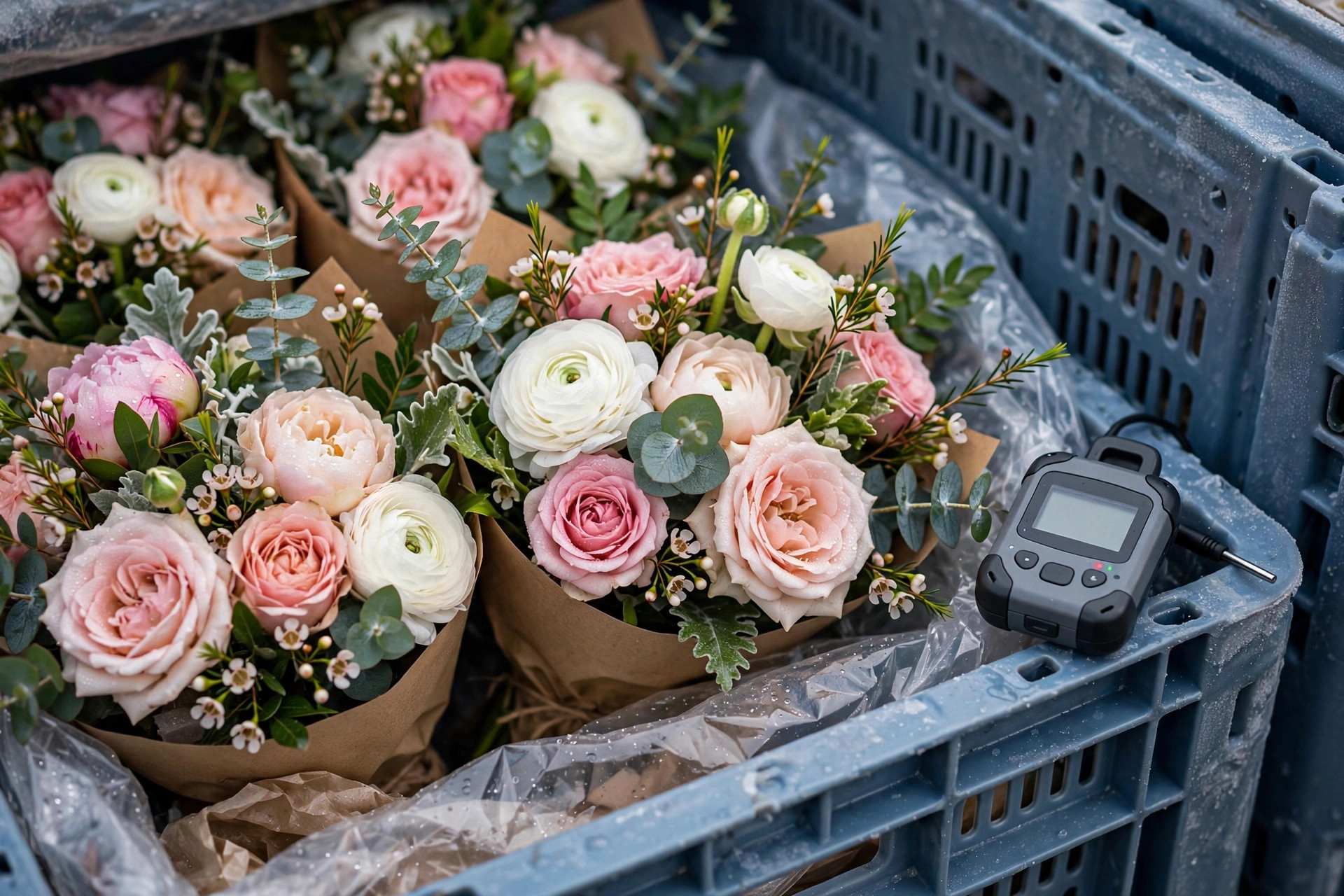
You don't pick a tier by gut feel — you run the total math. Valentine's week, 20,000 orders, average order value around sixty bucks: every point of shrinkage reduction saves five figures in product alone, before you count the repeat business that bad reviews destroy. They went with the middle tier. Shrinkage fell from nearly twenty percent to single digits. What they spent on packaging, they earned back in product that didn't get thrown away.
Here's the counterintuitive part: the real killer in flower cold chain isn't the linehaul — it's the four hours before the trailer rolls. Linehaul has loggers and SOPs; it's the most disciplined leg. The chain breaks in the "small stuff": trailers queued at the dock door, no pre-cool, handlers leaving insulated boxes in the sun to save time. We added one hard rule for this client: every pickup trailer must be pre-cooled to 4°C, and the driver checks trailer temperature at arrival — no pass, no load. Complaints dropped again.
Cutoffs: is your cutoff time a promise or a wish?
In flower e-commerce, marketing and ops fight over the cutoff time forever. Marketing wants midnight to capture more orders. Ops knows that anything coming in after 8 PM misses the next morning's linehaul departure and sits in the warehouse overnight — and for flowers, one night in the building is one day off the vase life.
Second counterintuitive take: your delivery bottleneck was never the carrier — it's your own cutoff time. Carrier transit times are standardized; your cutoff is the variable. We moved this client's peak-season cutoff from 10 PM to 4 PM. Marketing howled at first. Then the data came in: orders under the earlier cutoff showed clearly better on-time rates and review scores, and repeat purchase actually went up. Take 20% fewer orders, protect 80% of your reputation. Marketing signed off on that math eventually.
Peak planning has its own wrinkle: flowers are brutally pulsed. Valentine's Day and Mother's Day — two weeks — can be 30–40% of annual volume. You can't staff to the average. Our playbook: lock temp labor six weeks out, schedule pack lines at 1.5x peak, and clear half the cooler for flowers only. Don't wait until you're drowning to add headcount. Flowers don't wait.
Shrinkage: who pays, how much — get it in the contract
Here's the insider part, the kind of thing only the 3PL side knows: most 3PL quotes for flower clients have deliberately vague shrinkage language. The phrase "normal shrinkage" is a month-long argument waiting to happen. In our contracts, shrinkage is split by stage with hard thresholds: inbound receiving shrinkage above 3%, we help you claim against the supplier; in-warehouse handling shrinkage above 1.5%, we pay; linehaul is settled by the temperature log — if the chain broke on our watch, we pay; if there's no evidence of a break, we go after the carrier together.
Another client story. A subscription flower company in Texas, shipping on a fixed weekly cadence. Their old 3PL contract had exactly one sentence on shrinkage. One month it hit 12%, both sides argued for a month, and the client ate it. After they switched to us, the contract spelled out thresholds and burden of proof. Shrinkage has stayed under 5% ever since. Our operation didn't become magical — a clearly written clause disciplines both sides. Numbers on paper keep everyone honest.
Three questions for your next contract negotiation
When you're negotiating with a 3PL for flower fulfillment, don't just compare unit rates. A fifty-cent difference in rate versus a five-point difference in shrinkage — which one actually costs more? Next time you're at the table, ask these three questions:
One: is shrinkage measured by stage, with separate thresholds — and who pays when each one is breached? Two: is the cutoff time a contractual SLA commitment, or "best effort"? What happens to orders that miss the departure? Three: if the cold chain breaks, who proves it? Who provides the temperature records, and how long are they kept?
Ask those three, and you'll know within minutes whether you're talking to someone who actually understands flowers — or someone recycling a generic e-commerce template.
By Susan, 3PL Sales Director