We have a client in the imported cherry business who took a painful hit last summer. One container sat at the cold storage door for 40 extra minutes — just 40 minutes — the product temperature curve excursed for a short stretch, and the shipment was rejected at arrival. The goods left from our warehouse, so the claim landed on our desk. The shipper's logic was simple: it happened in your hands, you pay. After that, I went through our entire cold storage temperature monitoring SOP line by line, and rewrote every temperature clause in our contracts. Today I'm sharing the insider stuff only the 3PL side usually knows. If you run cold storage, copy the homework. If you're negotiating a 3PL cold storage contract, use this as your checklist.
Cold Storage Temperature Monitoring: Where the Sensors Actually Go
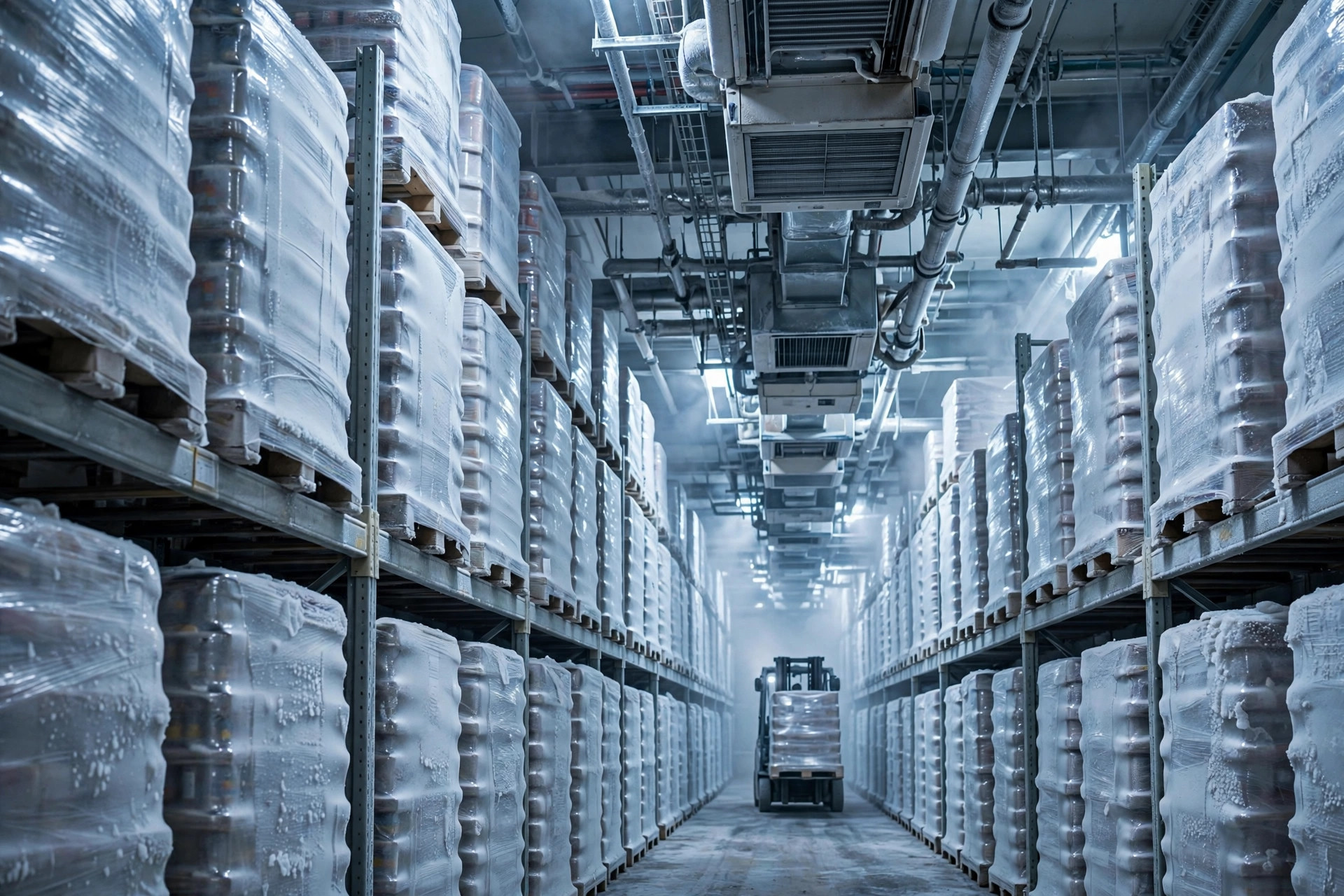
Here is the counterintuitive conclusion first: more sensors are not better. Wrong placement makes a hundred sensors decorative. The first step of cold storage temperature monitoring is not buying hardware — it is mapping. Before a new facility goes live, run temperature mapping: once empty, once loaded, once in summer, once in winter. Place mapping points by floor area and racking layout, with one goal: find every hot spot and dead zone. And mapping is not a one-and-done — redo it after major racking changes or reefer overhauls.
Once mapping is done, sensor placement has a basis. Five mandatory points:
First, the refrigeration unit's return-air inlet. This is the sentinel for cooling output — when return-air temperature drifts, the reefer itself may be the problem.
Second, inside the doors and dock doors. The front line of door-operation temperature swings, and where excursions most often start.
Third, mid-rack height, at product level. Note: product level, not the ceiling. This is the most valuable insider line in this article — plenty of warehouses hang sensors from the ceiling, where readings always look beautiful, because cold air sinks and it is routinely several degrees colder up there than inside the pallet stack. The client reviews the data, everything looks fine; the product has a problem, and the data still looks "fine." Sensors measure air temperature, not product temperature. That sentence is worth money.
Fourth, the hot spots and dead zones the mapping found: corners against walls, deep racking the airflow never reaches, interior faces of sun-struck exterior walls. Excursions love to hide there.
Fifth, an outdoor reference point — to distinguish "something broke inside" from "it is just brutally hot outside," which matters when you write the incident report.
Behind the placement logic sits a trade-off: the closer a sensor is to the product, the truer the data, but the harder the maintenance (forklifts hit them, cycle counts knock them). The closer to the ceiling and walls, the safer — and the prettier-but-fakier the data. Our compromise: fixed points for trend monitoring, plus mobile wireless probes that travel with high-value product.
Door Operations: An Excursion Is Not "Whether," It Is "How Long"
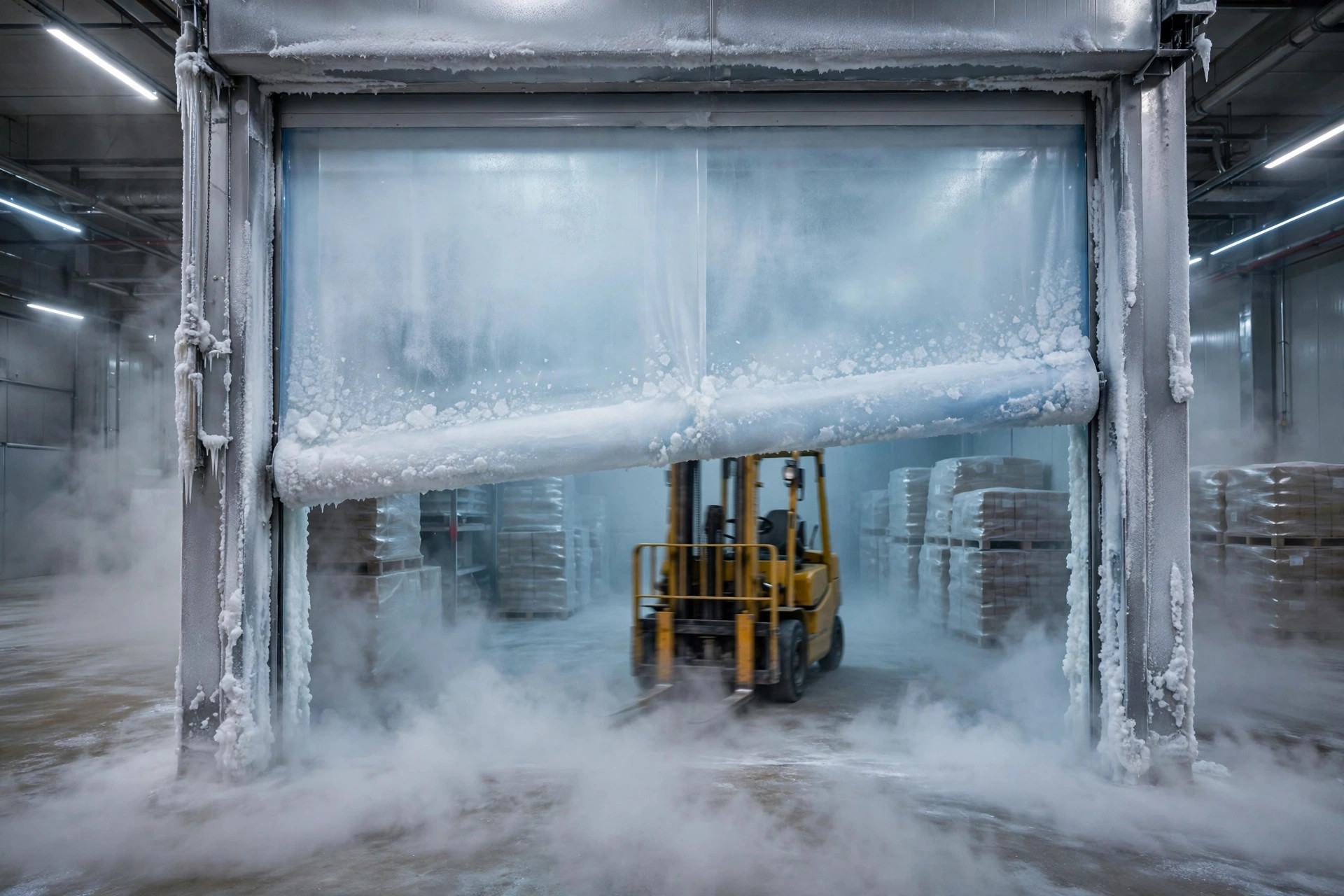
The biggest temperature enemy in cold storage is not the reefer — it is the door. A dock door opens dozens of times a day, and every opening pours in warm air. Anyone who has done mapping knows the temperature swing within 3 meters of a door can dwarf the swing at the room's center.
So door operations need an SOP detailed enough to execute: strip curtains or air curtains always on, repaired the same day they break — no "we'll manage for two days"; high-speed roll doors where justified, because opening speed is temperature saved; door discipline during loading — writing "close the door behind the forklift" into shift KPIs beats ten wall posters; door-area sensor readings tied to alarms, with an automatic nudge when a door stays open past the set time.
This is where the key concept comes in: a temperature excursion. An excursion is not "the temperature went over" — it is "by how many degrees, for how long." That definition has to be nailed down in the contract. The industry's common formulation is "X degrees over for Y minutes counts as one excursion"; the exact numbers differ by contract. What matters is that it is in writing. Without it, every incident becomes an argument: the client says ten minutes counts, you say two hours, and nobody has anything to point at.
For food, the temperature bands follow the FDA Food Code's general thresholds: 41°F (5°C) or below for refrigerated, 0°F (-18°C) or below for frozen. Pharma and specialty categories follow their own specs, listed separately in the contract. The band is the red line; the excursion definition is how you score it once the line is crossed. You need both.
Excursion Alarms: Tiered Response, or No Alarm at All
The most common way alarm systems die is not "never installed" — it is installed and then ignored. So excursion alarms must be tiered, with each tier tied to a clear action and owner:
L1 — early warning, SMS or app push: the duty operator acknowledges within 15 minutes, false alarm or real. L1 is allowed a meaningful false-positive rate; its job is "know early."
L2 — alarm, phone call to the supervisor: the supervisor goes on site, checks reefer status and door status, decides whether product needs to move. L2's false-positive rate must be very low — after three false alarms at 3 a.m., the supervisor stops picking up the fourth.
L3 — emergency, group call, contingency plan activated: shift product to another room, bring in backup cooling, notify the client. L3 may fire only a few times a year, but every one gets treated as real.
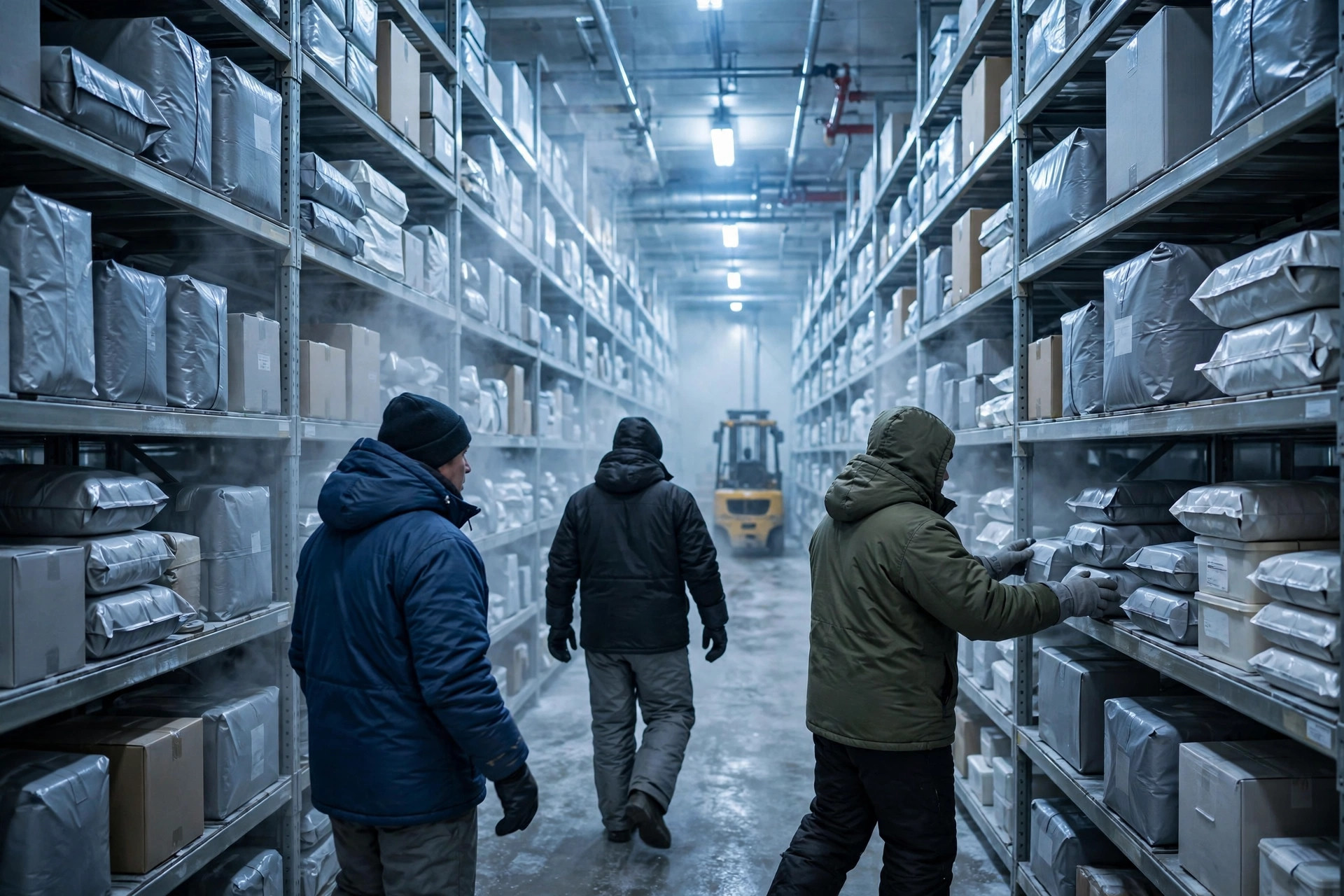
Behind the tiers sits one more thing to decide in advance: who has the authority to say "this product is still good." It must be a named person — the QA lead or operations manager signs the release. Not "let's discuss it." At 3 a.m. during an excursion, waiting for a morning meeting means the product is fully lost.
And the classic trade-off: thresholds set too tight, the phone rings every night at 3 a.m., and after a month nobody answers — alarm fatigue is more dangerous than no alarm. We learned this one the hard way: thresholds set per the reefer manufacturer's suggested values, normal door-operation swings triggering L2 daily, until the duty team muted L2 push notifications. The right way is thresholds derived from mapping data: only swings outside the normal operating envelope trigger alarms. Thresholds are calculated, not guessed.
The Real Math: Monitoring Cost vs. One Excursion
The 3PL-side ledger has two books: the investment book and the incident book.
| Monitoring investment | One excursion incident | |
|---|---|---|
| Hardware | Sensors + gateway + platform — low tens of thousands of USD for a mid-size room | — |
| Labor | 24/7 watch desk or outsourced monitoring | Sorting, inspecting, re-palletizing labor |
| Product loss | — | Cargo value of a container (tens of thousands of USD per reefer of imported fruit or seafood is not unusual) |
| Claims & goodwill | — | Customer claims, lost orders, lost accounts |
| Hidden costs | — | Insurance deductible, next year's premium hike |
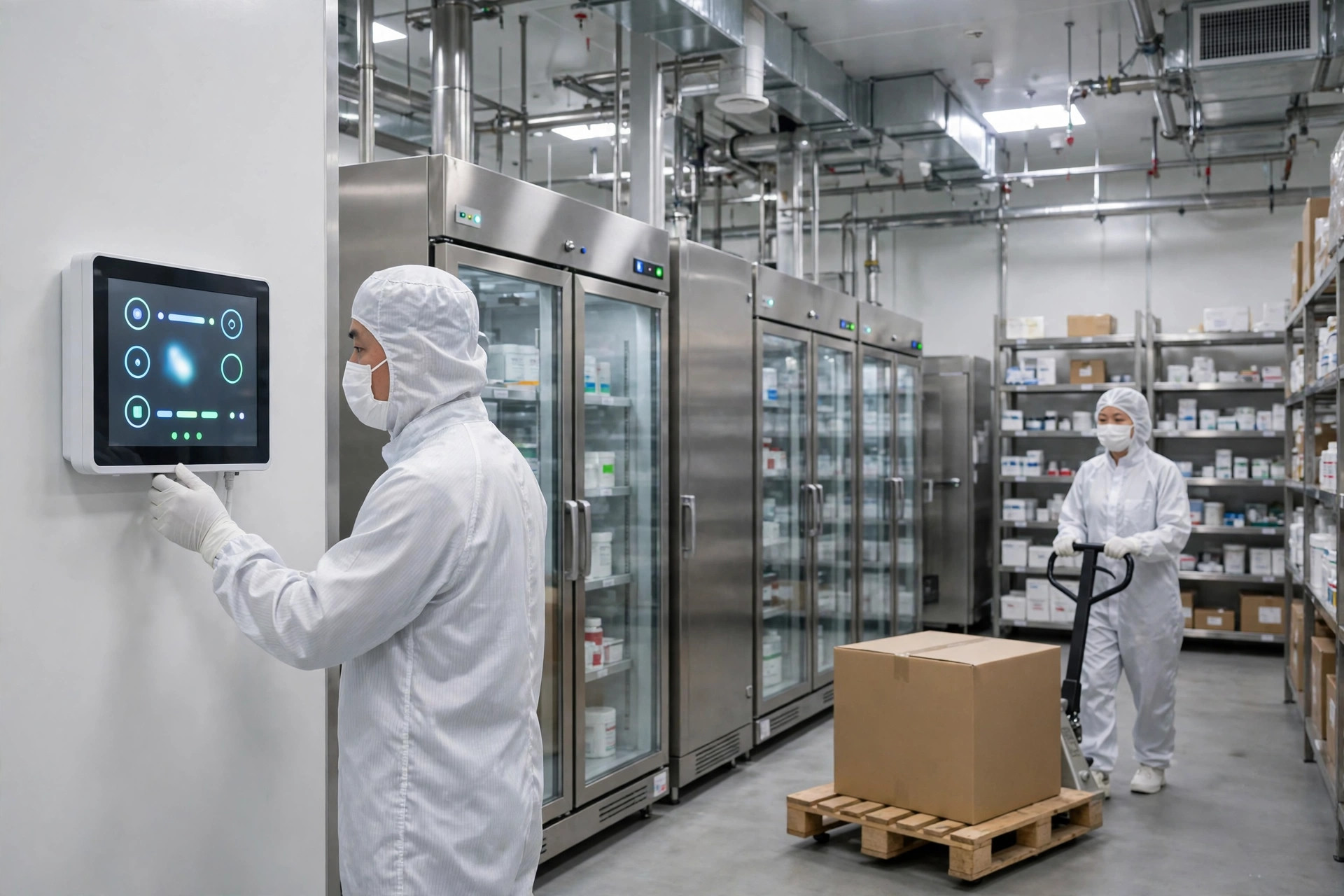
The math is easy: one mid-size excursion pays for several years of monitoring. But here is the detail only the operator side knows: a monitoring system's real value is not just "saving product" — it is "being able to prove it." Without a continuous temperature record, neither the insurer nor the client accepts your word after an incident — "you say it never went over; where is the evidence?" The record itself is an asset, worth more than the sensors.
A word on the regulatory backdrop, so nobody files temperature monitoring under "value-added service." The FDA's FSMA Sanitary Transportation rule requires temperature-controlled food to be kept under temperature control throughout transport, and carriers must be able to demonstrate, when asked, that the conditions were maintained. Industry common practice is a temperature log every 4 hours, with records typically retained at least 12 months for inspection. The warehouse-side logic is identical: the question is not "whether to log" but "at what granularity, kept how long, retrievable by whom."
One positive case, to show what this looks like when it works. Another client, imported salmon: L2 alarm at 2 a.m., the duty operator on site found the reefer stuck in a defrost anomaly, fixed by 4 a.m. The product temperature excursed for 40 minutes — within the contract's allowance. In the morning the client saw the complete temperature record and the response report, and renewed for a second year, adding volume. Note the causality: it was not "nothing happened" that satisfied the client — it was "something happened, with records, response, and a report." A 3PL never really sells "nothing goes wrong." It sells control when something does.
Three contrarian takes for cold storage operators:
First, the most expensive part of temperature monitoring is not hardware — it is "someone watching 24/7 who dares to make the call at 3 a.m." No sensor vendor will tell you this, but it is the operator's real cost.
Second, discount the IoT marketing pitch. "AI predictive maintenance" and "digital twin" sound lovely, but with wrong placement and wrong thresholds, the priciest platform is just a pretty dashboard. Mapping first, placement second, vendor selection last — reverse that order and the money is wasted.
Third, in every excursion post-mortem, the first question is always "where are the temperature records?" Complete records, and the conversation is "how do we improve." No records, and the conversation is "who pays." That difference is worth a monitoring system.
Next time you negotiate a cold storage contract, ask these three questions:
One — are the temperature bands and the excursion definition in the contract? How many degrees over, for how long, signed by both sides.
Two — who bears the burden of proof for temperature records, and how long are they kept? Whoever asserts must prove; the side without continuous records loses by default.
Three — are tiered alarm response and the escalation path in the SLA? Who answers L1/L2/L3, response times in minutes, who has authority to release product.
Ask those three and the other side knows they're dealing with someone who understands the business. Price is negotiable — but a contract missing these three clauses is expensive at any price.
By Susan, 3PL Sales Director