
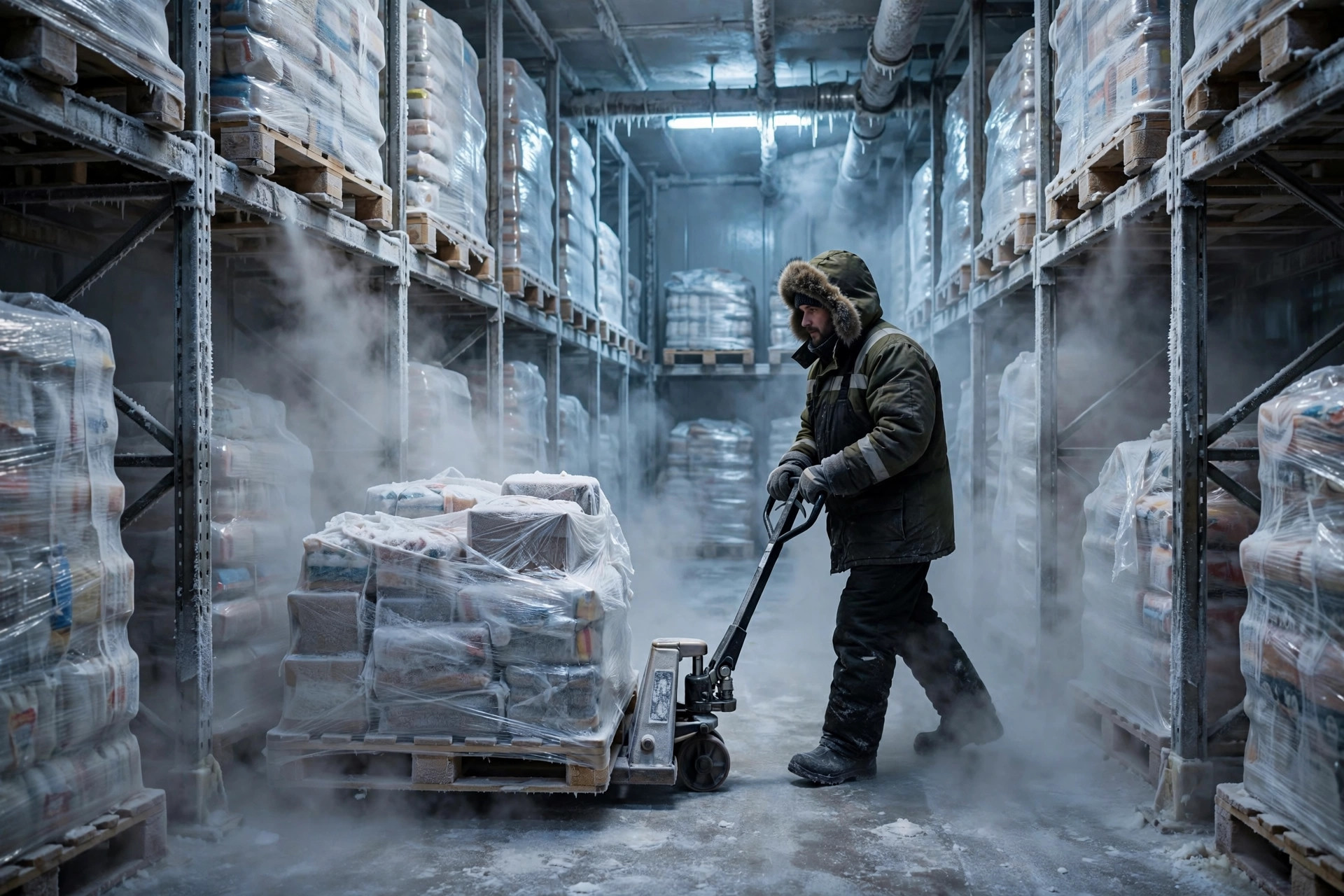
It was 5:40 on a January morning, still dark outside, and I walked into the freezer for my morning walk-through wearing two insulated jackets. Minus 25 degrees inside — my breath turned to white fog the second it left my mouth. One of our forklift operators went up to the third level to pull a pallet of frozen chicken legs. He slid the forks in and lifted — and the pallet didn't move. The load came up; the pallet stayed behind. Its bottom boards had frozen solid to the rack beam. He gave it a harder pull, there was a crack, a board snapped, and half a pallet of product hung three meters in the air, swaying. My stomach dropped. We stopped everything, grabbed safety straps and a spare pallet, and spent the better part of 40 minutes getting that load down safely.
Real talk: if you run a freezer warehouse and pallets have never burned you, you haven't been doing it long.
Where Wood Pallets Fail in a Freezer
Wood pallets are cheap — low teens of dollars apiece, practically free on the way in. But put them in a minus-twenty-something freezer and the problems start lining up.
First, they soak up moisture and freeze. Wood absorbs water. A pallet gets loaded at ambient temperature, rolls into the freezer damp, and by morning it's wearing a coat of ice. Pallets freeze to each other, to the rack beams, to the product itself. A pallet that weighed twenty or thirty kilos can pick up ten-plus kilos of ice. One of our forklift guys jokes that pulling product in winter is like pulling radishes — you wiggle it first to see if it's stuck.
Second, they go brittle. At minus 25, wood snaps like a cracker. Catch a bottom board a little hard with the forks and it cracks. We ran the numbers once: from December through February, pallet write-offs run two to three times the rest of the year. And they never break clean — it's always the bottom boards and blocks, the parts carrying the load. One breaks, the whole pallet goes crooked.
Third, splinters. Food and pharma customers dread them. A splinter in a packaging seam or stuck to a carton means a complaint, and a complaint means a fine at best and a lost account at worst.
The Audit That Forced Us to Do the Math
In the summer of 2023, a pharma cold-chain customer came in for a supplier audit. The auditor went pallet by pallet with a flashlight, and on one wood pallet he found splinters along the edge and a repair nail. Non-conformance, written up on the spot. Their buyer had one sentence for us: the zone holding their product goes all-plastic within three months, or the business walks.
We had no choice. We bought around 800 plastic pallets — tens of dollars apiece, three to five times the price of wood. Our finance guy's face went pale.
But it turned out to be a blessing in disguise. In the full year after the switch, pallet breakage in that zone was basically zero, and the words "foreign object" never appeared in a customer complaint again. At year-end review, the pharma zone had the best-looking pallet numbers in the whole building — not because plastic is cheap, but because it doesn't cause trouble.
Let's Lay Out the Math
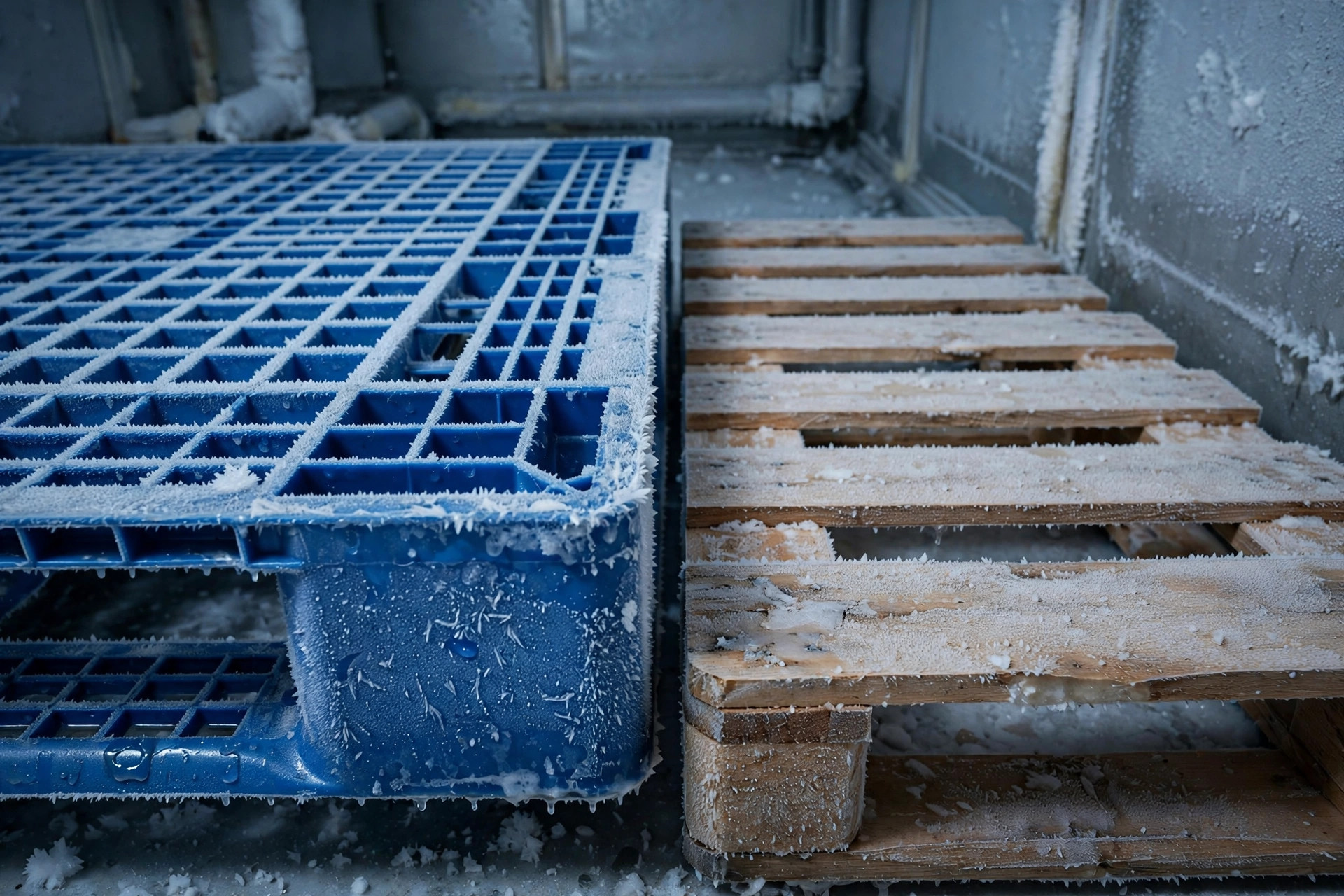
Plenty of peers ask me whether plastic pallets are worth it. I won't lecture — here are our actual numbers. One caveat: this is our building. Every warehouse turns pallets at a different rate, so your math will differ.
| Wood pallet | Plastic pallet | |
|---|---|---|
| Unit price | Low teens USD | Tens of USD, roughly 3–5x wood |
| Service life in a freezer | 1–2 years, dies fast in winter | 5+ years |
| Lifetime turns | Dozens | 100+ |
| Annual loss rate | 10–20% | Single-digit percent |
Rough math on 1,000 pallets over five years:
- Wood: a little over ten thousand dollars to start. In a freezer, wood pallets last one to two years, so over five years you churn through the pool two or three times — total spend heads toward thirty or forty thousand dollars. That doesn't count the labor of dealing with winter breakage, or the fines from splinter complaints.
- Plastic: forty to seventy thousand dollars up front, almost nothing to top up over five years.
On purchase price alone, wood still wins. But a pallet's ledger isn't just purchase price: one splinter complaint fine, one audit non-conformance that costs you an account, the labor of cleaning up broken pallets every winter — a few of those and the price gap is gone. So the real question is what kind of warehouse you run. Which brings me to the part people don't expect.
The Unpopular Take: Small Freezers Don't Need to Go All-Plastic
Here's something peers might not want to hear: a small freezer — a few thousand pallet positions — has no business copying the big guys and switching everything to plastic. Wood pallets plus good management pencil out just fine.
Here's how we run it today, zone by zone, no one-size-fits-all:
- High-standard zones — food, pharma: all plastic, not a single piece of wood. Audits and complaints stay quiet. Money well spent.
- Regular frozen storage: wood pallets stay, but with rules. Monthly spot checks; any bottom board cracked wider than a finger gets scrapped; no pallets staged outdoors by the freezer door soaking up moisture; every pallet gets a look before it goes in.
- The first lesson every veteran teaches a rookie: in winter, wiggle the pallet before you lift, make sure it isn't frozen down. That habit was bought with the morning half a load hung in midair.
Only big freezers — fast turns, a heavy food-and-pharma mix — justify a full switch to plastic. Without the scale and the speed, you can't spread tens of dollars per pallet thin enough. A pallet's ledger is a turns ledger, not a purchase ledger.
Plastic Isn't Magic Either — Freeze a Batch for a Winter First
We paid tuition on plastic pallets too. The first batch we bought, the sales rep talked it up as cold-rated. Then it froze through at minus 25, a forklift clipped it, it hit the floor and cracked clean in half. Plastic gets brittle in the cold too — just far less than wood.
We learned: before any bulk order, freeze a few dozen in your own freezer for a full winter. Drop them, stack them, hit them with a forklift. If they hold up, then talk price. Plastic has two more enemies: rough handling — a hard fork strike will crack it, and it's a pain to repair — and hot washdowns, which warp it. Warm water and a brush is plenty.
One reminder for fellow operators: before you buy plastic pallets, freeze a few dozen for a winter. Don't listen to the sales pitch. Let your own minus 25 do the talking.
By Chen Feng, Warehouse Operations Manager




