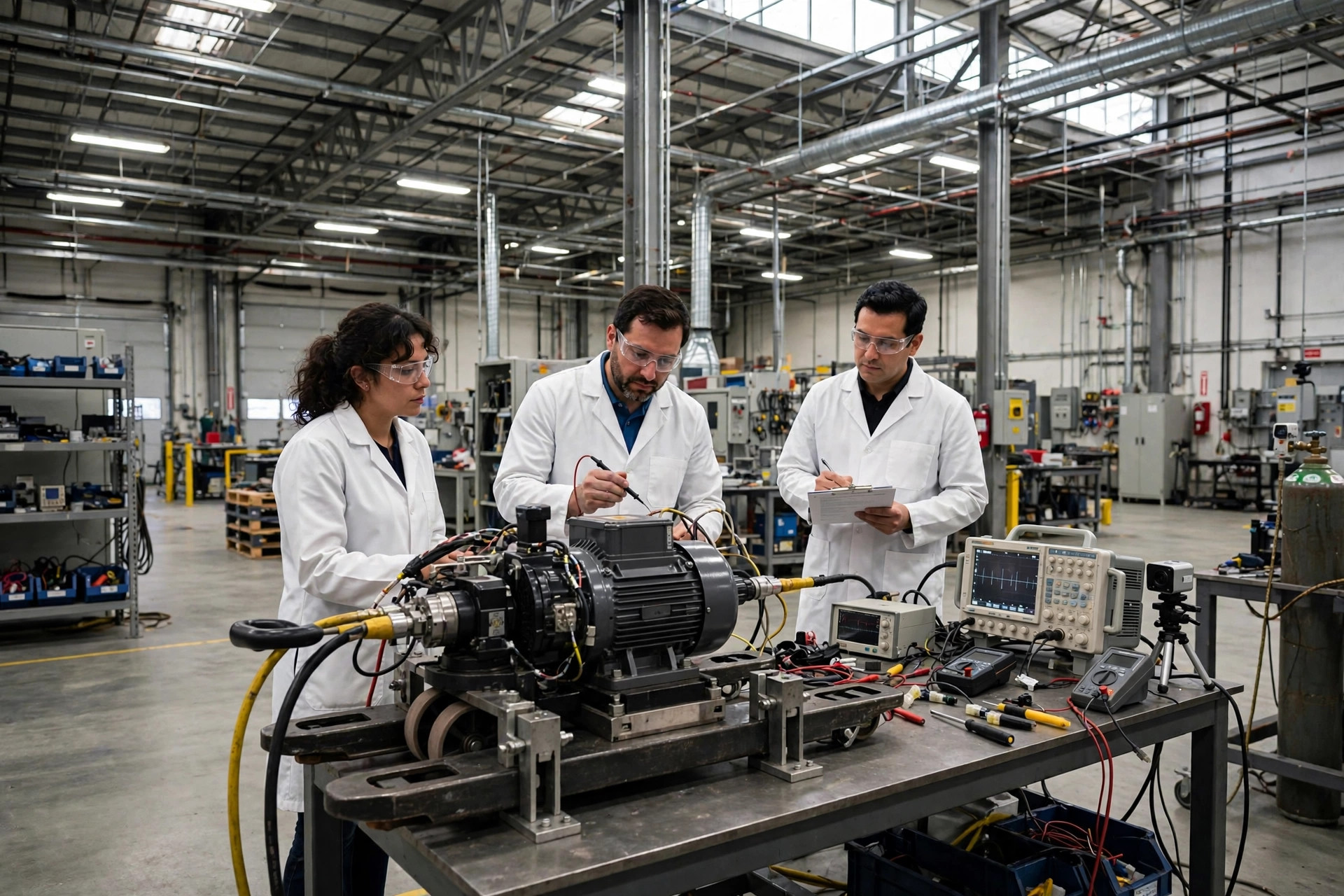
Let me give you the verdict first, because this is a decision that costs real money when you get it wrong: if your first deal is a complete system delivered into one warehouse — shuttles, rack tracks, charging, and dispatch software all landing together — certify the whole system as one product. If your first deal is selling sample units to a US distributor or a European integrator who will pair them with their own racking, charging, and WMS — certify the subsystems separately. Neither path is better. They fit different business models. Choose the wrong one and you'll pay twice and start over.
I have watched a manufacturer learn this the expensive way: their first project was a full system going into a US 3PL warehouse, but on an agent's advice they certified the shuttle body, the charging dock, and the control cabinet as three separate products. At the project site, they were told the installed system still needed a system-level safety evaluation. They paid for certification twice and lost three months of delivery schedule.
Whole-system certification: built for turnkey delivery, at the cost of flexibility
The logic of the whole-system path is simple: test whatever you hand to the customer as one product. In the US, the standard that fits four-way shuttles best is UL 3100. Its first edition was published on March 20, 2018, written specifically for automated guided vehicles, and it takes a holistic system approach — battery, charger, and vehicle evaluated together, covering enclosure strength, functional safety, motor safety, and protection against injury. On April 25, 2018, Dematic's bi-directional AGV forklift received the first UL 3100 certification UL ever issued — UL published a press release about it, and certification bodies still cite that case today. Worth knowing: UL 3100 itself cross-references standards like ANSI/ITSDF B56.5 for driverless industrial vehicles, and that shows up in the test reports.
On the EU side, watch the calendar. Right now (2026), and until January 20, 2027, machinery exported to Europe falls under the Machinery Directive 2006/42/EC. Regulation (EU) 2023/1230 on machinery becomes fully applicable on January 20, 2027, replacing the old directive. If you're starting certification now and your product won't reach the EU market until after that date, prepare to the new regulation: risk assessment per EN ISO 12100, electrical safety per EN 60204-1, safety-related control systems per the performance levels of EN ISO 13849-1 — all with a complete evidence trail in your technical file.
The biggest win of whole-system certification is that one certificate travels with the system: shuttles, tracks, charging, and dispatch certified as a unit means the customer's EHS team and their insurer accept it, and when you replicate the same configuration in a second warehouse, you generally don't retest. The price is flexibility: change any subsystem — a new battery supplier, a different charging method, a major dispatch-software upgrade — and the whole-system certificate goes back for reassessment. Fees follow the certification body's current price list; it isn't cheap.
Subsystem certification: built for channels and integrators, with the trap hidden in "integration"
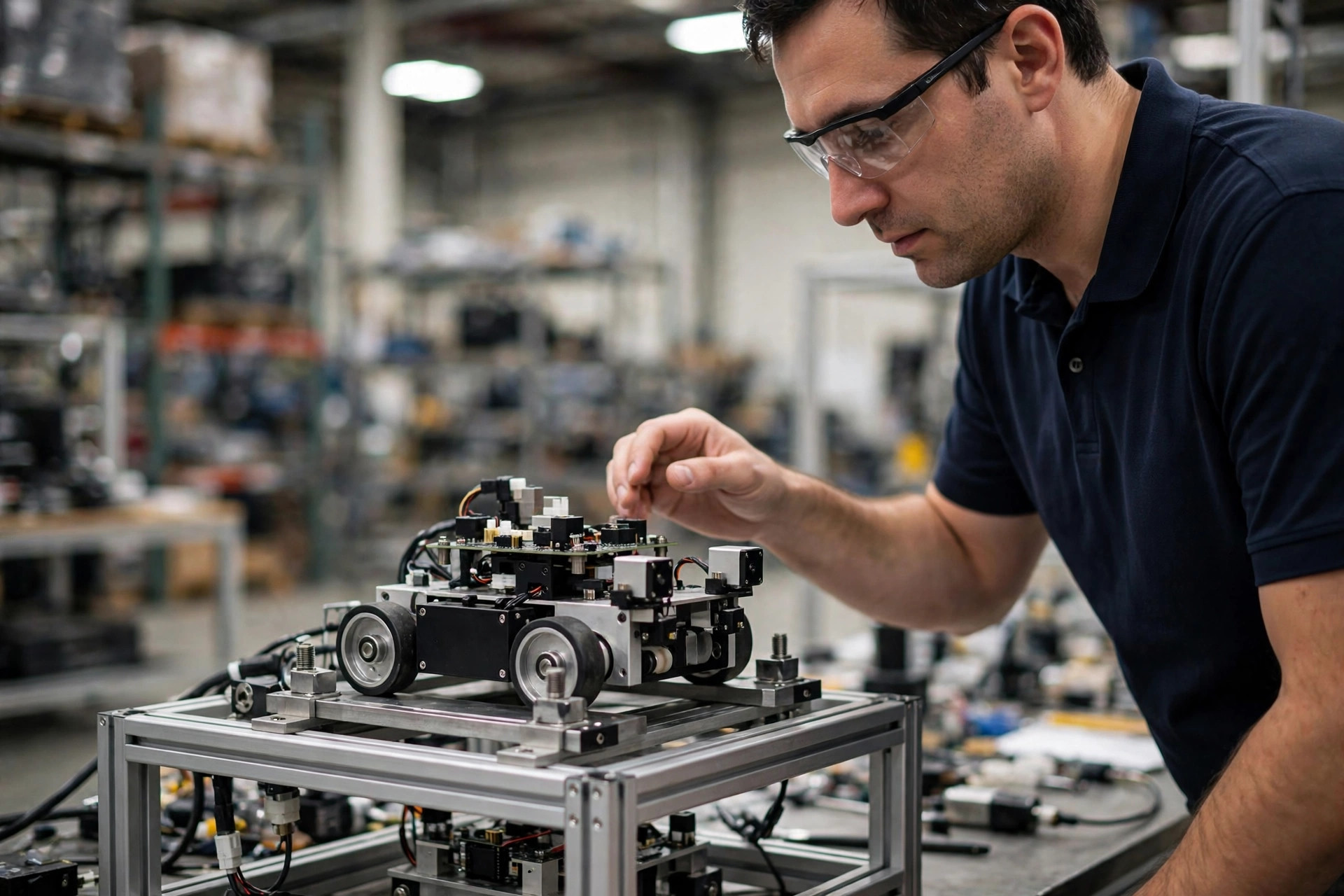
The split path certifies the shuttle body, the charging subsystem, and the control/communications subsystem separately, each against its own standards: the body under UL 3100 or the relevant industrial-machinery evaluation, the control panel under UL 508A for industrial control panels, lithium battery packs under UL 2054 with UN 38.3 testing for transport, and the wireless module under FCC Part 15 radiated-emissions requirements (industrial environments generally fall under Class A — check the FCC's latest published rules for the current limits). On the EU side, each subsystem gets its own CE technical file: the machinery piece, the EMC Directive 2014/30/EU, the Low Voltage Directive 2014/35/EU, and the Radio Equipment Directive 2014/53/EU (mandatory if the shuttle carries wireless communications).
Who is this path for? Manufacturers whose customers are integrators or distributors — you sell the vehicle, someone else does the site integration. The advantage is reusability: the same shuttle body certified once can pair with vendor A's charger this time and vendor B's racking next time, while the body certificate stands. Only the new combination needs an integration assessment.
And here is the trap that catches roughly nine out of ten manufacturers the first time: certified subsystems do not automatically equal a compliant system. Under the EU's new regulation, anyone who substantially modifies a machine — and that explicitly includes changes to software, control logic, or operating modes that create a new hazard or increase an existing one — is treated as the manufacturer, and the CE obligation moves to them. The US works the same way in practice: when an integrator assembles certified subsystems into a delivered system, OSHA field inspections look for NRTL (Nationally Recognized Testing Laboratory) compliance of the final system, not the three subsystem certificates in your folder. So the contract must spell out who performs the integration assessment, who pays for it, and who fixes it if it fails. Every deal I've seen blow up over certification had that paragraph missing.
The punch list to clear before you ship samples
Whichever path you take, these are the findings I see most often in test labs. Clearing them in advance saves you at least one full round of test fees:
- Battery protection: Lithium packs need overcharge, over-discharge, overcurrent, and short-circuit protection with a failure-mode analysis of the protection circuit. Get the UN 38.3 transport test report in hand before you export — ocean and air freight both check it.
- E-stop and safety functions: E-stop buttons, safety laser/ultrasonic obstacle detection, stall protection — the EU wants performance-level (PL) calculations per EN ISO 13849-1. "We have an e-stop" written on a brochure is not evidence; calculation sheets and test data are.
- Charging safety: Exposed charging contacts, a vehicle that can drive off mid-charge, and a charger with no interlock are the most common findings in UL 3100 system evaluations. The dock must enforce "no alignment, no charge; vehicle moves, charging stops."
- EMC emissions: Wireless communications plus motor drives running together fail radiated-emissions tests often. The fix is usually filtering, rerouting cables, and shielding the drive — but do it before the mechanical design freezes. Redesigning after tooling is paid for gets expensive fast.
- Documentation and markings: English manuals, safety warning labels, and nameplate data (model, electrical ratings, manufacturer) are all mandatory. The EU expects the technical file to be retained for the product's lifetime — don't start writing it when the auditor asks for it.
- Software version control: Dispatch algorithms and onboard firmware must be traceable. The new regulation explicitly requires software updates to be logged, and OTA upgrades need change records — a hard requirement for anything placed on the market after January 20, 2027.
One question to take home: is your first overseas customer buying a complete system from you, or buying a few vehicles to integrate themselves? Write down the answer and your certification path is eighty percent decided. The remaining twenty percent is a conversation with a certification body that has actually done AGV and mobile-robot products — not one whose entire portfolio is household appliances. They won't understand a four-way shuttle's risk profile, and your end customer won't accept their report.